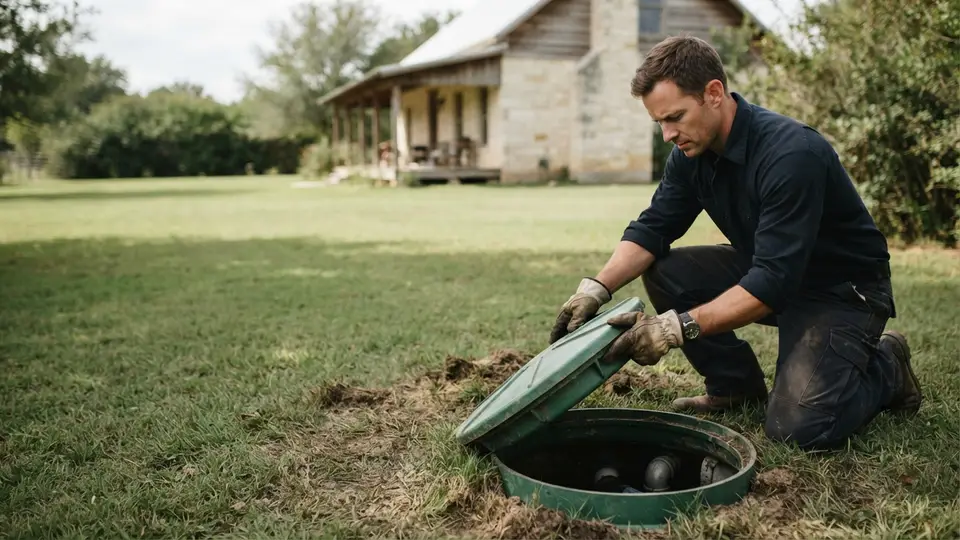
Septic pumping
When: Every few years or when sludge is high
What it includes: Uncover, pump every compartment, check baffles and filter
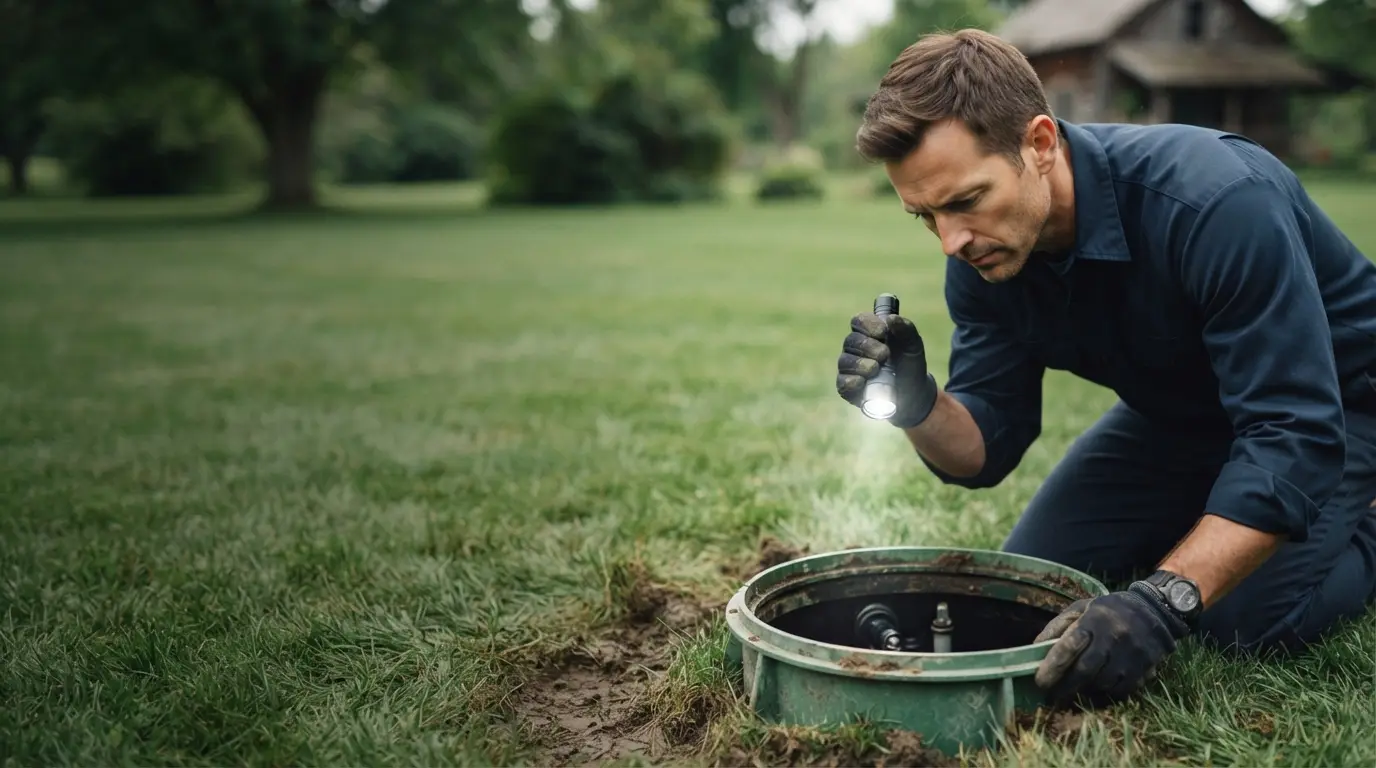
Toilets gurgling after a rainy week, or soggy ground over the drainfield? We provide septic tank services in Delaware for homes outside sewer districts. Septic systems are common across Kent and Sussex County and in rural parts of New Castle County. Southern Delaware brings special conditions: sandy soil that drains fast, a water table close to the surface, and sensitive inland bays and streams nearby. Many systems use pumps or elevated designs as a result. We pump, inspect and repair systems and handle the state permit when work needs one.
The service
An onsite wastewater system has a septic tank, where solids settle and scum floats, and a drainfield, where the clarified effluent soaks into the soil for treatment. Where the water table is high, Delaware systems often use pressure dosing, low-pressure pipe, elevated sand mounds or advanced treatment units so the effluent has enough unsaturated soil to be treated before it reaches groundwater.
What we do
When: Every few years or when sludge is high
What it includes: Uncover, pump every compartment, check baffles and filter
When: Home sale, refinance or trouble
What it includes: Measure layers, inspect tank, check field and pump chamber
When: Wet areas, odors, backups after pumping
What it includes: Locate and repair failed lines, distribution or dosing
When: Alarm on a dosing chamber or mound system
What it includes: Test floats, pump, controls and alarm
Why Delaware
Much of southern Delaware has groundwater close to the surface, especially in winter and spring. When it rises into the drainfield, the field cannot accept effluent and drains slow down.
Sandy soil drains quickly, which helps a field accept water but gives less treatment, so designs and setbacks matter for protecting wells and waterways.
Mound and pressure-dosed systems rely on pumps, floats and alarms. When a pump fails, the dosing chamber fills and the alarm sounds; if nobody responds, the system backs up.
Beach homes and rentals swing from empty to full. A tank sized for normal use can be overwhelmed by a full house every summer weekend.
Warning signs
Our process
We find the tank lids and dig if needed.
High liquid tells us the field or pump is not keeping up.
We pump every compartment and check baffles, filters and tank condition.
We look for surfacing effluent and test pumps, floats and alarms.
You get findings and a written price for any repair.
Typical cost
You get a written price before work begins.
Get a written price: (833) 733-2357More volume takes longer to pump.
Buried lids and tight lots add time.
Pumps, mounds and treatment units add components to service.
Baffles, lids, filters and pumps add parts.
Line repair costs much less than replacement.
Needed for replacements and major repairs.
Benefits
Pumping keeps solids out of the costliest part.
A working system keeps effluent out of drinking water.
Healthy systems protect local waters.
A recent inspection report helps with buyers and lenders.
Many field problems are fixable: a failed dosing pump, a clogged distribution line, a crushed pipe or root intrusion. We find and repair those. When the field soil itself has failed, a replacement needs a site evaluation, a design and a permit from DNREC, and in high-water areas it may need to be an elevated or advanced system. We coordinate those steps and complete the work.
Delaware's inland bays and the streams that feed them are sensitive to nutrients from septic systems. Systems near these waters may face stricter design and treatment requirements, and keeping existing systems working properly helps protect them. Regular pumping, prompt repairs and water conservation all reduce what reaches groundwater.
Manufactured homes make up 71% of homes in Long Neck, and some communities in Sussex County are served by shared or community wastewater systems rather than individual tanks. Individual homes outside those communities often have their own septic systems. We service both individual systems and the plumbing that connects homes to community systems.
Vacation rentals put a summer of heavy use on systems that may sit idle all winter. A house that sleeps ten every weekend sends far more water and waste to the tank than its design may have assumed. We recommend pumping before the season, checking pumps and alarms, posting a short guest notice about what not to flush and spacing out laundry between check-out and check-in.
Neutralizers, iron filters and softeners common on Delaware wells backwash into the drain, adding water to the septic system. Efficient settings reduce the load, and we can advise on discharge options where local rules allow.
Cut water use: delay laundry, shorten showers and skip the dishwasher. If a pump alarm is sounding, silence it but leave the pump circuit on unless the breaker trips.
Never open or enter a septic tank; the gases are deadly and old lids can collapse. Keep people and vehicles off the field and call us.
Onsite wastewater systems in Delaware are regulated by the Department of Natural Resources and Environmental Control, which issues permits for new and replacement systems and licenses the professionals who evaluate, design, install, inspect and pump them. Routine pumping needs no permit; replacements and major repairs do. Our team holds the licenses the work requires and coordinates permits with DNREC. Confirm requirements before planning new work.
Why choose us
What you can count on every time one of our plumbers comes to your door.
Every job is handled by a plumber who holds the license your state or city requires, backed by liability insurance.
Our plumber explains the problem and the options, and you approve a written price before any work begins.
Burst pipes, sewage backups and failed water heaters get priority scheduling, including nights and weekends.
We pull permits when the job needs one and schedule the inspection, so the work holds up when you sell.
Repairs and installations come with a written warranty on labor, on top of the manufacturer's warranty on parts.
Our pages and plumbers account for your area's water, soil, climate and the age of the homes around you.
Service area
Our data includes 27 Sussex County places and 26 in Kent County, many surrounded by homes on septic, including the areas around Georgetown, Millsboro and Seaford. Choose the nearest place:
Tank size, access to the lids, the type of system and what the inspection finds set the price. We give you a written price before pumping begins.
They have pumps, floats, controls and alarms that need periodic service on top of tank pumping. Keeping them working avoids much costlier repairs.
Yes. Replacing a drainfield, especially with an elevated system, is a major expense, and an inspection shows the condition before you commit.
We pump and inspect the tank, measure layers, check baffles and filters, look over the field or mound and test pumps and alarms.
Yes. Risers bring lids to the surface so the tank can be pumped and inspected quickly.
Yes. For replacements and major repairs, we coordinate the site evaluation, design and permit with DNREC.
Yes. Gases inside can kill quickly and old lids can give way. Leave tank work to our crew.
Yes. It carries pathogens and can reach wells and waterways. Keep people and pets away and call us.
Most home tanks are pumped and inspected in one to two hours, longer if lids are buried.
Construction takes several days, but site evaluation, design and permitting come first. We give a realistic timeline.
Many households need it every three to five years; busy rentals may need it more often. We suggest an interval after measuring.
Silence it, cut water use and call us. The chamber has limited reserve, so respond the same day.
Stop using water and call us. Septic backups get priority scheduling, and pumping usually brings quick relief.
DNREC regulates onsite wastewater systems statewide, issuing permits and licensing the professionals who work on them.
Effluent needs unsaturated soil to be treated. When groundwater rises into the field, it cannot drain or treat wastewater properly.