Blue-green stains, pinhole leaks
Usual cause: Acidic, low-pH water
Typical treatment: Neutralizer
Orange stains in the tub, or blue-green marks under the faucet? We install water softeners and filtration in Delaware after testing your water. Public water in northern Delaware and the larger towns is treated and monitored, but many homes in Kent and Sussex County draw from private wells. Delaware well water is often acidic, which eats copper pipe, and frequently carries iron. Some wells in farm areas show nitrates. We test, explain the results and install neutralizers, iron filters, softeners or reverse osmosis that match what we find.
The service
Each kind of equipment solves a different problem, and the right setup depends on your test results. Many Delaware well homes need a neutralizer and an iron filter; some also need a softener or a reverse osmosis system for drinking water. City homes usually need little more than a carbon filter for taste, if anything.
Common problems and treatments
Usual cause: Acidic, low-pH water
Typical treatment: Neutralizer
Usual cause: Iron in well water
Typical treatment: Iron filter
Usual cause: Manganese
Typical treatment: Manganese or combination filter
Usual cause: Hydrogen sulfide
Typical treatment: Oxidizing filter
Usual cause: Hardness
Typical treatment: Softener
Usual cause: Agricultural or natural sources
Typical treatment: Reverse osmosis or treatment matched to the report
Why Delaware
Many shallow wells on the Coastal Plain produce water with low pH. It dissolves copper, causing blue-green stains, pinhole leaks and higher copper levels in the water.
Iron is common in Delaware groundwater. It may look clear from the tap and then stain fixtures and laundry orange as it meets air. Manganese adds black stains.
In parts of Sussex and Kent, shallow wells near farmland can show elevated nitrates. Nitrates have no taste or smell, so only a lab test reveals them.
Public systems serving places such as Wilmington, with 35,514 homes in our data, treat and monitor their water. Most city homes need no softener, though some choose carbon filters for taste.
Warning signs
Our process
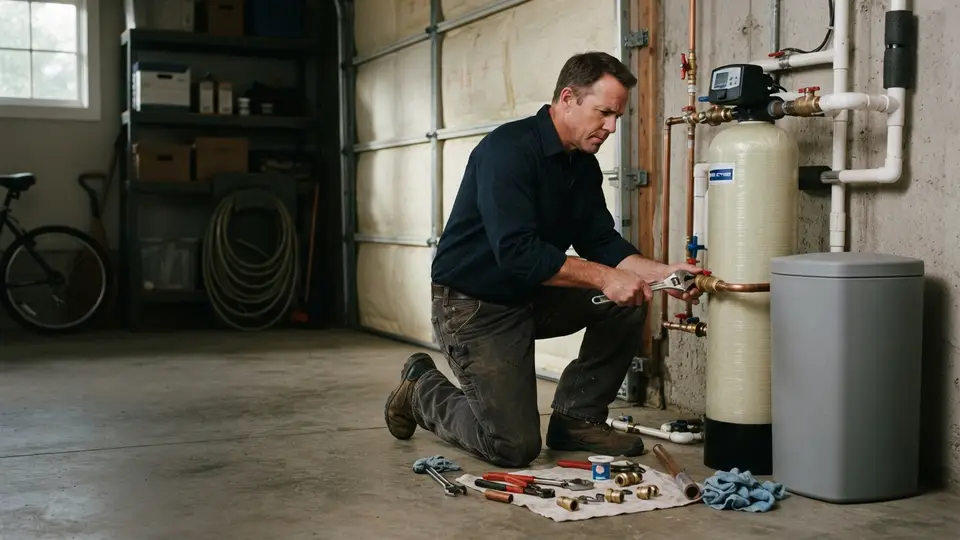
We test hardness, iron and pH, size the softener to your household and install it with a bypass valve and an air-gapped drain. In septic homes, we discuss where the backwash goes.
We install neutralizers, iron and manganese filters, sulfur filters and sediment filters at the point where water enters, in the right order so each stage works properly.
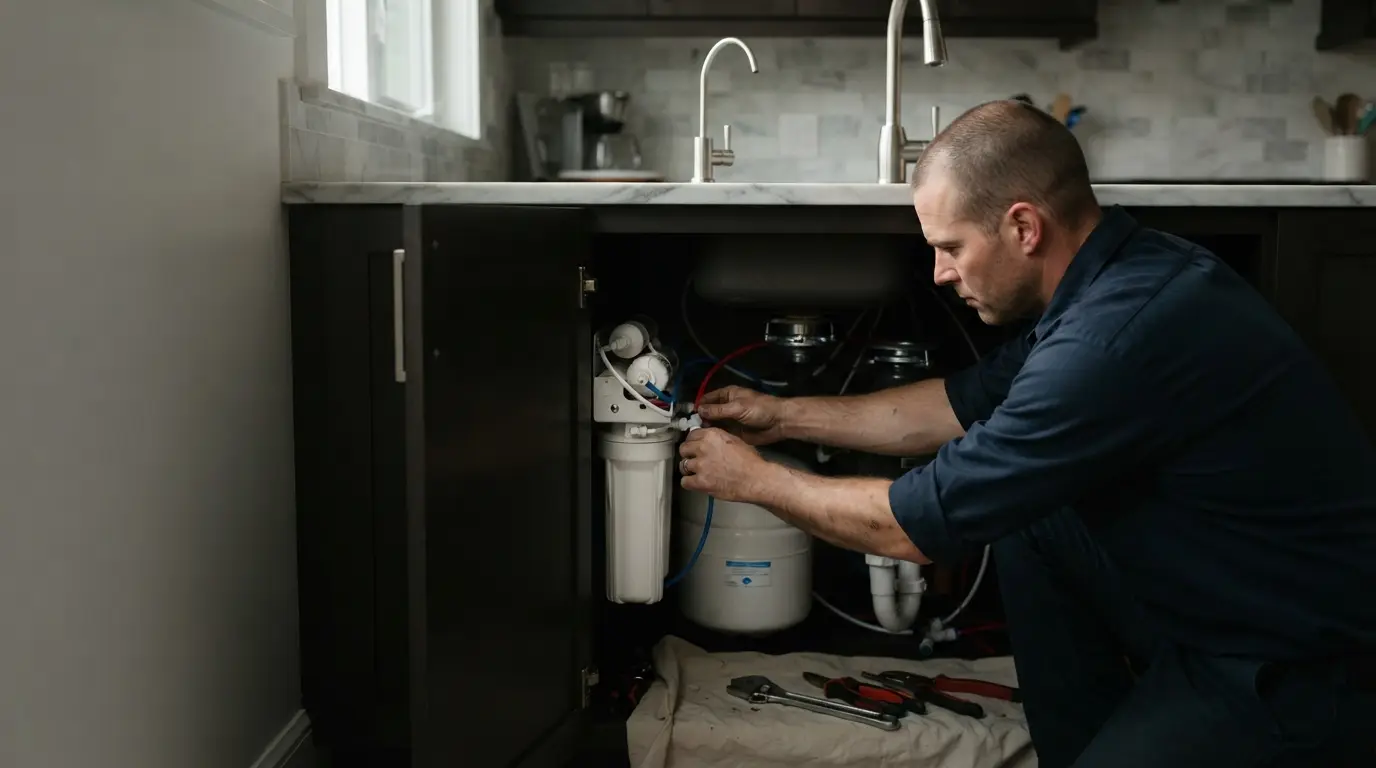
We mount the unit under the kitchen sink with a dedicated faucet. Reverse osmosis reduces nitrates and many dissolved minerals in drinking water, and we set a filter change schedule.
Typical cost
You receive a written price and a maintenance plan before we install.
Get a written price: (833) 733-2357PH correction and iron removal cost more than softening alone.
Some wells need two or three systems.
Larger households need more capacity.
Utility rooms and garages near the pressure tank are simplest.
Salt, media and filters are recurring.
Benefits
Iron filters stop orange and black stains.
Neutralizers slow copper corrosion and pinhole leaks.
Less corrosion and sediment in tanks.
Reverse osmosis reduces nitrates and dissolved minerals.
Our data includes 27 Sussex County places, many surrounded by homes on private wells, including the areas around Georgetown, Seaford, Milford and Millsboro. Well owners are responsible for their own water quality. We test for treatment basics, but we recommend a certified lab test for bacteria and nitrates, and your local public health office can advise on testing. We then size treatment to the lab results.
Acidic water does steady damage: pinhole leaks in copper, failing water heater tanks and worn fixture valves. A neutralizer raises the pH so the water stops dissolving metal. In homes that have already had several pinhole leaks, we may recommend repiping in PEX along with treatment, since thinned copper will keep failing even after the water is corrected.
Softeners and backwashing filters send water and, for softeners, salt to the drain during regeneration. In septic homes, efficient units and correct settings limit the extra load. We set regeneration to what your water actually needs and discuss discharge options where local rules allow.
Many Delaware wells are acidic rather than hard, and a softener does nothing to fix low pH. In fact, some neutralizers add a little hardness as they raise the pH, and a softener may then be useful after the neutralizer. Other wells need only an iron filter. That is why we test before recommending anything: the right answer might be one piece of equipment, or a sequence of two or three in the right order. We explain each stage and what it does so you are not paying for treatment your water does not need.
Treatment equipment in homes that sit empty for months needs attention when the house reopens. Filters can harbor stale water, and softener brine tanks can bridge. We flush and sanitize systems at spring startup, set regeneration to match rental occupancy and recommend low-maintenance equipment for owners who visit only occasionally.
Renters occupy 36% of Delaware homes in our data. Where a whole-house system is not possible, a reverse osmosis unit or a carbon filter at the kitchen sink improves drinking water. Renters should get the owner's approval first.
If you have a recent well test or a water quality report from your utility, keep it ready. Note stains, odors and when they appear. Clear access to the well pressure tank or main shutoff.
If existing equipment is leaking, put it in bypass, unplug it and call us. Do not add chemicals to your well yourself.
Many treatment installations need no permit, though some jurisdictions require one for new connections or drain changes. Our plumbers hold the Delaware licenses required, and every drain connection includes an approved air gap.
Why choose us
What you can count on every time one of our plumbers comes to your door.
Every job is handled by a plumber who holds the license your state or city requires, backed by liability insurance.
Our plumber explains the problem and the options, and you approve a written price before any work begins.
Burst pipes, sewage backups and failed water heaters get priority scheduling, including nights and weekends.
We pull permits when the job needs one and schedule the inspection, so the work holds up when you sell.
Repairs and installations come with a written warranty on labor, on top of the manufacturer's warranty on parts.
Our pages and plumbers account for your area's water, soil, climate and the age of the homes around you.
Service area
We test and treat water in 79 Delaware places. Choose yours:
It depends on what your test shows, how many stages you need, household size and installation space. We test first and give you a written price.
Running costs are modest. The media dissolves as it corrects pH and needs topping up periodically, which we explain at installation.
Often, yes, because iron needs specific media. Heavy iron may need a dedicated filter ahead of a softener.
Yes. We test pH, iron, hardness and other basics at the tap and review any lab report before recommending anything.
Usually in a utility room, garage or basement near the well pressure tank or main shutoff, with a drain and outlet nearby.
Backwash adds water, and softeners add salt. Efficient units and correct settings keep that load small.
Treatment tests do not cover bacteria and nitrates. Have a certified lab test your well; we treat what it finds.
Yes. It dissolves copper, causing pinhole leaks and stains, and shortens water heater life. A neutralizer stops it.
Most single systems take a few hours; multi-stage well treatment can take most of a day.
Treated water is immediate. Existing stains need cleaning, but they will not keep returning.
Every year or two, and whenever taste, smell or color changes.
A properly sized and maintained reverse osmosis system reduces nitrates in drinking water. A lab test confirms the result.
Put it in bypass, unplug it and call us. A stuck valve or drain line is the usual cause.
Shallow groundwater on the sandy Coastal Plain often has low pH, which makes it corrosive to copper.
Usually not. Public water is treated and monitored; some homes add a carbon filter for taste.