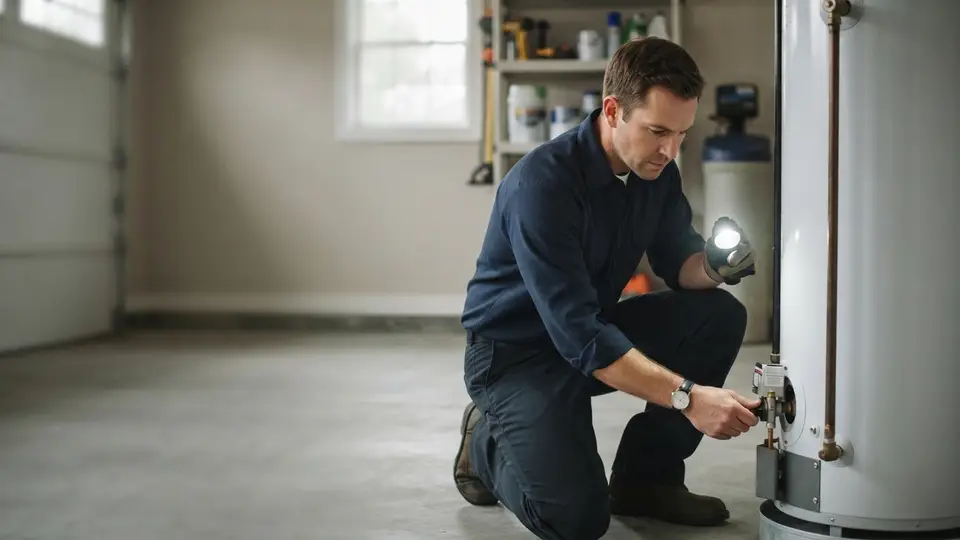
Gas tank
Good fit: Homes on gas mains
Points to know: Needs a sound flue or power vent and combustion air
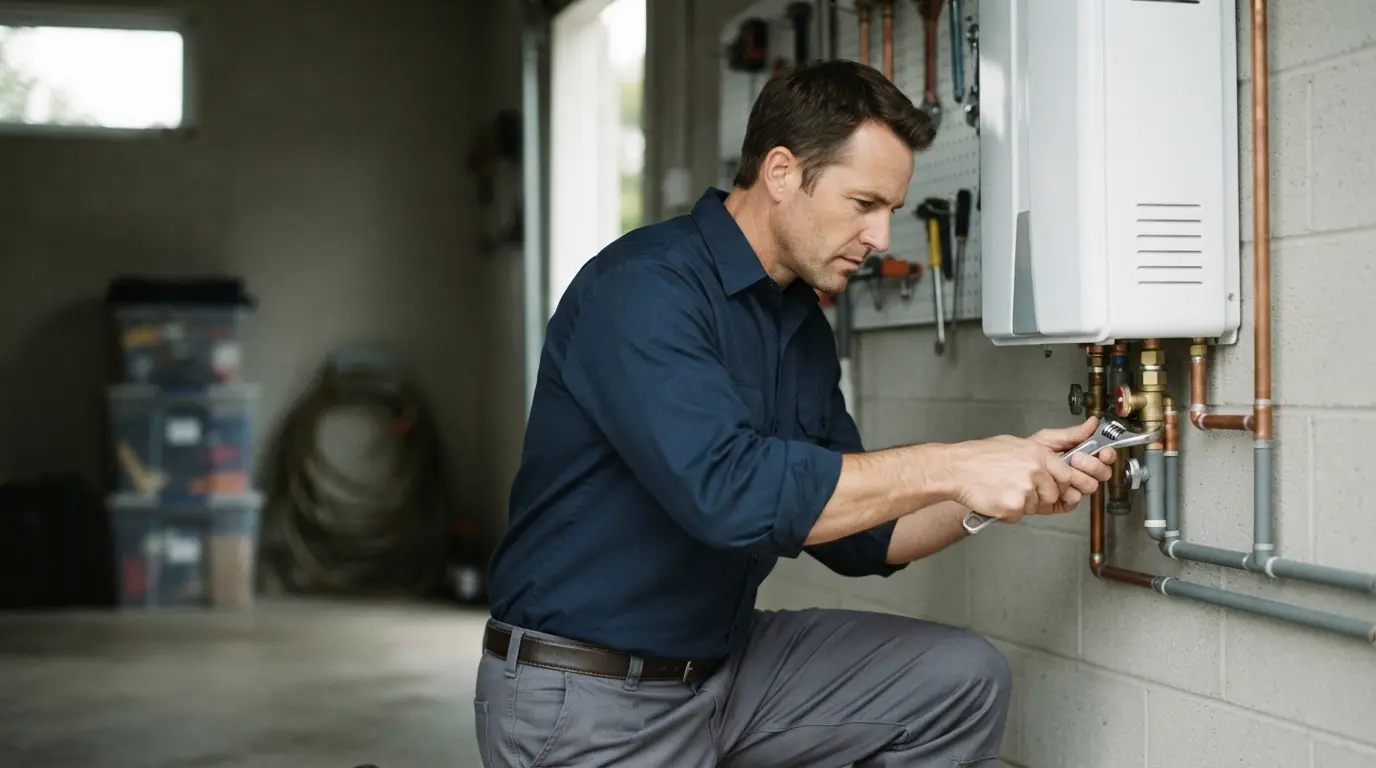
Hot water running out halfway through a shower, or rust at the bottom of the tank? We handle water heater repair and replacement in Delaware, all fuel types. Delaware homes split between gas, electric and propane: gas in most of New Castle and Kent County towns, electric and heat pump units at the beaches and in western Sussex, and propane in rural areas. Acidic or iron-rich well water shortens tank life, and rental homes put heavy demand on heaters in summer. We repair what is worth repairing and replace what is not.
The service
In our Delaware Census data, 47% of homes heat with utility gas, 38% with electricity and 5% with propane. Gas is the norm in places like Clayton (89%) and New Castle (76%), while gas heats only 6% of Rehoboth Beach homes and 8% in Georgetown. Pike Creek Valley, at 19%, shows how much it varies even within New Castle County. Water heaters usually follow the home's heating fuel.
Common water heater types
Good fit: Homes on gas mains
Points to know: Needs a sound flue or power vent and combustion air
Good fit: Rural homes beyond gas mains
Points to know: Propane-specific settings; supplier owns the tank
Good fit: Homes without gas, small households
Points to know: Simple; slower recovery
Good fit: Electric homes with garage or utility space
Points to know: Lower running cost; needs airflow and a condensate drain
Good fit: Larger households, tight spaces
Points to know: May need larger gas line and new venting
Why Delaware
Acidic well water corrodes tanks and fittings, and iron-rich water leaves sediment that settles in the tank bottom. Some wells also cause a rotten-egg smell in hot water through a reaction with the anode rod.
Beach rentals and student housing near Newark put far more demand on a heater than a typical household. Undersized heaters run constantly and wear out early.
In older Wilmington homes, where the median home dates from 1946, heaters often vent into old chimneys that may no longer draft properly when a furnace is upgraded. Missing expansion tanks and drain pans are also common.
At the shore, salt air corrodes heaters in garages and outdoor closets faster than inland.
Warning signs
Our process
We test thermocouples, gas valves, igniters, elements, thermostats and relief valves, check the anode rod and flush sediment. For smelly hot water, we can replace the anode with a type that reduces the reaction.
We size the new heater to your household or rental capacity, remove the old unit and install the new one with a relief valve discharge line, an expansion tank where needed, a drain pan where required and correct venting for gas or propane. The old heater is hauled away.
We check your gas or propane supply, size the unit to peak demand, install new venting and add isolation valves for descaling. Well water may need treatment ahead of a tankless unit.
Typical cost
You get a written price before any work starts.
Get a written price: (833) 733-2357A part costs far less than a new heater.
Tankless and heat pump units cost more upfront.
Converting fuels adds piping, venting or electrical work.
Attics and tight closets take more labor than garages.
Expansion tanks, pans and venting may be required.
Most Delaware jurisdictions require one.
Benefits
Correct sizing keeps up with full houses.
Proper flues keep exhaust out of the house.
Efficient and heat pump units use less energy.
Treated water and maintenance fight corrosion.
In electric homes, which are common in Sussex County, a heat pump water heater can cut water heating costs substantially compared with a standard electric tank. It needs a space with enough air, such as a garage or utility room, a condensate drain and a suitable electrical circuit. In a warm garage at the shore, it works especially well. We assess the space before recommending one.
A beach house that sleeps a dozen people needs more hot water than a typical home of the same size. We size heaters to the number of bedrooms and bathrooms that will be in use at once, and may recommend a larger tank, two heaters or a tankless unit so guests do not run out during the morning rush.
Homes with a pressure-reducing valve or a backflow device at the meter, and well systems with a check valve, form a closed system. When water heats and expands, pressure rises and the relief valve drips. A thermal expansion tank absorbs that extra volume. We check for one on every replacement and install it when needed, which also protects fixtures and supply lines.
When a shore home is winterized, the water heater is drained and shut down. In spring we refill it before turning on the power or gas, check the relief valve and look for leaks, since a dry element or a cracked fitting can fail on startup.
If the tank is leaking, close the cold water valve above it and shut off the gas or propane control, or switch off the breaker for an electric unit. If you smell gas or propane, leave the house and call your utility or supplier from outside.
Do not cap the relief valve and do not drain a hot tank. Note the brand, age and any error lights, then call us.
Water heater replacement generally requires a permit from your county or town, and inspectors check venting, gas connections and relief lines. Our plumbers hold the Delaware licenses required, and we pull the permit and schedule the inspection.
Why choose us
What you can count on every time one of our plumbers comes to your door.
Every job is handled by a plumber who holds the license your state or city requires, backed by liability insurance.
Our plumber explains the problem and the options, and you approve a written price before any work begins.
Burst pipes, sewage backups and failed water heaters get priority scheduling, including nights and weekends.
We pull permits when the job needs one and schedule the inspection, so the work holds up when you sell.
Repairs and installations come with a written warranty on labor, on top of the manufacturer's warranty on parts.
Our pages and plumbers account for your area's water, soil, climate and the age of the homes around you.
Service area
We repair and replace water heaters in 79 Delaware places. Choose yours:
Most repairs replace a single part, such as a thermocouple, gas valve or element, so the part and access set the price. We give you a written price before starting.
Repair usually wins if the tank is under about ten years old and not leaking. A leaking tank body means it is time to replace.
In electric homes, often yes. It uses much less electricity than a standard electric tank, especially in a warm garage.
We count bedrooms and bathrooms likely in use at once and size the tank or tankless unit so guests do not run out.
Yes. Removal and disposal are included in the installation price.
Yes. We size it to your demand, run the gas line from the supplier regulator and install venting.
Leave the house, avoid switches and call your utility or propane supplier from outside. We repair the problem once it is safe.
Often a reaction between well water and the anode rod. A different anode type or water treatment usually fixes it.
A standard tank swap takes a few hours. Tankless or fuel conversions can take most of a day.
Most repairs are done on the first visit. Replacements depend on the model, and we give you the timeline.
Once a year for most homes, more often with iron-rich well water. Rentals benefit from a flush before summer.
Many tanks last eight to twelve years. Acidic water, salt air and heavy use shorten that.
Close the cold supply valve, cut gas or power and call us. Leaking tanks get priority scheduling.
It depends where you live. Gas is common in New Castle and Kent towns; electric and propane dominate at the beaches and in rural Sussex.
Acidic or iron-rich well water can. Testing and treatment protect the heater.