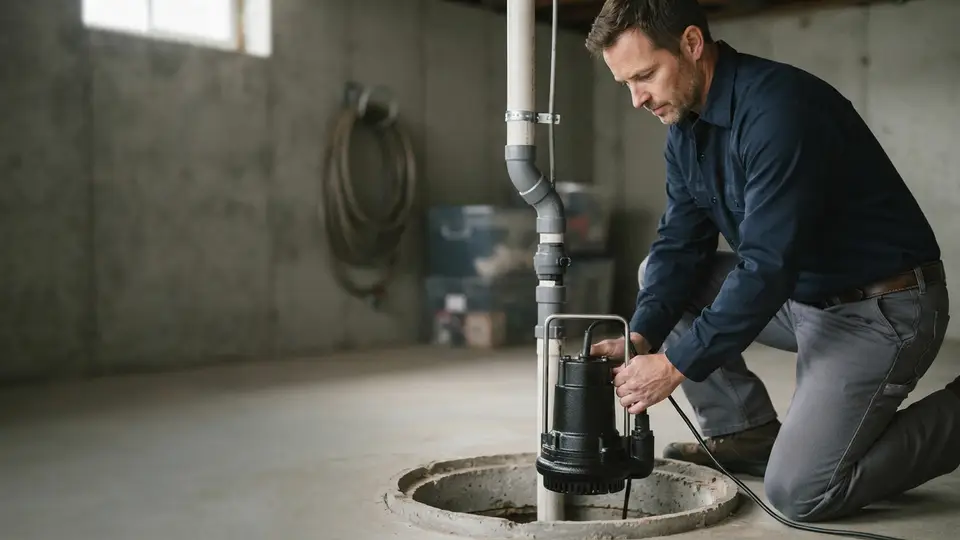
Primary pump
What it does: Removes water from the pit
What we check: Motor, impeller, float, cord
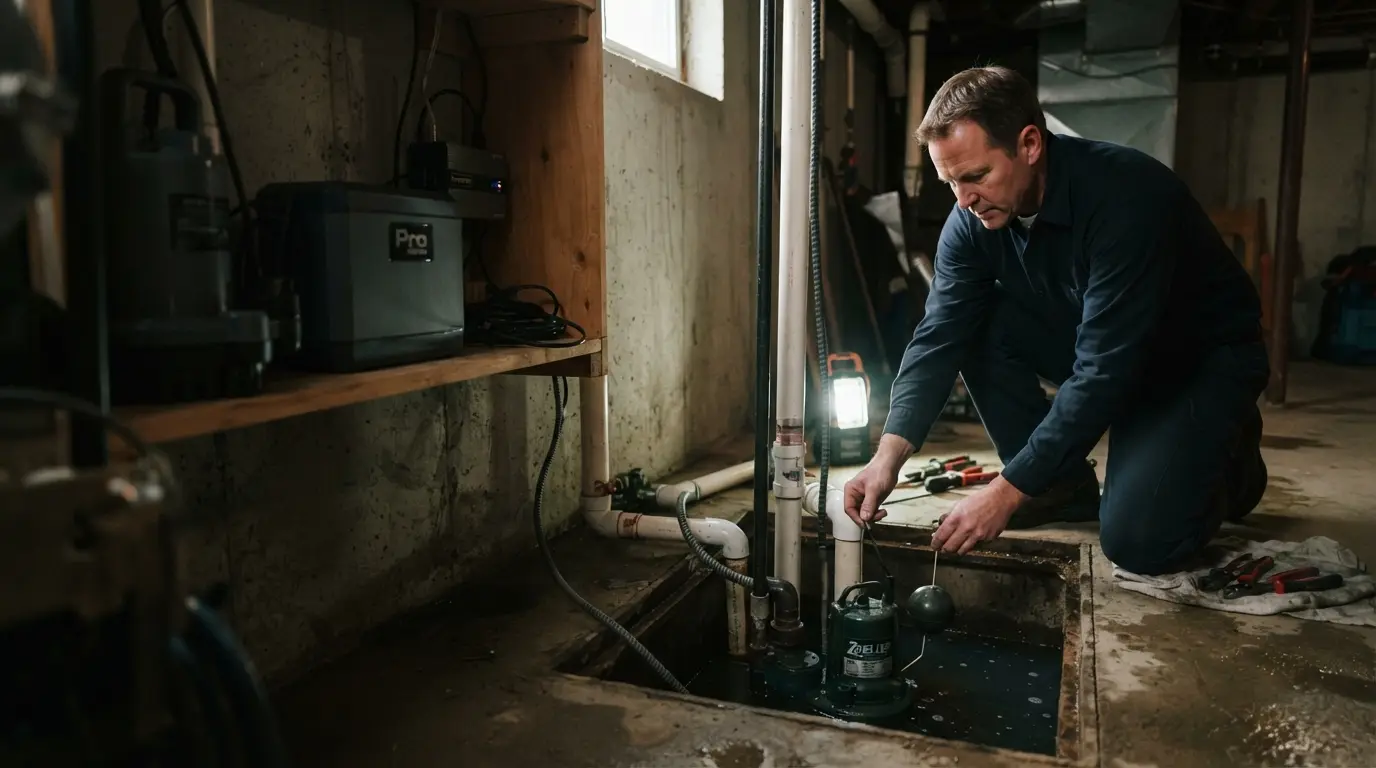
Water creeping across the basement floor after a storm? We do sump pump repair and installation in Delaware, with backups for power outages. Much of Delaware is low and flat, with a water table close to the surface, especially near the Delaware River, the bay and the inland bays. Nor'easters, tropical storms and heavy spring rain push that water higher. Basements in New Castle County and crawl spaces farther south depend on sump pumps to stay dry. We repair failing pumps, install new systems and add battery backups.
The service
A sump pump sits in a pit at the lowest point of a basement or crawl space. Groundwater reaches the pit through drain tile around the foundation, under the slab or through the pit liner. When the water rises, a float switch starts the pump, which sends the water through a discharge line to the yard. A check valve stops it from flowing back. Many newer New Castle County homes were built with perimeter drains and sumps because of the high water table.
Sump equipment we service
What it does: Removes water from the pit
What we check: Motor, impeller, float, cord
What it does: Stops pumped water returning
What we check: Seal, direction, noise
What it does: Carries water away
What we check: Breaks, freezing, outlet location
What it does: Pumps during outages
What we check: Battery, charger, alarm
What it does: Collects groundwater
What we check: Silt, debris, flow into the pit
Why Delaware
Delaware sits on the Coastal Plain, where groundwater is close to the surface across much of the state. In wet seasons it rises against foundations and into crawl spaces.
Nor'easters and tropical storms bring heavy rain, and near the bay and the inland bays they can raise water levels for days.
In the Piedmont area north of Wilmington and in some older neighborhoods, clay soils hold water against basement walls. 79% of Wilmington homes predate 1980, and many basements were built without modern drain tile.
Storms that bring the most water often knock out power, and a pump without a backup stops at the worst time.
Warning signs
Our process
We test the float, motor and impeller, clear silt and debris, replace failed check valves and inspect the discharge. A pump with a failed motor is replaced with one sized to your inflow.
For a new system, we set a lined pit at the low point, connect drain tile or an interior drain, install the pump and check valve, and route the discharge to an approved spot away from the foundation. We add a sealed lid to keep debris and moisture out.
A battery backup pump takes over during outages or when inflow exceeds the main pump. We install it with a charger and alarm and show you how to test it.
Typical cost
We give a written price before work begins.
Get a written price: (833) 733-2357A float or check valve costs less than a pump.
Cutting a basement floor and adding drain pipe adds work.
High-flow pumps cost more.
Batteries, chargers and alarms add equipment.
Long or buried lines add materials.
Low crawl spaces and finished basements take longer.
Benefits
Carpet, drywall and furniture stay dry.
Dry crawl spaces prevent rot and duct damage.
Less moisture means less mold and musty odor.
Furnaces and water heaters stay out of water.
Southern New Castle County has grown quickly. The median home in Middletown dates from 2005, in Bear from 1996 and in Glasgow from 1993. Many of these homes have basements with perimeter drains and sump pumps installed by the builder, and those original pumps are now at or past their expected life, often with no backup. Replacing an aging pump before it fails, and adding a backup, is far less costly than drying out a finished basement.
Farther south, many homes sit on crawl spaces in sandy ground with a shallow water table. Standing water under the house rots framing, ruins insulation and ductwork and feeds mold. A sump pit at the low point, with a vapor barrier and good drainage outside, keeps the crawl space dry. We install the pump and discharge and can recommend grading and gutter changes to reduce the water reaching it.
In low neighborhoods where the public sewer can surcharge during heavy rain, sewage can come up through a basement floor drain even when the sump is working. A backwater valve on the building drain closes when flow reverses. We install them alongside sump work and show you how to check them.
Homes on public water with good pressure can use a water-powered backup pump that runs on municipal water pressure instead of batteries. It is not suitable for homes on wells, since the well pump stops when the power does.
Check that the pump is plugged in and the breaker or GFCI has not tripped. If the float is stuck, unplug the pump and free it with a stick.
Do not walk through standing water where cords or equipment may be submerged. Shut off power to the area from a dry spot if you can, move belongings and call us.
Replacing a pump in an existing pit usually needs no permit. New pits, interior drains and discharge connections may, depending on your county or town, and discharging groundwater into the sanitary sewer is generally not allowed. Our plumbers hold the Delaware licenses required, and we check local rules first.
Why choose us
What you can count on every time one of our plumbers comes to your door.
Every job is handled by a plumber who holds the license your state or city requires, backed by liability insurance.
Our plumber explains the problem and the options, and you approve a written price before any work begins.
Burst pipes, sewage backups and failed water heaters get priority scheduling, including nights and weekends.
We pull permits when the job needs one and schedule the inspection, so the work holds up when you sell.
Repairs and installations come with a written warranty on labor, on top of the manufacturer's warranty on parts.
Our pages and plumbers account for your area's water, soil, climate and the age of the homes around you.
Service area
We repair and install sump pumps in 79 Delaware places, from New Castle and Hockessin to Dover and the shore. Choose yours:
Many repairs, such as a float or check valve, are modest. A burned-out motor means a new pump. Our plumber gives you a written price before work starts.
It depends on whether a pit and drain tile exist, pump size, the discharge route and basement finishes. We price it after seeing the space.
Yes for most basements. Coastal storms bring both heavy rain and outages, and a backup keeps pumping when power fails.
A high water table can feed the drain tile for days or weeks after storms, especially in spring.
We measure how fast the pit fills and how high and far the water must go, then choose a pump with enough capacity.
To the yard, well away from the foundation, where it drains away. Not into the sanitary sewer.
Not if electrical equipment or cords may be in the water. Shut off power from a dry spot if possible and wait for us.
Ground-fault protection is commonly required. We check the electrical connection and recommend what your location needs.
Usually one to two hours in an existing pit. A new pit with drain pipe can take a day or more.
Right away. Water above the rim reaches finished floors and equipment quickly.
Before spring and before hurricane season. Fill the pit with water and watch the pump start and stop.
Often seven to ten years. Pumps that run often wear out sooner.
Check pump power, keep away from water near electrical equipment and call us. Flooding gets priority scheduling.
Yes. A pit at the low point with a vapor barrier and good outside drainage keeps the crawl space dry.
Most of the state lies on the low, flat Coastal Plain, where the water table is close to the surface, especially near bays and rivers.