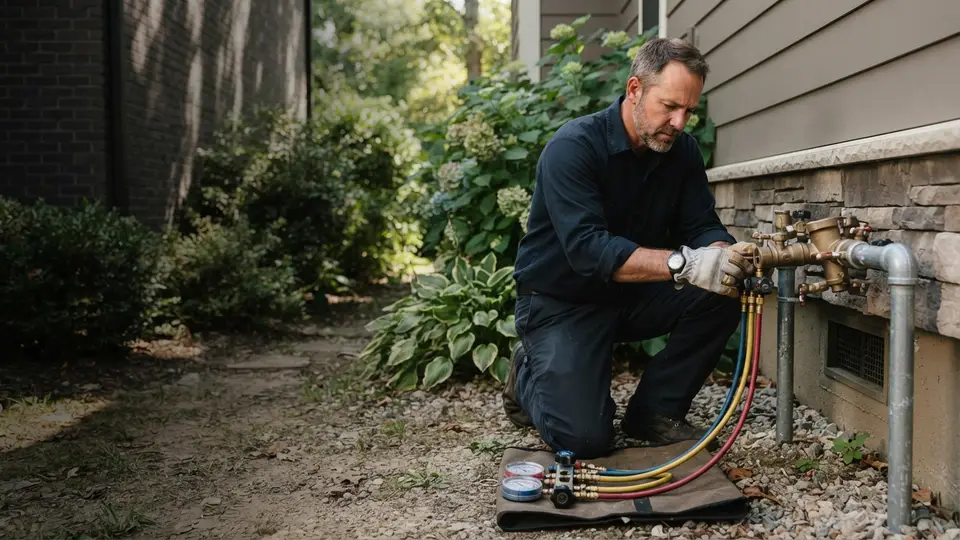
Pressure vacuum breaker
Typical use: Lawn irrigation
Testing: Usually yearly
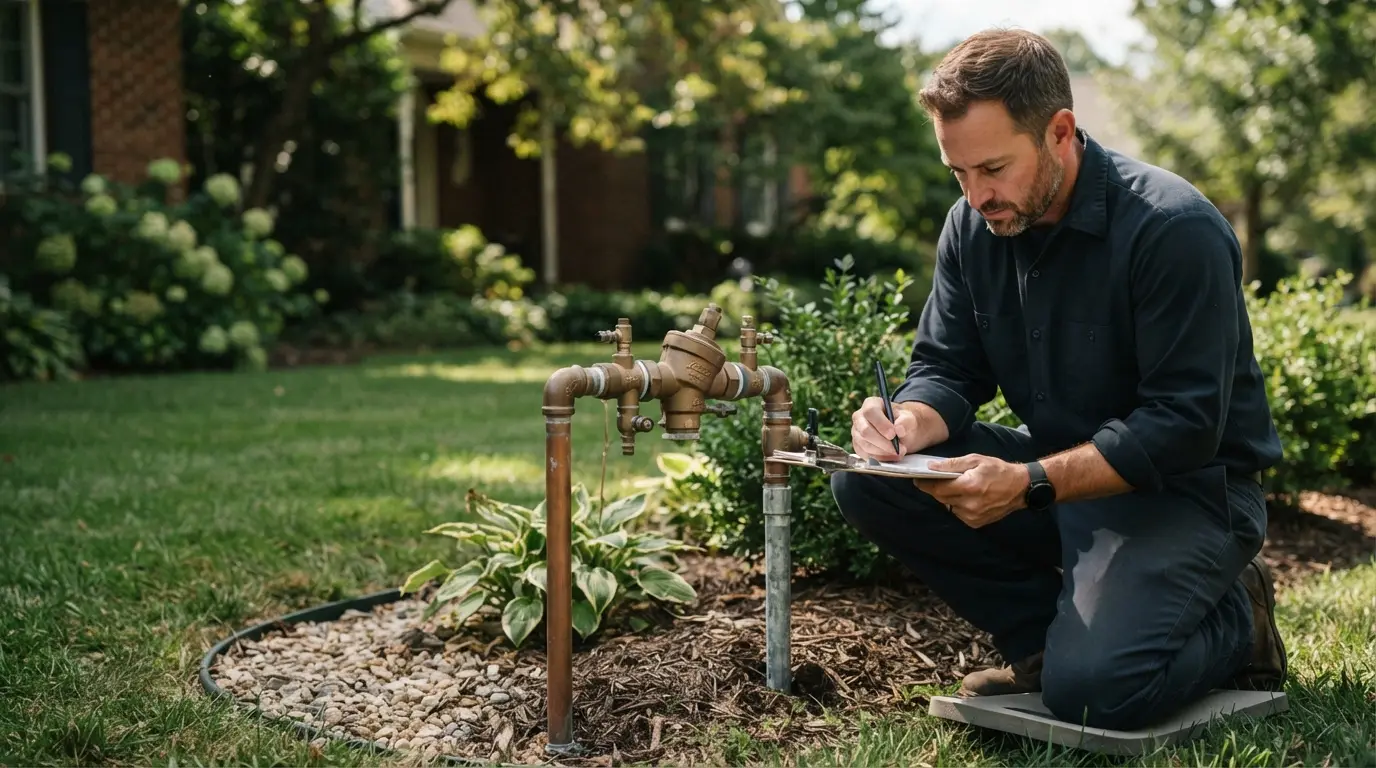
Test notice from the water system, or a backflow valve spraying? We handle backflow testing and prevention in Louisiana. Lawn sprinklers, fire lines, boilers, restaurant equipment and industrial processes can push contaminated water back into the public supply when pressure drops, and Louisiana systems see pressure drops after storms and main breaks. A backflow preventer stops that reverse flow. We test devices, submit results and repair or replace any that fail.
The service
When water main pressure drops, water inside a property can be drawn back into the public system. A backflow preventer is a set of check valves, sometimes with a relief valve, that blocks this. Suburbs like Youngsville (median built 2011) and Prairieville (median built 2003) have many lawn sprinklers, and commercial properties across the state have devices on fire lines and equipment.
Devices we test and install
Typical use: Lawn irrigation
Testing: Usually yearly
Typical use: Fire sprinklers, lower hazard
Testing: Usually yearly
Typical use: High hazard, chemicals
Testing: Usually yearly
Typical use: Outdoor faucets
Testing: Replaced if failed
Why Louisiana
Sand and silt after main breaks and storms keep checks from sealing.
Rubber parts age faster in hot, humid conditions.
Devices are seldom insulated, so a hard freeze can crack them.
Water hammer from sprinkler valves stresses internal parts.
Warning signs
Our process
A certified tester connects a gauge, checks each valve and relief point and records results on your water system's form.
We install the device your water system requires for the hazard, at the correct height and location.
We rebuild devices with new checks, springs and seals or replace damaged bodies, then retest.
Typical cost
Any figure before we see the device is an estimate only. These factors determine the cost:
You approve a written price before we start.
Get a written price: (833) 733-2357RPZ testing takes longer.
Several on one site can be tested together.
Rebuild kits cost less than new devices.
Devices in vaults or tight spots take longer.
Some water systems charge to record results.
Benefits
Contaminants stay out.
Deadlines are met.
Small problems are caught first.
Regular service helps.
Louisiana water systems lose pressure after hurricanes, power outages and main breaks, which is why boil-water notices are familiar in New Orleans (195,552 homes) and other cities. Low pressure is exactly when backflow happens. A working device keeps sprinkler water, fertilizer and chemicals at your property from being pulled into the public supply.
Restaurants, car washes, clinics, apartment complexes and offices in Baton Rouge (106,712 homes), Lafayette and Kenner have devices on fire lines, soda systems, boilers and equipment. We test several devices per visit, keep a list of due dates and repair on the same visit when parts are on hand.
Lake Charles (40,742 homes), Baton Rouge and the river parishes have many plants and industrial sites where process water, cooling systems and chemicals connect to the potable supply. Those connections need high-hazard protection. We work with facility staff to test and maintain devices and schedule work around operations and safety rules.
Sprinklers run much of the year in Louisiana. Their backflow devices sit outdoors, exposed to heat, mowers and the occasional freeze. We test them, repair leaks and recommend protective covers or a sturdy enclosure that keeps mowers, trimmers and storm debris from cracking the bonnet or test cocks. Before a forecast hard freeze, shut off the irrigation supply and drain the device.
Storms can damage outdoor devices with falling debris and fill them with silt when mains break. In Houma (14,945 homes), Lake Charles and other storm-hit areas, we test and rebuild devices after the storm and replace any that were crushed or flooded.
Louisiana water systems run cross-connection control programs under state rules, and each sets its own schedule and reporting method. We submit results the way your system requires and give you a copy.
Property managers, school systems and businesses with sites in Shreveport (90,007 homes), Lafayette (59,363 homes) and elsewhere may have dozens of devices due at different times. We keep a list of each device, its location and due date, and group tests to save visits.
Hospitals, hotels and office buildings with boilers and chillers use treated water that must not reach the drinking supply. The fill lines for these systems need backflow protection, and we test and replace those devices during mechanical service. Cooling towers, which run hard through long Louisiana summers, often have make-up water connections that need the same protection, and we include them in the yearly testing schedule so nothing is missed.
Soda fountains that inject carbon dioxide, coffee and tea brewers, ice machines, dishwashers and chemical dispensers all connect to the water supply in a food business. Carbonated water can dissolve copper and pull it back into the line if there is no proper device, and chemical dispensers need protection against siphoning. Many water systems and health inspectors look for these devices. We identify each connection, install the right device and keep test records ready for inspection.
If you are adding irrigation, the backflow device comes first. We tap the water line, install the device where your water system requires it, add a shutoff and drain so it can be protected in a freeze and arrange the first test once the zones are finished. Getting it right at the start avoids moving it after a failed inspection.
If the device is spraying, close the valve that feeds it. Clear access to the device and any valve box.
Have your water system's notice handy. Do not adjust the device yourself. Then call us.
New backflow devices usually need a permit, and testing must be done by a certified tester. We pull permits and submit results. Our plumbers are licensed by the State Plumbing Board of Louisiana.
Why choose us
What you can count on every time one of our plumbers comes to your door.
Every job is handled by a plumber who holds the license your state or city requires, backed by liability insurance.
Our plumber explains the problem and the options, and you approve a written price before any work begins.
Burst pipes, sewage backups and failed water heaters get priority scheduling, including nights and weekends.
We pull permits when the job needs one and schedule the inspection, so the work holds up when you sell.
Repairs and installations come with a written warranty on labor, on top of the manufacturer's warranty on parts.
Our pages and plumbers account for your area's water, soil, climate and the age of the homes around you.
Service area
We test and repair backflow devices in 489 Louisiana communities, including Kenner (27,908 homes). Find yours:
It depends on the device type, the number of devices and how your water system handles reports. We give you a written price before testing.
Usually. Rebuilding with new parts costs less, but a crushed or cracked body must be replaced.
Filing is part of our test service. Some water systems charge their own record fee, which we tell you about upfront.
Our certified tester briefly shuts off water, connects a gauge kit, checks each valve and records readings. Most tests take under an hour.
Yes. We submit results in the required format and give you a copy.
We explain why, give you a written price for repair or replacement and retest after the work.
It keeps fertilizers, chemicals and dirty water out of drinking water when pressure drops after storms or main breaks.
It signals a problem or a failing device. Call us to test and repair it so it protects the supply.
Usually less than an hour per device. Repairs may add an hour or two.
Your water system sets the deadline. Many owners test once a year at the same time.
Yes. Shut off the irrigation supply and drain the device when a hard freeze is forecast.
Most Louisiana water systems require testable devices to be checked every year. Your notice gives the rule.
Close the valve feeding it and call us. Burst devices are scheduled ahead of routine testing.
Most water systems require one on irrigation connections. We confirm the local rule.
Yes. Debris can damage them and silt from main breaks can foul the checks. Test devices after a major storm.