Clay
Era: Before the 1970s
Typical failure: Roots, separated joints
Sewer backing up after every heavy rain, or the yard sinking over the line? We handle sewer line repair and replacement in Louisiana. Louisiana laterals sit in soft, wet ground that settles over the years, and in clay that swells and shrinks farther north. Joints pull apart, pipes sag and roots move in. We camera the line, mark the damage from above and repair it by digging or with trenchless methods, shoring trenches where the soil needs it.
The service
The lateral carries waste from the house to the public sewer, and the property owner is usually responsible for it. 55% of the 1,397,597 homes in our Louisiana data were built before 1980. In Gretna 73% of homes predate 1980, in Marrero 69% and in Metairie 69%, and many of those laterals are original.
Sewer pipe under Louisiana homes
Era: Before the 1970s
Typical failure: Roots, separated joints
Era: Through the 1970s
Typical failure: Rust, cracked bottoms
Era: Mid 1900s
Typical failure: Flattening and collapse
Era: Newer homes
Typical failure: Sags as soil settles
Why Louisiana
Ground in the New Orleans area keeps sinking, pulling laterals away from the house and the main.
North Louisiana clay swells and shrinks, bending and cracking joints.
Oaks and other big trees push roots into joints that have opened.
Uprooted trees and floodwater can crack and shift buried lines.
Warning signs
Our process
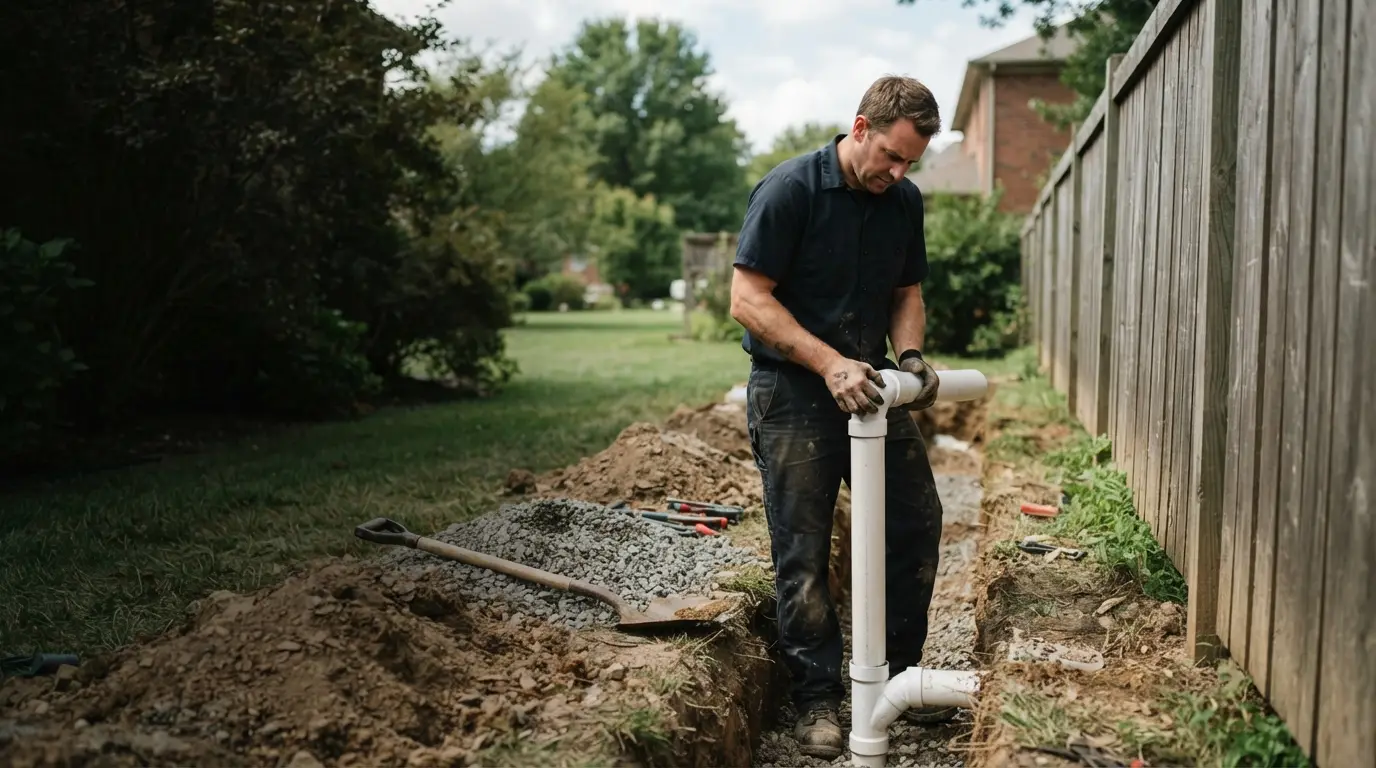
For a single break or sag, we dig at the marked spot, replace the bad section and set it on firm bedding.
When the lateral fails along its length, we replace it by open trench, pipe bursting or lining, depending on soil and route.
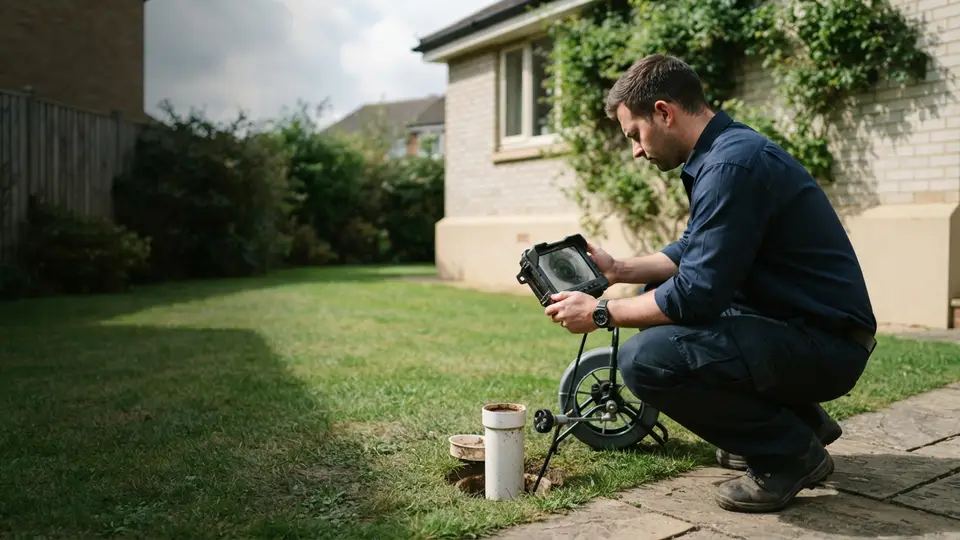
We record the line with a camera and locate breaks, sags and their depth from the surface.
Typical cost
Any figure before the camera inspection is an estimate only. These factors set the final price:
You approve a written price before we dig.
Get a written price: (833) 733-2357Deeper or longer lines need more digging.
Soft soil and high groundwater need shoring and pumps.
Driveways, slabs and trees affect the method.
One break costs less than a full replacement.
Most sewer work needs a permit.
Benefits
Proper slope keeps waste moving.
Sewage stays in the pipe.
Buyers value a sound sewer.
Sealed joints keep rodents and roaches out.
In New Orleans (195,552 homes), Metairie and Kenner (27,908 homes), the ground under yards and streets slowly sinks, while houses on pilings may not. Over time, the lateral can pull away at the house connection or sag along its length. We use flexible connections where code allows, set new pipe on proper bedding and slope it so it keeps draining as the ground continues to move.
In much of south Louisiana, water sits only a few feet below the surface. Trenches fill with water and soft soil can cave in. We use pumps and shoring to keep trenches safe and dry enough to set pipe properly. This is one reason trenchless methods are popular here when the line qualifies.
Shreveport (90,007 homes) and Monroe (66% built before 1980) have older neighborhoods with clay laterals in clay soil. Dry summers shrink the ground and open joints for roots; wet seasons swell it again. We replace failing sections with sealed pipe and recommend cleaning schedules for rooted lines.
Lining places a resin liner inside the old pipe that hardens into a new one. Bursting pulls new pipe through while breaking the old line apart. Both avoid long trenches under driveways and landscaping, but a badly sagged or collapsed line usually needs digging. We explain the options after the camera inspection.
After hurricanes in Lake Charles (40,742 homes) and southeast Louisiana, uprooted trees cracked laterals and floods filled lines with silt. If drains have worked poorly since a storm, a camera inspection shows whether the line was damaged. We document damage for insurance where it applies.
When neighbors back up at the same time, the public main may be the problem. In Baton Rouge (106,712 homes) and other cities, our camera shows where the blockage is. If it is in the public sewer, we tell you to call the sewer utility. If it is your lateral, we explain the repair and give you a written price.
In growing places like Youngsville (median built 2011), PVC laterals can sag as fill soil settles. A camera inspection shows the belly, and the footage helps if a builder warranty applies.
Home inspections seldom include the sewer. In soft-soil areas, a camera check before closing is especially worthwhile. We give you the video and a written summary to share with your agent before you sign.
Many older Louisiana houses sit on piers, with the building drain running under the floor before it drops into the ground. Hangers rust, the pipe sags between supports and the joint where it enters the soil cracks as the ground settles away from the house. We re-support and re-slope under-floor drains, replace cracked cast iron with new pipe and rebuild the transition into the lateral so it can handle some movement.
Stop using water if sewage is backing up, and keep everyone away from it.
Clear access to the yard cleanout. Do not dig near the line yourself, then call us.
Sewer repair and replacement in Louisiana generally need a city or parish permit and inspection. We handle the permits. Our plumbers are licensed by the State Plumbing Board of Louisiana.
Why choose us
What you can count on every time one of our plumbers comes to your door.
Every job is handled by a plumber who holds the license your state or city requires, backed by liability insurance.
Our plumber explains the problem and the options, and you approve a written price before any work begins.
Burst pipes, sewage backups and failed water heaters get priority scheduling, including nights and weekends.
We pull permits when the job needs one and schedule the inspection, so the work holds up when you sell.
Repairs and installations come with a written warranty on labor, on top of the manufacturer's warranty on parts.
Our pages and plumbers account for your area's water, soil, climate and the age of the homes around you.
Service area
We repair sewer lines in 489 Louisiana communities. Find yours:
It depends on depth, length, soil conditions and what lies above the line. We give you a written price after the camera inspection and before digging.
It can cost more per foot but avoids restoring driveways and landscaping, and it skips the challenges of digging in wet soil.
Yes. It is priced as its own service and shows exactly where the damage is, so you only pay to fix what is broken.
We record the line with a camera and use a locator to mark the problem and its depth on the surface.
We call in utility locates, open the ground with shoring and pumps if needed, replace the pipe, test it and arrange inspection.
Yes. We reconnect it with proper fittings and bedding, and where code allows we use connections that handle some ground movement.
Yes. Sewage carries bacteria. Avoid contact, keep children and pets away and clean and disinfect the area after the repair.
Not for homeowners. Utility lines may be nearby and soft trenches can collapse. Leave excavation to us.
Many lateral replacements take one to two days plus inspection. Wet soil or long runs can add time.
Only while the old pipe is out and the new one is being connected. We tell you when to stop and resume using water.
Plant trees away from the line, clean roots regularly and replace clay sections with sealed pipe when roots keep returning.
In soft-soil areas, a camera check every few years helps catch sags and separations before they cause backups.
Stop using water and call us. Sewage backups are scheduled ahead of routine work, and we keep you updated on timing.
Soft, wet soils settle and the ground around New Orleans subsides, so laterals sink unevenly and form low spots.
Usually the property owner. Rules vary by city and sewer utility, so check where your responsibility ends.