Galvanized steel
Era: Before about 1960
Typical issue: Rust buildup, low pressure
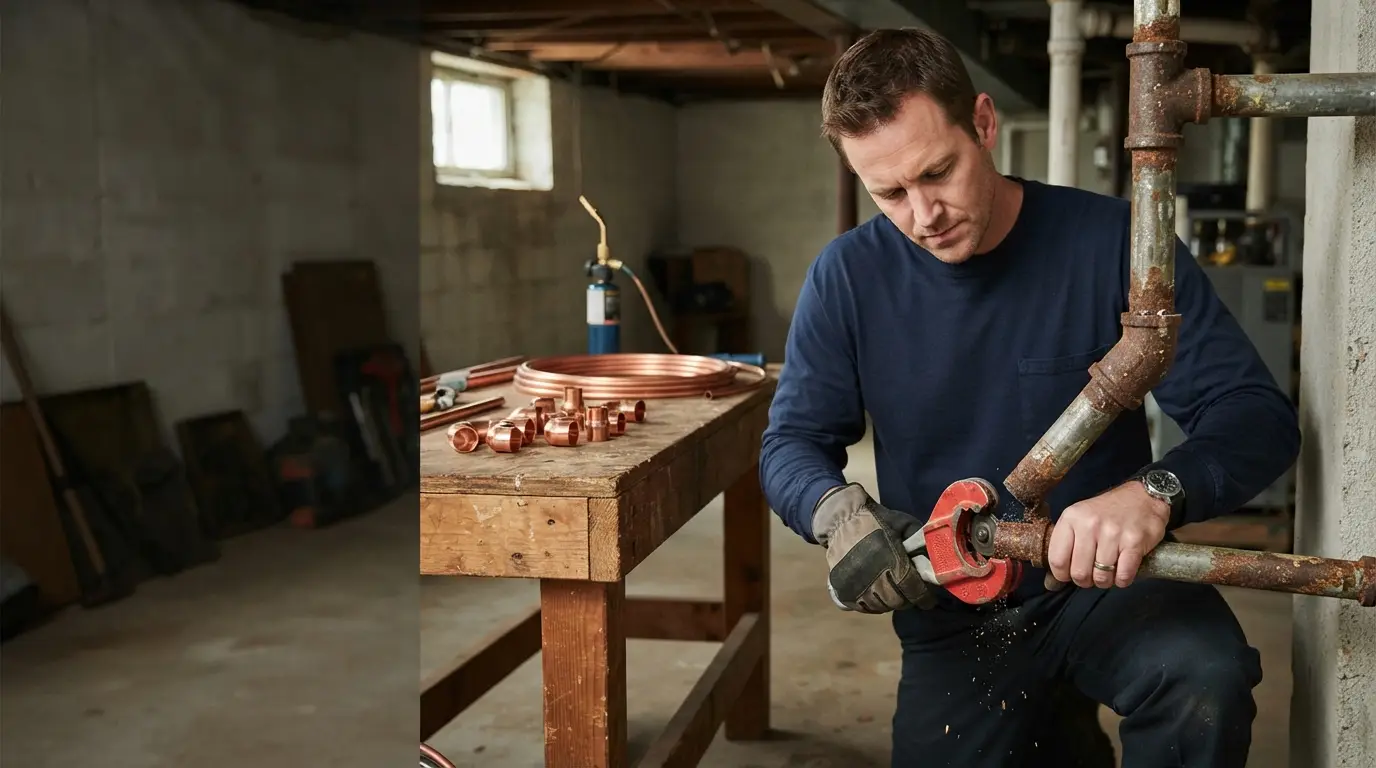
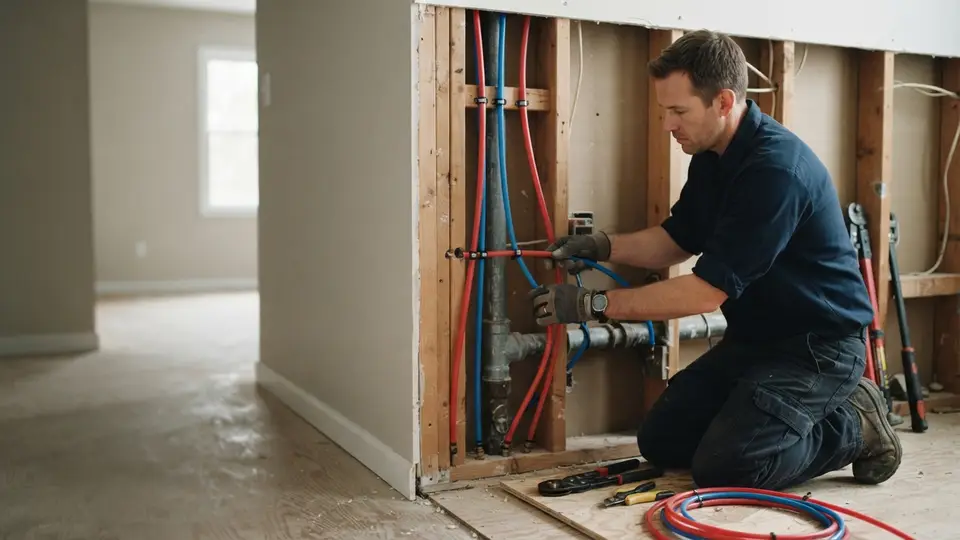
Low pressure, or rusty water when you open the tap? We handle repiping and water line replacement in Louisiana for houses, duplexes and small buildings. Many Louisiana homes still have galvanized steel or early copper, and humid air under raised houses and settling soil under slabs speed up the wear. We replace old lines with PEX or copper, routing them through attics, walls or under the floor, restore water each evening and patch the access openings when we finish.
The service
23% of the 1,397,597 homes in our Louisiana data were built before 1960, and 55% before 1980. In New Orleans 74% of homes predate 1980, in Gretna 73% and in Marrero 69%. Many still have galvanized supply lines, often mixed with copper added during past repairs.
Pipe in Louisiana homes
Era: Before about 1960
Typical issue: Rust buildup, low pressure
Era: 1950s onward
Typical issue: Pinholes, slab leaks
Era: Late 1970s to mid 1990s
Typical issue: Fitting failures
Era: Today
Typical issue: Flexible, fewer joints
Era: Today
Typical issue: Durable, good for exposed runs
Why Louisiana
Galvanized pipe from the early and mid 1900s has rusted inside.
Damp air under raised homes corrodes pipe from the outside.
Settling and clay movement crack lines under slabs.
Floodwater and silt damage pipes, valves and fittings.
Warning signs
Our process
We replace leaking sections with new pipe and proper transition fittings.
We plan routes, run new supply to every fixture, pressure test and abandon the old lines.
We repair leaks in the service line between the meter and the house.
We replace old service lines, shoring trenches in soft soil when needed.
Typical cost
Repiping figures are estimates only until we walk the home. The price depends on:
You approve a written price before we start.
Get a written price: (833) 733-2357More bathrooms mean more pipe.
PEX and copper differ in cost.
Attics, raised floors and crawl spaces differ in access.
Patching adds cost.
Replacement to the meter is separate.
Repipes usually need a permit.
Benefits
Full flow at every fixture.
No more rust.
Overhead lines are easy to reach.
Updated plumbing helps both.
Most slab homes in Metairie (66,355 homes), Baton Rouge and Shreveport have supply lines under the floor. After repeated slab leaks, we run new lines through the attic and drop them through walls to each fixture. Louisiana attics get extremely hot in summer and occasionally freeze, so we insulate the new runs and keep them away from the hottest areas under the roof.
Raised homes in New Orleans (195,552 homes), Houma and other towns have supply lines running under the floor. That makes repiping more direct, since we work from below and come up through the floor. We support the new pipe properly, insulate it against freezes and keep it clear of the ground and floodwater where possible.
An old, narrowed service line can limit pressure even after the house is repiped. Some Louisiana utilities are identifying and replacing older service lines, so ask yours what applies to your address. We replace the private side, with shoring and pumps where soft soil and high water call for it.
When a house has been gutted after flooding, walls are open and it is the best time to replace old supply lines. Running new pipe before drywall goes back costs far less than coming back later. We coordinate with your contractor on rough-in and inspection.
In Shreveport (90,007 homes), Monroe (66% built before 1980) and Alexandria (65%), older neighborhoods have homes on crawl spaces and slabs with galvanized pipe. We repipe in one project or in stages, and insulate pipes in crawl spaces where freezes are more common than on the coast.
Larger buildings hold 31% of homes in Baton Rouge and 26% in Terrytown, and doubles and older rental houses are common in New Orleans. We plan repipes unit by unit, give tenants notice and keep water outages short.
Some Louisiana homes built between the late 1970s and mid 1990s have gray polybutylene pipe. Its fittings can fail suddenly, and some insurers ask about it. We replace it with PEX or copper, usually in a few days.
We protect floors, shut off water and start new mains in the attic or under the house. Over the next days we connect bathrooms, kitchen, laundry and water heater, a few areas at a time, and restore water each evening. Once everything runs on new pipe, we pressure test, call for inspection and patch openings.
A repipe is the right time to fix the small parts that cause trouble later. We measure the incoming pressure and add or replace a pressure regulator if it runs high, which protects the new pipe and every fixture. We install a main shutoff that turns easily, quarter-turn stops under each sink and toilet and a shutoff for the water heater. Before a storm or a freeze, you can then shut the house down quickly, and if one fixture fails, you can isolate it instead of turning off water to the whole home.
New Orleans shotgun houses and doubles often have long, narrow plumbing runs from the front of the house to a kitchen and bath at the back, with lines added over many decades. In a double, both sides may share one service line. We map what serves each unit, separate lines where it helps and plan the work so each side keeps water as much as possible.
If a pipe is leaking, close the main shutoff and cut power to wet areas. Note which fixtures have low pressure or rusty water.
Clear the attic hatch or access under the house. Then call us to plan the work.
Repiping and water line replacement usually need a city or parish permit and inspection in Louisiana. We handle both. Our plumbers are licensed by the State Plumbing Board of Louisiana.
Why choose us
What you can count on every time one of our plumbers comes to your door.
Every job is handled by a plumber who holds the license your state or city requires, backed by liability insurance.
Our plumber explains the problem and the options, and you approve a written price before any work begins.
Burst pipes, sewage backups and failed water heaters get priority scheduling, including nights and weekends.
We pull permits when the job needs one and schedule the inspection, so the work holds up when you sell.
Repairs and installations come with a written warranty on labor, on top of the manufacturer's warranty on parts.
Our pages and plumbers account for your area's water, soil, climate and the age of the homes around you.
Service area
We repipe homes in 489 Louisiana communities, including Houma (14,945 homes). Find yours:
It depends on home size, fixtures, pipe material, access and wall repairs. We walk through the home and give you a written price before starting.
PEX usually costs less to install and handles occasional freezes better. Copper costs more but suits exposed runs.
Yes. Replacing the line from the meter to the house involves digging and is listed as its own item.
We run new lines through the attic and down through walls, abandoning the old pipe under the slab.
Usually, yes. We restore water each evening so you can live in the home throughout the work.
We patch access openings. Final paint and texture can be included or handled by your contractor.
Rust is mostly a nuisance, but old pipes can carry other metals. Test your water if you are concerned.
Older service lines or fittings may. Testing your water and checking with your utility tells you whether it is a concern.
Many homes take a few days. Larger homes take longer.
Usually one to two days, depending on depth, soil and what lies above the line.
We insulate them. Before a hard freeze, keep the heat on and open cabinets on outside walls.
Often, yes. Rerouting supply lines overhead ends slab leaks and makes future repairs easier.
Close the main shutoff and call us. We fix the break first and schedule the repipe afterward.
Many older homes still have galvanized pipe, and humidity and moving soil add wear to supply lines.
Yes. Open walls make repiping much cheaper, and new pipe goes in before the drywall.