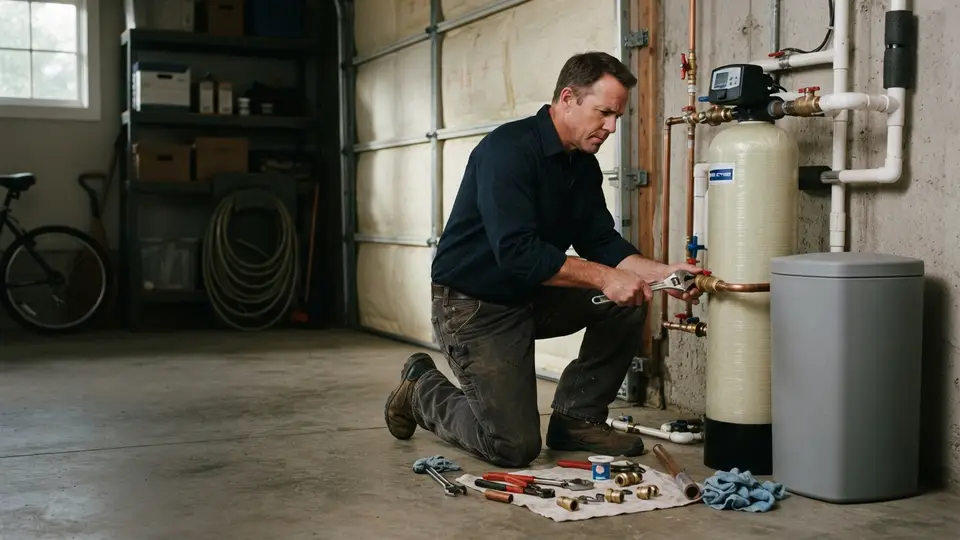
Water softener
What it handles: Hardness, some iron
Notes: Regenerates with salt
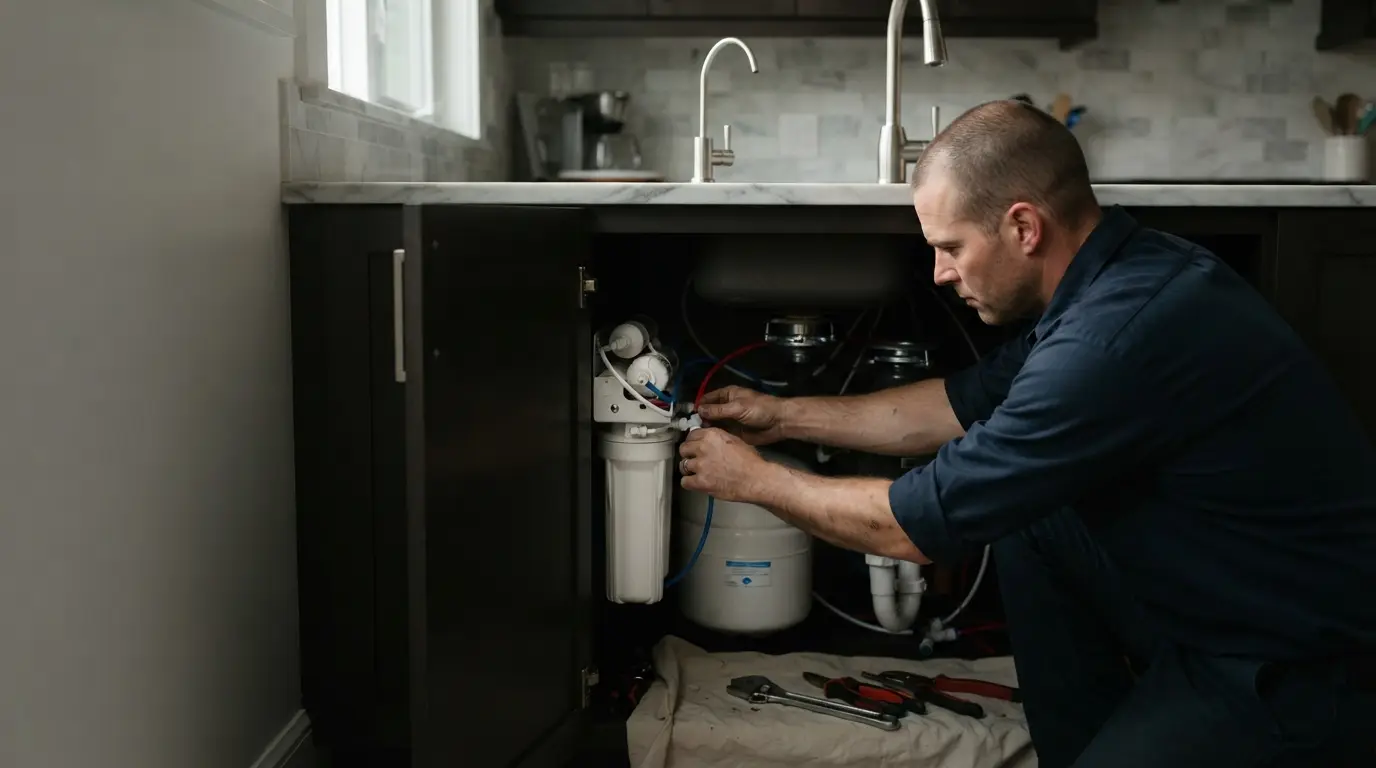
Orange stains in the tub, or a strong chlorine taste from the tap? We install water softeners and filtration in Louisiana for city water and private wells. Louisiana water varies a lot: some groundwater carries iron and manganese, some is moderately hard, river water is heavily treated, and storms and main breaks bring boil-water notices. We test your water first, then install the softener, iron filter, carbon filter or reverse osmosis system that fits what we find.
The service
New Orleans (195,552 homes) and many river parishes treat water from the Mississippi River, while Baton Rouge, Lafayette and much of the state use groundwater. Some groundwater has iron or manganese, and hardness varies by aquifer. Our data counts 1,397,597 Louisiana homes, and newer suburbs like Youngsville (median built 2011) often have plumbing ready for a filter or softener.
Treatment systems we install
What it handles: Hardness, some iron
Notes: Regenerates with salt
What it handles: Iron, manganese, stains
Notes: Common on groundwater
What it handles: Chlorine taste and odor
Notes: Whole house or drinking tap
What it handles: Dissolved solids, many contaminants
Notes: Drinking water
What it handles: Bacteria in well water
Notes: With a sediment filter
Why Louisiana
Some Louisiana groundwater carries iron that stains fixtures and laundry.
Some aquifers deliver moderately hard water that leaves scale.
River water is treated heavily, and some households want less chlorine taste.
Main breaks and outages can stir up sediment and bring boil-water notices.
Warning signs
Our process
We test hardness and iron, size the softener to your household, install it with a bypass and connect the drain.
We install sediment, carbon or iron filters on the main line.
We install under-sink reverse osmosis with a dedicated faucet and can connect it to the refrigerator.
Typical cost
Any figure before we test is an estimate only. These factors determine the cost:
You approve a written price before we start.
Get a written price: (833) 733-2357Iron and bacteria need extra equipment.
Bigger families need bigger systems.
Adding a drain or loop takes labor.
RO and UV add cost.
Salt, filters and lamps are ongoing.
Benefits
Iron filters stop orange marks.
Carbon and RO remove chlorine taste.
Less sediment and scale.
Less crust and fewer spots.
Lafayette (59,363 homes), New Iberia, Opelousas and other Acadiana towns rely on groundwater. Iron and minerals there can stain fixtures and laundry. An iron filter ahead of a softener usually solves both problems. We test, size and install the right combination.
Mississippi River water is treated to meet drinking standards, but some households notice chlorine taste and odor, and older pipes in the system and in homes can add sediment. A whole-house carbon filter improves taste and smell throughout the home, and a reverse osmosis tap gives the best drinking water. We install both, and we can add a sediment filter ahead of them to catch grit after main breaks.
Filters and softeners do not make water safe during a boil-water notice. Follow the notice until it is lifted. Afterward, flush your lines, replace filter cartridges that may have collected contaminated water and run the softener through a regeneration. We can do this for you if you are unsure.
Rural homes around Opelousas (7,493 homes), Ruston and other towns may use private wells. Test regularly for bacteria and other contaminants. After a flood covers or nears a well, do not drink the water until it is disinfected and tested. We install iron filters, UV disinfection and softeners based on your lab results.
Electric water heaters, common in Louisiana, suffer when sediment and scale coat their elements. Iron stains fixtures and clogs aerators. Treated water helps heaters, dishwashers and washers last longer and keeps bathrooms cleaner. It also means less time scrubbing orange rings out of toilets and tubs, and white laundry that stays white instead of slowly turning yellow.
Renters occupy 54% of homes in Hammond and 64% in Ruston, and larger buildings hold 31% of Baton Rouge homes. A central filter or softener protects heaters and fixtures across units. We install and service systems for owners and managers.
A system that is too small wears out media and lets problems through; one that is too large wastes money. We size equipment from your test results and household use and set controls to regenerate only when needed.
In slab homes in Lake Charles (40,742 homes) and Shreveport (90,007 homes), we usually install equipment in the garage near where the water line enters. Raised homes may need a protected spot under the house or in a utility room. Equipment needs a drain and an outlet, and in flood zones we raise it off the floor.
A sulfur smell can come from the water itself or from the water heater. If only hot water smells, the anode rod is often reacting with the water, and changing the anode or flushing the tank usually solves it. If cold water smells too, hydrogen sulfide is in the supply, which is more common on wells. An oxidizing or aeration filter removes it before it reaches the taps. We test to find the source before recommending equipment, so you do not pay for a filter that does not fix the smell.
Traditional softeners use salt, and some households prefer potassium chloride. Salt-free conditioners reduce scale but do not remove hardness or iron. We explain how each option performs with your water and what upkeep it needs each year.
If you have city water, find your utility's water quality report. If you have a well, arrange a lab test or gather recent results.
Clear space near the main water line, usually in the garage. Then call us to test and plan the installation.
Installations that change plumbing may need a permit. We pull permits where required. Our plumbers are licensed by the State Plumbing Board of Louisiana.
Why choose us
What you can count on every time one of our plumbers comes to your door.
Every job is handled by a plumber who holds the license your state or city requires, backed by liability insurance.
Our plumber explains the problem and the options, and you approve a written price before any work begins.
Burst pipes, sewage backups and failed water heaters get priority scheduling, including nights and weekends.
We pull permits when the job needs one and schedule the inspection, so the work holds up when you sell.
Repairs and installations come with a written warranty on labor, on top of the manufacturer's warranty on parts.
Our pages and plumbers account for your area's water, soil, climate and the age of the homes around you.
Service area
We install softeners and filters in 489 Louisiana communities, including New Iberia (13,546 homes). Find yours:
It depends on the system size, your water chemistry and installation needs. We test your water and give you a written price before starting.
An under-sink system costs less than whole-house treatment. The price depends on the unit and any refrigerator connection.
Salt, replacement filters, membranes and UV lamps. We explain them so there are no surprises.
We test for hardness, iron, chlorine and other issues, then size equipment for your household and water use.
We shut off the water, cut in a bypass, install the system, connect the drain, program it and test.
Yes. An iron filter removes iron before it reaches your fixtures. Existing stains need cleaning once.
For most people, yes. It adds a little sodium. A reverse osmosis tap is a good option for drinking water.
No. Follow the notice until it is lifted, then flush lines and replace filter cartridges.
Most installs take a few hours. Homes without a nearby drain take longer.
Many last ten to fifteen years or more with care. Media and valves may need service over time.
Most sediment and carbon filters every few months to a year, and RO membranes every few years.
If a well was flooded, disinfect and test it before drinking. Replace filters that sat in floodwater.
Put it in bypass, close the inlet valve and call us. Leaks that will not stop are scheduled ahead of routine work.
It varies. Some groundwater is moderately hard and some carries iron. A test tells you what your water needs.
River water is treated with disinfectant. A carbon filter or reverse osmosis tap removes most of the taste.