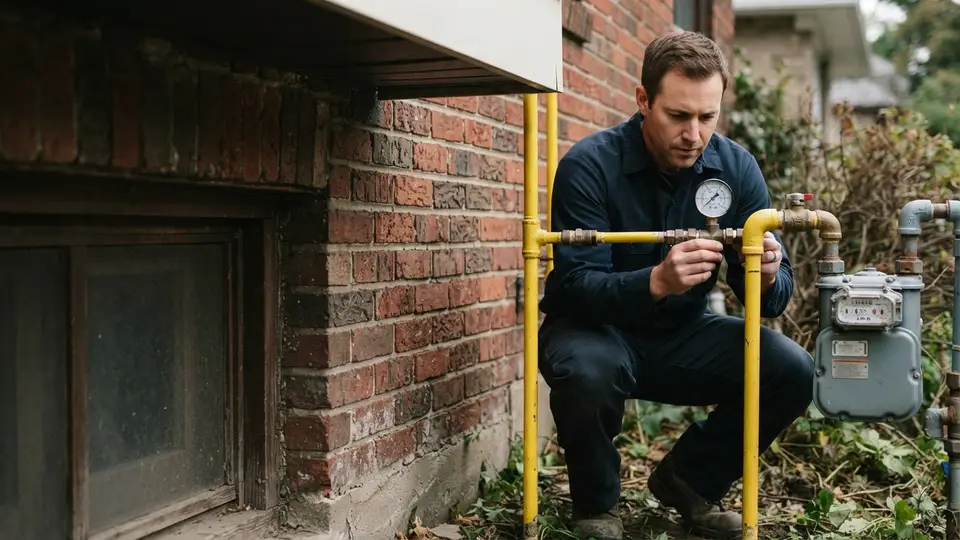
Black steel
Common use: Most interior piping
What we check: Joint leaks, corrosion outdoors
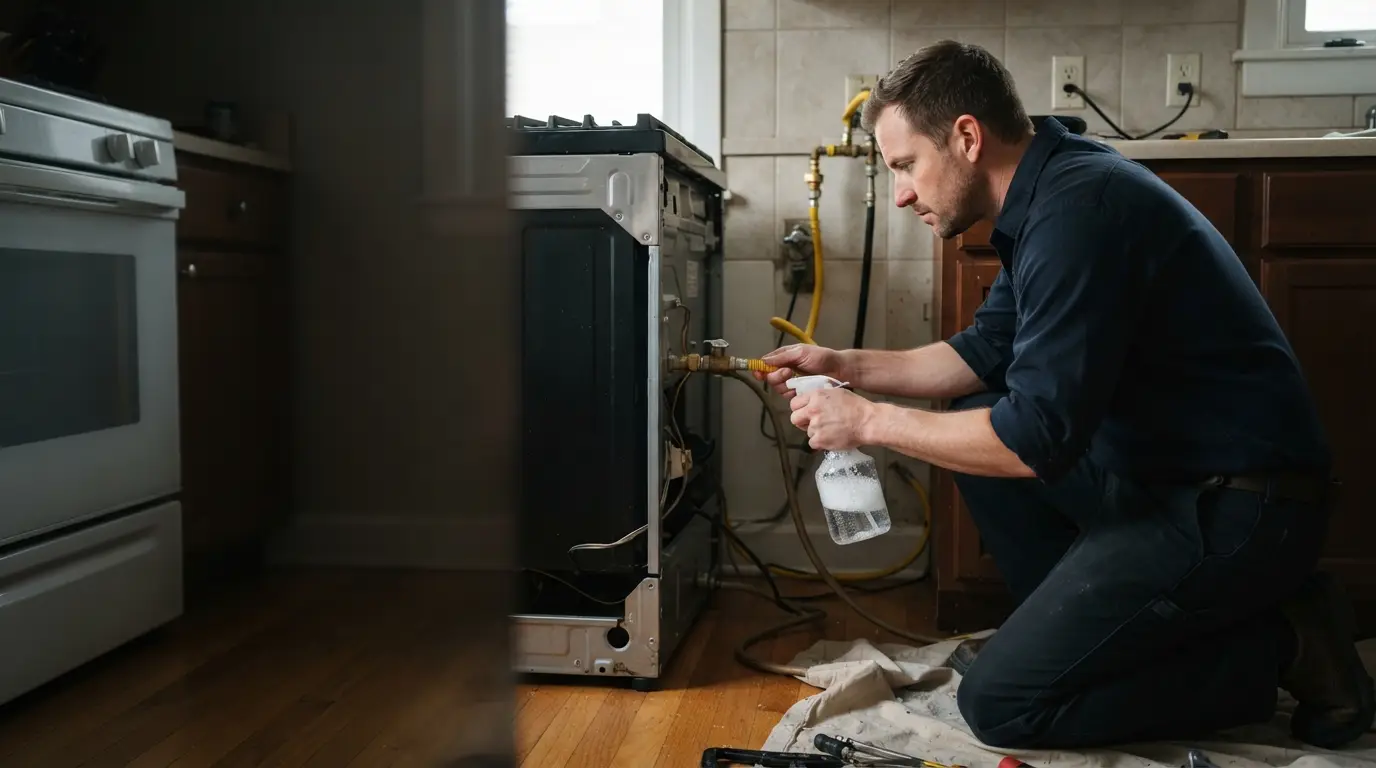
Gas smell near an old wall heater, or a new range to hook up? We handle gas line repair and installation in New Mexico. Our plumbers find and fix leaks in house gas piping, run new lines for ranges, dryers, water heaters, fireplaces, grills and heaters, and connect appliances safely, on both natural gas and propane. New Mexico homes still use many older gas wall heaters and floor furnaces, high elevations change how appliances must be set up, and propane serves homes far beyond the gas mains. We test every line under pressure and handle the permit and inspection.
The service
Utility gas heats 66% of New Mexico homes, 86% in Farmington, 84% in Gallup and 82% in Rio Rancho. Propane heats 5% statewide but far more in rural areas: 64% of Angel Fire homes and 25% in Chaparral. The utility or propane supplier owns the meter or tank and regulator; the piping after that belongs to the owner. In slab homes, gas lines often run through the attic or along exterior walls.
Gas piping we work with
Common use: Most interior piping
What we check: Joint leaks, corrosion outdoors
Common use: Newer homes and additions
What we check: Bonding and protection
Common use: Buried yard lines
What we check: Depth and tracer wire
Common use: Some propane systems
What we check: Flare fittings, kinks
Why New Mexico
Older homes often have aging heaters with worn valves and connectors.
Outdoor piping corrodes and coatings break down under strong sun.
Expansive soil strains buried yard lines and meter connections.
Reused connectors and unsized extensions cause leaks and poor burning.
Warning signs
Our process
We locate the leak with an electronic detector and bubble test, isolate the section, replace failed fittings or pipe and pressure test before relighting.
We size the new line for all appliances, run steel or CSST with proper bonding, add shutoffs and sediment traps and arrange the inspection.
We connect ranges, dryers, water heaters, fireplaces and heaters with new connectors and check the flame, venting and setup for your elevation.
Typical cost
Any figure before we see the site is an estimate only. The main factors:
You approve a written price before we start.
Get a written price: (833) 733-2357Attic, wall and yard runs vary.
Large appliances need bigger lines.
Natural gas and propane differ.
Caliche and rock slow trenching.
City or state fees.
Benefits
Tested, leak-free piping.
Appliances set for your elevation.
Every appliance gets enough gas.
Permits filed and passed.
Many older homes in Albuquerque (258,178 homes), the South Valley and small towns still heat with gas wall heaters or floor furnaces. 66% of South Valley homes were built before 1980. These units often have old flexible connectors and valves. We check the piping and connections, replace unsafe connectors and cap lines to heaters that have been removed, so no open gas line is left behind.
Santa Fe (46,608 homes) sits near 7,000 feet, White Rock and Los Alamos are higher and Angel Fire is higher still. At these elevations, appliances must be set up for altitude according to the manufacturer. A range or heater set up for sea level can burn rich and produce soot and carbon monoxide. When we connect an appliance, we check its rating and flame before we leave.
Propane heats 16% of Edgewood homes, 12% in Shiprock and 11% in Socorro. Propane systems run at different pressures than natural gas and need appliances set up for propane. New Mexico has separate state rules for liquefied petroleum gas work. We run piping from the regulator to each appliance and test it, while your supplier sets the tank and first-stage regulator.
New Mexico's climate invites outdoor living, and many owners add a grill, fire pit, kiva fireplace or patio heater. Buried lines must be the right material at a safe depth with tracer wire. We call New Mexico 811 before digging, run the line with a shutoff at the house and test the system before the first fire.
Manufactured homes make up 36% of housing in Española and 67% in Chaparral. Their gas piping runs under the floor to a single connection point, and the connector to the supply must be the right type and protected. Settling and wind can strain it. We check and replace connectors, repair underfloor piping and connect water heaters and furnaces approved for manufactured homes.
If you smell gas, get everyone out and call the utility, supplier or 911 from outside. Do not look for the leak yourself.
For a planned hookup, clear space around the appliance and the meter or tank and have the manual handy. Then call us.
New gas piping and most repairs need a permit from your city or the state Construction Industries Division, and propane work follows the state rules for liquefied petroleum gas. We file permits, schedule inspections and coordinate with the utility. Our plumbers hold the New Mexico licenses each job requires.
Why choose us
What you can count on every time one of our plumbers comes to your door.
Every job is handled by a plumber who holds the license your state or city requires, backed by liability insurance.
Our plumber explains the problem and the options, and you approve a written price before any work begins.
Burst pipes, sewage backups and failed water heaters get priority scheduling, including nights and weekends.
We pull permits when the job needs one and schedule the inspection, so the work holds up when you sell.
Repairs and installations come with a written warranty on labor, on top of the manufacturer's warranty on parts.
Our pages and plumbers account for your area's water, soil, climate and the age of the homes around you.
Service area
We repair and install gas lines in 528 New Mexico communities, including Las Cruces (50,423 homes) and Farmington (18,788 homes). Find yours:
It depends on length, pipe size, route, fuel type and the permit. We give you a written price after we see where the new line needs to run.
Yes. A leak repair depends on finding and replacing the failed part. New lines depend on length and size. Both come with a written price first.
Not always. The piping work is similar, but propane appliances need different setup, and long runs from a tank add material and labour.
We use an electronic gas detector along the piping, confirm suspect joints with bubble solution and pressure test the whole system.
We shut off the gas, run and connect the new pipe, pressure test it and restore gas once the inspection is complete or permitted.
Yes. We check that each gas appliance is rated and set up for your elevation and confirm a clean flame before we leave.
Leave right away without using switches or phones. Call your gas utility, propane supplier or 911 from outside, and call us once it is safe.
They can be if connectors, valves or venting are worn. Have them checked each fall and install carbon monoxide alarms nearby.
A short line for a range or dryer takes a few hours. Longer runs and outdoor lines can take a day, plus the inspection.
Usually the same day, once the line passes a pressure test and any required inspection or utility turn-on.
When appliances are serviced each year, whenever you smell gas and before adding a new appliance to an existing line.
No. Old flexible connectors can crack or leak. We install a new connector with every appliance hookup we do.
For new piping and most repairs, yes. We file with your city or the state and schedule the inspection.
Yes. We pipe from the regulator to each appliance and test it, while your propane supplier handles the tank and first regulator.
Get out and call the utility or 911 first. Once it is safe, we put gas repairs ahead of routine work and keep you updated on timing.