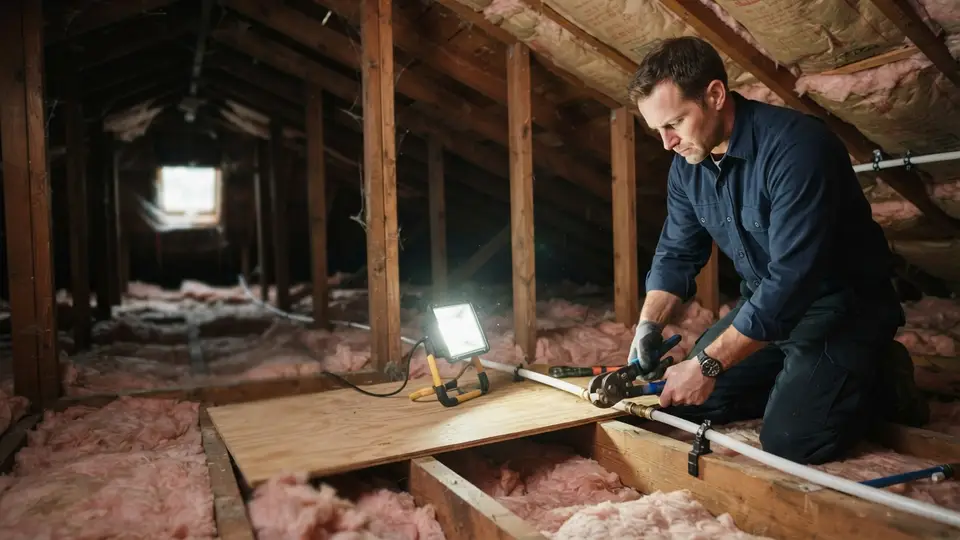
Direct repair
When it fits: A single leak in sound pipe
Trade-off: Small floor opening, patch concrete
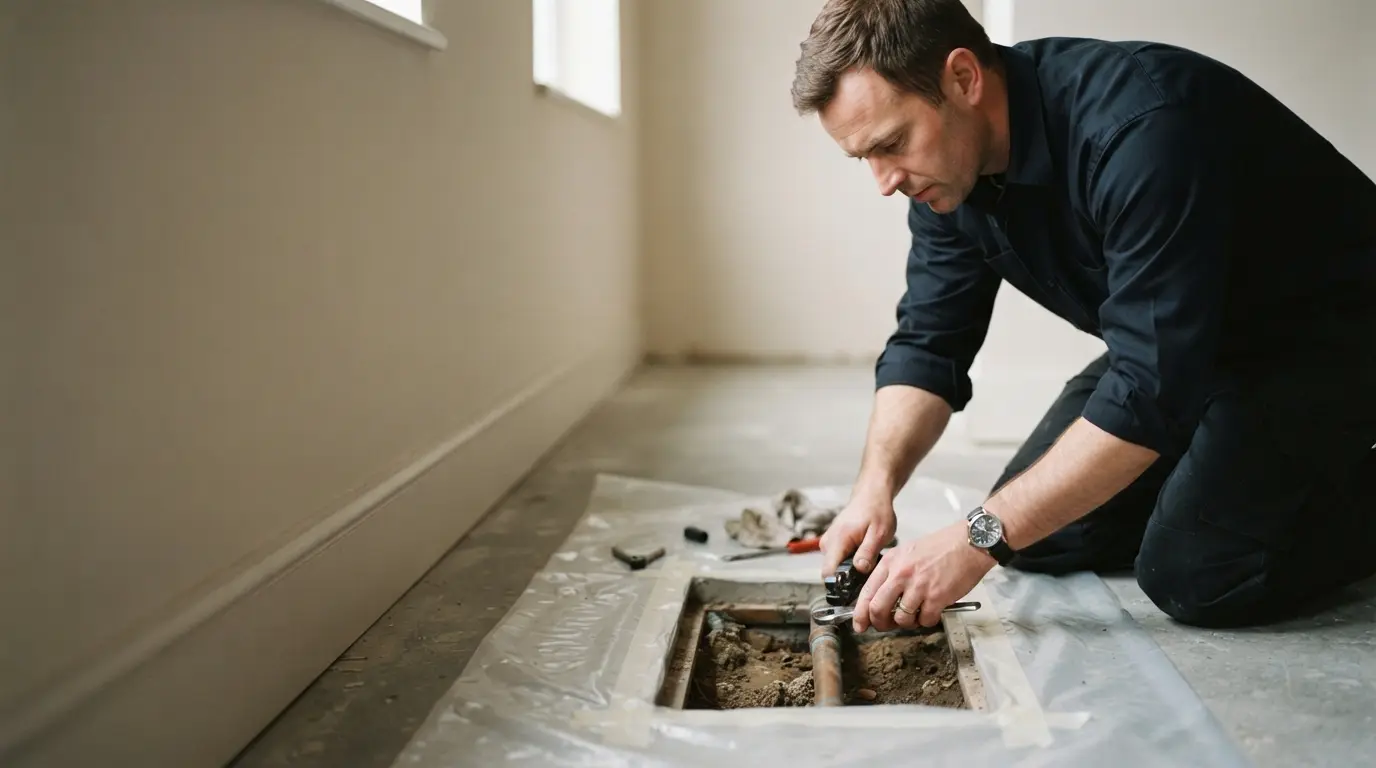
Warm tile underfoot, or the meter spinning with every tap off? We handle slab leak repair in New Mexico. Our plumbers find leaks in water lines under concrete floors, repair them through a small opening or reroute the line through walls and attic, and check the rest of the system for weak points. Slab foundations are the norm in Albuquerque, Rio Rancho, Las Cruces and most New Mexico towns, and expansive clay, caliche and hard water all put stress on the copper and plastic lines buried beneath them. Finding the exact spot first keeps the repair small.
The service
A slab leak is a break in a pipe that runs in or under a concrete floor. New Mexico builds mostly on slabs, and 25% of the state's 820,253 homes were built since 2000, many in fast-growing areas like Rio Rancho, where the median home dates from 2000, and Sunland Park, from 2003. Older homes from the 1950s through the 1980s often have copper under the slab; newer ones may have PEX or CPVC. Each fails in its own way, and each can be found with the right tools.
How we fix slab leaks
When it fits: A single leak in sound pipe
Trade-off: Small floor opening, patch concrete
When it fits: Old or failing pipe
Trade-off: New line overhead, floor untouched
When it fits: Several leaks on one run
Trade-off: Replaces the whole branch
When it fits: Pipe failing throughout
Trade-off: Largest job, ends the problem
Why New Mexico
Expansive clay swells and shrinks, and the slab and pipes move with it.
Hot lines expand and rub against gravel, rebar and concrete until they wear through.
Minerals and high velocity wear copper at elbows and fittings.
Kinked or dented pipe buried during building fails years later.
Warning signs
Our process
We test hot and cold sides separately, trace the lines under the floor with an electronic locator and listen through the slab with acoustic equipment. On hot lines, thermal imaging confirms the spot.
We open a small section of floor, dig to the pipe, replace the damaged length, pressure test it and fill and patch the concrete.
We abandon the line under the slab and run new PEX or copper through walls, ceilings or attic, connecting it to the fixtures it served.
Typical cost
Any figure before we find the leak is an estimate only. The cost depends on:
We give you a written price for the plumbing before work starts.
Get a written price: (833) 733-2357Under a cabinet costs more than under a closet.
Tile, brick and wood take more care.
Each has its own price.
Older pipe often has more than one.
Flooring is usually a separate trade.
Benefits
Water under the floor erodes support.
A slab leak can waste a lot every day.
Hot water leaks keep the heater running.
Damp flooring dries before mold grows.
Albuquerque has 258,178 homes and Rio Rancho 41,908, nearly all on slabs. Older Albuquerque neighborhoods built from the 1950s to the 1980s have aging copper under the floor, and the clay soils of the valley and mesa move with the seasons. In single-story homes, rerouting through the attic is often simpler than breaking into tile. We explain both options with prices so you can choose.
Las Cruces (50,423 homes) and the towns around it sit on sandy soil over caliche, where water can collect and move under slabs. Summer heat keeps hot water lines and attic spaces very hot, so we plan reroutes with insulation and away from the hottest spots. Many homes here were built after 1990, and we see leaks in early plastic piping as well as copper.
In Hobbs (16,117 homes), Carlsbad and Artesia, very hard water leaves heavy scale in pipes and fittings. 59% of Carlsbad homes were built before 1980, many with copper lines under the slab that have carried this water for decades. When we find one leak, we look at the rest, because others are often close behind. A softener slows future wear on new pipe.
Many homes in Santa Fe (46,608 homes) and Eldorado at Santa Fe have tile or brick floors over slabs, and some have radiant heating tubing in the concrete. A leak in the heating loop shows as a boiler losing pressure rather than a high water bill. We separate the plumbing and heating systems during testing so we know which one is leaking before we open anything.
In a dry climate, irrigation is often the biggest source of water near a foundation. Drip lines and sprinklers that soak the soil along one side of the house while the other side stays dry can make clay swell unevenly and tilt the slab slightly, stressing the pipes inside it. When we repair a slab leak, we look at the watering pattern around the house and suggest changes that keep soil moisture more even.
Close the main valve if you see or hear water. For a hot spot, turn the water heater off or to vacation.
Move rugs and furniture, take photos for your insurer and keep water away from outlets. Do not break into the floor. Call us.
Reroutes and repipes usually need a permit from your city or the state Construction Industries Division. We file it and schedule the inspection. Our plumbers hold the New Mexico licenses each job requires.
Why choose us
What you can count on every time one of our plumbers comes to your door.
Every job is handled by a plumber who holds the license your state or city requires, backed by liability insurance.
Our plumber explains the problem and the options, and you approve a written price before any work begins.
Burst pipes, sewage backups and failed water heaters get priority scheduling, including nights and weekends.
We pull permits when the job needs one and schedule the inspection, so the work holds up when you sell.
Repairs and installations come with a written warranty on labor, on top of the manufacturer's warranty on parts.
Our pages and plumbers account for your area's water, soil, climate and the age of the homes around you.
Service area
We repair slab leaks in 528 New Mexico communities, including Alamogordo (15,478 homes) and Clovis (17,125 homes). Find yours:
It depends on the leak location, flooring and whether we repair or reroute. You approve a written price before we begin.
Sometimes. In single-story homes with attic access, a reroute can cost about the same and avoids future leaks in old pipe.
Many policies cover access and water damage but not the pipe. Check your policy; we give you notes and photos for the claim.
We isolate hot and cold lines, trace them under the floor and listen through the slab, using thermal imaging on hot lines.
Only a small area if we repair in place. If you choose a reroute, we leave the floor alone and run new pipe overhead.
We pressure test the line, patch the concrete and check the meter to confirm no other leaks remain.
Yes. Water can wash away soil and make expansive clay swell, which can crack the slab over time.
It wastes energy, can raise floor temperature and keeps moisture near outlets. Turn off the water heater and the main valve.
A direct repair usually takes most of a day. A reroute takes one to three days depending on the house.
Usually one to three hours. Homes with several leaks or long runs can take longer.
Keep pressure normal, soften hard water and water the yard evenly near the foundation. In older homes, reroute before failures start.
Once a year, turn off every fixture and watch the meter. Any movement means water is escaping.
Yes. Most homes sit on slabs over clay or caliche, and hard water adds wear. We repair them across the state.
Yes. A leak in the heating loop shows as the boiler losing pressure. We test plumbing and heating separately to find it.
Shut off the main and the power to the wet area, then call us. We put active leaks ahead of routine work and keep you updated on timing.