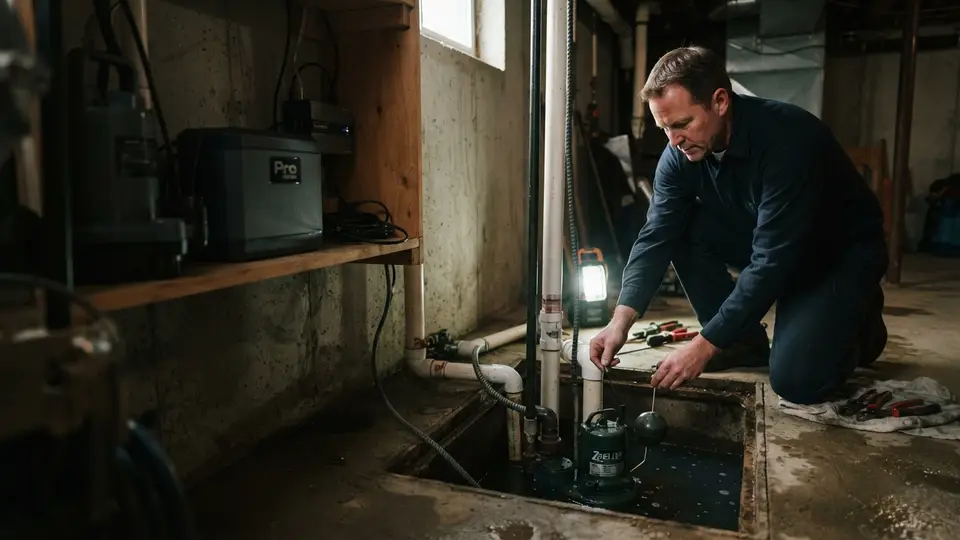
Submersible pump
What it does: Quiet pump inside the pit
Good for: Basements and finished spaces
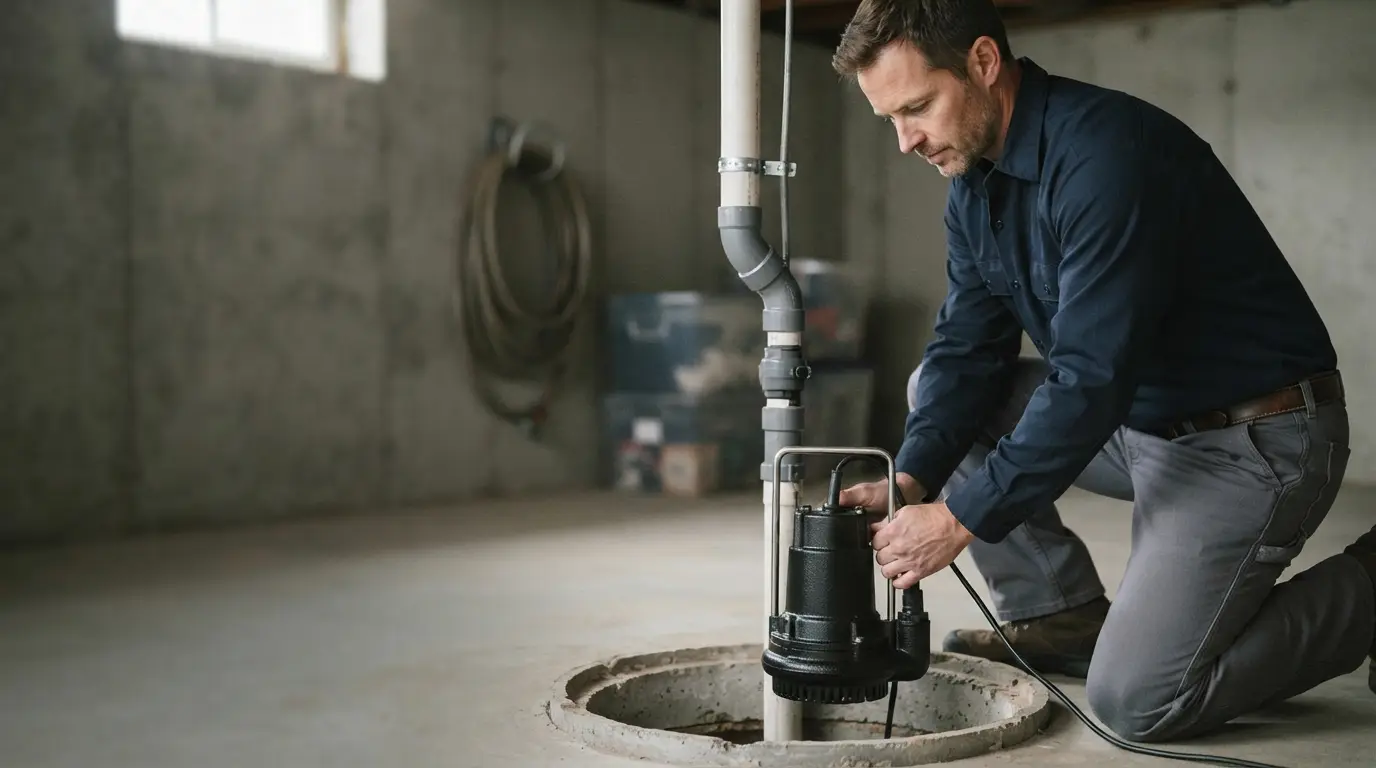
Water in the crawl space after a storm, or a pump that will not start? We handle sump pump repair and installation in New Mexico. Our plumbers repair and replace sump pumps, install new pits and pumps and add battery backup pumps for homes with basements, crawl spaces and low spots that collect water. Most New Mexico homes sit on slabs, but basements are common in older northern towns, and crawl spaces and below-grade rooms appear everywhere. Monsoon downpours, snowmelt in the mountains and a high water table near the Rio Grande can all send water where it does not belong.
The service
A sump pump collects water in a pit at the lowest point of a basement or crawl space and pumps it outside. In New Mexico we install them in older homes with basements in Las Vegas, Raton, Santa Fe and Los Alamos, in crawl spaces under raised homes, in homes near the river where groundwater rises and in below-grade garages and window wells. Raton's median home dates from 1959, and 66% of Las Vegas homes predate 1980.
Pump options we install
What it does: Quiet pump inside the pit
Good for: Basements and finished spaces
What it does: Motor above the pit
Good for: Narrow or shallow pits
What it does: Second pump on a battery
Good for: Storms with power loss
What it does: Small pump in a shallow basin
Good for: Raised homes and crawl spaces
Why New Mexico
Summer downpours drop heavy rain on hard ground that cannot absorb it, sending runoff toward foundations.
In the mountains, spring melt soaks soil around cabins and older homes.
Near the Rio Grande and irrigation ditches, the water table rises in irrigation season.
A leaking supply line can fill a crawl space without any rain at all.
Warning signs
Our process
We fill the pit to test the pump, check the float switch and check valve, clear silt and debris and replace parts or the pump if it is worn.
We dig the pit at the low point, set a lined basin, install the pump and run the discharge far enough from the house that water does not return.
We add a second pump with its own battery and alarm so the pit keeps draining during the power outages that often come with storms.
Typical cost
Any figure before we see the site is an estimate only. The main factors:
You get a written price before we start.
Get a written price: (833) 733-2357Switches cost less than pumps.
Digging through rock or caliche takes time.
Battery systems add equipment.
Long, buried or freeze-protected lines.
Tight crawl spaces slow the work.
Benefits
Water leaves before it does damage.
Backups keep running.
Alarms warn of high water.
Less moisture means less mold.
In Albuquerque's North Valley, where the median home dates from 1978, and the South Valley, with 14,132 homes, groundwater sits close to the surface near the river and acequias. During irrigation season, crawl spaces and the few basements in the area can take on water. We install pumps sized for long run times and discharge lines that send water well away from the foundation and neighbors.
Older homes in Las Vegas, Raton, Santa Fe and Los Alamos are more likely to have basements than homes in the south. Snowmelt and monsoon rain find their way through old foundation walls. 57% of Los Alamos homes were built before 1980. In these towns, discharge lines can freeze in winter, so we route them with a slope and a freeze-resistant outlet.
52% of Ruidoso homes and 24% of Taos homes stand vacant on a typical day. Cabins on hillsides often have crawl spaces where runoff collects after storms and snowmelt. With no one home, water can sit for weeks and rot wood. We install crawl space pumps with alarms that alert owners by phone and check them during seasonal visits.
From July through September, a single storm can drop more rain than the ground can absorb. Canales on flat roofs throw water close to walls, and yards that slope toward the house funnel runoff to the foundation. A sump pump handles what reaches the pit, but grading, gutters and splash blocks keep much of the water away to begin with. We look at the whole picture and point out simple drainage fixes along with the pump work.
Some homes in Santa Fe (46,608 homes), Farmington and Silver City have basement bathrooms or laundry rooms below the sewer line. These need a sewage ejector pump rather than a sump pump. We repair and replace ejector pumps and their sealed basins, check alarms and make sure the vent and check valve are working.
If safe, check that the pump is plugged in and the breaker is on. Lift the float gently to see if it starts.
Move belongings off the floor and stay out of water near electrical equipment. Then call us.
Pump replacement usually needs no permit, but new pits, discharge lines, electrical circuits and ejector systems may. Sump pumps should not discharge into the sewer. We follow city and state rules and file any permit needed. Our plumbers hold the New Mexico licenses each job requires.
Why choose us
What you can count on every time one of our plumbers comes to your door.
Every job is handled by a plumber who holds the license your state or city requires, backed by liability insurance.
Our plumber explains the problem and the options, and you approve a written price before any work begins.
Burst pipes, sewage backups and failed water heaters get priority scheduling, including nights and weekends.
We pull permits when the job needs one and schedule the inspection, so the work holds up when you sell.
Repairs and installations come with a written warranty on labor, on top of the manufacturer's warranty on parts.
Our pages and plumbers account for your area's water, soil, climate and the age of the homes around you.
Service area
We install and repair sump pumps in 528 New Mexico communities, including Albuquerque (258,178 homes) and Belen (3,203 homes). Find yours:
It depends on the pump type, the pit, the discharge route and access. We give you a written price before we start any work.
If your basement or crawl space floods during storms, yes. Monsoon storms often knock out power right when the pump is needed most.
Yes. Digging the pit, especially through caliche or rock, and setting a basin take more time than replacing a pump in an existing pit.
We pour water into the pit, watch the float start the pump, check the flow at the outlet and listen for worn bearings or a failing motor.
Rarely for the slab itself. We install them in basements, crawl spaces, below-grade garages and window wells where water collects.
We check for a stuck float, a failed check valve, a leak feeding the pit or a high water table, then fix the cause or size the pump correctly.
Not if water is near outlets, appliances or the panel. Have the power shut off first, and keep children and pets out of the area.
Generally no. Storm water should not go into the sanitary sewer. We route the discharge outdoors and away from the foundation.
A replacement in an existing pit takes a couple of hours. A new pit and discharge line can take most of a day, depending on the ground.
Batteries usually last a few years before they need replacing. Run time in an outage depends on how much water comes in and how often the pump cycles.
Before monsoon season and before spring snowmelt in the mountains, plus after any long period when the home has been empty.
Usually seven to ten years. Pumps that run often near the river, or that sit idle in dry years, may fail sooner and should be tested.
It lifts waste from bathrooms or laundry below the sewer line up to the main drain. It is different from a sump pump and needs its own care.
Yes. In an empty cabin, an alarm that sends a phone alert lets you deal with a failed pump before water damages the floor framing.
We put flooding ahead of routine work and keep you updated on timing. Move valuables up and stay clear of electrical hazards until we arrive.