Hardness
Where we see it: Most of the state, worst in the southeast
Treatment: Water softener
White crust on every faucet, or a well test that worries you? We handle water softeners and filtration in New Mexico. Our plumbers install water softeners, whole-house filters and reverse osmosis drinking water systems for homes on city water and domestic wells. New Mexico water is hard across most of the state and very hard in the southeast, and some groundwater carries natural arsenic, uranium, fluoride or nitrate. City utilities treat their water to meet standards, but scale still damages water heaters and fixtures. We test your water first and recommend only the treatment it needs.
The service
Most of New Mexico's 820,253 homes in our data get water from city or community systems that draw on wells and, in Albuquerque and Santa Fe, river water. Those systems meet drinking water standards but often deliver hard water. Homes with domestic wells, common in the East Mountains, the valleys and rural counties, are responsible for their own testing and treatment. Testing tells us which problems you actually have.
Common New Mexico water issues and fixes
Where we see it: Most of the state, worst in the southeast
Treatment: Water softener
Where we see it: Some wells
Treatment: Reverse osmosis or specialty media
Where we see it: Some wells
Treatment: Sediment and iron filters
Where we see it: City water
Treatment: Carbon filtration
Why New Mexico
Aquifers in the east and southeast pick up calcium, magnesium and sulfate.
Some aquifers carry natural arsenic, fluoride or uranium.
Near septic systems and farms, shallow wells can pick up nitrate.
Dry air concentrates minerals in coolers, kettles and fixtures.
Warning signs
Our process
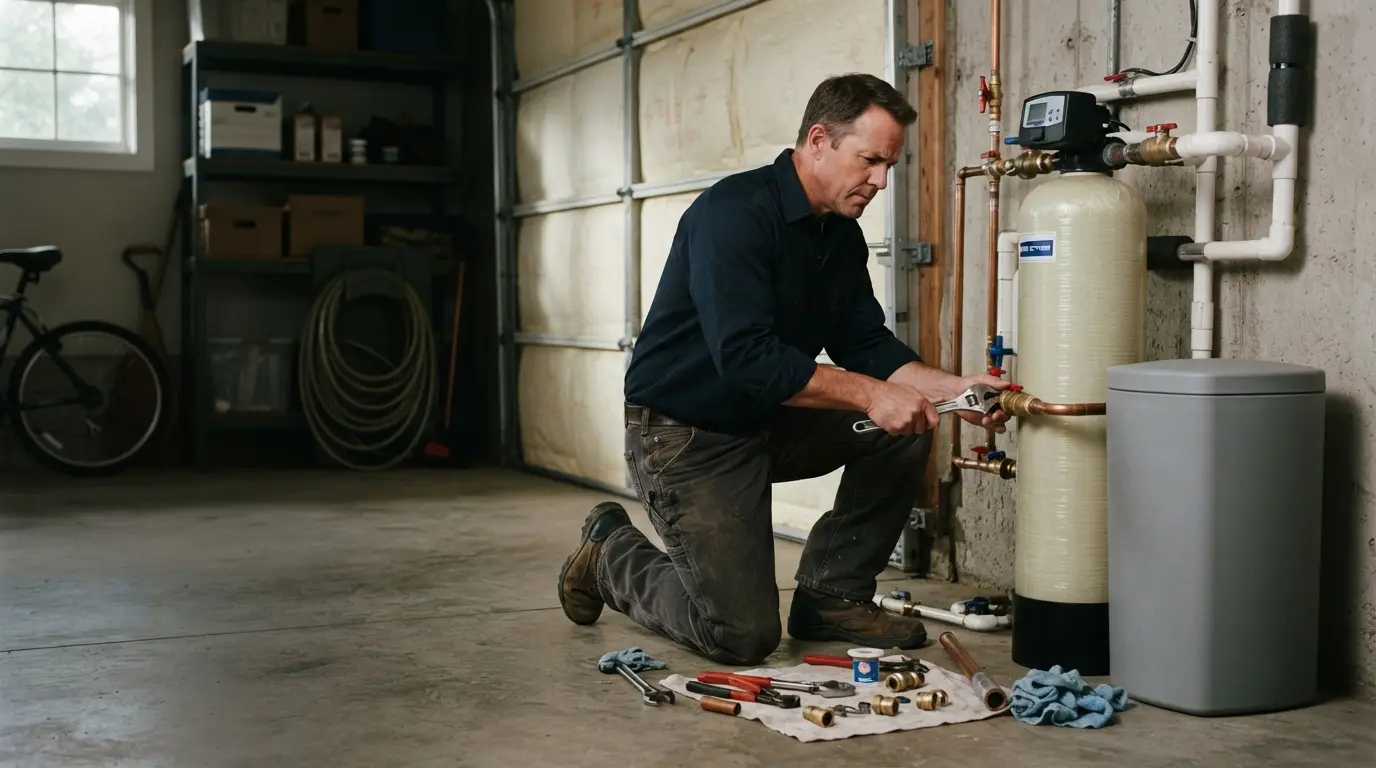
We size the softener from your hardness and water use, install a bypass, connect the drain with an air gap and program regeneration to save salt and water.
We install sediment, carbon or specialty filters at the main line, in the order your test calls for, with valves for easy cartridge changes.
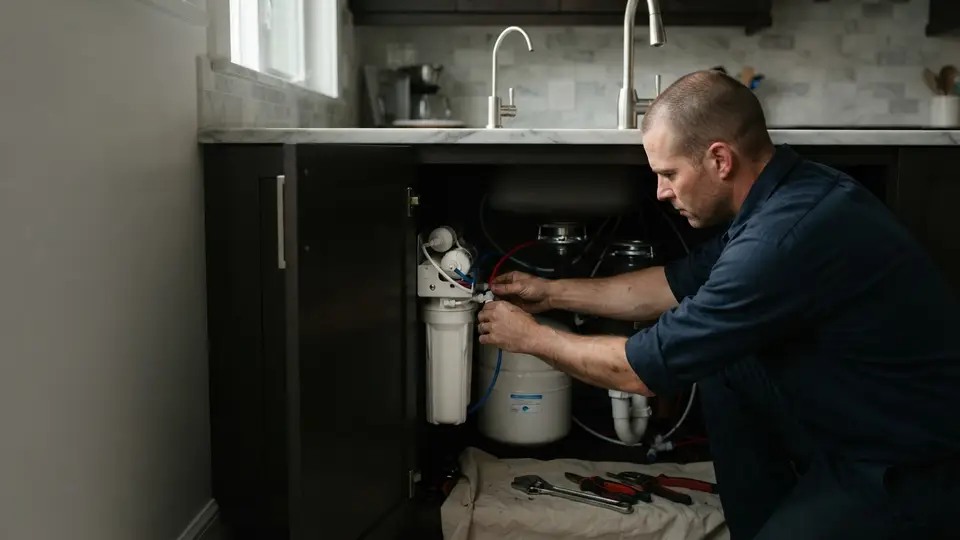
We install an under-sink system with its own faucet for drinking and cooking water, removing dissolved minerals and many contaminants.
Typical cost
Any figure before we test your water is an estimate only. The main factors:
You approve a written price before we install.
Get a written price: (833) 733-2357Each issue needs its own treatment.
Bigger families need larger systems.
Several issues mean several units.
Garages, closets and utility rooms differ.
Salt, filters and membranes.
Benefits
Less scale in the tank.
Fewer spots and crust.
Treatment matched to a real test.
Soft water lathers easily.
Hobbs (16,117 homes), Carlsbad, Artesia, Roswell and Clovis have some of the hardest water in the state. Tanks fill with scale, elements burn out and shower doors cloud over within weeks. A softener sized for this water protects the water heater, dishwasher and every fixture. We set it to regenerate based on use so it does not waste salt.
Albuquerque (258,178 homes), Rio Rancho and Las Cruces deliver water that meets standards but is moderately hard to hard depending on the source and neighborhood. Many owners notice spotting and scale. We test your tap water, show you the hardness reading and recommend a softener, a simpler scale-reduction system or a drinking water filter depending on what bothers you most.
In Edgewood, Corrales, the South Valley and rural areas, many homes use domestic wells. Some New Mexico groundwater carries natural arsenic, and parts of the northwest, including areas near Grants and Gallup, have uranium in groundwater. Shallow valley wells can pick up nitrate. We review your lab results, install treatment certified for the contaminant and recommend a follow-up test to confirm it works.
Swamp coolers evaporate water and leave its minerals behind on pads, pans and pumps. In hard water areas, pads crust over quickly and pumps fail. Softened water is not recommended for coolers, so we usually leave the cooler line on unsoftened water and suggest a bleed-off kit that drains a little water to keep minerals from building up.
Santa Fe (46,608 homes) draws on a mix of river water and wells, and water quality can vary across the city and nearby subdivisions. Some homeowners want better taste or extra filtration for drinking water. We test, then install carbon or reverse osmosis systems sized for your household and set up so cartridges are easy to change.
Manufactured homes make up 13% of New Mexico housing, and many have small utility closets with little room for equipment. We fit compact softeners and filters into tight spaces or install them in a protected outdoor enclosure where winters are mild, with insulation and heat where needed. Protecting the water heater from scale is especially worthwhile in these homes, because replacement units must be models approved for manufactured housing.
Gather your latest well test or your utility's annual water quality report. If a test shows a health risk, switch to bottled water for drinking and cooking.
Clear space where the main line enters the house, near a drain and outlet. Then call us to book a water test.
Some jurisdictions require a plumbing permit for treatment equipment connected to the water supply and drain. We check with your city or the state Construction Industries Division and file what is needed. Our plumbers hold the New Mexico licenses each job requires.
Why choose us
What you can count on every time one of our plumbers comes to your door.
Every job is handled by a plumber who holds the license your state or city requires, backed by liability insurance.
Our plumber explains the problem and the options, and you approve a written price before any work begins.
Burst pipes, sewage backups and failed water heaters get priority scheduling, including nights and weekends.
We pull permits when the job needs one and schedule the inspection, so the work holds up when you sell.
Repairs and installations come with a written warranty on labor, on top of the manufacturer's warranty on parts.
Our pages and plumbers account for your area's water, soil, climate and the age of the homes around you.
Service area
We install softeners and filters in 528 New Mexico communities, including Las Cruces (50,423 homes) and Carlsbad (14,285 homes). Find yours:
It depends on your water hardness, household size and the model you choose. You get a written price after we test your water and look at the space.
Usually, because it treats only drinking water at one sink. Whole-house systems treat every gallon entering the home and cost more to install.
Mainly salt and some water used during regeneration. Filters and reverse osmosis membranes also need replacing on a regular schedule.
We test your water for hardness and other concerns, review any lab report you have and recommend only the equipment that addresses what we find.
We shut off the water, install a bypass and the treatment units, connect the drain with an air gap, set the controls and test the treated water.
Yes. We can run a line from the reverse osmosis system to your refrigerator so filtered water and ice come from the same system.
Only a lab test can tell you. Some New Mexico wells contain arsenic, uranium, nitrate or bacteria, so test regularly and treat as the results require.
Use bottled water for drinking and cooking, call us to install treatment certified for the problem and retest after the system is running.
Most installations take a few hours. Multi-stage well treatment systems can take most of a day, depending on space and plumbing.
Right after installation and the first regeneration. Existing scale on fixtures and in pipes fades gradually over the following weeks.
Check the brine tank monthly. In very hard water, many households add salt every few weeks; others every month or two.
At least every year or two, and any time the taste, smell or color changes or after nearby flooding or construction.
Generally no. We leave the cooler on unsoftened water and suggest a bleed-off kit to limit mineral buildup on the pads and pump.
In much of the state, yes, and especially around Hobbs, Carlsbad, Roswell and Clovis. A test shows exactly how hard your water is.
We schedule as soon as we can and help you choose treatment quickly. We keep you updated on timing until the system is in place.