Roots
What the camera shows: Root masses at joints
Usual fix: Cleaning, then lining or section repair
Sewage at the cleanout, or roots back in the line again? We handle sewer line repair and replacement in New Mexico. Our plumbers inspect, repair and replace the private sewer line between your home and the city main, including the drain under the slab and the cleanouts outside. New Mexico sewer lines are stressed by expansive clay, hard caliche layers, thirsty tree roots and decades of mineral buildup in older pipe. We start with a camera, show you the footage and recommend the smallest repair that fixes the problem for good.
The service
The homeowner usually owns the sewer line from the house to the connection at the city main. In New Mexico that line often starts under a concrete slab, exits near the foundation and runs across the yard. 44% of the state's 820,253 homes were built before 1980, when clay and cast iron were standard. Raton's median home dates from 1959 and Tucumcari's from 1960. Newer homes have PVC or ABS, which can still shift and separate in moving soil.
Sewer line problems and the usual fix
What the camera shows: Root masses at joints
Usual fix: Cleaning, then lining or section repair
What the camera shows: Standing water in a low section
Usual fix: Excavate and relay at proper slope
What the camera shows: Pipe ends shifted apart
Usual fix: Section replacement
What the camera shows: Scale, holes, rough bottom
Usual fix: Replacement with PVC
Why New Mexico
Clay that swells and shrinks with moisture pushes pipes out of line.
Hard caliche layers trap water around pipes and resist proper bedding.
In a dry climate, a leaking sewer joint is one of the few steady water sources for tree roots.
Older cast iron corrodes and narrows with mineral buildup.
Warning signs
Our process
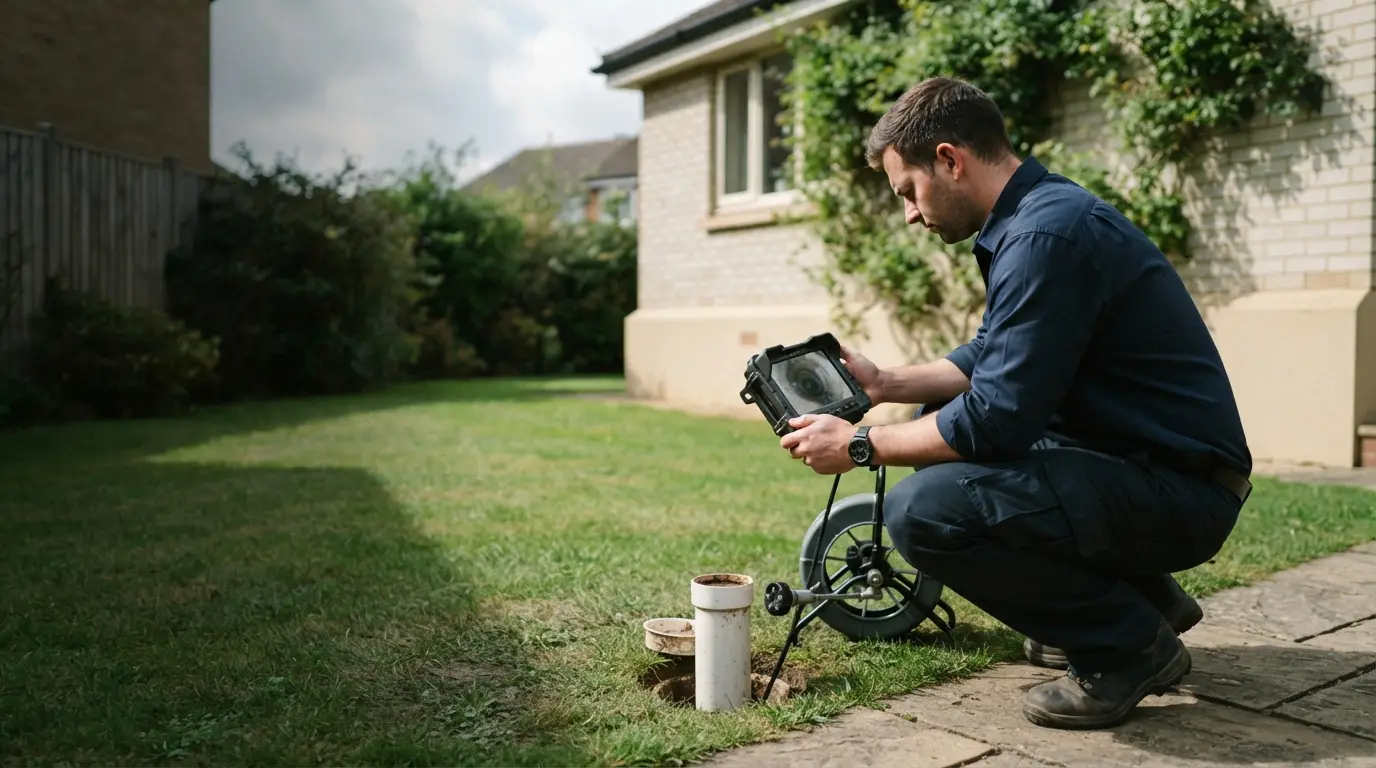
We run a camera from the cleanout to the city main, record the full line, measure the distance to each defect and locate it from the surface.
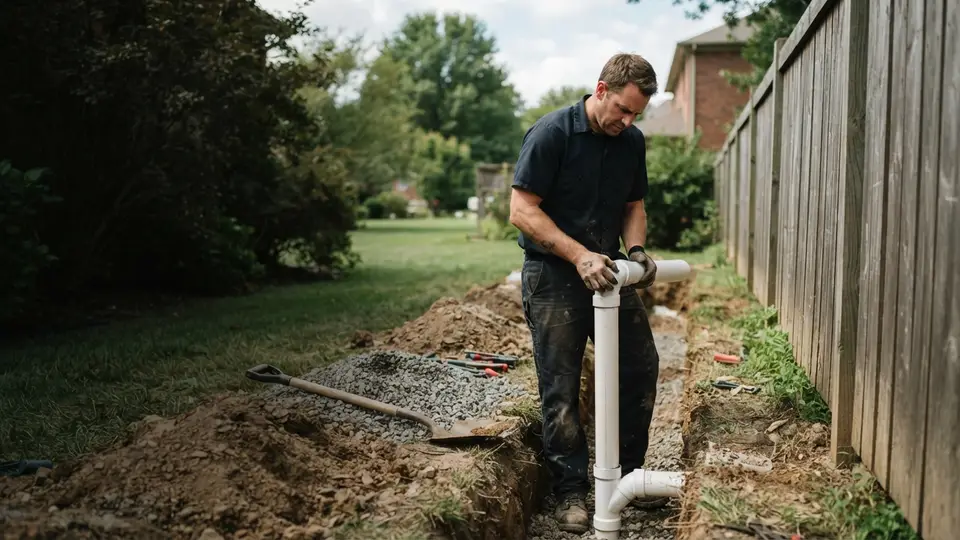
For a single broken or offset section, we excavate at that spot, replace the damaged pipe with PVC and shielded couplings and bed it properly. Where digging is hard, lining may be an option.
When the whole line has failed, we replace it by trench or by pipe bursting, set it at the correct slope and connect it to the city tap.
Typical cost
Any figure before a camera inspection is an estimate only. The main factors:
We give you a written price after the inspection and before any digging.
Get a written price: (833) 733-2357Longer, deeper lines take more digging.
Caliche and rock slow excavation.
Slabs, driveways and landscaping add work.
Spot repair, lining, bursting or open trench.
City or state permits and tap fees.
Benefits
No more cleaning every few months.
Leaks no longer wash out soil.
The camera shows us where to open.
Video and records for a future sale.
In Albuquerque (258,178 homes), Las Cruces and Rio Rancho, the first stretch of the sewer runs under the slab. When a drain line breaks there, water and sewage can wash out the soil and cause the floor to settle. We use the camera to find the break, then repair it through a small floor opening or reroute the drain outside the slab where that causes less disruption.
69% of Roswell homes, 66% of Las Vegas homes and 67% of Silver City homes were built before 1980. Many have clay laterals and cast iron under the house. Roots, settling and corrosion are common. We camera the whole line before quoting, because a home with one failure often has more.
Across southern New Mexico, including Las Cruces, Alamogordo, Carlsbad and Lovington, a hard caliche layer sits a short way below the surface. It can be as hard as concrete. Trenching takes heavier equipment and more time. Where the camera shows the old pipe holds its shape, a liner or pipe bursting can avoid most of the digging.
In the South Valley, where the median home dates from 1970, groundwater sits close to the surface near the Rio Grande and irrigation ditches. Wet soil softens bedding and lets pipes sag into bellies. We dewater trenches when we dig, set new pipe on stable bedding and check the slope with the camera before backfilling.
From July through September, monsoon storms can drop a lot of rain in a short time. Water rushing across yards and down arroyos can erode soil over shallow sewer lines, and cleanouts without caps let storm water and grit pour into the pipe. In low areas, storm water can also enter cracked lines and overload them. After a big storm, we check for exposed or damaged pipe, replace missing caps and clear sand from lines before it hardens into a clog.
Newer neighborhoods are not immune. Many Rio Rancho homes were built after 2000, and a sewer line laid on poorly compacted fill can settle within a few years, creating a belly where waste collects. We see this in fast-growing subdivisions across the state. A camera inspection shows the low spot clearly, and a short excavation to relay the section at the right slope usually solves it.
Use as little water as you can. Hold off on laundry, dishes and showers.
Clear the area around the outdoor cleanout so we can reach it, but do not remove the cap if sewage is backed up, since it will spill. Then call us.
Sewer repairs and replacements usually need a permit from your city or the state Construction Industries Division, and connections to the main follow the sewer utility's rules. We file the permits and schedule inspections. Our plumbers hold the New Mexico licenses each job requires.
Why choose us
What you can count on every time one of our plumbers comes to your door.
Every job is handled by a plumber who holds the license your state or city requires, backed by liability insurance.
Our plumber explains the problem and the options, and you approve a written price before any work begins.
Burst pipes, sewage backups and failed water heaters get priority scheduling, including nights and weekends.
We pull permits when the job needs one and schedule the inspection, so the work holds up when you sell.
Repairs and installations come with a written warranty on labor, on top of the manufacturer's warranty on parts.
Our pages and plumbers account for your area's water, soil, climate and the age of the homes around you.
Service area
We repair sewer lines in 528 New Mexico communities, including Las Cruces (50,423 homes) and Gallup (7,462 homes). Find yours:
It depends on length, depth, soil, method and what sits above the line. We give you a written price after a camera inspection.
Often, yes. Caliche can be as hard as rock and needs heavier equipment. Lining or bursting can reduce the digging.
Often, when the old pipe holds its shape and digging would be hard. Lining cannot fix a collapsed pipe or a deep belly.
We feed a camera through the cleanout, record the line, measure the distance to each problem and locate it from above.
We mark utilities, dig or set bursting pits, install and test the new pipe, then backfill and restore the surface.
Yes. We repair it through a small opening in the floor or reroute the drain outside the slab when that is less disruptive.
It can be. Leaking sewage attracts pests, soaks soil and can back up into the home. Keep people away from any spill.
Yes. We request a utility locate through New Mexico 811 before we excavate.
Most residential replacements take one to two days, plus time for permits, locates and inspection.
A properly bedded PVC line should last for decades. Good bedding matters even more in shifting clay soil.
Plant trees away from the line, fix leaking joints and have the line checked when drains begin to slow.
Yes, especially for homes built before 1980. An inspection costs little compared with replacing a line after closing.
Expansive clay swells when wet and shrinks when dry, moving pipes out of line over time. Good bedding and slope help.
In most New Mexico cities, the homeowner owns the line to the main. We confirm the rule with your sewer utility before quoting.
Yes. We clear the line first to stop the backup, then camera it to plan the repair. We keep you updated on timing.