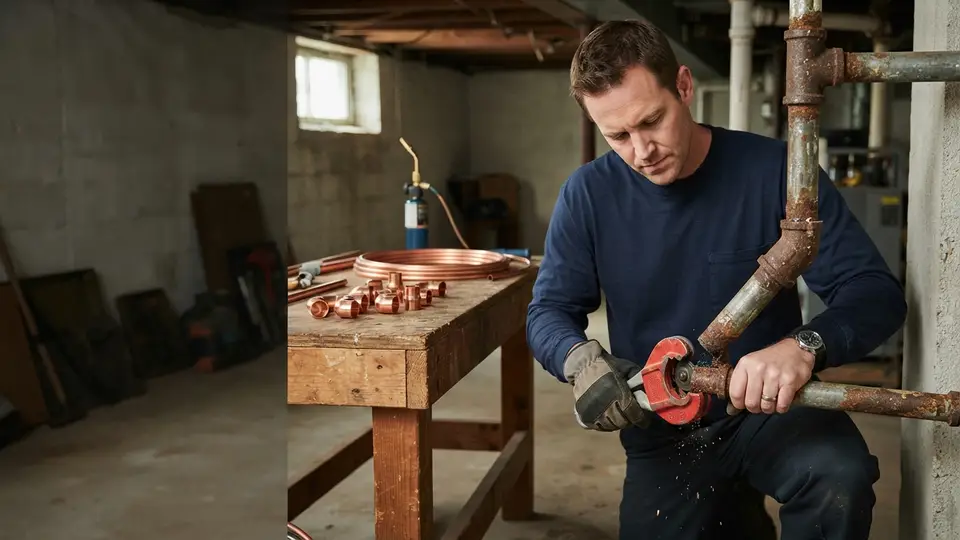
Galvanized steel
Common problem: Rust, scale, weak flow
Replacement: PEX or copper
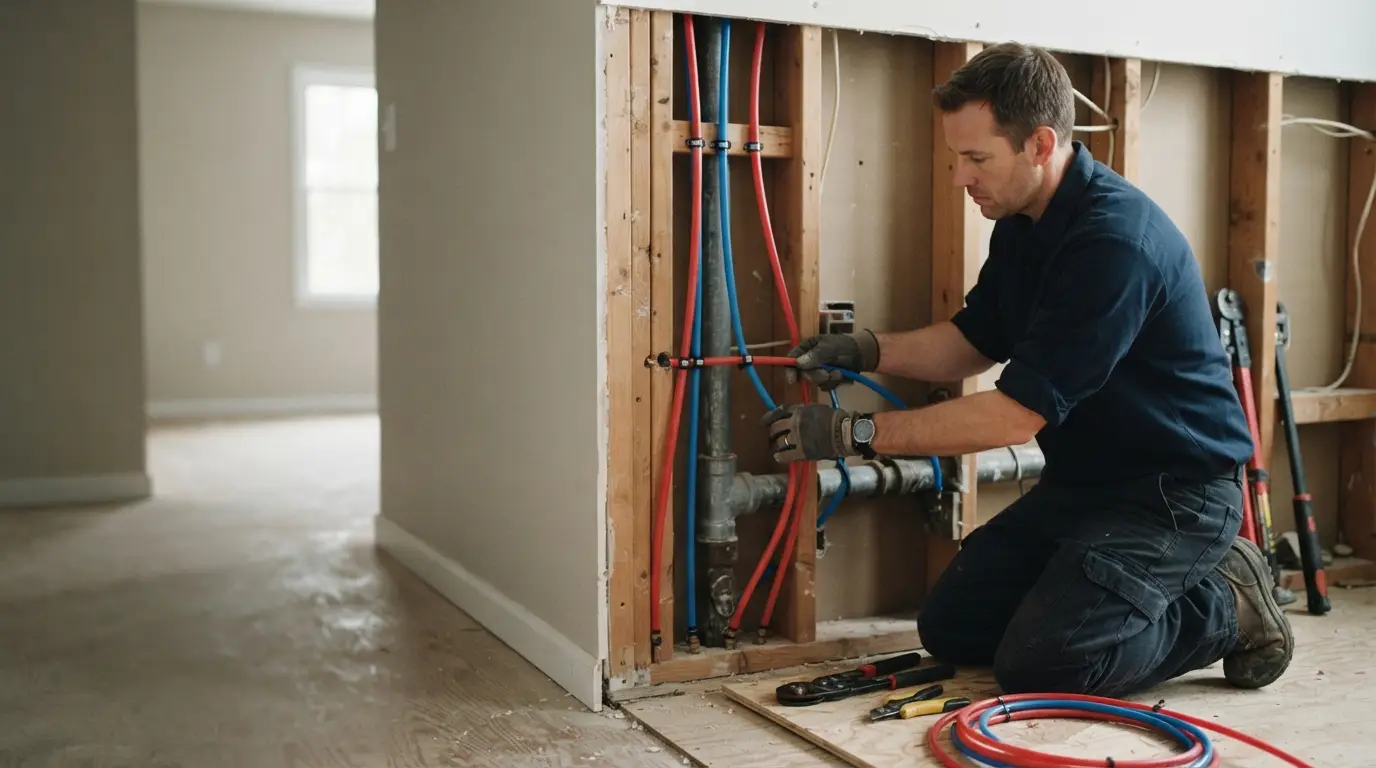
Low pressure, rusty water or leaks at old fittings? We handle repiping and water line replacement in New Mexico. Our plumbers repair damaged pipe, replace galvanized, polybutylene and worn copper throughout the house and replace the water line from the meter to the home. In New Mexico, repiping often means moving lines out from under a slab and running them overhead, replacing gray plastic pipe in manufactured homes or swapping out steel lines in older valley and plains houses. We plan routes to save your walls and floors and handle the permit.
The service
44% of New Mexico's 820,253 homes were built before 1980. Raton's median home dates from 1959, Tucumcari's from 1960 and Roswell's from 1968. Homes of that age often have galvanized steel or early copper. Homes from the late 1970s to the mid-1990s, including many manufactured homes, may have polybutylene, a gray plastic pipe known for failing at its fittings. Repiping replaces it all with PEX or copper.
Pipe we replace in New Mexico
Common problem: Rust, scale, weak flow
Replacement: PEX or copper
Common problem: Sudden fitting and pipe failures
Replacement: PEX
Common problem: Pinholes and slab leaks
Replacement: Overhead reroute
Common problem: Leaks, low pressure
Replacement: New PE or copper service
Why New Mexico
Mineral-heavy water scales the inside of steel and wears copper fittings.
This plastic pipe and its fittings degrade with age and chlorinated water.
Expansive clay strains lines under slabs and in the yard.
Hot summers and cold nights stress exposed and shallow pipe.
Warning signs
Our process
We replace a damaged section with new pipe and proper transition fittings and tell you honestly how the rest of the system looks.
We map every fixture, run new lines through the attic and walls rather than under the slab, connect fixtures one area at a time and restore water each evening.
We locate a leak in the service line, dig at that spot and splice in a new section.
We replace the line from the meter to the house by trench or by pulling new pipe, and coordinate with the water utility on the meter.
Typical cost
Any figure before we see the home is an estimate only. The main factors:
You approve a written price before work begins.
Get a written price: (833) 733-2357More fixtures mean more pipe.
Attic, walls or crawl space access.
Adobe and plaster need more care than drywall.
PEX and copper differ in cost.
Length and digging through caliche.
Benefits
Clear pipe delivers full flow.
Lines move out of the floor.
No rust or scale from old steel.
Some insurers ask about polybutylene.
Manufactured homes make up 13% of New Mexico housing, 36% in Española and 34% in Truth or Consequences. Many units from the late 1970s to the mid-1990s were plumbed with polybutylene. It can fail without warning, flooding the space under the floor. We replace it with PEX, which handles freezing better, and insulate the new lines behind the skirting.
In Albuquerque (258,178 homes) and Las Cruces, most homes have water lines under the slab. After one or two slab leaks, many owners choose to repipe overhead. We run new PEX through the attic, drop it down interior walls to each fixture and cap the old lines under the floor. Attics get very hot in summer, so we insulate the new lines and keep them away from the hottest areas.
66% of South Valley homes, 69% of Lovington homes and 65% of Grants homes were built before 1980. Galvanized steel in these homes is often packed with scale from hard water, so flow drops to a trickle at upstairs or far fixtures. Replacing it restores pressure and ends the rust stains. We work room by room to limit wall openings.
Santa Fe (46,608 homes) and northern New Mexico have many adobe and pueblo-style houses with thick walls, flat roofs and little attic space. Pipes may run through masonry walls or under brick floors. We plan routes through closets, cabinets and interior frame walls, and where pipe must cross masonry, we make neat openings that a plasterer can finish.
The service line from the meter to the house is the owner's responsibility in most New Mexico towns. Older lines may be galvanized steel or early plastic laid shallow in clay or across a caliche layer. Soil movement, freezing near the surface and digging for landscaping all cause leaks. When a service line fails, we replace it with polyethylene or copper set below the frost line for your area and bedded in sand so rocks and caliche cannot wear through it. A new line often restores pressure the whole house had been missing.
Renters occupy 32% of New Mexico homes, and many rentals are older houses, duplexes and small complexes with original pipe. Landlords often fix one leak after another until the tenant calls again. We price a full repipe against the cost of ongoing repairs, schedule work around tenants and finish one unit at a time so no one goes without water overnight. For small complexes we can replace the pipe in phases to spread the cost.
Find the main shutoff and make sure it works. If a pipe is leaking, close it and open a faucet to drain the lines.
Clear access to the attic hatch, closets and the water heater. Then call us to plan the work.
Repiping and water line replacement need a permit from your city or the state Construction Industries Division. We file it, coordinate with the water utility and schedule the inspection. Our plumbers hold the New Mexico licenses each job requires.
Why choose us
What you can count on every time one of our plumbers comes to your door.
Every job is handled by a plumber who holds the license your state or city requires, backed by liability insurance.
Our plumber explains the problem and the options, and you approve a written price before any work begins.
Burst pipes, sewage backups and failed water heaters get priority scheduling, including nights and weekends.
We pull permits when the job needs one and schedule the inspection, so the work holds up when you sell.
Repairs and installations come with a written warranty on labor, on top of the manufacturer's warranty on parts.
Our pages and plumbers account for your area's water, soil, climate and the age of the homes around you.
Service area
We repipe homes in 528 New Mexico communities, including Rio Rancho (41,908 homes) and Farmington (18,788 homes). Find yours:
It depends on house size, fixture count, route and wall type. You get a written price after we look at the home.
Usually. PEX needs fewer fittings and less labour, and it handles freezing better. We price both if you prefer copper.
Some insurers ask about polybutylene or charge more for homes with it. Replacing it removes that concern.
We run new lines through the attic and interior walls and cap the old ones under the slab, so the floor stays intact.
Most evenings, yes. We work in sections and reconnect water before we leave each day.
We protect floors, confirm the routes with you, shut off water to the first area and begin running new lines.
It is not toxic, but it can fail suddenly and flood a home. We recommend replacing it before that happens.
Yes. Rust and scale discolor water and slow flow. Replacing it restores clean water and pressure.
Most single-story homes take two to four days. Larger homes and adobe houses can take longer.
Usually a day, plus time for locates and permits. Caliche can add time to the digging.
Soften hard water, keep pressure normal and insulate pipes in attics and under manufactured homes.
Yes. Replacing pipe while walls are open saves money and disruption later.
Look for gray, sometimes blue or black, plastic pipe stamped PB, often at the water heater or under sinks. We can confirm it.
Yes. We route through closets and interior walls and make careful masonry openings where needed.
Close the main valve and call us. We put active leaks ahead of routine work and keep you updated on timing.