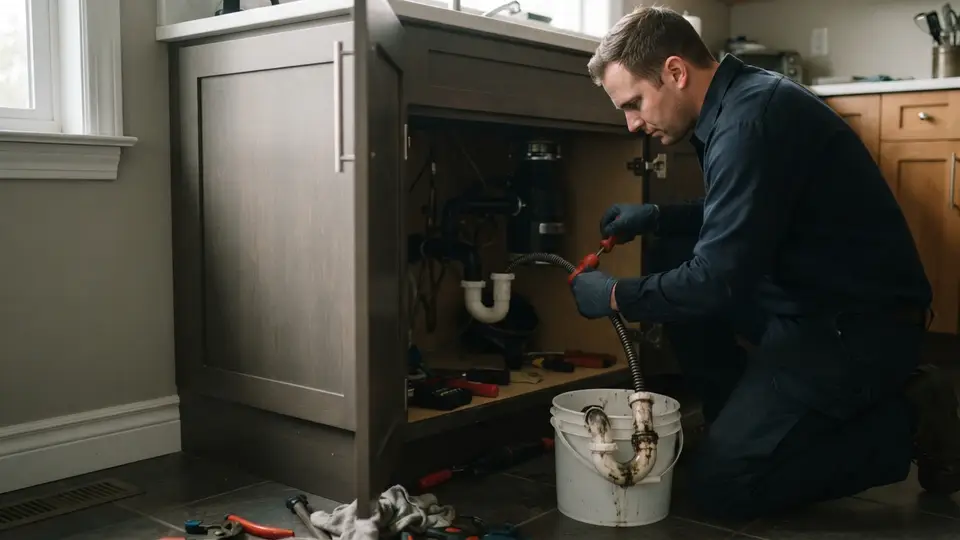
One fixture is slow
What it usually means: Hair, soap or a small grease plug near the trap
How we clear it: Hand or drum auger
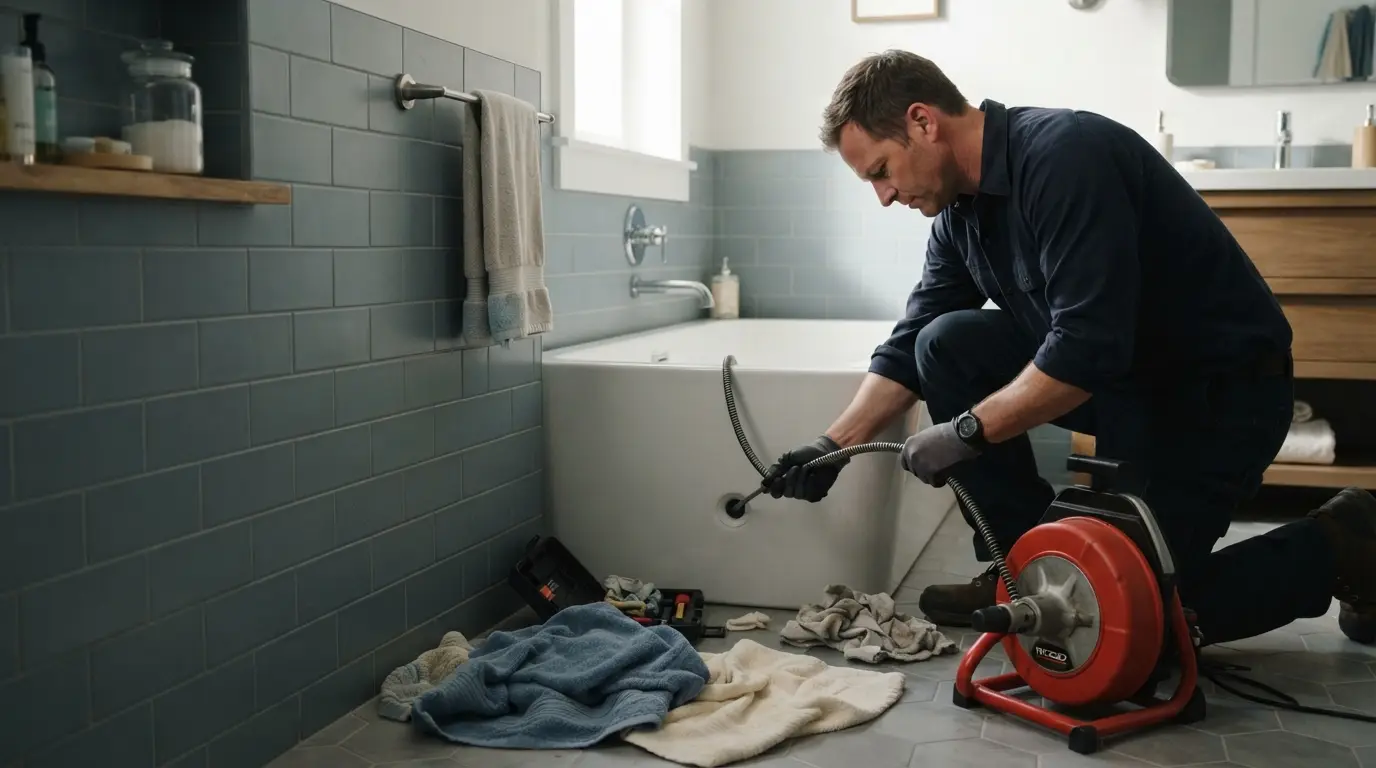
Shower draining like syrup, or the cleanout overflowing in the yard? Our team handles drain cleaning and clog removal in California every day. Here the trouble is usually older: clay and cast iron laterals under 1920s to 1960s neighborhoods, street tree roots, grease in apartment kitchen stacks, and hard water scale that narrows drain lines. Low-flow fixtures help conserve water but send less water to carry waste down long runs. We clear the line, look inside it and tell you what caused the clog. Here is how we work.
The service
We work on every drain in the building: bathroom sinks, tubs, showers, toilets, kitchen lines, laundry standpipes, floor drains, the main building drain and the sewer lateral out to the city connection. In condos and apartments we also clear shared vertical stacks. The aim is to restore the full pipe, then explain why it clogged.
From symptom to solution
What it usually means: Hair, soap or a small grease plug near the trap
How we clear it: Hand or drum auger
What it usually means: Main line or lateral blockage
How we clear it: Cable from the cleanout, then camera
What it usually means: Grease in a shared stack
How we clear it: Hydro jetting the stack
What it usually means: Roots and cracks letting in water and soil
How we clear it: Root cutting, camera, repair plan
What it usually means: Too little water carrying waste in a long or sagging line
How we clear it: Cleaning and camera to check slope
Why California
56% of homes in our California Census data predate 1980, 70% in Los Angeles, 77% in Oakland and 76% in San Francisco. Their laterals are often clay with joints every few feet, and ficus, pine, eucalyptus and other street trees send roots straight into them.
A quarter of California homes, 25%, are in buildings with five or more units. Every kitchen on a stack adds grease, and the lowest units are the first to back up.
Hard water leaves mineral deposits, and old cast iron rusts into a rough, narrowed channel. Both grab paper and food waste.
Low-flow toilets and fixtures conserve water, which is important in a drought-prone state. In older homes with long or sagging drains, though, less water means solids travel less far, so occasional cleaning helps.
Warning signs
Our process
Which fixtures are affected tells us whether it is a branch, a stack or the lateral.
We clear main lines from a cleanout rather than through a toilet when one exists, and can add one if not.
Cutting heads for roots and paper; hydro jetting for grease, scale and sludge.
For repeat clogs, roots and older laterals, we record the inside of the pipe and locate problems from above.
We run water through every cleared drain and tell you what we saw and what, if anything, needs repair.
Typical cost
Before we start, you approve a written price.
Get a written price: (833) 733-2357A sink trap is quick; a lateral or a five-story stack is not.
No accessible cleanout means pulling a toilet, roof access or installing a cleanout.
Roots, scale and hardened grease take longer than hair.
Jetting costs more and lasts longer.
Added when we need to see the pipe.
Nights and weekends cost more.
Benefits
A clean pipe wall gives grease and paper nothing to cling to.
Video shows whether roots, a belly or a break is behind repeat trouble.
Cleared laterals handle storm-season flows better.
Many buyers in older California neighborhoods ask for a lateral video.
A jetter sends high-pressure water through a nozzle that scours the whole pipe wall. We use it for restaurant and apartment kitchen lines, stacks, scaled cast iron and laterals after root cutting. Before jetting an old line, we check it by camera, since badly broken pipe can need repair instead.
A plunger is fine for a single slow fixture. If more than one drain is backing up, stop running water, including dishwashers and washers. In an apartment, let your manager and neighbors on the same stack know.
Avoid caustic drain cleaners, which seldom clear a main line and can harm old pipe and anyone who works on it afterward. Keep children and pets away from any sewage, and call us.
Drain cleaning needs no permit. Repairing or replacing a lateral, or adding a cleanout in the public right of way, usually does, and some Bay Area agencies require lateral testing or certificates at sale or remodel. Our California work is done under a C-36 plumbing contractor license, and we pull permits when the repair needs one.
Why choose us
What you can count on every time one of our plumbers comes to your door.
Every job is handled by a plumber who holds the license your state or city requires, backed by liability insurance.
Our plumber explains the problem and the options, and you approve a written price before any work begins.
Burst pipes, sewage backups and failed water heaters get priority scheduling, including nights and weekends.
We pull permits when the job needs one and schedule the inspection, so the work holds up when you sell.
Repairs and installations come with a written warranty on labor, on top of the manufacturer's warranty on parts.
Our pages and plumbers account for your area's water, soil, climate and the age of the homes around you.
Related services
Service area
We clear drains in 1,618 California places, from Long Beach, where 79% of homes predate 1980, to Santa Barbara at 74%. Choose yours:
Price depends on which line is clogged, cleanout access, what is causing the clog and whether jetting or a camera is needed. We give you a written price first.
For grease, scale and roots, often yes. Jetting cleans the full pipe wall, so the line usually stays clear much longer than after cabling.
It is a separate line on your quote. We recommend it for repeat clogs, root problems and older laterals, because it shows the real cause.
Yes. We clear shared stacks from roof vents or cleanouts and coordinate with the manager or HOA so affected units know what to expect.
Yes. We share the footage and point out any roots, cracks, offsets or low spots, which is useful for repairs or a home sale.
We show you the damage and give written prices for a spot repair, trenchless lining or replacement so you can choose.
Yes. Sewage carries harmful bacteria. Stop using water, keep people and pets away and let us clear the line before anyone cleans up.
We do not recommend them. They rarely reach main line clogs, can damage older pipe and make the line hazardous to work on.
Many main lines are cleared and checked by camera in two to three hours. Heavy roots or stacks in large buildings can take longer.
Yes. We test every cleared line before we leave, and we tell you if camera findings mean you should limit use until a repair.
Often every year or two until it is repaired or lined. A camera check shows how quickly the roots are returning.
Wipe pans with a paper towel, pour cooled grease into a container and use hot water sparingly as a flush; it only moves grease further down.
Stop using water and call us. Storm-season backups often mean roots or cracks in the lateral, and they get priority scheduling.
Modern low-flow toilets work well, but older drains with sags or long runs may need occasional cleaning because less water carries waste.
Some Bay Area communities require one at sale or remodel. Check with your city or sewer agency, and we can inspect, test and repair as needed.