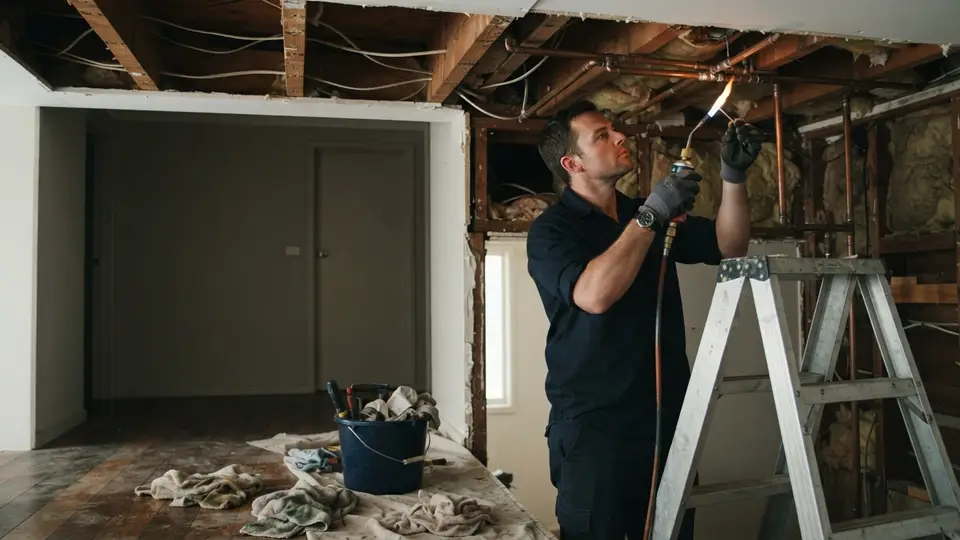
Burst or leaking pipe
Your first step: Close the main water shutoff
Our response: Locate and repair the break, check for more damage
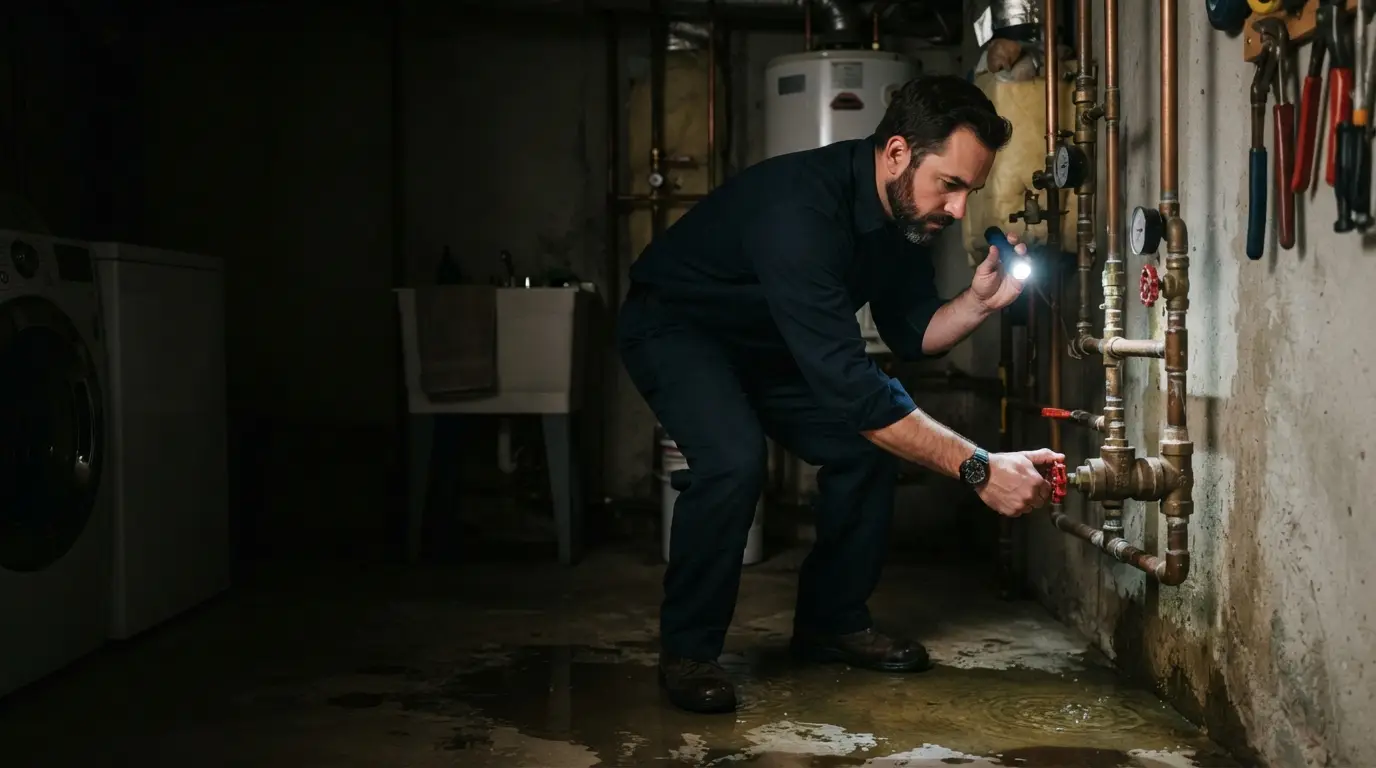
Pipe burst in the wall, or sewage rising in the shower? Call our team for emergency plumbing in California; urgent calls are scheduled first. Many California emergencies follow the seasons and the ground: root-filled laterals backing up in winter storms, slab leaks that finally surface, water heaters failing in summer heat, frozen pipes in mountain cabins, and damaged gas and water lines after an earthquake. We stop the damage, find the cause and fix it, with your approval on a written price. Here is what to do first and how we respond.
The service
We treat a call as urgent when water or sewage is damaging the home, when there is a gas or electrical hazard, or when you have no usable water or toilet. These calls are scheduled ahead of routine work, and we keep you updated on timing. When you call, we help you decide how urgent it is and what to shut off right away.
Emergencies and first steps
Your first step: Close the main water shutoff
Our response: Locate and repair the break, check for more damage
Your first step: Stop using all water
Our response: Clear the line, camera it, plan the repair
Your first step: Check for a utility outage
Our response: Find frozen, broken or blocked lines or failed valves
Your first step: Leave and call the gas utility
Our response: Repair the leak after the utility makes it safe
Your first step: Close the cold supply; cut gas or power
Our response: Repair or replace, strapped to code
Your first step: Check for gas odor first, then leaks
Our response: Inspect and repair gas and water lines
Why California
Heavy rain pushes groundwater and roots into old laterals. In older cities, 70% of Los Angeles homes and 77% of Oakland homes predate 1980, and storm-season sewer backups are among our most common emergency calls.
In the Central Valley, Inland Empire and deserts, extreme heat strains water heaters and dries clay soil under slabs, so slab leaks and heater failures rise.
In South Lake Tahoe, where 74% of homes predate 1980, and other mountain communities, pipes in vacant cabins and crawl spaces freeze and split.
Shaking can break gas connections, crack pipes and topple unbraced water heaters. After a quake, a gas check comes first.
Warning signs
Our process
We tell you which valve to close or what to switch off so the damage stops while we are on the way.
Emergencies go ahead of scheduled work, and we tell you when to expect us.
Our plumber stops the leak, backup or hazard first.
We explain the cause and give you a written price before repairing.
The repair is tested, and you get notes and photos for insurance.
Typical cost
Even on emergency calls, you approve a written price before the repair.
Get a written price: (833) 733-2357Nights, weekends and holidays cost more.
A pipe break is simpler than a collapsed lateral.
Slabs, finished ceilings and tight crawl spaces add time.
Water heaters and pumps cost more than fittings.
Sometimes we stabilize now and finish later.
Benefits
Drywall, flooring and cabinets absorb more every hour.
Fast drying keeps mold from taking hold.
Sewage and gas problems need fast attention.
Prompt repairs with photos support a claim.
We cut out and replace the damaged section, check the run for further damage, and in older homes tell you if the pipe around it is near failure too.
We clear the main from a cleanout, then camera the lateral to see whether roots, a break or a belly caused it. In multi-unit buildings we coordinate with management.
We check the main valve, pressure regulator, service line and, in mountain homes, frozen lines. Well homes may have a failed pump or pressure switch.
The gas utility responds first. Then we locate the leak, repair it, pressure test the piping and relight appliances.
After a significant quake, check for gas odor before anything else; if you smell gas or hear hissing, leave and call the utility. Then look for water on floors, around the water heater and in the yard, and watch the meter with all water off. Make sure the water heater is still upright and its straps and connectors are intact. If you have a seismic gas shutoff valve that closed, do not reopen it until the system has been checked. We inspect gas and water lines, reset valves and repair damage.
Find your main shutoff now. In many California homes it is where the line enters the house near the front hose bib, or at the meter box near the street, which may need a meter key. For leaks, close it and turn off the water heater. For sewage, stop using water. For gas, get out and call the utility.
Stay clear of water near electrical outlets and panels. Move belongings, take photos and open faucets on frozen lines. Never use flame on pipes. Then call us.
We make emergency repairs immediately. When the work is a type that requires a permit, such as a water heater replacement or lateral repair, we file the permit and schedule inspection as local rules allow. Our California work is done under a C-36 plumbing contractor license.
Why choose us
What you can count on every time one of our plumbers comes to your door.
Every job is handled by a plumber who holds the license your state or city requires, backed by liability insurance.
Our plumber explains the problem and the options, and you approve a written price before any work begins.
Burst pipes, sewage backups and failed water heaters get priority scheduling, including nights and weekends.
We pull permits when the job needs one and schedule the inspection, so the work holds up when you sell.
Repairs and installations come with a written warranty on labor, on top of the manufacturer's warranty on parts.
Our pages and plumbers account for your area's water, soil, climate and the age of the homes around you.
Service area
We take emergency calls in 1,618 California places, from San Jose's 345,066 homes to Sacramento's 212,485. Choose yours:
The time of the call, the repair, access and parts set the price. After we stop the damage, you approve a written price for the repair.
Yes. Nights, weekends and holidays cost more than regular hours, and we tell you the price before repairing.
Sometimes. If the water can stay off safely, we may stabilize tonight and schedule the full repair during regular hours.
We tell you how to stop the damage, prioritize your visit and let you know when to expect us.
Yes. You get notes on the cause, photos and an itemized invoice for your claim.
Yes. We work with managers and HOAs on stack backups, riser leaks and building-wide shutoffs.
Leave immediately, avoid switches and phones inside and call your gas utility or 911 from outside. We repair the leak once safe.
Keep everyone away from the affected area and stop using water. Sewage carries bacteria; let us clear the line before cleanup.
Instantly, by closing the main. We then repair it, usually within a few hours of arriving.
Many repairs restore water the same visit. Service line or slab work may take longer, and we give you a timeline.
Strap the water heater, use flexible connectors, know your gas and water shutoffs and consider a seismic gas shutoff valve.
Yes. Locate it, label it and test it yearly. We replace valves that stick or leak.
Stop the water at the fixture valve or main shutoff, turn off the water heater, then call us.
Storm water seeps into cracked old laterals and roots catch debris, so lines overload during heavy rain.
Check for gas odor first, then look for leaks, watch the water meter and confirm the water heater and its straps are intact.