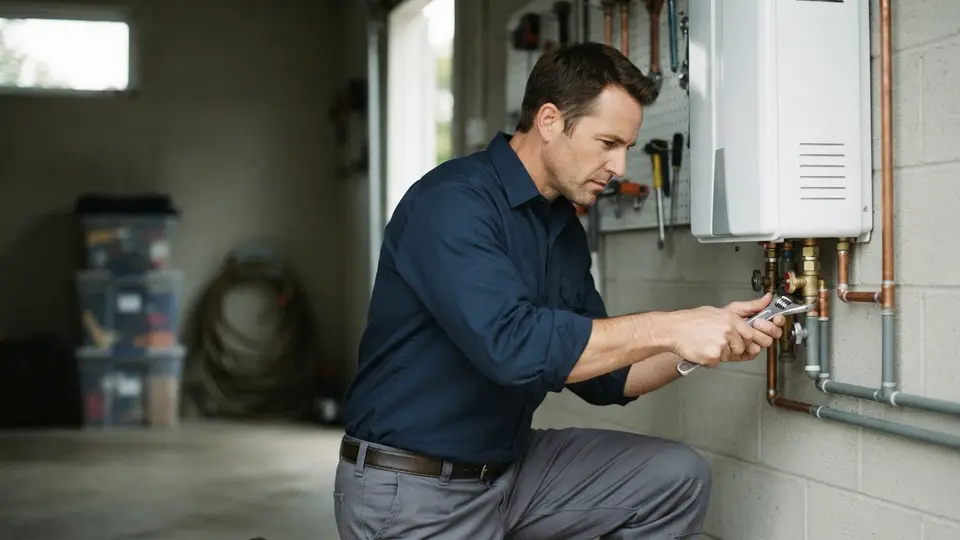
Gas storage tank
Good fit: Most existing California homes
Things to know: Needs proper venting, combustion air and seismic straps
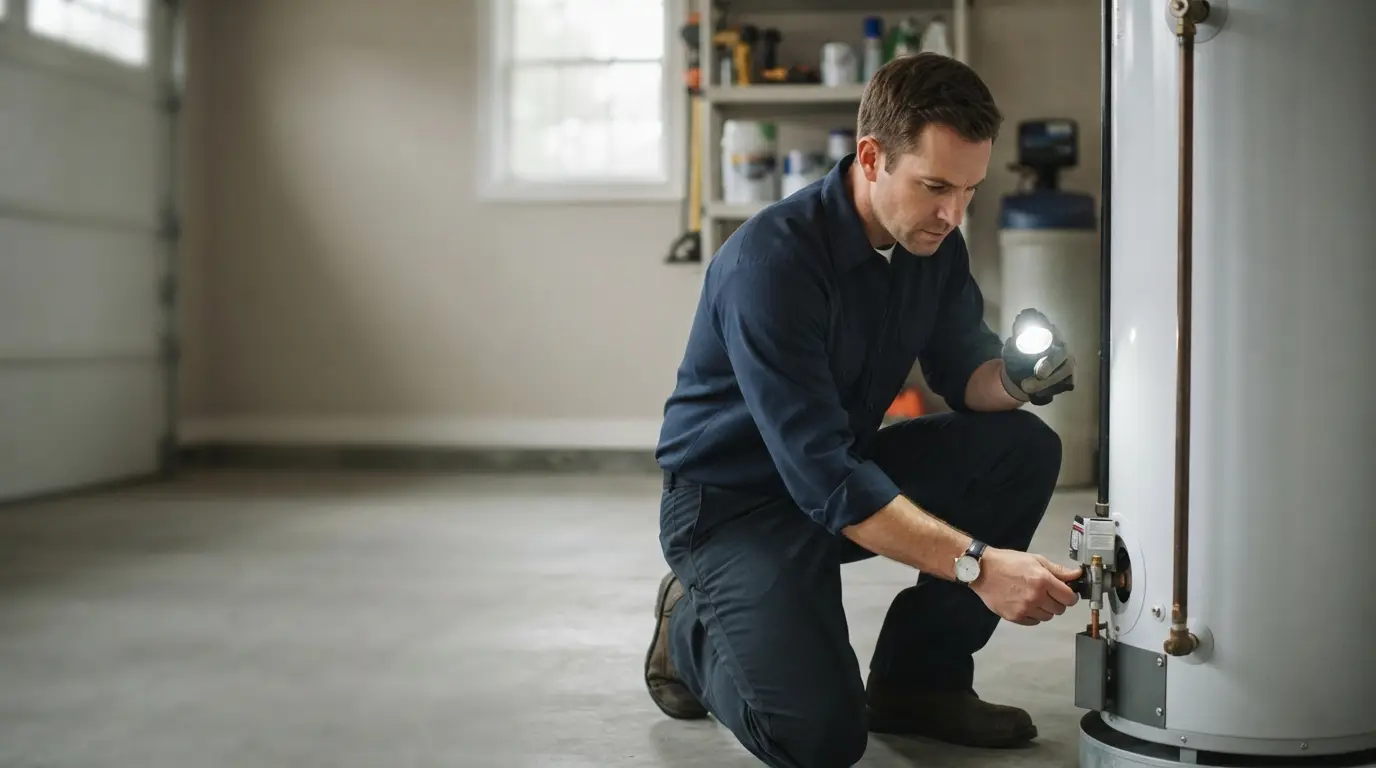
Showers turning cold halfway through, or rust at the bottom of the tank? We do water heater repair and replacement in California, installed to state code. Most California water heaters run on natural gas, many sit in garages or closets, and every one must be braced against earthquakes. Hard water in much of the state builds scale fast. We repair gas, electric and tankless units, install replacements with proper straps and venting, and help you weigh heat pump water heaters. Here is what to watch for, how we work and what affects cost.
The service
In our California Census data, 62% of homes heat with utility gas and 30% with electricity. Gas water heaters are the most common type we service, with gas heat especially widespread in Lancaster (80%) and Santa Clarita (78%). Electric and heat pump units are growing, especially in new construction and all-electric remodels.
Water heater types
Good fit: Most existing California homes
Things to know: Needs proper venting, combustion air and seismic straps
Good fit: High demand, limited space
Things to know: May need larger gas line and new venting; descaling in hard water
Good fit: Homes without gas
Things to know: Simple install; slower recovery
Good fit: Garages and utility rooms with airflow
Things to know: Lower energy use; may need a dedicated circuit and condensate drain
Why California
Much of Southern California and the inland valleys have hard water. Minerals settle as a crust in tank bottoms and inside tankless heat exchangers, cutting efficiency and causing overheating and noise.
Heaters in hot garages and attics in Fresno, Redding and the deserts endure extreme summer temperatures. Palm Springs homes, with a median build year of 1977, often have heaters in exterior closets exposed to the sun.
Many older heaters were installed before current venting, strapping and expansion tank rules. Corroded flues, rigid gas connectors and missing drain pans are common findings.
High street pressure without a working regulator or expansion tank strains tanks and causes relief valves to drip.
Warning signs
Our process
We test the gas control, thermocouple or flame sensor, igniter, burner, elements, thermostats and relief valve. Common repairs replace one of these, clean a burner, or flush sediment. We check the anode rod and the venting on every visit.
We size the replacement to your household, remove the old unit and install the new one with two seismic straps, a properly sloped vent, a flexible gas connector, a relief valve line to an approved location, a drain pan where needed and an expansion tank when the system requires it. Old heaters are hauled away.
We check whether your gas line and meter can supply a tankless unit, size the unit to peak demand, install new venting and isolation valves for descaling, and set the temperature. In hard water areas, we recommend treatment ahead of the unit.
Typical cost
We give you a written price before any work starts.
Get a written price: (833) 733-2357A part costs far less than a new heater.
Tankless and heat pump units cost more upfront than standard tanks.
Straps, venting, drain pans, expansion tanks and gas connectors may be needed.
Moving the heater or switching fuels adds piping, venting or electrical work.
Required for replacement in California.
Benefits
Strapped tanks with flexible connectors stay put and keep gas lines intact.
Correct venting keeps combustion gases out of the living space.
Right sizing means fewer cold showers.
Clean tanks and efficient units use less gas or electricity.
California requires water heaters to be anchored or strapped to resist movement during an earthquake. A tank that tips can break its gas line and water connections, causing fire or flooding. We install straps at the upper and lower portions of the tank, secured to the wall framing, and use flexible connectors for gas and water. When we service an older heater without proper straps, we point it out and can correct it on the spot.
Heat pump water heaters pull heat from the surrounding air and use far less electricity than standard electric tanks. They work well in California garages and utility rooms, which stay warm most of the year. They are taller than many gas tanks, need a dedicated electrical circuit and a condensate drain, and require space for air movement. Rebates are offered by some utilities and programs from time to time; check what is available for your address. We assess your space and electrical panel before recommending one.
For a leaking tank, close the cold water valve on top and turn the gas control to off or switch off the breaker for an electric unit. If you smell gas, leave the house and call your gas utility from outside.
Do not plug or cap a dripping relief valve; it prevents the tank from overpressurizing. Avoid draining a hot tank. Note the brand, age and any error code, then call us.
Replacing a water heater in California requires a permit in nearly every city and county, and inspectors check strapping, venting, gas connections and relief lines. Our California work is done under a C-36 plumbing contractor license, and we pull the permit and schedule the inspection.
Why choose us
What you can count on every time one of our plumbers comes to your door.
Every job is handled by a plumber who holds the license your state or city requires, backed by liability insurance.
Our plumber explains the problem and the options, and you approve a written price before any work begins.
Burst pipes, sewage backups and failed water heaters get priority scheduling, including nights and weekends.
We pull permits when the job needs one and schedule the inspection, so the work holds up when you sell.
Repairs and installations come with a written warranty on labor, on top of the manufacturer's warranty on parts.
Our pages and plumbers account for your area's water, soil, climate and the age of the homes around you.
Service area
We repair and replace water heaters in 1,618 California places, from San Diego's 568,668 homes to Fresno and Redding. Choose yours:
Most repairs replace a single component such as a gas control, thermocouple or element. The part and access set the price, which we give you in writing first.
Code requires seismic straps, proper venting, flexible connectors and sometimes an expansion tank and drain pan. We list each item on the quote.
For larger households or limited space, often yes. It may need a bigger gas line and new venting, which we include in the written price.
We look at household size, bathrooms and how many fixtures run at once, then choose a tank capacity or tankless flow rate to match.
Yes. Removal and disposal are part of our installation and appear on your written price.
Yes. We check space, airflow, the electrical panel and drain access, then install the unit and any circuit it needs.
Leave the house, avoid switches and call your gas utility from outside. After they make it safe, we repair the problem.
Yes. California requires water heaters to be braced. Straps keep the tank from tipping and breaking gas and water lines.
A standard tank swap usually takes a few hours. Tankless and heat pump conversions can take most of a day.
Most repairs are done on the first visit. Replacements depend on the model, and we give you the timeline with the price.
Yearly for most California homes, and more often where water is hard. Tankless units need periodic descaling.
Many tanks last about eight to twelve years. Hard water and hot garages shorten that; maintenance helps.
Close the cold supply valve, shut off gas or power and call us. Leaking tanks get priority scheduling.
Yes. Scale builds in tanks and tankless exchangers in much of Southern California and the inland valleys. A softener helps.
Yes, almost everywhere. We pull it and schedule the inspection, which checks straps, venting and gas connections.