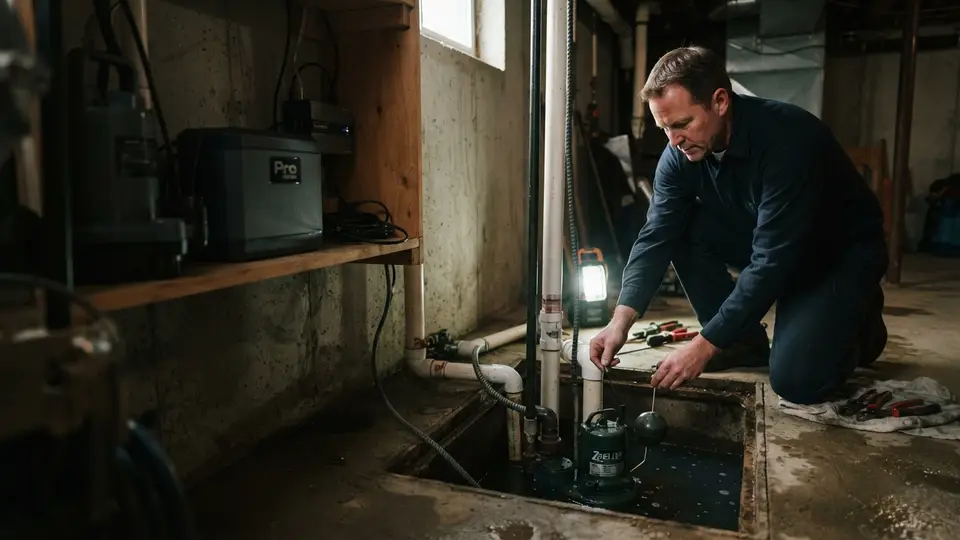
Submersible sump pump
Typical location: Basement or crawl space pit
Purpose: Removes groundwater and seepage
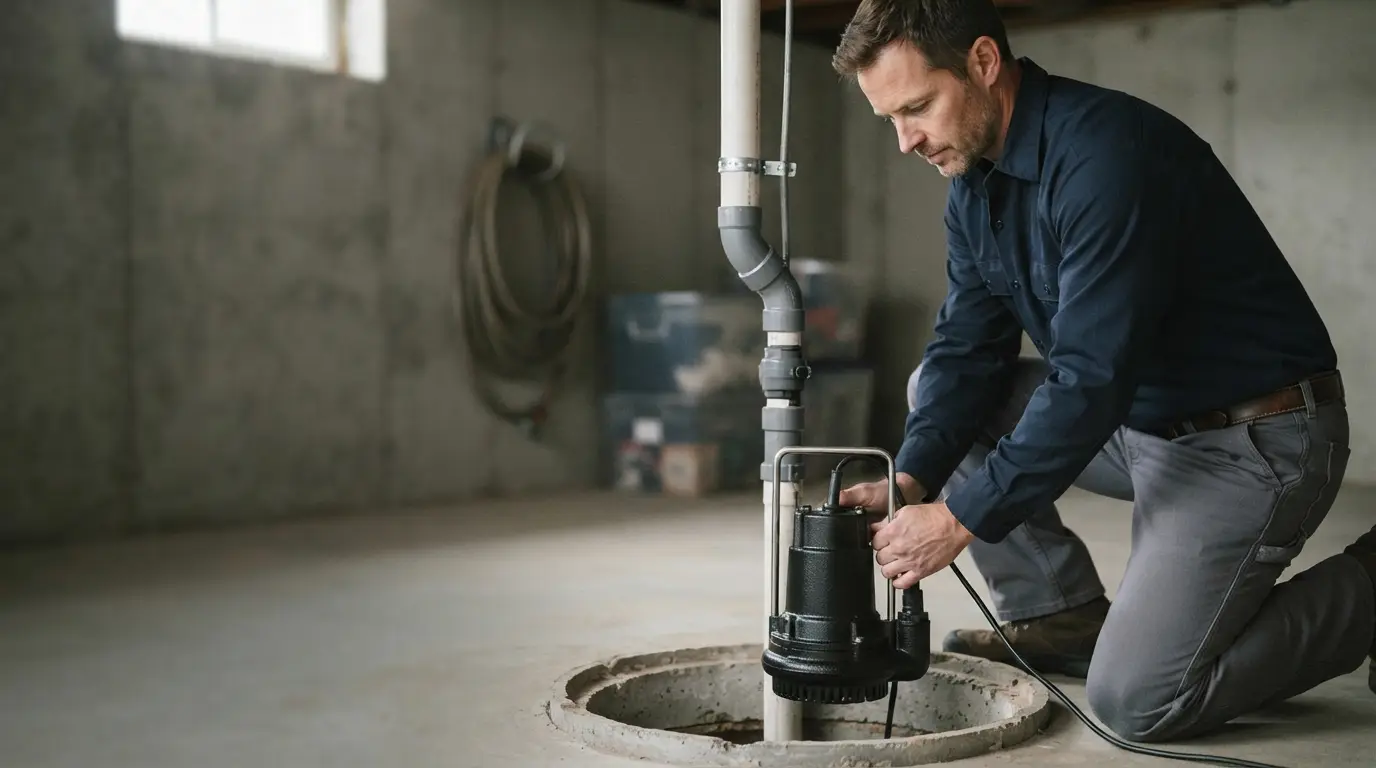
Basement wet after a winter storm, or water pooling under the house? We do sump pump repair and installation in California for homes that collect water. Sump pumps are less common here than in the East, but they matter where they are needed: hillside homes, older Bay Area houses with basements or garages below grade, river delta and valley areas with high groundwater, and crawl spaces that flood when atmospheric rivers stall over the coast. We repair failing pumps, install new systems and add backups. Here is how.
The service
A sump pump collects water in a pit at the low point of a basement, garage or crawl space and pumps it out through a discharge line when a float switch rises. Related systems include pumps for below-grade driveways and patios, and ejector pumps that lift wastewater from basement bathrooms up to the sewer.
Most California homes never need one. The homes that do tend to share a few features: a floor or crawl space below the surrounding grade, a hillside lot where groundwater moves downhill under the house, or a location near rivers, sloughs or the Delta where the water table rises in wet winters.
Pump systems we install and repair
Typical location: Basement or crawl space pit
Purpose: Removes groundwater and seepage
Typical location: Shallow or narrow pits
Purpose: Easy-to-service option for light water
Typical location: Next to the main pump
Purpose: Keeps pumping during power outages
Typical location: Below-grade garages and patios
Purpose: Clears storm runoff that collects at a low spot
Why California
California rain arrives in a few months, often in powerful storms that drop several inches in a day or two. Soil that has been dry all summer cannot absorb it fast enough, and water runs toward foundations.
On hillside lots in the Bay Area, Los Angeles hills and coastal towns, water moves downhill through the soil and surfaces under the house. Retaining walls and below-grade rooms collect it.
Basements and below-grade garages are most common in older housing. The median home in San Francisco dates from 1946, in Berkeley from 1944 and in Oakland from 1953, and many of these homes have a lower level built into the slope.
Low-lying areas around Sacramento, the Delta and North Coast towns such as Eureka can see groundwater rise close to the surface in wet winters.
Warning signs
Our process
We check the float switch, motor, impeller, check valve and discharge line, and clear silt and debris from the pit. Stuck floats and failed check valves are common. A pump with a burned motor is replaced.
We find the low point, cut and line the pit, connect any drain tile or gravel trench, set a pump sized to the inflow, and route the discharge to an approved location away from the foundation. Many California cities do not allow groundwater to be pumped into the sanitary sewer, so we follow local rules on where it goes.
Winter storms often bring power outages. A battery backup pump takes over when power fails or the main pump falls behind. We install it with a charger and alarm and show you how to test it.
Typical cost
You receive a written price before any work begins.
Get a written price: (833) 733-2357Swapping a float switch costs far less than a new pump.
Cutting a pit into a slab or digging in a crawl space adds labor.
Drain tile or gravel trenches to feed the pit add materials.
Higher flow pumps cost more.
Batteries, chargers and alarms add equipment.
Long runs or connections to a storm drain may need a permit.
Benefits
Keeps finished basements and garages dry.
Prevents rot and long-term soil saturation under the house.
Less moisture means less mold and musty odor.
Water heaters, furnaces and stored belongings stay out of water.
Basement bathrooms, laundry rooms and in-law units below the sewer line need an ejector pump to lift wastewater up to the main drain. When one fails, fixtures on that level back up. We repair and replace ejector pumps, sealed basins, check valves and alarms, and vent them properly to prevent odors.
The best time to check a sump system in California is in fall, before the first major storm. We test the pump under load, verify the float and check valve, clean the pit, confirm the discharge line is open and test the backup battery. If the pump is near the end of its life, replacing it on a dry day costs less and is less stressful than replacing it during a downpour.
Check that the pump is plugged in and that its breaker or GFCI has not tripped. If the float is caught on the pit wall, unplug the pump and free it with a stick.
Do not step into standing water where cords, outlets or equipment may be submerged. Cut power to that area from a dry location if you can safely reach the panel, then call us.
Replacing a pump in an existing pit usually needs no permit. New pits, new discharge connections and work tied to storm drains may require one, and discharge rules vary by city. Our California work is done under a C-36 plumbing contractor license, and we check the local requirements before installing.
Why choose us
What you can count on every time one of our plumbers comes to your door.
Every job is handled by a plumber who holds the license your state or city requires, backed by liability insurance.
Our plumber explains the problem and the options, and you approve a written price before any work begins.
Burst pipes, sewage backups and failed water heaters get priority scheduling, including nights and weekends.
We pull permits when the job needs one and schedule the inspection, so the work holds up when you sell.
Repairs and installations come with a written warranty on labor, on top of the manufacturer's warranty on parts.
Our pages and plumbers account for your area's water, soil, climate and the age of the homes around you.
Service area
We repair and install sump pumps in 1,618 California places, including Sacramento, Santa Rosa, where the median home dates from 1980, and Eureka, where 83% of homes predate 1980. Choose yours:
Many repairs, such as a float switch or check valve, are modest. A failed motor means a new pump. We give you a written price before work starts.
It depends on whether we cut a new pit, add drainage, the pump size and the discharge route. We price it after seeing the space.
If storms bring water under your home, yes. Outages often hit during the same storms, and the backup keeps pumping.
Only if water collects in a basement, below-grade garage or crawl space. We look at the source and suggest the simplest fix.
Usually to the yard or storm system as local rules allow, not the sanitary sewer in many cities. We follow your city requirements.
Yes. We repair and replace sewage ejector pumps that lift wastewater from basement bathrooms and laundry rooms.
Not if electrical equipment or cords may be in the water. Cut power from a dry spot if you can and wait for us.
Many installations call for ground-fault protection. We check the electrical connection and recommend what the location requires.
Replacing a pump in an existing pit usually takes one to two hours. A new pit and discharge line can take a day.
As soon as water rises in the pit or on the floor and the pump is not clearing it. Standing water causes damage quickly.
In fall before the rainy season and after long dry spells. Fill the pit with water and watch the pump start and stop.
Often seven to ten years. Pumps that run heavily each winter wear out sooner.
Check power to the pump, stay clear of water near electrical equipment and call us. Flooding calls get priority scheduling.
Heavy storms soak dry soil faster than it drains, and hillside and low-lying homes collect the runoff and groundwater.
Relatively few, mostly older homes and hillside houses. Sump pumps here serve basements, below-grade garages and crawl spaces.