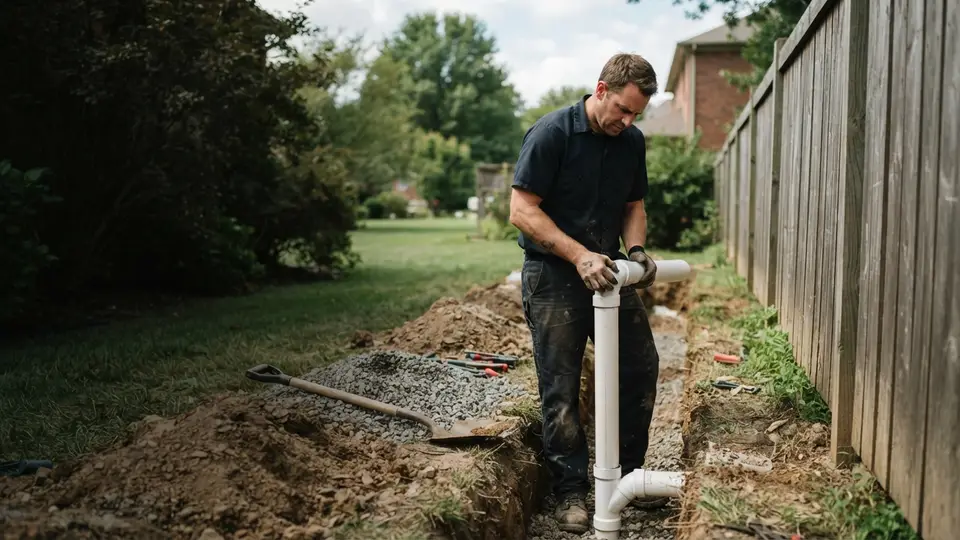
Spot repair
Suited to: A single break or separated joint
What it means for your property: One small excavation at the damaged point
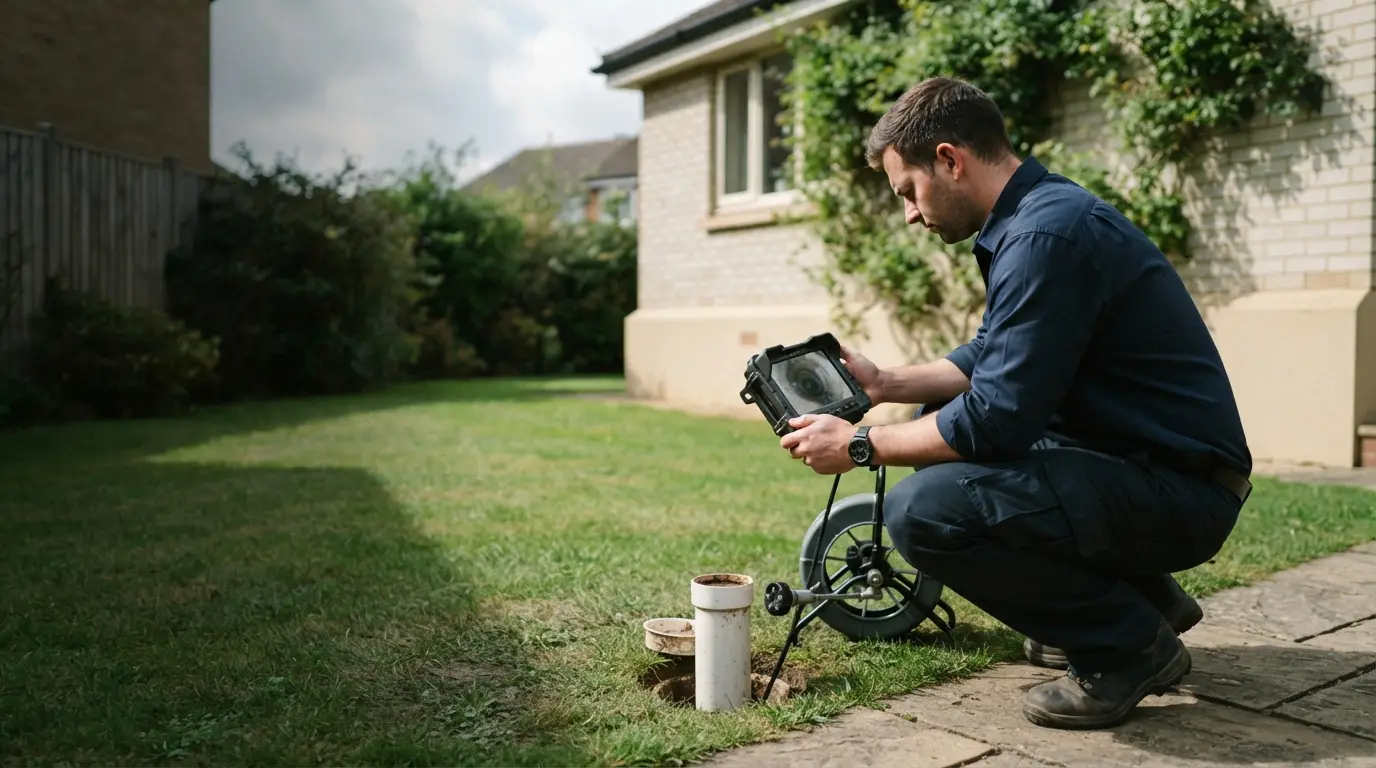
Lateral failed its inspection, or roots back after every rainy season? We provide sewer line repair and replacement in California, trenchless when possible. Older California neighborhoods sit on clay and cast iron laterals that have been in the ground for 60 to 100 years. Street trees, settling soil and earthquakes have cracked, separated and shifted many of them. We record the line on camera, show you the problem and fix it by spot repair, lining, bursting or open trench. Here are the options, our process and what affects price.
The service
The lateral carries wastewater from your house to the public sewer main, usually under the yard and often under the sidewalk to the street. In most California cities the property owner is responsible for the lateral, sometimes all the way to the main. Rules differ by city and sewer agency, so check yours. We inspect, test, repair and replace laterals, add cleanouts and handle the right-of-way work.
Repair methods compared
Suited to: A single break or separated joint
What it means for your property: One small excavation at the damaged point
Suited to: Cracked pipe that still holds its shape
What it means for your property: A resin liner forms a new pipe inside the old one; little digging
Suited to: Long runs under driveways, hardscape and trees
What it means for your property: New pipe pulled through the old between two access pits
Suited to: Collapsed, badly sagging or offset pipe
What it means for your property: Full excavation to reset the line at proper slope
Why California
In our California Census data, 27% of homes were built before 1960. The median home in San Francisco dates from 1946, in Berkeley from 1944 and in Oakland from 1953. Laterals of that age are often vitrified clay with mortar joints that have cracked away.
Ficus, sycamores, pines and other big trees line many California streets. Their roots find every gap in a clay lateral and grow into dense masses inside it.
Expansive clay in many valleys and the shaking of past earthquakes can pull joints apart, crack pipe and create sags where waste settles.
Cracked laterals let rainwater and groundwater into the sewer, which overloads treatment plants during storms. That is why some sewer agencies require private laterals to be tested and repaired.
Warning signs
Our process
We record the full lateral, measure distances and depths and mark defects on the ground.
You see the footage and receive written prices for each method that fits.
We obtain city or agency permits, including encroachment permits for work in the street, and call 811 for utility locates.
Spot repair, lining, bursting or trench replacement, with a cleanout added where the line lacks one.
A final camera run, plus any air or water test your agency requires, then backfill and restore.
Typical cost
Each option comes with a written price before you decide.
Get a written price: (833) 733-2357Longer, deeper lines cost more.
Spot repairs cost least; full replacement under hardscape costs most.
Encroachment permits, traffic control and sidewalk replacement add cost.
Driveways, patios, mature trees and finished landscaping take more care.
Agency air or water tests and certificates add a step.
These differ by city and agency.
Benefits
Lined or new pipe has no open joints.
New pipe at correct slope keeps waste moving.
A compliance certificate or recent video helps where buyers or agencies ask.
Sealed laterals keep rain out, which helps the whole system.
Some California communities, including several in the East Bay, require a private sewer lateral to be inspected or tested, and repaired if needed, when a home is sold, significantly remodeled or the water meter size changes. The agency issues a certificate once the lateral passes. We inspect, make the repairs, schedule the required test and help you obtain the paperwork. If you are buying or selling, ask your agent whether your city has such a rule.
A sewer lateral is easy to overlook during a purchase because it is buried and works fine on the day of a showing. In a house built before 1960, though, a camera inspection often finds roots, cracked joints or a sag. We record the full lateral, mark defects with distances and depths, and give you a written repair price, so you can raise it during negotiations or plan the work for after closing. If the city requires a certificate at sale, the same inspection tells you what the seller or buyer will need to fix to obtain it.
If sewage is backing up, stop using water inside. If your outdoor cleanout is reachable, open the cap slowly while standing to the side; it may release water outside instead of in the house.
Do not dig near the lateral yourself; gas, electric and fiber lines often run nearby, and work in the sidewalk or street needs a permit. Keep children and pets away from wet areas and call us.
Lateral repair or replacement almost always needs a permit, and work in the public right of way needs an encroachment permit from the city. Our California work is done under a C-36 plumbing contractor license. We obtain the permits, schedule inspections and tests, and handle utility locates.
Why choose us
What you can count on every time one of our plumbers comes to your door.
Every job is handled by a plumber who holds the license your state or city requires, backed by liability insurance.
Our plumber explains the problem and the options, and you approve a written price before any work begins.
Burst pipes, sewage backups and failed water heaters get priority scheduling, including nights and weekends.
We pull permits when the job needs one and schedule the inspection, so the work holds up when you sell.
Repairs and installations come with a written warranty on labor, on top of the manufacturer's warranty on parts.
Our pages and plumbers account for your area's water, soil, climate and the age of the homes around you.
Service area
We repair laterals in 1,618 California places, including Santa Ana (74% of homes before 1980) and Garden Grove (77%). Choose yours:
Length, depth, method, street work and permit fees drive the price. After the camera inspection, we give you a written price for every suitable option.
Often, when hardscape, trees or long distances lie above the line. A collapsed or sagging lateral may still need excavation.
It needs an encroachment permit, traffic control and sidewalk or pavement restoration, all of which add to the job.
The camera footage shows the pipe condition, and we match the method to it, the depth and what lies above the line.
Yes. Where a city or agency requires one, we inspect, repair, arrange the required test and help you obtain the certificate.
We backfill and compact our excavations, and sidewalk or street restoration required by the permit is included in our price.
It can be. Leaking sewage contaminates soil and can surface or back up into the home. Keep people and pets away and call us.
We advise against it. Buried utilities run nearby, and street work requires a permit. We call 811 for locates before digging.
Lining and spot repairs are often done in a day. Full replacements with street work can take a few days, plus inspection scheduling.
Usually yes. You will need to stop using drains while the line is open, and we keep that period as short as possible.
Properly installed liners and new PVC laterals are expected to last for decades with normal use.
Lining or new pipe seals out roots. Plant new trees away from the line and avoid planting directly over it.
Stop using water inside and call us. Overflowing cleanouts and backups get priority scheduling.
Usually the property owner, often all the way to the main in the street. Your city or sewer agency sets the exact boundary.
Ground shaking can crack or separate older clay and cast iron laterals. If drains act up after a quake, a camera inspection is a good idea.