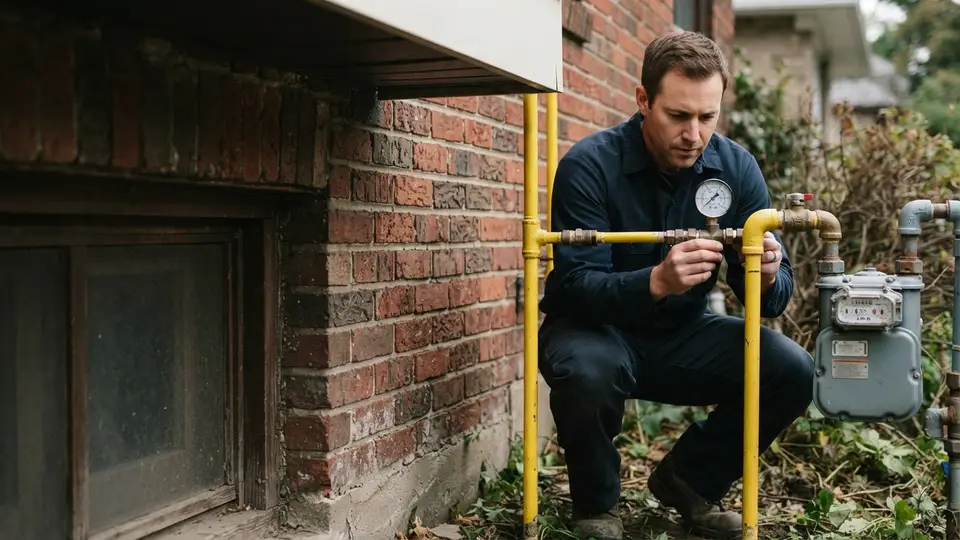
Gas leak repair
What it includes: Locating leaks, replacing failed pipe, fittings, valves and connectors
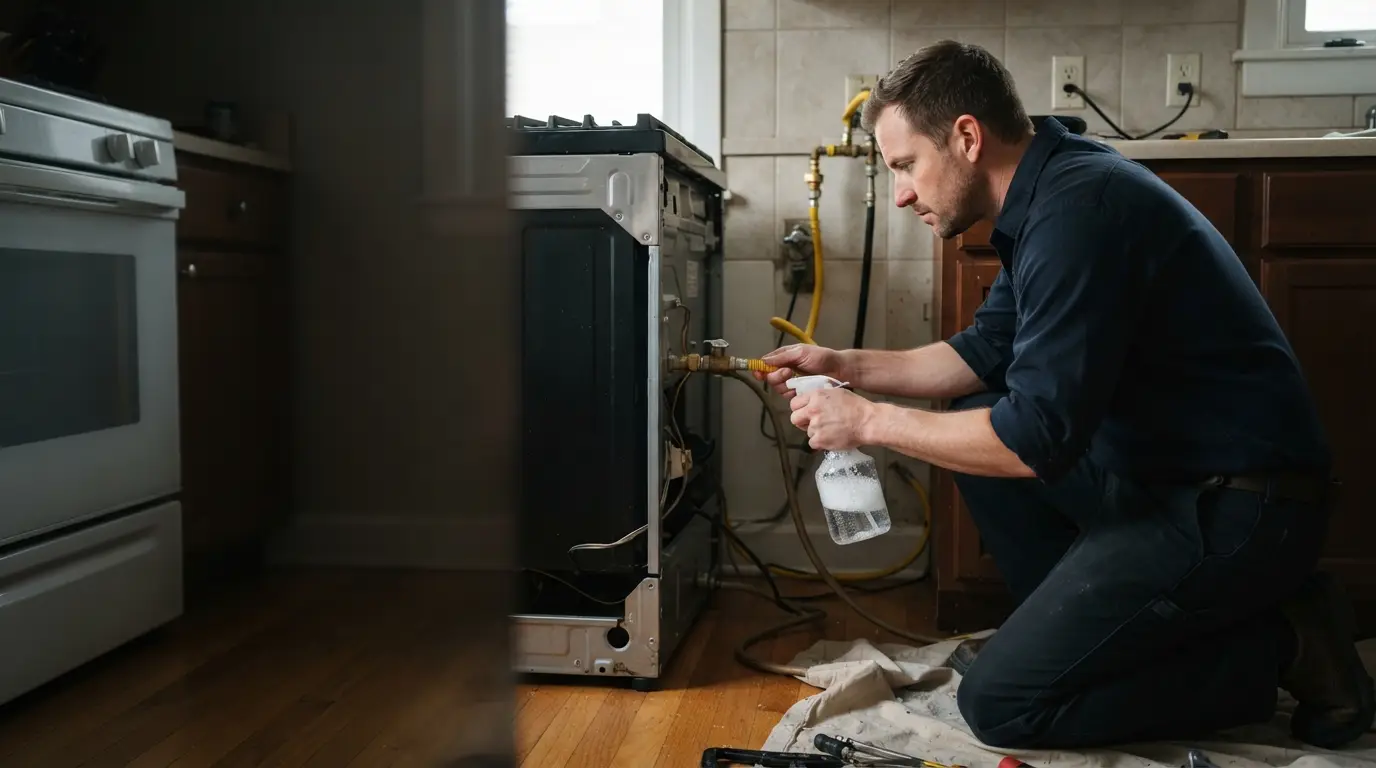
Gas smell in the laundry room, or a new range waiting for a line? We provide gas line repair and installation in California, tested and permitted. Natural gas heats most California homes and runs water heaters, furnaces, ranges, dryers, fireplaces, pool heaters and outdoor kitchens. Earthquakes add a risk other states do not face: rigid connections and unbraced appliances can break gas lines when the ground shakes. We locate and repair leaks, run new lines, hook up appliances and install seismic safety features. Here is how we work.
The service
62% of the California homes in our Census data heat with utility gas, and the share tops 75% in places such as Moreno Valley (79%), Fontana (74%) and Visalia (78%). Your gas utility owns the service line and meter; the house piping after the meter belongs to the owner, and that is the system we repair and extend.
Gas services
What it includes: Locating leaks, replacing failed pipe, fittings, valves and connectors
What it includes: New lines for kitchens, additions, pool and spa heaters, fire pits, BBQs and generators
What it includes: Ranges, dryers, water heaters, furnaces and fireplaces with shutoffs and approved connectors
What it includes: Flexible connectors, braced appliances and seismic gas shutoff valves where wanted or required
Why California
Shaking can crack threaded joints, pull rigid connections apart and tip unbraced water heaters, rupturing their gas lines. Small leaks can appear after even moderate quakes.
San Francisco homes have a median build year of 1946, and 70% of Los Angeles homes predate 1980. Black iron in damp crawl spaces corrodes, and old valves and unions loosen.
Older uncoated brass appliance connectors can crack and are no longer considered safe. We replace them when we find them.
Fire pits, BBQ islands, pool heaters and patio heaters are popular in the California climate. Lines added without proper sizing or burial depth cause weak flames and leaks.
Warning signs
Our process
Once the site is safe, we pressure test the system, locate the leak with an electronic detector and leak solution, and replace the failed component. The repaired system is tested before gas is restored, and each appliance is relit and checked.
We calculate the total load of every appliance on the system, size the pipe accordingly, and install black iron, coated stainless tubing or approved buried pipe with correct support, bonding and depth. New lines are pressure tested and inspected.
Each appliance gets its own shutoff, an approved flexible connector and a sediment trap where needed. We check for leaks and confirm proper flame and venting.
Typical cost
We give you a written price before beginning.
Get a written price: (833) 733-2357Long runs and finished walls add cost.
Black iron needs more labor than flexible stainless tubing.
Trenching to pools, spas and outdoor kitchens adds time.
Large new appliances may require larger pipe or a meter upgrade coordinated with the utility.
Shutoff valves and bracing add parts.
Required for most gas work.
Benefits
Proper sizing, fittings and testing prevent leaks.
Flexible connectors and shutoffs reduce fire risk after a quake.
Correct pipe size delivers enough gas to every burner.
Permits and inspections protect you with insurers and buyers.
A seismic gas shutoff valve closes automatically when it senses strong shaking, stopping gas flow into the house. Some California cities require one in certain situations, such as new construction, additions or major remodels, and many owners choose one anyway. Excess flow valves are another option that closes when flow suddenly increases from a broken line. We install them on the house side of the meter, and after a quake we can reset the valve, check for leaks and relight appliances.
About 2% of California homes in our data heat with propane, mostly in foothill, mountain and rural areas beyond gas mains. Propane piping inside the house is similar to natural gas piping, but appliances need propane orifices and settings. The propane supplier usually owns the tank and first regulator; we install and repair the piping and appliance connections after it and coordinate with the supplier when a system is converted or extended.
If you smell gas, get out and call the utility first; do not search for the leak or relight pilots. If the utility turns off your meter, tell us so we can coordinate restoring service after the repair.
Know where your meter shutoff is and keep a wrench nearby, but only close it if you smell gas or hear a leak, since the utility must turn it back on. For new installations, have model numbers ready so we can size the line.
Gas piping work in California generally needs a permit and inspection from the city or county, and new lines must pass a pressure test. Our California work is done under a C-36 plumbing contractor license. We pull permits, run the tests, schedule inspections and coordinate with your gas utility when service must be turned on.
Why choose us
What you can count on every time one of our plumbers comes to your door.
Every job is handled by a plumber who holds the license your state or city requires, backed by liability insurance.
Our plumber explains the problem and the options, and you approve a written price before any work begins.
Burst pipes, sewage backups and failed water heaters get priority scheduling, including nights and weekends.
We pull permits when the job needs one and schedule the inspection, so the work holds up when you sell.
Repairs and installations come with a written warranty on labor, on top of the manufacturer's warranty on parts.
Our pages and plumbers account for your area's water, soil, climate and the age of the homes around you.
Service area
We repair and install gas lines in 1,618 California places, from Huntington Beach, where 74% of homes heat with gas, to inland valley towns. Choose yours:
It depends on where the leak is, how much pipe or how many fittings need replacing, access and permits. We give you a written price after locating the leak.
Distance from the meter or nearest line, trenching, pipe size and the number of appliances drive the price. We quote it in writing.
The valve, its location at the meter and any piping changes set the cost. We include parts, labor and permit in one written price.
We pressure test the piping, then use an electronic detector and leak solution on joints and connectors to locate the exact spot.
Yes. We install a shutoff and approved connector, check for leaks and confirm the burners light and burn properly.
Yes. When the utility must turn service on, or a meter upgrade is needed, we schedule with them after our work passes testing.
Leave, avoid switches and phones inside and call your gas utility or 911 from outside. We repair the leak once it is safe.
Only if you smell gas, hear a leak or see damage. Once shut off, the utility or a qualified technician must restore service.
Many repairs take a few hours. New underground lines or reroutes can take a day or more, plus inspection.
After the repair passes a pressure test and any required inspection. We coordinate with the utility for a quick restart.
Follow the maker schedule, typically yearly for furnaces and water heaters, and have connectors checked at the same time.
Yes, in homes with fuel-burning appliances or attached garages. Place them outside sleeping areas and on each level.
Call us. We repair and test the piping, then arrange for service to be restored and relight your appliances.
Some do in certain cases, such as new construction or major remodels. Your building department sets the rule, and we can install one either way.
Shaking can crack rigid joints and topple unbraced appliances, breaking gas lines. Flexible connectors and bracing reduce that risk.