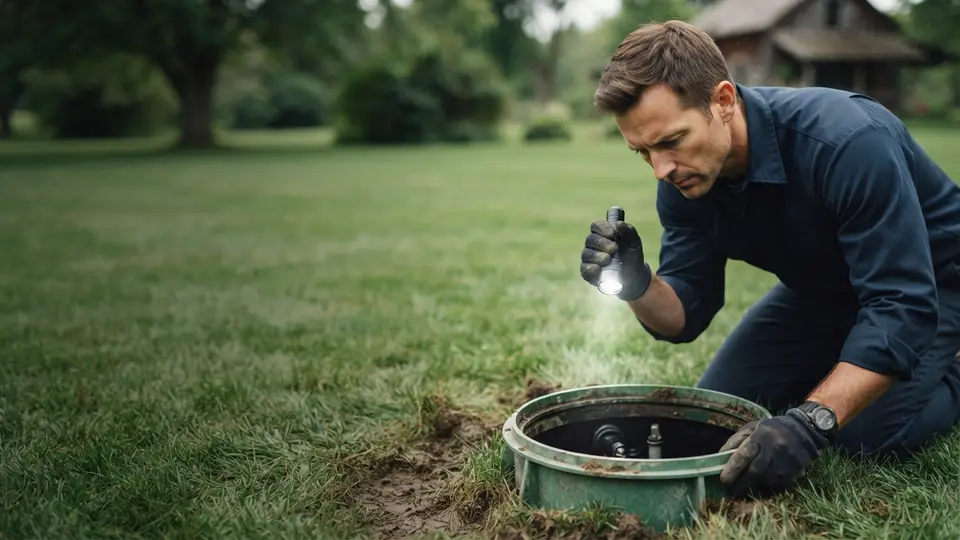
Septic pumping
When it is needed: On a regular cycle, or when sludge is high
What it involves: Uncover and pump the tank, check baffles and effluent filter
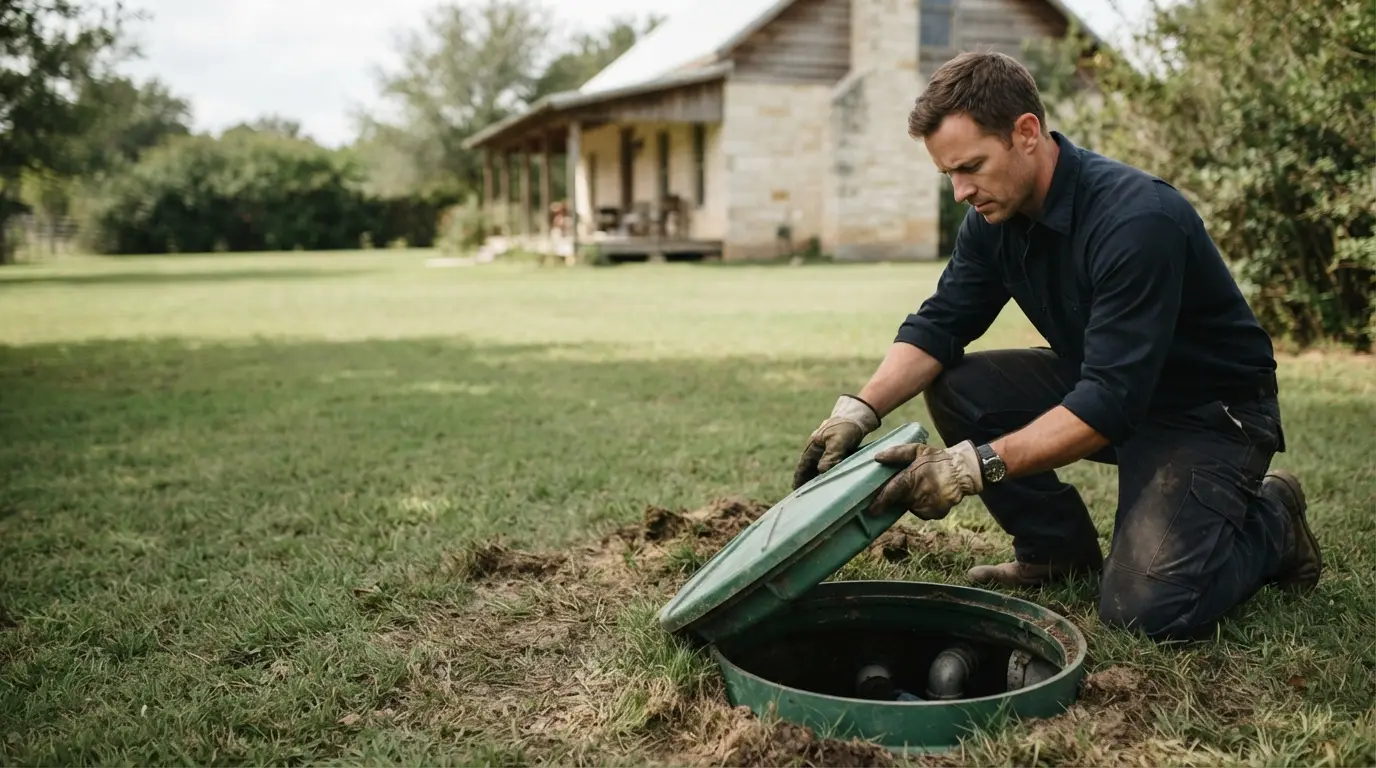
Ground soggy over the leach field, or toilets slow after guests leave? We offer septic tank services in California for homes past the reach of sewer mains. Septic is common in the foothills, mountain communities, rural valleys, wine country and the high desert. Each region brings its own trouble: thin soil over granite in the Sierra, tight clay in the valleys, sandy desert soils and long dry seasons followed by heavy winter rain. We pump, inspect and repair systems, and handle the county permit when work needs one.
The service
A septic system has two working parts. The tank holds wastewater long enough for solids to settle and for scum to float, and the leach field, also called a drain field or dispersal field, spreads the clarified water into the soil for final treatment. Some California properties use pumps, mound systems or advanced treatment units because of shallow soil, high groundwater or sensitive watersheds.
Septic services we provide
When it is needed: On a regular cycle, or when sludge is high
What it involves: Uncover and pump the tank, check baffles and effluent filter
When it is needed: Home purchase, sale, refinance or trouble
What it involves: Measure layers, inspect tank structure, test the field
When it is needed: Wet areas, odors, slow drains after pumping
What it involves: Locate failed lines, repair or replace them
When it is needed: Alarm sounding on a pump or treatment unit
What it involves: Test floats, pump, timer and alarm, repair as needed
Why California
In the Sierra foothills, mountain communities and parts of the coast ranges, granite or other bedrock sits close to the surface. There is little soil to treat wastewater, and fields on slopes can push effluent sideways to the surface.
Clay soils in the Central Valley and many coastal valleys take water slowly. Fields there have less capacity and fail sooner when a household grows or a toilet runs.
Most California rain falls in a few winter months. Saturated soil around a field cannot take more water, so problems show up after big storms and fade in summer, which can hide a failing system.
Older steel and concrete tanks rust or crack, baffles fall off and solids escape into the field. Skipped pumping does the same damage more slowly.
Warning signs
Our process
We find the tank lids, digging when there are no risers, and open each compartment.
A liquid level above the outlet tells us the field is not accepting water.
We remove sludge and scum, clean the effluent filter and check baffles, walls and lids.
We look for surfacing water, probe lines and test pumps, floats and alarms.
You receive our findings and a written price for any recommended repair.
Typical cost
You receive a written price before any work begins.
Get a written price: (833) 733-2357More volume means more to pump.
Buried lids cost time; installing risers saves it later.
Baffles, lids, filters and pumps each add parts and labor.
Line repair costs far less than a new field.
Slope, rock and access for the truck affect the job.
Required for new fields and major repairs.
Benefits
Regular pumping keeps solids out of the most expensive part of the system.
A working system keeps wastewater out of groundwater, creeks and lakes.
A recent inspection report answers buyer and lender questions.
Catching a full tank early keeps sewage out of the bathrooms.
Some field problems are local: a crushed line under a driveway, a root-filled trench or a distribution box that has tilted and sends all the water down one line. We find and repair those. When the soil itself is sealed with years of solids, the field needs replacement, often in a new area of the property. Replacement requires a design based on a soil evaluation and a county permit, and we coordinate those steps with the designer and county.
Many rural California homes rebuilt after wildfires sit on existing septic systems. Heat, heavy equipment and debris removal can damage tanks, lids, pipes and fields. Before reconnecting a rebuilt home, the tank should be inspected and the field checked, and the county may have specific requirements. We inspect, repair or replace components and work with the county on any permit needed.
Use as little water as you can: delay laundry and dishwashing and keep showers short. If a pump alarm is sounding, you can silence it, but leave the pump circuit on unless the breaker is tripping. Note whether problems began after heavy rain or extra guests.
Do not open the tank or lean over an open one; septic gases can be fatal and old lids can collapse. Keep everyone off wet ground over the field, and call us.
Onsite wastewater systems in California follow a statewide policy from the State Water Resources Control Board, and county environmental health departments issue the permits and set local standards. Pumping does not need a permit; new fields, tank replacements and major repairs do. Our California work is done under a C-36 plumbing contractor license, and we coordinate permits and inspections with the county. Confirm the rules for your county before planning new work.
Why choose us
What you can count on every time one of our plumbers comes to your door.
Every job is handled by a plumber who holds the license your state or city requires, backed by liability insurance.
Our plumber explains the problem and the options, and you approve a written price before any work begins.
Burst pipes, sewage backups and failed water heaters get priority scheduling, including nights and weekends.
We pull permits when the job needs one and schedule the inspection, so the work holds up when you sell.
Repairs and installations come with a written warranty on labor, on top of the manufacturer's warranty on parts.
Our pages and plumbers account for your area's water, soil, climate and the age of the homes around you.
Service area
Our California data includes 1,136 unincorporated communities and 956 places with fewer than 5,000 residents, where septic systems are common. Choose the nearest area:
Tank size, how easily we can reach the lids and the condition we find set the price. We give you a written price before pumping begins.
It requires a soil evaluation, an engineered design, a county permit and excavation. Pumping and minor repairs cost far less.
Yes. Field replacement is one of the largest repair bills on a rural property, and an inspection shows the system condition before you commit.
We open and pump the tank as needed, measure sludge and scum, check baffles and filters, inspect the field and test pumps and alarms.
Yes. Risers bring the lids to ground level so future pumping and inspections are faster and cost less.
Yes. For repairs and replacements that need a permit, we work with the designer and the county environmental health department.
Yes. Gases in a tank can kill quickly and old lids can give way. Leave opening and entering tanks to our crew.
Yes. It carries pathogens and can reach wells and creeks. Keep people and pets away and call us to find the cause.
Most home tanks are pumped and checked in one to two hours, longer if we have to dig to reach the lids.
Construction often takes several days, but design and county approval come first and can take weeks. We give you a realistic timeline.
Many households need pumping every three to five years, depending on tank size and use. We suggest an interval after measuring your tank.
We recommend cleaning it when the tank is pumped, or more often if your system needs it. We can show you how to do it safely.
Stop using water and call us. Septic backups get priority scheduling, and pumping the tank usually gives immediate relief.
County environmental health departments issue permits under the statewide policy from the State Water Resources Control Board.
Most rain falls in winter, saturating soil around the field so it cannot absorb wastewater. A struggling field shows it first after storms.