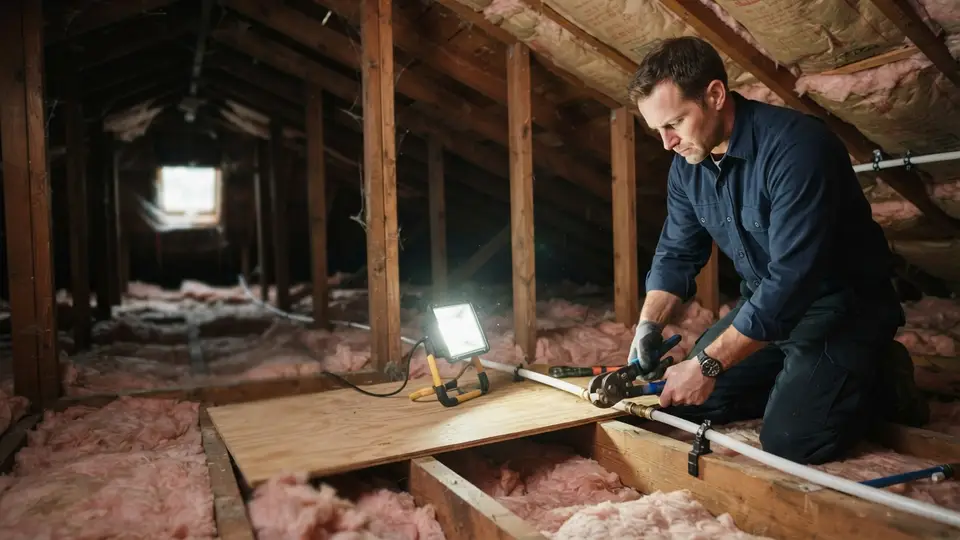
Direct repair
When we recommend it: One leak in pipe that is otherwise sound
What to expect: A small opening in the floor at the leak, then concrete and flooring patch
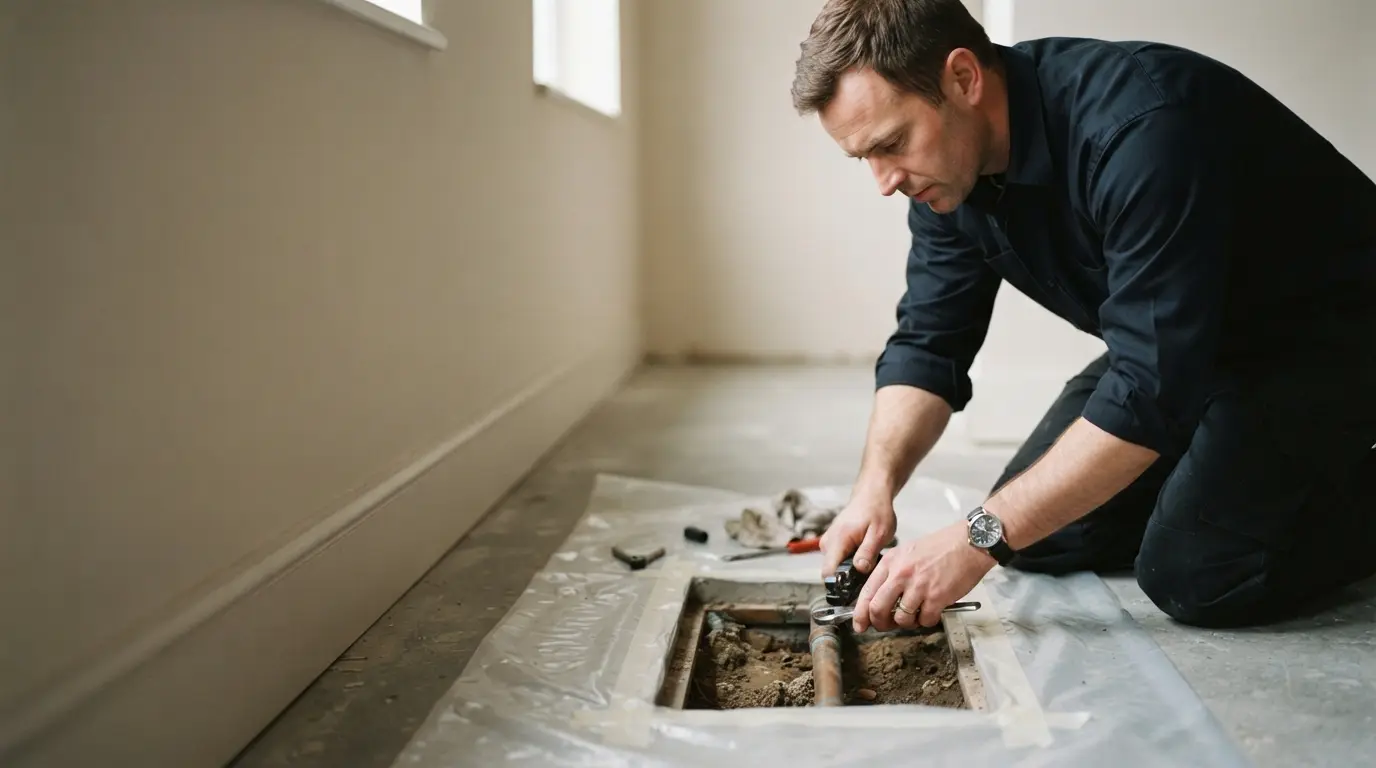
Floor warm in one spot, or water hissing under the concrete? Our crews do slab leak repair in California, locating first and opening as little as possible. Slab foundations are the norm across Southern California, the Inland Empire, the deserts and the Central Valley, and many of those homes were plumbed with copper laid under or through the slab. Decades of hot water, clay soil movement and earthquakes wear it thin. We find the leak, compare a direct repair with a reroute and give you a written price for each.
The service
A slab leak is a break in a water or drain pipe under or inside a concrete floor. Hot water lines account for most of them. Water can soak into the ground for a long time before a warm floor, a damp carpet or a high bill gives it away.
Older raised-foundation homes, common in the Bay Area, older Los Angeles neighborhoods and coastal towns, rarely have slab leaks; their pipes run through a crawl space instead.
Slab leak repair options
When we recommend it: One leak in pipe that is otherwise sound
What to expect: A small opening in the floor at the leak, then concrete and flooring patch
When we recommend it: Pipe likely to leak again, or leak under cabinets, tile or stone
What to expect: New line through walls, attic or ceiling; old line capped
When we recommend it: Several past slab leaks or widespread thin pipe
What to expect: All supply lines replaced overhead; ends supply-side slab leaks
When we recommend it: Some cases where opening walls is very costly
What to expect: Coating applied inside the pipe; suitability depends on pipe condition
Why California
Clay soils in many inland valleys swell in the rainy season and shrink in long dry summers. That seasonal movement flexes pipes held in concrete, especially where they rise through the slab.
Copper under a slab expands and contracts with each use of hot water and rubs against gravel or concrete. Over decades, it wears through. Some soils and water chemistry also corrode copper from outside or inside.
Earthquakes can stress or crack lines at the slab, and small leaks may start long after the shaking stops.
High pressure from a failed regulator and very hot water heater settings increase stress on buried lines. Desert homes with hot incoming water add to it.
Warning signs
Our process
We test the meter, then the hot and cold systems separately to confirm which line is leaking.
Acoustic listening and thermal imaging pinpoint the leak, often to a spot under a specific floor tile.
We weigh pipe age, leak location and your flooring, then put a repair and a reroute side by side in writing.
Direct repairs open the slab at the leak; reroutes run new pipe above the floor and cap the old line.
The system is pressure tested and the meter checked before we leave.
Typical cost
You approve a written price before work begins.
Get a written price: (833) 733-2357Under open floor is simpler than under cabinets, showers or stone.
Reroutes avoid concrete work but need more pipe and wall access.
Tile and hardwood patches cost more than carpet.
Single-story homes with attics make reroutes easier.
Reroutes and repipes usually require one.
Drying and restoration are separate from plumbing.
Benefits
Water saturating clay under a slab can cause swelling or erosion.
A hot water slab leak wastes water and the energy used to heat it.
Moisture wicking up into flooring and walls feeds mold.
Early leaks leave choices open before floors are damaged.
Inland communities built heavily since the 1980s are now at the age where slab copper fails. The median home in Fontana dates from 1989, in Moreno Valley from 1988, in Santa Clarita from 1987, in Bakersfield from 1990 and in Visalia from 1988. Older slab homes in Palm Springs and other desert towns, with a median of 1977, see the added stress of very hot incoming water in summer.
Not every slab leak is on a supply line. Cast iron and ABS drain lines under the slab can crack or separate, leaking slowly every time water drains. These do not show on the water meter, so the clues are odors, damp flooring near bathrooms and pests. We find them with a camera run through the drain and repair the section or line it from inside.
Homeowners policies differ in how they treat slab leaks. Some cover the cost of accessing the pipe and the resulting water damage but not the pipe repair itself; others have specific limits. We document the leak location, cause and repair with photos and notes. Your insurer decides coverage, so review your policy or call your agent.
If the leak seems to be on the hot side, close the cold supply valve on top of the water heater; that stops the leak and keeps hot water from running into the ground. For larger leaks, close the main between uses.
Photograph warm spots, damp flooring and recent bills. Do not break up flooring or concrete to look. Call us to locate the leak first.
Spot repairs often need no permit, but reroutes and repipes usually do. Our California work is done under a C-36 plumbing contractor license, and we pull permits and schedule inspections as required.
Why choose us
What you can count on every time one of our plumbers comes to your door.
Every job is handled by a plumber who holds the license your state or city requires, backed by liability insurance.
Our plumber explains the problem and the options, and you approve a written price before any work begins.
Burst pipes, sewage backups and failed water heaters get priority scheduling, including nights and weekends.
We pull permits when the job needs one and schedule the inspection, so the work holds up when you sell.
Repairs and installations come with a written warranty on labor, on top of the manufacturer's warranty on parts.
Our pages and plumbers account for your area's water, soil, climate and the age of the homes around you.
Service area
We locate and repair slab leaks in 1,618 California places. Choose yours:
The price depends on leak location, repair method, flooring, house layout and permits. We give you a written price for each option before starting.
It can be, especially when the leak is under cabinets, tile or stone. We price both so you can see the difference.
When you have had more than one slab leak or the copper is thin throughout. A repipe ends the cycle of repeat repairs.
We isolate the leaking line with pressure tests, then use acoustic listening and thermal imaging to pinpoint the spot.
Usually a small section over the leak, enough to reach and repair the pipe. Precise location keeps it small.
In single-story homes with attics, often only a few small openings. We show you the planned route before we begin.
Water under a slab on clay soil can cause swelling or washout, which may lead to cracks. Prompt repair limits the risk.
For short periods, usually. Close the valve to the leaking line between uses and call us. Large leaks need the main closed.
A direct repair or reroute is usually completed in one or two days. Repipes take longer.
Most slab leaks are located during the first visit, typically within a few hours.
Keep pressure normal, avoid very hot heater settings, manage drainage around the slab and consider rerouting after a first leak.
Yes. Comparing each bill with the same month last year is one of the best early warnings of a slab leak.
Shut off the main water valve and call us. Surfacing slab leaks get priority scheduling.
It varies by policy. Some cover access and water damage but not the pipe. We document the leak to support your claim.
Most homes there sit on slabs with copper underneath, and clay soil movement, earthquakes and decades of hot water use wear that pipe out.