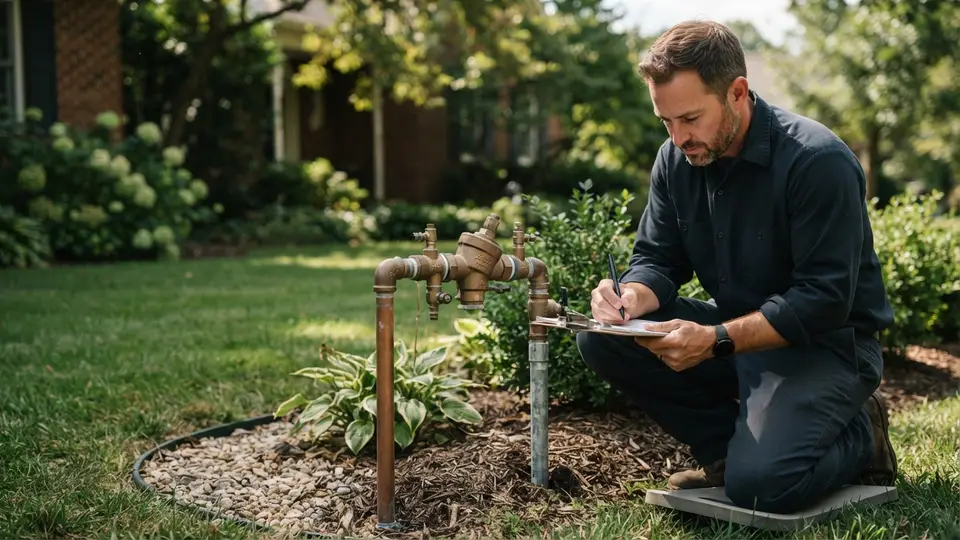
Pressure vacuum breaker
Typical use: Lawn irrigation
Testing: Usually yearly
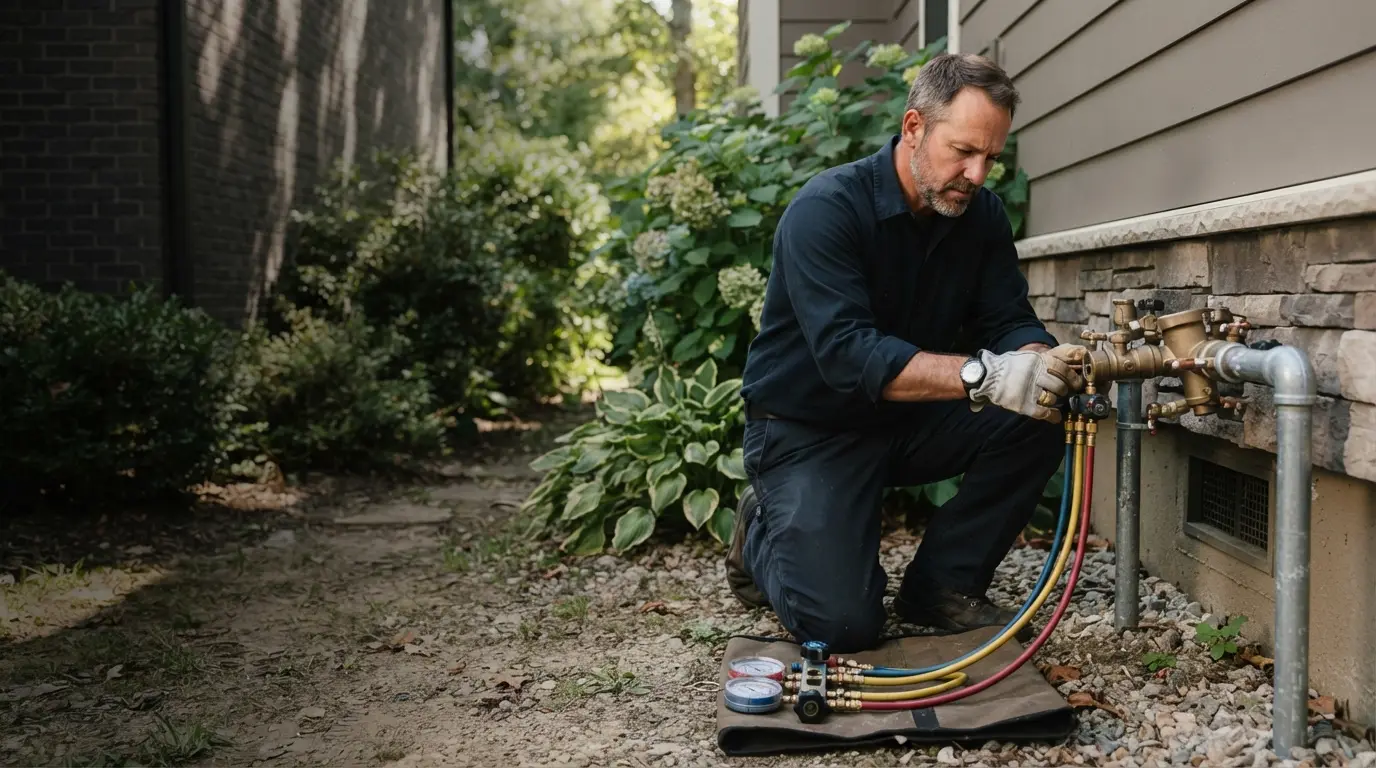
Got a test letter from the water company, or a sprinkler valve leaking? We handle backflow testing and prevention in Kentucky. Lawn sprinklers, fire lines, boilers and commercial equipment can send dirty water back into the public supply when pressure drops, and a backflow preventer stops it. Many Kentucky water systems require these devices to be tested every year. We test them, submit the results and repair or replace any device that does not pass.
The service
When pressure in a water main drops, during a main break or heavy hydrant use for example, water inside a building can be pulled back into the public system. A backflow preventer is a set of check valves, sometimes with a relief valve, that stops that reverse flow. Suburbs such as Florence (14,499 homes), Burlington, Georgetown and Nicholasville have many lawn irrigation systems that need one.
Devices we test and install
Typical use: Lawn irrigation
Testing: Usually yearly
Typical use: Fire sprinklers, lower hazard
Testing: Usually yearly
Typical use: High hazard, chemicals, boilers
Testing: Usually yearly
Typical use: Outdoor faucets
Testing: Replaced if failed
Why Kentucky
Devices left full of water crack when a hard freeze arrives.
Hard water scale and debris keep check valves from sealing.
Seals and diaphragms harden and stop holding pressure.
Water hammer from sprinkler valves stresses internal parts.
Warning signs
Our process
A certified tester connects a calibrated gauge, checks each valve and relief point and records the readings on your water system's form.
We install the device your water system requires for the hazard, at the correct height and location, with the needed permit.
We rebuild devices with new checks, springs and seals or replace frost-cracked bodies, then retest.
Typical cost
Any figure before we see the device is an estimate only. These factors determine the cost:
You approve a written price before we start.
Get a written price: (833) 733-2357RPZ testing takes longer.
Several on one site can be tested together.
Rebuild kits cost less than new devices.
Devices in vaults or tight spaces take longer.
Some water systems charge to record results.
Benefits
Contaminants stay out of the supply.
Deadlines are met.
Small problems are caught first.
Regular service helps.
Louisville (289,095 homes), Lexington (148,959 homes) and their suburbs have many homes with underground sprinklers. Their backflow devices usually sit outdoors near the foundation. We test devices in spring when systems start up, submit results and drain devices during a fall blowout so they make it through winter.
Florence, Burlington (median built 1998) and other Boone and Kenton County communities have grown quickly, with sprinklers, commercial buildings and warehouses that need backflow devices. We test multiple devices per site and keep a schedule of due dates for owners and managers.
Restaurants, clinics, car washes, apartments, schools and plants in Bowling Green (33,481 homes), Owensboro, Paducah and other cities have devices on fire lines, boilers, soda systems and process equipment. We test them together, plan short shutdowns with your staff and repair on the same visit when parts are on hand.
Many Kentucky farms connect to rural water districts and use that water for livestock tanks, barns and mixing sprays. A hose left in a tank can siphon contaminated water back into the system. Water districts often require a backflow device or an air gap at those connections. We install and test them.
Distilleries, breweries and food processors use water in cooling, cleaning and production equipment that can contaminate the supply without proper protection. We work with plant staff to identify cross-connections, install the right devices and schedule testing around production.
Before the first hard freeze, close the irrigation supply valve inside, open the test cocks and drain the device. Insulated covers help but do not replace draining, because a long cold spell can still freeze a device that is full of water. Devices on fire lines and in heated rooms stay in service all year and still need their yearly test. If a device cracked last winter, we replace it before the system starts in spring.
Kentucky water systems run cross-connection control programs under state drinking water rules, and each sets its own testing schedule and reporting method. We submit results the way your system requires and give you a copy.
Property managers, associations and businesses with several sites in Owensboro (27,274 homes), Paducah (13,878 homes) and elsewhere may have dozens of devices due at different times. We keep a simple list of each device, its location and due date, and group tests to save visits.
Older Kentucky churches, schools, apartment buildings and some homes heat with hot water boilers. The boiler fill line usually needs a backflow device because boiler water often contains treatment chemicals and sits in iron piping for years. These small devices are easy to forget until a test letter arrives or the boiler loses pressure. We test and replace them during boiler service, check that the fill valve and relief valve work together and add a device where none was installed.
If you are adding lawn irrigation, the backflow device comes first. We tap the water line, install the device at the height and location your water system requires, add an inside shutoff and drain for winter and arrange the first test once the zones are finished. Getting it right at the start avoids moving it after a failed inspection.
If the device is spraying, close the valve that feeds it. Clear access to the device and any valve box.
Have your water system's notice handy. Do not adjust the device yourself. Then call us.
New backflow devices usually need a plumbing permit, and testing must be done by a certified tester. We pull permits and submit results. Our plumbers hold Kentucky state plumbing licenses.
Why choose us
What you can count on every time one of our plumbers comes to your door.
Every job is handled by a plumber who holds the license your state or city requires, backed by liability insurance.
Our plumber explains the problem and the options, and you approve a written price before any work begins.
Burst pipes, sewage backups and failed water heaters get priority scheduling, including nights and weekends.
We pull permits when the job needs one and schedule the inspection, so the work holds up when you sell.
Repairs and installations come with a written warranty on labor, on top of the manufacturer's warranty on parts.
Our pages and plumbers account for your area's water, soil, climate and the age of the homes around you.
Service area
We test and repair backflow devices in 555 Kentucky communities, including Georgetown (15,646 homes) and Nicholasville (12,863 homes). Find yours:
It depends on the device type, the number of devices and how your water system handles reports. We give you a written price before testing.
Usually. Rebuilding with new parts costs less, but a body cracked by frost has to be replaced.
Filing is part of our test service. Some water systems charge their own record fee, which we tell you about upfront.
Our certified tester briefly shuts off water, connects a gauge kit, checks each valve and records the readings. Most tests take under an hour.
Yes. We submit results in the format your water system requires and give you a copy.
We explain why, give you a written price for repair or replacement and retest after the work.
It keeps fertilizers, chemicals and dirty water out of the drinking water supply when pressure drops.
It signals a problem or a failing device. Call us to test and repair it so it protects the supply.
Usually less than an hour per device. Repairs may add an hour or two.
Spring, when systems start, is common. Your water system may set a specific deadline.
Close the supply valve inside, open the test cocks and drain the device before freezing weather.
Most water systems require testable devices to be checked every year. Your notice gives the exact rule.
Close the valve feeding it and call us. Burst devices are scheduled ahead of routine testing.
Most Kentucky water systems require one on irrigation connections. We confirm the local rule.
Often, yes, where rural water feeds livestock tanks or chemical mixing. Water districts may require a device or air gap.