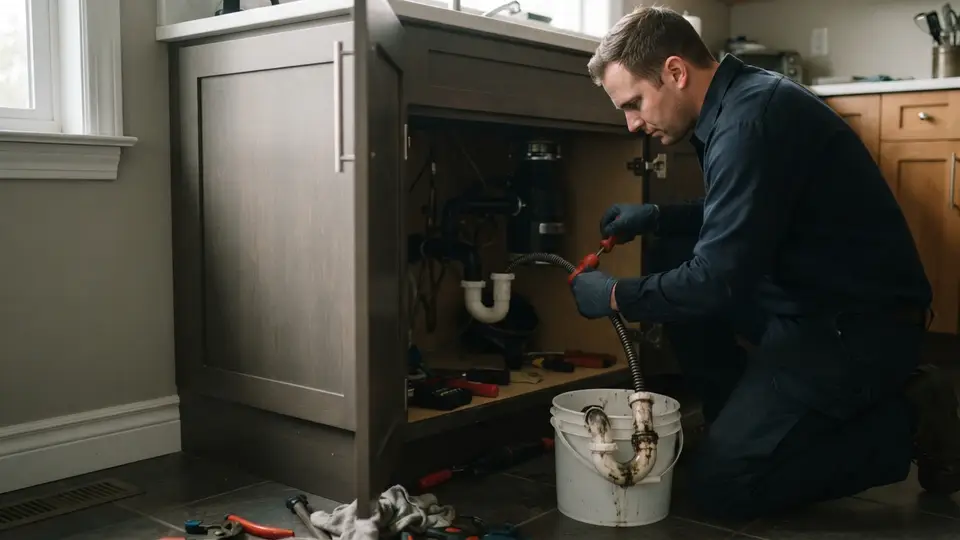
Hand auger
Where we use it: Sinks, showers, toilets
What it does: Breaks up clogs near the fixture
Kitchen sink backing up, or the basement drain overflowing in a storm? We handle drain cleaning and clog removal in Kentucky for homes, rentals and restaurants. Kentucky drains collect limestone scale from hard water, roots from old shade trees in clay laterals, and grease that hardens in cold basement pipe. In older cities, the public sewer may also carry storm water and back up in heavy rain. We clear the line, show you the cause on camera and fix it so the clog stays gone.
The service
Our Kentucky data includes 1,215,352 homes, 54% of them built before 1980. In Bellevue that share is 91%, in Shively 87% and in Covington 75%, so cast iron stacks and clay laterals are the norm there. Newer suburbs such as Georgetown, with a median build year of 2001, have plastic drains that clog from grease, wipes and debris instead.
How we clear Kentucky drains
Where we use it: Sinks, showers, toilets
What it does: Breaks up clogs near the fixture
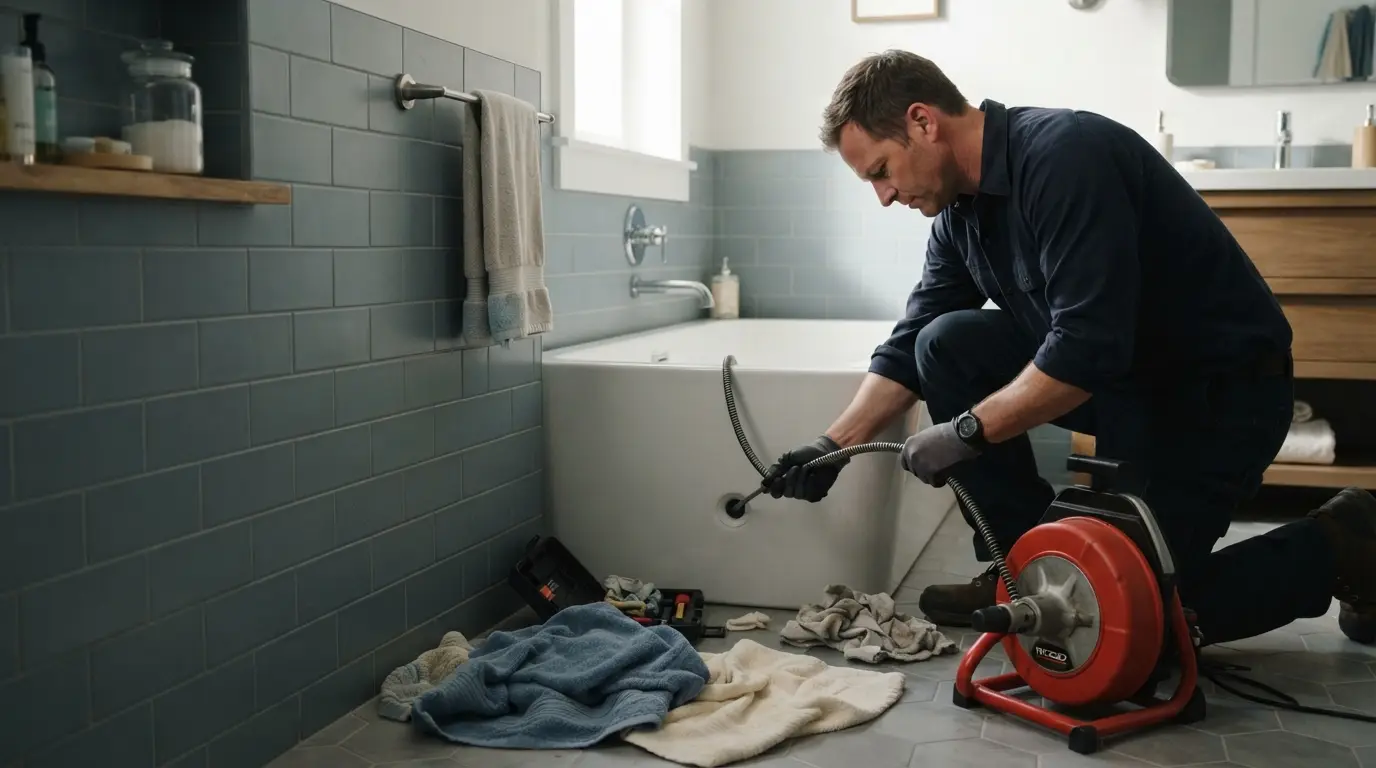
Where we use it: Main lines and laterals
What it does: Cuts roots and packed debris
Where we use it: Grease, scale and sludge
What it does: Scrubs the inside of the pipe
Where we use it: Repeat or mystery clogs
What it does: Shows breaks, sags and roots
Why Kentucky
Hard Kentucky water leaves a mineral crust inside metal drains that narrows them over time.
Oaks, maples and sycamores along older streets grow into clay lateral joints.
Fats cool and harden in basement and crawl space drains.
Older city sewers that carry rain and wastewater can fill and push back into low drains.
Warning signs
Our process
We access the line at the nearest cleanout, run a cable sized for the pipe and confirm flow with water.
For clogs that keep returning, we camera the line and replace or line the broken, sagging or rooted section.
We use high-pressure water to wash grease and scale from pipe walls, after checking old cast iron on camera.
Typical cost
Drain cleaning prices are estimates only until we see the line. These factors decide the cost:
We explain the options, and you approve a written price before we start.
Get a written price: (833) 733-2357A sink is quicker than a main line.
No cleanout means working through a toilet or roof vent.
Jetting and camera inspection cost more than cabling.
Damaged pipe needs repair.
After-hours calls cost more.
Benefits
Roots and scale are removed.
The main stays open.
Camera video shows the pipe.
Sludge is washed out.
Louisville has 289,095 homes in our data, many in older neighborhoods with clay laterals under tree-lined streets. Parts of the older city are served by combined sewers, which can fill during heavy rain and push water into basement floor drains. We clear your line, check whether the problem is yours or the public sewer's and recommend a backwater valve where it helps.
Covington (21,048 homes), Newport and Bellevue have very old housing on steep streets. Laterals can be long, deep and made of clay or cast iron. Basement drains often tie into the main sewer, so a blockage or a storm surge shows up in the basement first. We clear lines from inside and outside and camera them to find breaks.
Renters occupy 63% of homes in Bowling Green and 62% in Richmond, and larger buildings hold 30% of Bowling Green homes. Busy kitchens and shared bathrooms clog often. We clear drains for owners and managers and can jet building lines over summer and winter breaks.
Kitchens in Lexington (148,959 homes), Louisville and Owensboro send grease down their drains every day. We jet kitchen lines, clear floor drains and work alongside your grease interceptor pumping schedule.
In Bowling Green and much of the Bluegrass, ground settling over limestone voids can create sags or breaks in sewer laterals. Waste collects in the low spot and clogs return. A camera inspection shows the sag, and we repair the section with proper bedding so it holds.
In Paducah, 68% of homes predate 1980, and in Owensboro (27,274 homes) many neighborhoods date from the middle 1900s. Older cast iron and clay laterals there clog from roots and scale. River flooding can also raise groundwater and slow drains. We clean, camera and repair these lines.
In rural Kentucky, slow drains throughout the house often point to a full septic tank or a saturated field. We check the tank before cleaning the line so you pay for the right fix, and we can pump the tank on the same visit.
Basement laundry tubs and standpipes collect lint, soap and scale. When the tub starts overflowing during the spin cycle, the drain needs cleaning. A lint trap on the washer hose slows the problem. In older Louisville and Northern Kentucky homes, the laundry often drains into an old floor sink tied straight into the main, so a laundry backup can be the first warning of a main line clog. We check the main when the laundry drain keeps overflowing.
Stop using water if drains are backing up, including the washer and dishwasher. Close the toilet supply valve if the bowl keeps rising.
Do not pour chemical cleaners into a backed-up drain; they damage pipe and endanger whoever opens it. Keep children and pets away, then call us.
Drain cleaning needs no permit, but pipe replacement usually does, and we pull it. Our plumbers hold Kentucky state plumbing licenses.
Why choose us
What you can count on every time one of our plumbers comes to your door.
Every job is handled by a plumber who holds the license your state or city requires, backed by liability insurance.
Our plumber explains the problem and the options, and you approve a written price before any work begins.
Burst pipes, sewage backups and failed water heaters get priority scheduling, including nights and weekends.
We pull permits when the job needs one and schedule the inspection, so the work holds up when you sell.
Repairs and installations come with a written warranty on labor, on top of the manufacturer's warranty on parts.
Our pages and plumbers account for your area's water, soil, climate and the age of the homes around you.
Service area
We clear drains in 555 Kentucky communities. Find yours:
It depends on where the clog is, how we reach it and the method. A sink costs much less than a main line, and you approve a written price before we start.
When grease or limestone scale keeps closing a line, yes. Jetting removes the buildup that a cable leaves, so the drain stays open much longer.
It is priced as its own item. On older or repeat-clog lines, it often saves money by showing exactly what needs fixing.
We open the best cleanout, run a cable with a cutting head through the line, then flush with water to confirm flow.
Yes. We run a camera after clearing the line and show you the video, including any roots, cracks or sags.
We can work through a toilet or roof vent. Adding a cleanout makes future cleanings faster and cheaper.
We advise against them. They can damage older pipes and leave caustic water that burns anyone who opens the line.
Yes. Sewage carries bacteria. Keep people and pets away, avoid contact and stop using water until the line is clear.
Most fixture drains take under an hour. Main lines, root cutting and jetting can take a few hours with camera time.
We schedule as soon as we can, with backups ahead of routine work, and keep you updated on timing.
Many clay laterals with roots need cleaning every year or two. If roots come back faster, a repair may cost less over time.
A softener slows new scale in drains and fixtures. Existing buildup still needs to be cleaned out.
Stop using water and call us. Storm backups get priority, and we find out whether your line or the city sewer is the cause.
Some older sewers carry both rain and wastewater. Heavy storms can fill them and push water into low basement drains.
Yes. Ground settling over limestone voids can create sags or breaks in laterals. A camera inspection shows the damage.