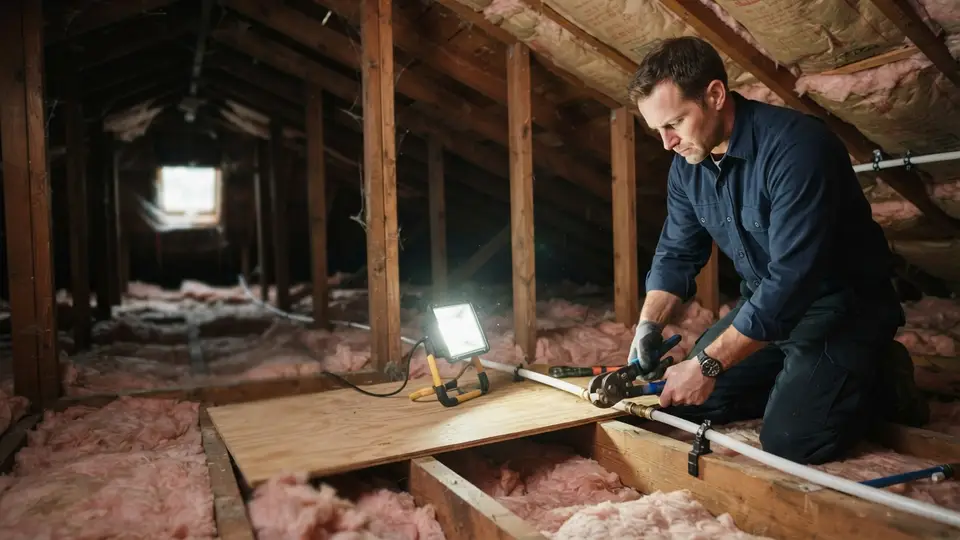
Spot repair
What we do: Open the slab at the leak and fix the pipe
Good choice when: One leak, sound pipe elsewhere
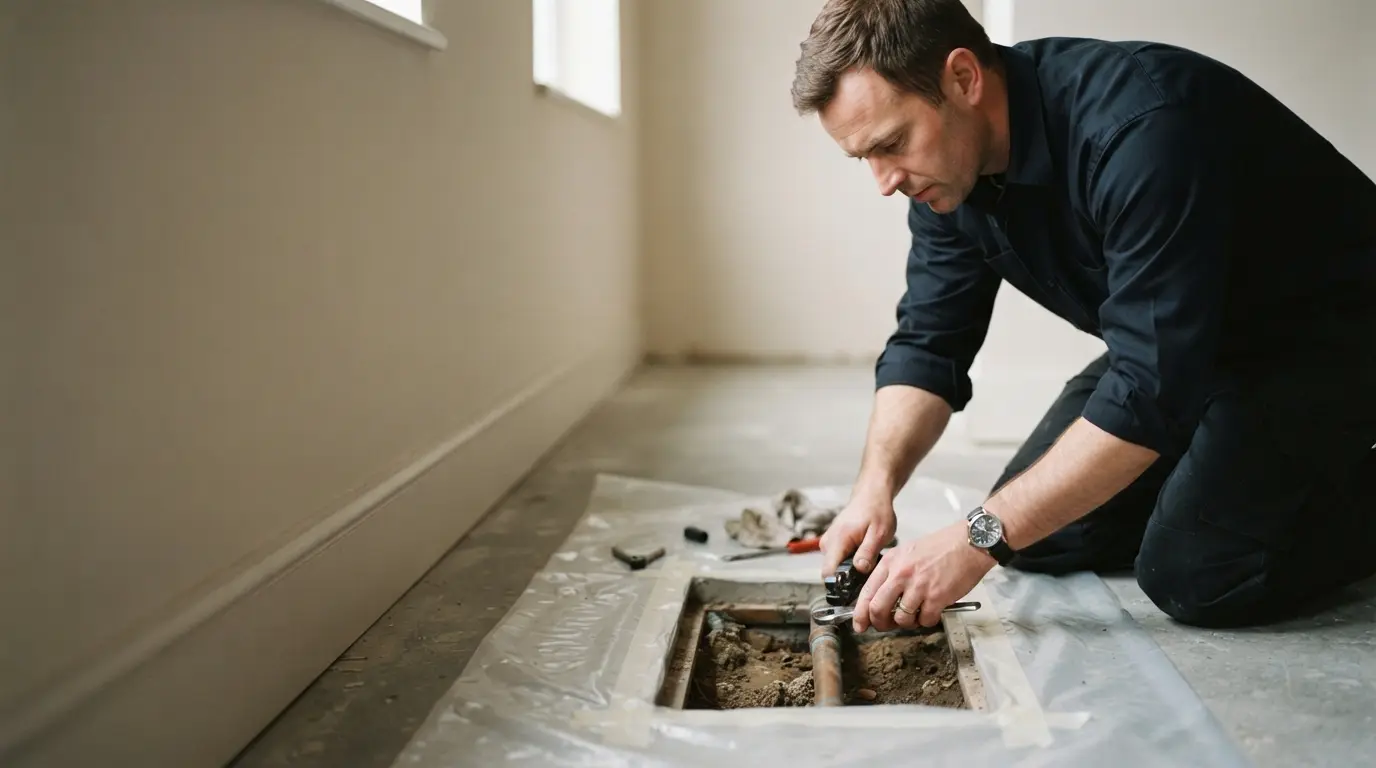
Warm patch on the floor, or a meter that never stops turning? We handle slab leak repair in Kentucky for homes and businesses. Slab homes and townhomes are common in the fast-growing suburbs around Lexington, Louisville and Bowling Green, and older basement homes have drains and lines under concrete too. Settling ground over limestone, hard water and age all wear on buried pipe. We find the leak precisely and repair it through a small opening or reroute the line so the floor stays intact.
The service
A slab leak is a break in a water or drain line under a concrete floor. Newer suburbs such as Georgetown (median built 2001), Nicholasville (median built 1993) and Richmond include many slab homes, townhomes and apartment buildings. In older basement homes in Louisville (289,095 homes), the main drain and sometimes supply lines run under the basement floor.
Repair options
What we do: Open the slab at the leak and fix the pipe
Good choice when: One leak, sound pipe elsewhere
What we do: Run new pipe through walls or attic
Good choice when: Old pipe or costly flooring
What we do: Seal a cracked drain from inside
Good choice when: Drain still holds its shape
What we do: Replace all supply lines
Good choice when: Several leaks over time
Why Kentucky
Ground over karst can settle unevenly, stressing pipes under the slab.
Some Kentucky soils swell and shrink with moisture, moving the slab.
Copper rubs on concrete and gravel, and minerals thin it from inside.
Cast iron drains under older floors rust through.
Warning signs
Our process
We separate hot, cold and drain lines with pressure tests and pinpoint the leak using listening equipment and thermal imaging.
We cut a small, clean opening, replace the damaged pipe, test it and patch the concrete.
We leave the old line in place and run new PEX or copper through walls, ceilings or the attic.
Typical cost
Any figure before we locate the leak is an estimate only. These factors decide the cost:
You approve a written price before we start.
Get a written price: (833) 733-2357Some spots sit under cabinets or tubs.
Rerouting avoids floor damage but may cost more upfront.
Tile and hardwood cost more to restore.
Repeated leaks may call for repiping.
Reroutes and repipes may need one.
Benefits
Less soil washes away.
Water and energy stop leaking out.
Mold and odors stay away.
Repair and reroute priced side by side.
In Bowling Green (33,481 homes) and much of the Bluegrass around Lexington (148,959 homes), limestone voids lie under some neighborhoods. Water from a slab leak can wash soil into those voids and leave the slab unsupported. When we find signs of settling, cracks or voids during a repair, we tell you so a foundation specialist can assess it. Fixing the leak quickly limits how much soil is lost.
In older Louisville and Northern Kentucky homes, cast iron drains run under the basement floor to the street. They rust along the bottom, and water can seep up through cracks or around the floor drain. A camera shows the condition, and we repair by opening the floor or lining the drain.
If one section of an old slab line has failed, others may follow. Rerouting replaces the whole run with new pipe that is easy to reach. It avoids breaking tile or hardwood and is often finished in a day or two. We price both options so you can choose.
Homes near Fort Knox and Fort Campbell, including Elizabethtown (14,788 homes) and Hopkinsville (14,279 homes), include many slab ranches and rentals. Owners who live elsewhere may not notice a slab leak until a tenant reports a warm floor or a high bill. We locate and repair leaks for owners and property managers and send photos of the work.
Some Kentucky homes and garages have radiant heat tubing in the slab. A leak causes pressure loss in the heating system and damp floors. We test each loop, find the leaking circuit and repair or isolate it.
Restaurants, offices and shops on slabs have lines running to restrooms, kitchens and floor sinks. A hidden leak can raise costs for months. We find it, plan the repair around your hours and choose between floor repair and an overhead reroute. For kitchens and restrooms that must stay open, we can often run a temporary line so the business keeps water while the permanent repair is made, then remove it once the new pipe is tested.
A hot water slab leak keeps the heater refilling and heating. If your heater seems to run all day or your electric bill jumps, close the cold valve at the heater for an hour and watch the meter. If the meter stops, the leak is probably on the hot side. We confirm with pressure testing.
Townhome rows in Lexington, Louisville and Bowling Green often share slabs and sometimes share supply lines. A leak under one unit can show up as dampness in the next one, and the repair may involve the homeowner association. We trace the leak to the right line, document which unit it serves and work with the association and neighbors so the repair happens once and is done right.
With every fixture off, check whether the meter is moving. If water is coming up through the floor, close the main shutoff.
If the floor feels warm, turn off the water heater. Move rugs and furniture and take photos. Then call us.
Spot repairs often need no permit, while reroutes and repipes may. We pull permits where required. Our plumbers hold Kentucky state plumbing licenses.
Why choose us
What you can count on every time one of our plumbers comes to your door.
Every job is handled by a plumber who holds the license your state or city requires, backed by liability insurance.
Our plumber explains the problem and the options, and you approve a written price before any work begins.
Burst pipes, sewage backups and failed water heaters get priority scheduling, including nights and weekends.
We pull permits when the job needs one and schedule the inspection, so the work holds up when you sell.
Repairs and installations come with a written warranty on labor, on top of the manufacturer's warranty on parts.
Our pages and plumbers account for your area's water, soil, climate and the age of the homes around you.
Service area
We repair slab leaks in 555 Kentucky communities. Find yours:
It depends on where the leak is, the repair method and the flooring. We give you a written price after finding the leak and before cutting any concrete.
Often, yes, when the old line is likely to leak again or the floor is expensive to replace. We price both options for you.
Many policies cover access and resulting damage but not the pipe itself. Check your policy; we provide documentation.
We pressure test each system to isolate the leak, then use listening equipment and thermal imaging to mark it on the floor.
Usually small, often under two feet across, because we pinpoint the leak first. Rerouting avoids opening the floor entirely.
Yes. Cast iron drains corrode and crack. A camera inspection shows the damage, and we repair or line the pipe.
It can, especially over limestone where water may wash soil into voids. Prompt repair limits the risk.
It signals a hot water leak. Turn off the water heater to save energy and prevent hot water surfacing, then call us.
Most spot repairs take a day, plus curing time for the patch. Reroutes can take one to two days.
Usually the same day. We restore water once the repair is tested, even before the patch cures.
Keep water pressure normal, direct water away from the slab and treat very hard water.
If the pipe is old or worn, more leaks are likely. Rerouting or repiping can prevent repeat repairs.
Close the main shutoff and call us. Active leaks are scheduled ahead of routine work, and we keep you updated on timing.
Settling over limestone voids can stress pipes under slabs. Leaking water can also enlarge voids, so quick repair matters.
Yes, especially in newer suburbs and townhome developments. Older homes more often have basements or crawl spaces.