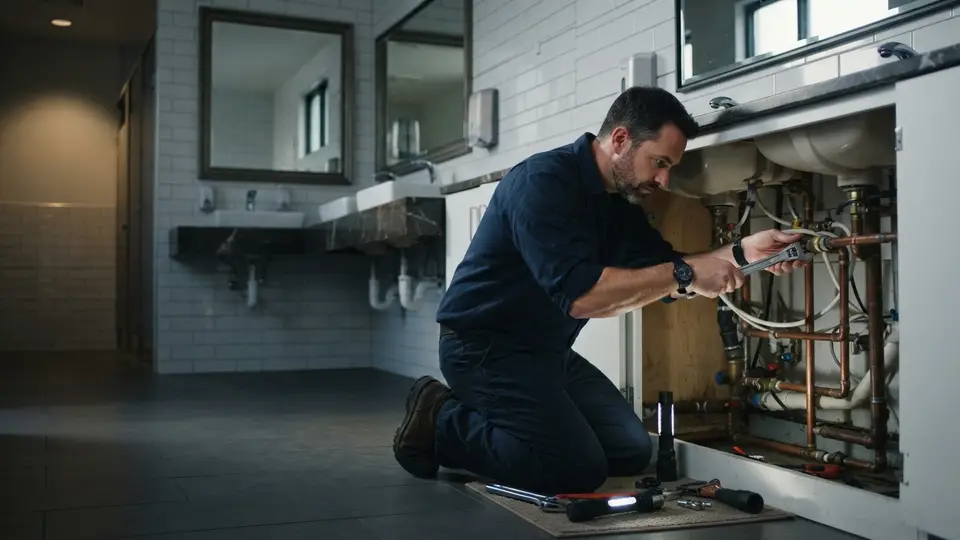
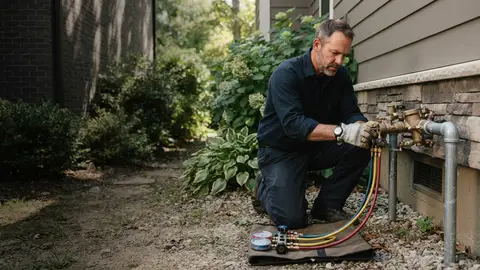
Restaurants and bars
Common work: Grease lines, interceptors, water heaters
Our approach: Before or after service
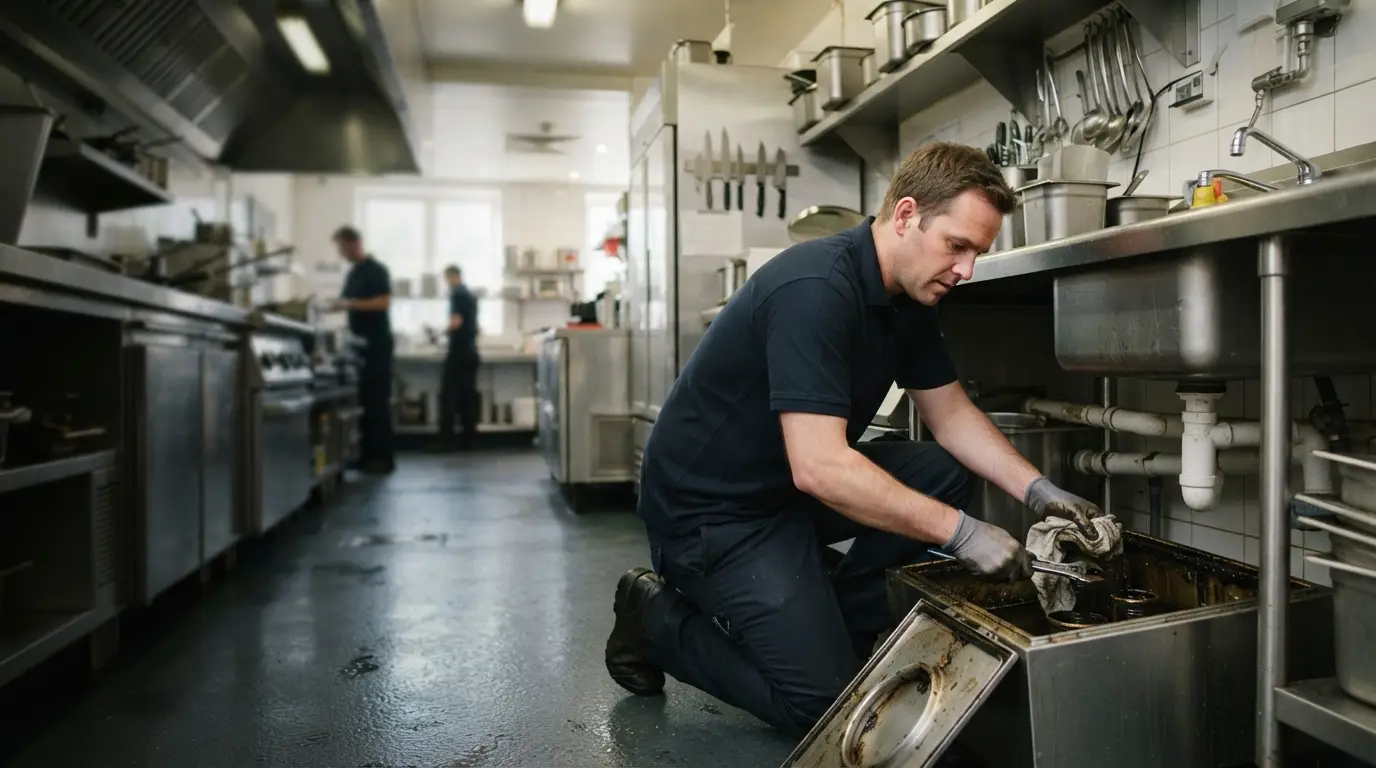
Grease line backing up, or a restroom closed at your business? We handle commercial plumbing in Kentucky. Our plumbers work in restaurants, offices, stores, apartment complexes, warehouses and plants. Kentucky businesses face hard water that scales heaters and dishwashers, older downtown buildings with cast iron and galvanized pipe, and storms that overload sewers. We work around your hours and give you a written price before we start.
The service
Our commercial work ranges from downtown buildings in Louisville (289,095 homes in the city) and Covington to office parks in Lexington, warehouses in Northern Kentucky and plants in Owensboro, Paducah and Georgetown. Larger buildings hold 41% of homes in Florence, 34% in St. Matthews and 31% in Richmond, so apartments are a big part of our work.
Commercial properties we serve
Common work: Grease lines, interceptors, water heaters
Our approach: Before or after service
Common work: Restrooms, backflow, heaters
Our approach: Minimal disruption
Common work: Risers, stacks, unit repairs
Our approach: Planned shutoffs with notice
Common work: Process water, floor drains, gas
Our approach: Safety and code compliance
Common work: Restrooms, kitchens, boilers
Our approach: Scheduled around use
Why Kentucky
Restrooms and kitchens cycle far more than home fixtures.
Scale builds in commercial heaters, dishwashers and ice machines.
Downtown blocks have cast iron stacks and galvanized lines decades old.
Heavy rain fills older sewers and backs up floor drains.
Warning signs
Our process
We jet kitchen lines, repair and install grease interceptors and service commercial water heaters.
We repair restrooms, install fixtures, test backflow devices and maintain heaters and drains.
We repair stacks and risers, replace shutoffs, service boilers and central heaters and handle unit repairs.
Typical cost
Any figure before we see the job is an estimate only. These factors set the price:
You approve a written price before we start.
Get a written price: (833) 733-2357Large or occupied buildings need planning.
After-hours work costs more.
Commercial heaters and interceptors cost more.
Permits and inspections vary.
Maintenance plans spread costs out.
Benefits
Work scheduled around you.
Notes and photos after each visit.
Permits and inspections handled.
From restaurants to warehouses.
Prevention
Regular maintenance reduces emergency calls. We schedule line jetting, water heater flushing, backflow testing, sump pump checks and restroom inspections, with notes after every visit.
Call (833) 733-2357Restaurants in Louisville, Lexington (148,959 homes) and Bowling Green need grease lines that stay open through busy weekends. Sewer utilities in Kentucky commonly require grease interceptors and maintenance records. We jet lines, repair interceptors and help keep records, working before opening or after closing.
Kentucky distilleries, breweries and food processors use large volumes of water for cooking, cooling and cleaning. They need floor drains that handle washdown, hot water capacity, backflow protection on process connections and gas service for boilers. We plan work around production and follow site safety rules.
Renters occupy 63% of homes in Bowling Green and 62% in Richmond, and Hopkinsville (14,279 homes) sits near Fort Campbell. Apartment complexes and student housing need fast repairs, scheduled turnovers and bigger projects during breaks. We work with managers on shutoffs, risers and central water heaters.
Downtown Louisville, Covington (21,048 homes), Owensboro and Paducah have commercial blocks from the 1800s and early 1900s. We camera drains, repipe in phases and add isolation valves so future work does not shut down the whole building.
Northern Kentucky and the Louisville area have many warehouses and distribution centers. They need working restrooms for large shifts, eyewash stations, fire line backflow testing and protection for pipes near loading docks. We set maintenance schedules and respond to breakdowns. Break rooms with coffee machines, ice makers and dishwashers also need water lines and filters that hold up to constant use, and we service those along with the restrooms.
Medical offices need working sinks in every room and backflow protection on equipment. Senior living buildings need anti-scald valves and steady shower temperatures. We plan larger work for evenings or weekends and keep shutoffs short and announced well in advance.
Hard freezes reach pipes near docks, entry doors and exterior walls. Vacant storefronts are especially at risk. We insulate and reroute exposed lines, add heat trace and winterize vacant spaces.
Hotels in Louisville, Lexington and Georgetown (15,646 homes) and event venues across the state see big swings in water use around race weekends, games and conventions. We service large water heaters, recirculation pumps and restroom fixtures before peak dates and respond quickly when something fails during an event.
Churches, community centers and small-town schools across Kentucky often have plumbing that sits idle for days and then serves a crowd. Traps in rarely used restrooms dry out and let sewer gas in, kitchen lines take heavy loads during events, and older boilers and long supply runs can freeze if heat is turned down too far between uses. We repair restrooms and kitchens, set sensible winter settings, test boiler and fire line backflow devices and schedule work around services, classes and events.
Horse farms around Lexington, tobacco and grain operations and farm supply stores need water to barns, wash bays and stock tanks, frost-free hydrants that work in January, and backflow protection where water meets chemicals or livestock. Many are on rural water or wells with septic. We install and repair hydrants, run lines to outbuildings and size water heaters and drains for the actual workload.
For a leak, close the nearest shutoff or the building main. For a backup, stop using fixtures on that line and post a sign.
Keep staff and customers away from water and sewage. Have drawings or valve locations ready if available. Then call us.
Commercial plumbing in Kentucky often needs plan review, permits and inspections under the state plumbing code. We pull permits and coordinate inspections. Our plumbers hold Kentucky state plumbing licenses.
Why choose us
What you can count on every time one of our plumbers comes to your door.
Every job is handled by a plumber who holds the license your state or city requires, backed by liability insurance.
Our plumber explains the problem and the options, and you approve a written price before any work begins.
Burst pipes, sewage backups and failed water heaters get priority scheduling, including nights and weekends.
We pull permits when the job needs one and schedule the inspection, so the work holds up when you sell.
Repairs and installations come with a written warranty on labor, on top of the manufacturer's warranty on parts.
Our pages and plumbers account for your area's water, soil, climate and the age of the homes around you.
Service area
We serve businesses in 555 Kentucky communities, including Owensboro (27,274 homes) and Paducah (13,878 homes). Find yours:
We review the scope, access, timing and code requirements, then give you a written price. Work starts only after you approve it.
Yes. We schedule line jetting, water heater flushing, backflow testing and inspections, priced in writing for your property.
Yes, usually, but it lets you stay open during business hours.
We schedule before opening, after closing or during slow periods and give notice before any water shutoff.
Yes. We jet kitchen lines, repair and install interceptors and help you keep the records your sewer utility may require.
Yes. We coordinate with managers, notify tenants and keep shutoffs short and planned.
Evacuate without using switches and call the gas utility or 911 from outside. We repair the line once it is safe.
Many Kentucky water systems require yearly testing of backflow devices on commercial properties. We test and file results.
Often a day, depending on size, venting and access. We plan to limit time without hot water.
Many are done in one visit. Larger renovations take longer and may need inspection.
It depends on volume and menu. Many busy kitchens benefit from jetting every few months.
Insulate pipes near doors and docks, keep heat on in vacant spaces and add heat trace on exposed lines.
Close the nearest shutoff or the main and call us. Commercial emergencies are scheduled ahead of routine work.
Many require them for food service businesses. Rules vary, so we confirm your utility's requirements first.
Hard limestone water leaves scale in tanks and heat exchangers. Regular flushing and softening extend their life.