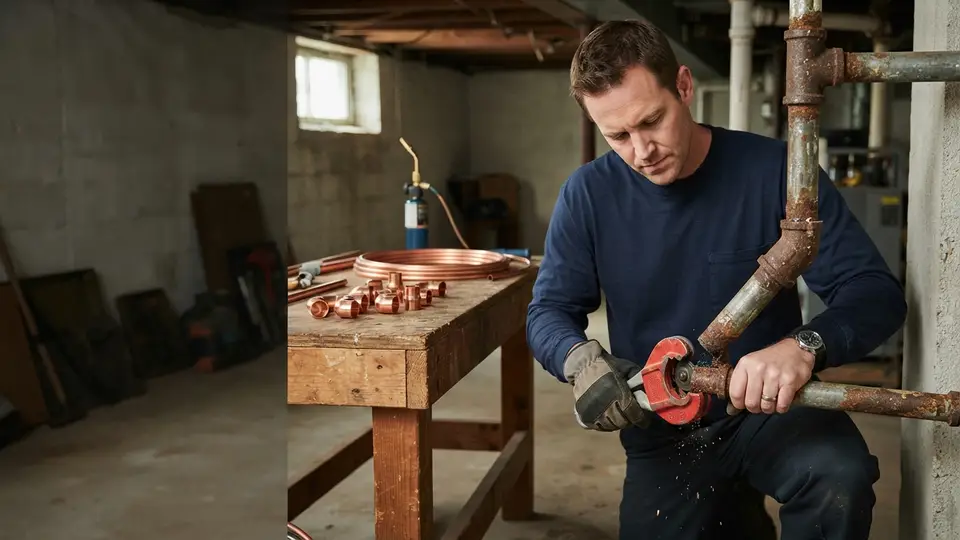
Galvanized steel
Era: Before about 1960
Typical issue: Rust buildup, low pressure
Weak pressure, or water that comes out rusty? We handle repiping and water line replacement in Kentucky for houses, duplexes and small buildings. Many Kentucky homes, especially in river cities and older Louisville neighborhoods, still use galvanized steel or early copper. Hard limestone water speeds wear, and crawl space pipes take a beating from freezes. We replace old lines with PEX or copper, keep water on each evening and patch the access openings when we finish.
The service
27% of the 1,215,352 homes in our Kentucky data were built before 1960, and 54% before 1980. In Bellevue 91% of homes predate 1980, in Shively 87% and in Ashland 77%. Many still have galvanized supply lines, sometimes mixed with copper added during later remodels.
Common pipe in Kentucky homes
Era: Before about 1960
Typical issue: Rust buildup, low pressure
Era: 1950s onward
Typical issue: Pinholes, worn joints
Era: Late 1970s to mid 1990s
Typical issue: Fitting failures
Era: Today
Typical issue: Flexible, freeze tolerant, fewer joints
Era: Today
Typical issue: Durable, good for exposed runs
Why Kentucky
Galvanized pipe from the early and mid 1900s is at the end of its life.
Limestone minerals coat and narrow old pipe.
Pipes near vents freeze and weaken over repeated winters.
Copper joined directly to galvanized corrodes at the connection.
Warning signs
Our process
We replace leaking sections with new pipe and proper transition fittings.
We plan new routes, run supply lines to every fixture, pressure test and remove or abandon old pipe.
We repair leaks in the service line from the meter to the house.
We replace old service lines by trench or, where ground allows, by pulling new pipe through.
Typical cost
Repiping figures are estimates only until we walk the home. The price depends on:
You approve a written price before we start.
Get a written price: (833) 733-2357More bathrooms mean more pipe.
PEX and copper differ in cost.
Crawl spaces and unfinished basements make work faster.
Patching adds cost.
Replacement to the street is separate.
Repipes usually need a permit.
Benefits
Full flow at every tap.
No rust.
New pipe ends repeat repairs.
Updated plumbing helps both.
Many Kentucky homes sit over crawl spaces, which makes repiping practical: we run new mains under the floor and bring branches up to each fixture through the floor or walls. We insulate lines near vents and outside walls so the new pipe is less likely to freeze. Homes with basements get new mains along the basement ceiling instead.
Louisville has 289,095 homes in our data, many in prewar and postwar neighborhoods such as those around St. Matthews (68% built before 1980) and Shively. Galvanized service lines and interior pipe are common there. We repipe the house and replace the private side of the service line, coordinating with the water utility when needed.
An old, narrowed service line can limit pressure even after the inside is repiped. Some Kentucky water utilities are identifying and replacing older service lines, so check with yours. We replace the private side and work with the utility on the public side when required.
Larger buildings hold 30% of homes in Bowling Green, and older duplexes and converted houses are common in Frankfort (13,877 homes) and Winchester. We plan repipes unit by unit, give tenants notice and keep water outages short.
Some Kentucky homes built between the late 1970s and mid 1990s have gray polybutylene pipe. Its fittings can fail without warning, and some insurers ask about it. We replace polybutylene with PEX or copper, usually in a few days.
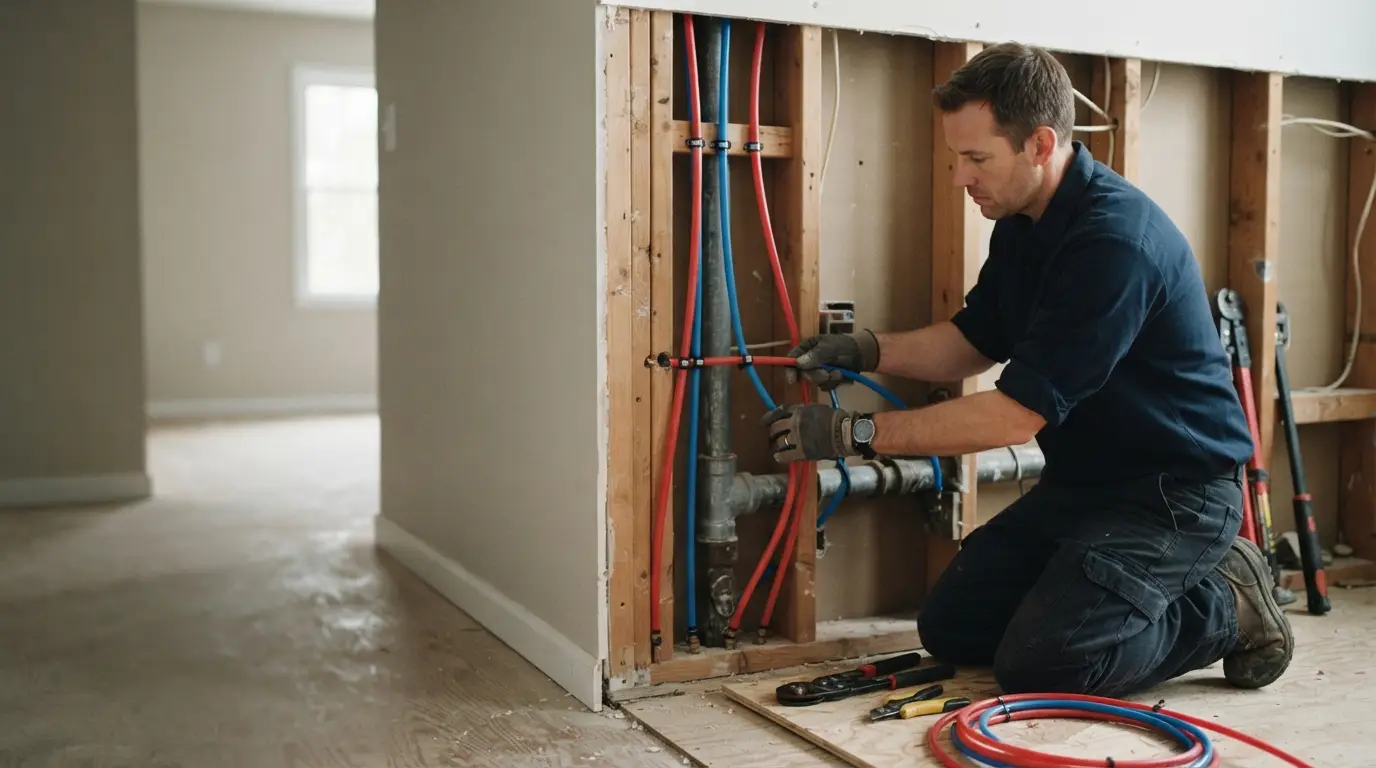
We protect floors, shut off the water and start new mains in the crawl space or basement. Over the next days we connect bathrooms, kitchen, laundry and water heater, a few areas at a time, restoring water each evening. When everything runs on new pipe, we pressure test, call for inspection and patch the access openings.
When walls are open for a kitchen or bath remodel, replacing supply lines costs much less than coming back later. We coordinate with your contractor and schedule rough-in and inspection to keep the project moving.
A repipe is the right time to fix the small parts that cause trouble later. We measure street pressure and add or replace a pressure regulator if it runs high, which protects the new pipe, the water heater and every faucet in the house. We install a new main shutoff that turns easily, put quarter-turn stop valves under each sink and toilet and add a shutoff for the water heater. When something goes wrong in the future, you can isolate one fixture instead of shutting off the whole house.
Rural Kentucky homes on wells often have old galvanized pipe from the pressure tank to the house and throughout the interior. Iron and sediment from the well can speed up clogging. When we repipe a well home, we check the pressure tank, pressure switch and any filters so the whole system works with the new pipe.
If a pipe is leaking, close the main shutoff and cut power to wet areas. Note which fixtures have low pressure or rusty water.
Clear the crawl space entrance or basement walls where pipes run. Then call us to plan the work.
Repiping and water line replacement usually need a Kentucky plumbing permit and inspection. We pull the permit and schedule the inspection. Our plumbers hold Kentucky state plumbing licenses.
We repipe homes in 555 Kentucky communities, including Owensboro (27,274 homes) and Winchester (9,538 homes). Find yours:
Why choose us
What you can count on every time one of our plumbers comes to your door.
Every job is handled by a plumber who holds the license your state or city requires, backed by liability insurance.
Our plumber explains the problem and the options, and you approve a written price before any work begins.
Burst pipes, sewage backups and failed water heaters get priority scheduling, including nights and weekends.
We pull permits when the job needs one and schedule the inspection, so the work holds up when you sell.
Repairs and installations come with a written warranty on labor, on top of the manufacturer's warranty on parts.
Our pages and plumbers account for your area's water, soil, climate and the age of the homes around you.
Service area
Covington (21,048 homes), Owensboro, Ashland and Frankfort have neighborhoods of houses built a century or more ago. Some have been partly updated, with copper added in one bathroom while galvanized still feeds the rest. We map what is there and replace it in one project or in stages to fit your budget.
It depends on home size, fixtures, pipe material, access and wall repairs. We walk through the home and give you a written price before starting.
PEX usually costs less to install and handles freezing better. Copper costs more but works well for exposed runs.
Yes. Replacing the line from the meter to the house involves digging and is listed as its own item.
We run new mains under the floor and bring branches up to fixtures, insulating lines near vents and outside walls.
Usually, yes. We restore water each evening so you can live in the home throughout the project.
We patch access openings. Final paint and texture can be included or handled by your contractor.
Rust is mainly a nuisance, but old pipes can carry other metals. Test your water if you have concerns.
Older service lines or fittings may. Testing your water and checking with your utility tells you whether it is a concern.
Many homes take a few days. Larger homes or finished basements may take longer.
Usually one to two days, depending on depth, rock and what is above the line.
Insulate crawl space pipes, close vents in winter and keep the home heated during hard freezes.
If your water is hard, a softener helps protect new pipe, fixtures and the water heater.
Close the main shutoff and call us. We repair the break first and schedule the repipe afterward.
Many older homes still have galvanized pipe that has rusted inside, and hard water and crawl space freezes add wear.
Some Kentucky utilities have programs for older service lines. Ask yours what applies to your address.