Electric tank
Fuel: Electricity
Notes: Two elements and thermostats to service
Hot water gone, or a tank leaking in the utility closet? We handle water heater repair and replacement in Kentucky. Nearly half of Kentucky homes heat with electricity, so electric tanks with failed elements and thermostats are some of our most common calls, alongside gas heaters in older basement homes. Hard limestone water fills tanks with scale and shortens their life. We find the fault, repair it when that is the better value and install a properly sized replacement when it is not.
The service
Electricity heats 49% of the homes in our Kentucky data and utility gas 48%. All-electric homes are especially common in places like Richmond (84% electric heat), Radcliff (76%) and Georgetown (70%), while gas is more common in older cities such as Owensboro (68%) and Ashland (63%). Propane serves some rural homes, including 27% in Elk Creek and 21% in Claryville.
Water heaters we work on
Fuel: Electricity
Notes: Two elements and thermostats to service
Fuel: Natural gas or propane
Notes: Needs proper venting and combustion air
Fuel: Electricity
Notes: Much lower operating cost in suitable spaces
Fuel: Gas, propane or electric
Notes: Steady hot water, needs descaling
Why Kentucky
Limestone minerals settle in the tank and coat electric elements, which then burn out.
Electric heaters rely on parts that wear out with age and scale.
Once the anode rod is used up, the tank begins to rust.
Without an expansion tank, heated water raises pressure and stresses the tank.
Warning signs
Our process
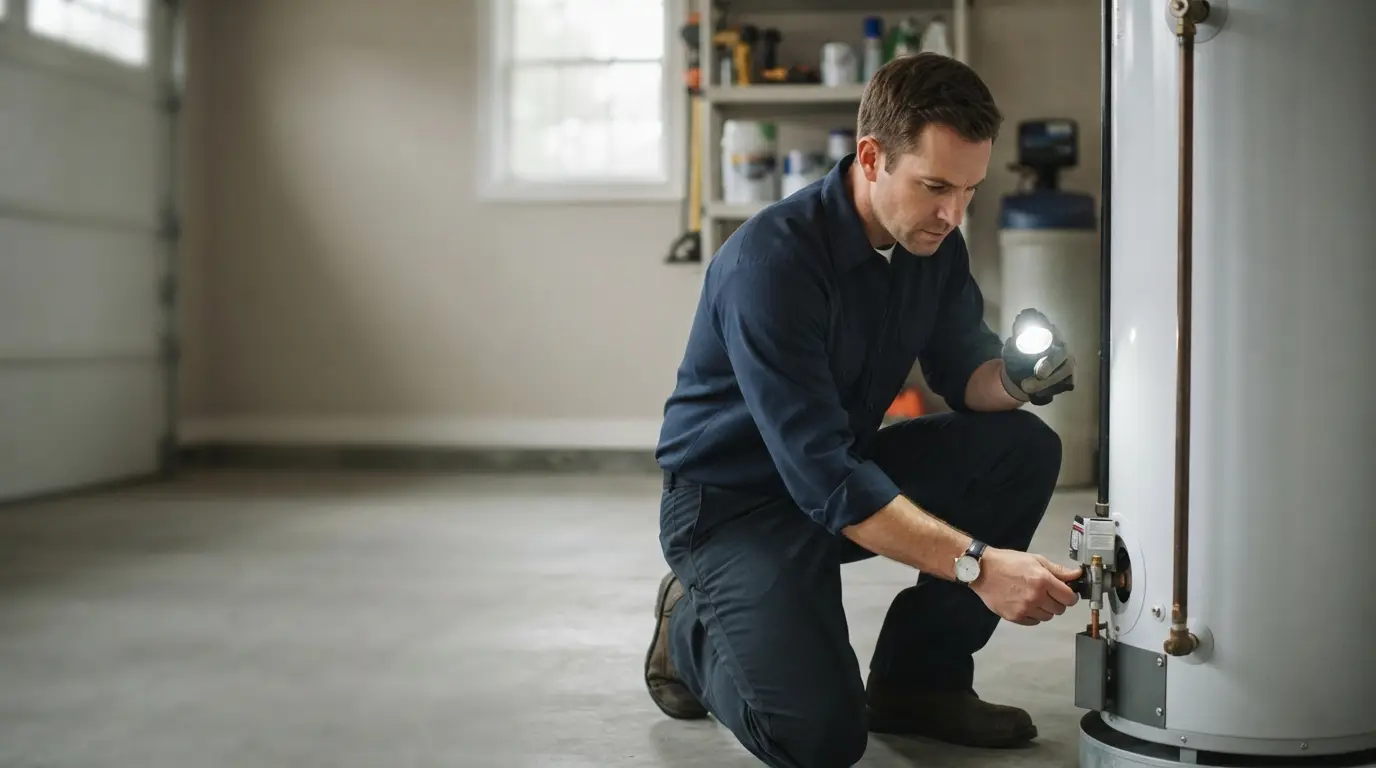
We test elements, thermostats, gas valves, thermocouples and igniters, replace failed parts and check the relief valve.
We size the heater to your home, set it in a drain pan where needed, connect power or gas, add an expansion tank and haul away the old unit.
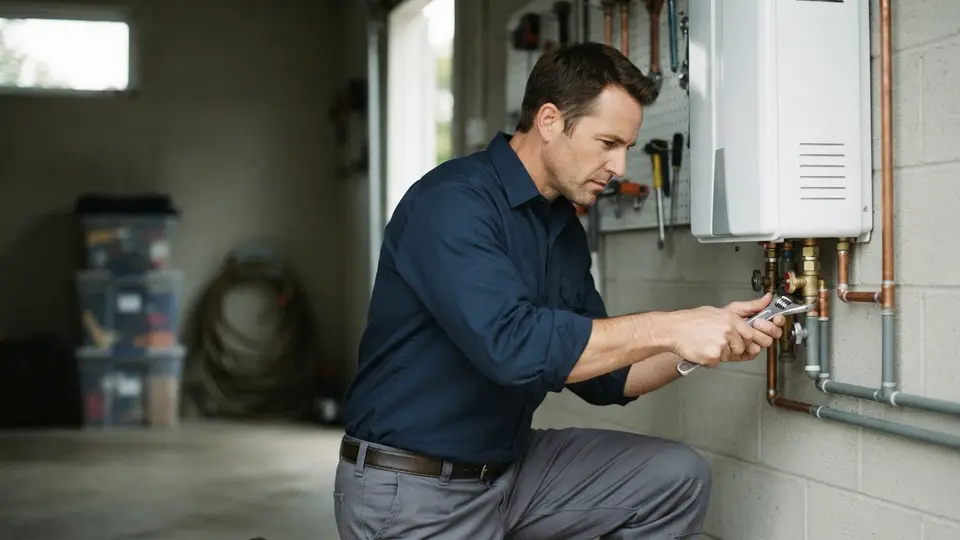
We install tankless units with correct gas or electrical supply and venting, plus valves for yearly flushing.
Typical cost
Any figure before we see the heater is an estimate only. The price depends on:
You approve a written price before we start.
Get a written price: (833) 733-2357Elements and thermostats cost far less than a new tank.
Heat pump and tankless units cost more upfront.
Closets, attics and crawl spaces take longer.
Circuit or gas line upgrades add cost.
Expansion tanks and pans may be required.
Benefits
Matched to your household.
Electrical, gas and venting checked.
Efficient models and clean tanks.
Expansion tanks and anodes protect the heater.
Most electric tanks have an upper and lower element, each with its own thermostat. When the upper element fails, there is no hot water at all; when the lower one fails, hot water runs out quickly. Scale from hard water coats elements and makes them burn out sooner. We test each part with a meter, replace what has failed and flush sediment so the new element lasts.
In all-electric homes, a heat pump water heater can cut water heating costs sharply. It needs a space with enough air, such as a garage, basement or large utility room, plus a condensate drain. It also cools and dries the air around it, which many Kentucky basements welcome in humid summers. We check whether your space suits one before recommending it.
Older gas-heated homes in Louisville (289,095 homes), Owensboro and Ashland often vent the water heater into a chimney shared with the furnace. When the furnace is replaced with a high-efficiency model, the chimney may no longer draft properly for the heater alone. We check venting on every gas install and add a liner or switch to a power-vent unit when needed. Install carbon monoxide alarms near bedrooms.
Tankless units give steady hot water and free up space. Gas models need a larger gas line and new venting; electric models need heavy electrical capacity that many homes lack. Hard water means descaling every year. We give you an honest comparison with a tank or heat pump heater.
Renters occupy 63% of homes in Bowling Green, 62% in Richmond and 58% in Murray. Rental heaters work hard and are often undersized. We repair and replace them for owners and managers and can standardize models across units.
Many Kentucky ranches put the water heater in a hall closet, a utility room or even the crawl space. A leak in a closet can damage floors and walls quickly, so we install drain pans piped to a safe place and suggest leak sensors. Crawl space heaters are hard to service and exposed to cold air in winter; we can often move them to an easier, warmer spot during replacement, which also makes future flushing and repairs quicker and cheaper.
Homes with a pressure regulator or check valve need room for heated water to expand. Without it, pressure rises, the relief valve drips and the tank wears out. We add a thermal expansion tank with new installations where the system needs one. We also measure incoming water pressure, since a failing regulator causes the same dripping relief valve and puts strain on every faucet, toilet valve and appliance in the house.
If the tank is leaking, close the cold water valve above it and switch off the breaker or turn the gas control to off.
If you smell gas, leave and call your gas utility from outside. Do not open the relief valve. Then call us.
Water heater replacement in Kentucky generally needs a plumbing permit and inspection. We pull the permit and schedule the inspection. Our plumbers hold Kentucky state plumbing licenses.
Why choose us
What you can count on every time one of our plumbers comes to your door.
Every job is handled by a plumber who holds the license your state or city requires, backed by liability insurance.
Our plumber explains the problem and the options, and you approve a written price before any work begins.
Burst pipes, sewage backups and failed water heaters get priority scheduling, including nights and weekends.
We pull permits when the job needs one and schedule the inspection, so the work holds up when you sell.
Repairs and installations come with a written warranty on labor, on top of the manufacturer's warranty on parts.
Our pages and plumbers account for your area's water, soil, climate and the age of the homes around you.
Service area
We repair and replace water heaters in 555 Kentucky communities, including Lexington (148,959 homes). Find yours:
It depends on the heater type and size, location, electrical or gas work and code items. We give you a written price before starting.
Yes, usually. If the tank is sound and not leaking, a new element and thermostat cost far less than a new heater.
It costs more upfront than a standard electric tank but can save a lot on electricity over its life.
We shut off power or gas, drain and remove the old heater, set the new one, connect it, fill and test it and haul the old unit away.
We consider household size, bathrooms, tubs and appliances, and whether you prefer a tank, heat pump or tankless unit.
Often, yes, if there is space in a utility room, garage or closet. It makes future service easier.
Leave the home without using switches and call your gas utility or 911 from outside. We repair it once it is safe.
High pressure, high temperature or a worn valve can cause it. Never cap it; call us to find the cause.
A standard tank swap usually takes a few hours. Heat pump, tankless or relocated heaters take longer.
Many tanks last eight to twelve years. Hard water and skipped flushing shorten that.
Once a year is a good habit in Kentucky, where hard water leaves scale in the tank.
Yes. Softened water leaves less scale, helping elements and tanks last longer.
Close the cold supply valve, shut off power or gas and call us. Leaking heaters are scheduled ahead of routine work.
Nearly half of Kentucky homes heat with electricity, and many have no gas service, so electric water heaters are standard.
Hard water coats elements with scale, which makes them overheat and fail. Flushing and softening help.