Clay tile
Era: Before the 1970s
Typical failure: Roots, cracked joints
Sewer backing up again, or a low spot forming over the line? We handle sewer line repair and replacement in Kentucky. Many Kentucky laterals are clay or cast iron laid in the first half of the 1900s, running under old trees on hilly lots and, in karst country, over limestone that can shift. Roots, settling and age break them down. We camera the line, mark the damage from above and repair it by digging or trenchless methods.
The service
Your lateral carries waste from the house to the public sewer, and the owner is usually responsible for it. 27% of the 1,215,352 homes in our Kentucky data were built before 1960. Bellevue (91% before 1980), Shively (87%), Ashland (77%) and Covington have many laterals that have never been replaced.
Sewer pipe in Kentucky homes
Era: Before the 1970s
Typical failure: Roots, cracked joints
Era: Through the 1970s
Typical failure: Rust, scale, split pipe
Era: Mid 1900s
Typical failure: Deforms and collapses
Era: Newer homes
Typical failure: Sags if poorly bedded
Why Kentucky
Mature trees reach into clay joints and fill the pipe.
Ground over limestone voids can settle and break or sag lines.
Slopes in Northern and Eastern Kentucky creep over time, pulling joints apart.
Cast iron corrodes and fiber pipe flattens after decades in the ground.
Warning signs
Our process
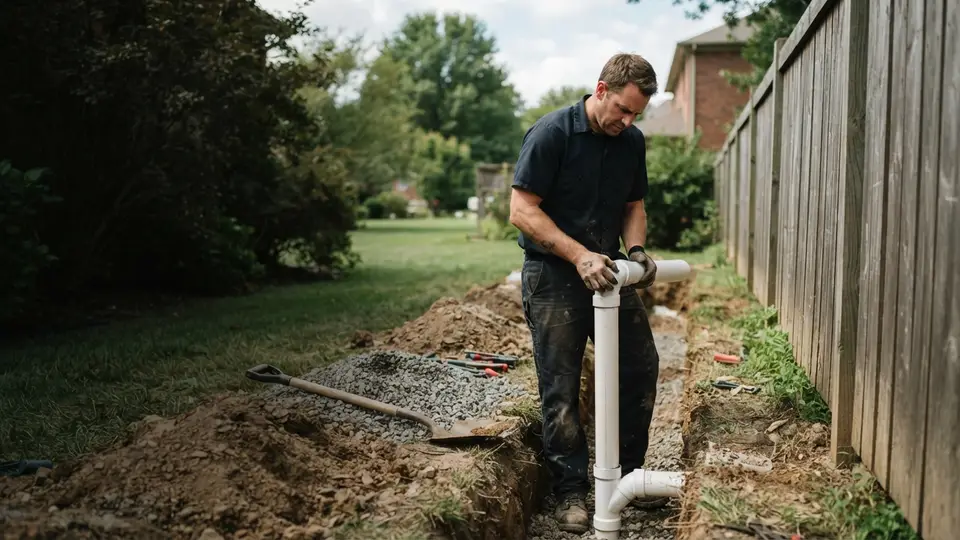
For a single break, we dig at the marked spot, replace the bad section and connect it with shielded couplings.
When the lateral fails along its length, we replace it by open trench, pipe bursting or lining, depending on the route.
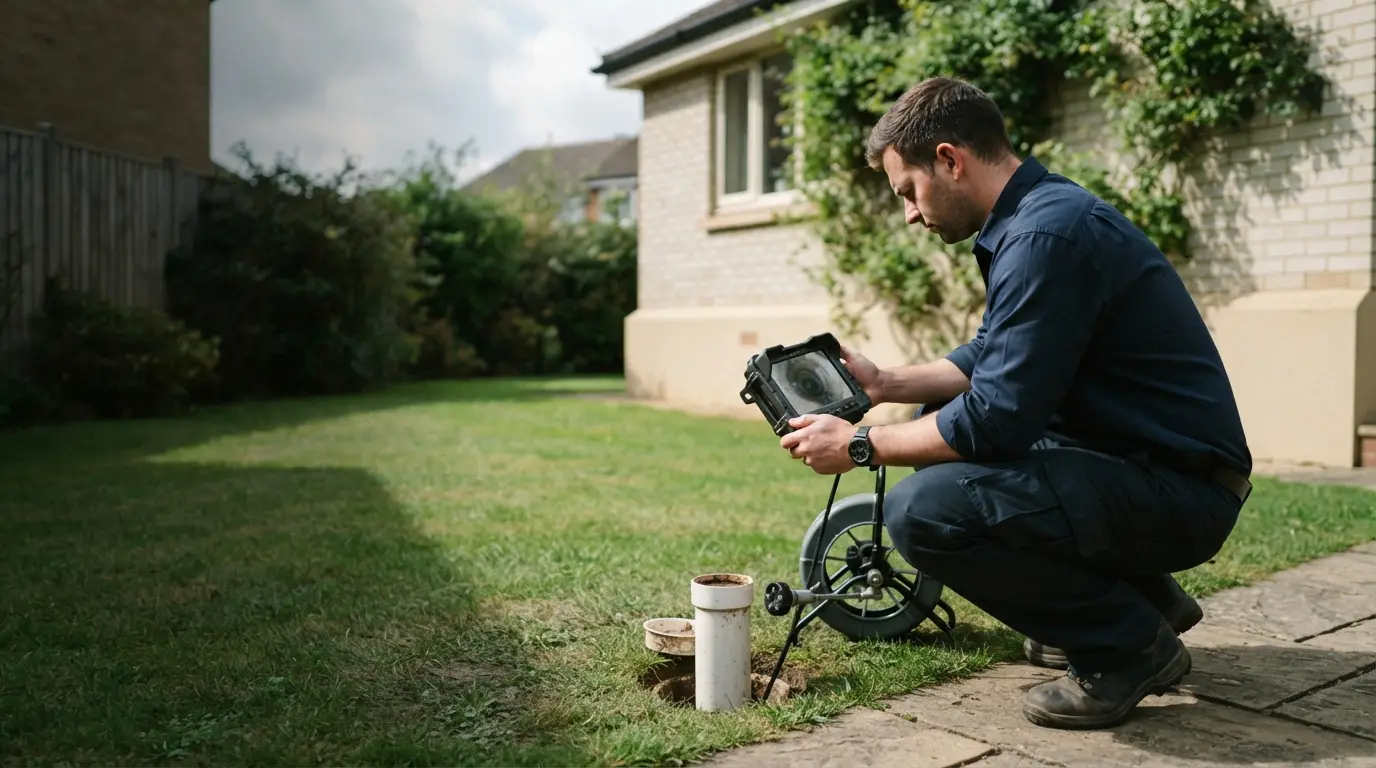
We push a camera through the line, record it and locate problem spots and depth from the surface.
Typical cost
Any figure before the camera inspection is an estimate only. These factors set the final cost:
You approve a written price before we dig.
Get a written price: (833) 733-2357Deep or long lines take more digging.
Hillsides and limestone slow work.
Driveways and trees affect the method.
One break costs less than a full line.
Most sewer work needs a permit.
Benefits
Sealed pipe stops intrusion.
Sewage stays in the pipe.
Buyers value a sound sewer.
Sealed joints keep rodents out.
Louisville (289,095 homes) and older suburbs like St. Matthews (68% before 1980) and Shively have many clay laterals under big trees. Parts of the city are served by combined sewers that carry storm water too. We camera and repair laterals and tell you when a backwater valve should be part of the job to protect your basement.
In Covington (21,048 homes), Newport and Bellevue, houses stand on steep lots with laterals running downhill to the street. Hills shift slowly, and old clay joints separate. Repairs can be deep and need careful shoring. We plan the safest method, including trenchless options that avoid digging across steep yards.
In Bowling Green (33,481 homes) and the Bluegrass around Lexington (148,959 homes), limestone voids can open under lines and let them settle. We camera the line to see sags and breaks, repair the section with proper bedding and, where a void is found, tell you so it can be addressed before it grows.
Lining places a resin sleeve inside the old pipe that hardens into a new pipe. Bursting pulls a new line through as it breaks the old one apart. Both avoid long trenches under driveways, gardens and steep yards, but collapsed or badly sagging pipe usually needs digging. We explain what fits after the camera inspection.
Home inspections rarely include the sewer. On an older Kentucky house, a camera check before closing can reveal a rooted or broken lateral. We give you the video and a written summary to share with your agent, so repairs can be negotiated before you sign.
In growing places like Independence (median built 1999), PVC laterals can still sag if backfill settles, or catch debris left from construction. A camera shows the cause, and the footage helps if a builder warranty applies.
When several neighbors back up at once, the public main may be the cause. Our camera shows where the blockage sits. If it is in the public sewer, we tell you to call your sewer utility, such as the city of Frankfort (13,877 homes) or your regional district. If it is your lateral, we explain the repair and give you a written price.
We compact backfill in layers so the trench does not sink later, save sod when possible and leave the surface level. Trenchless jobs leave only small pits at each end. If a sidewalk or driveway has to be cut, we can arrange the concrete patch as part of the same job.
Ashland, where 77% of homes predate 1980, and river towns downstream to Paducah and Henderson grew up with industry along the Ohio. Their older neighborhoods have clay and cast iron laterals that have spent decades in damp soil near the river. High water raises groundwater and can push into cracked pipe, while flood mud can settle into low spots in the line. After high water, we camera laterals that drain slowly, clear sediment and repair joints that let groundwater in.
Stop using water if sewage is backing up and keep everyone away from it.
Clear access to any outdoor cleanout. Do not dig near the line yourself, then call us.
Sewer repair and replacement in Kentucky generally need a plumbing permit and inspection, and your sewer utility may have its own connection rules. We handle the permits. Our plumbers hold Kentucky state plumbing licenses.
Why choose us
What you can count on every time one of our plumbers comes to your door.
Every job is handled by a plumber who holds the license your state or city requires, backed by liability insurance.
Our plumber explains the problem and the options, and you approve a written price before any work begins.
Burst pipes, sewage backups and failed water heaters get priority scheduling, including nights and weekends.
We pull permits when the job needs one and schedule the inspection, so the work holds up when you sell.
Repairs and installations come with a written warranty on labor, on top of the manufacturer's warranty on parts.
Our pages and plumbers account for your area's water, soil, climate and the age of the homes around you.
Service area
We repair sewer lines in 555 Kentucky communities. Find yours:
It depends on depth, length, slope, rock and what lies above the line. We give you a written price after the camera inspection and before digging.
It can cost more per foot but avoids restoring driveways, gardens and steep yards. Under open lawn, digging may cost less.
Yes, it is priced as its own service. It shows exactly where the damage is, so you only pay to fix what is broken.
We record the line with a camera and use a locator to mark the problem and its depth on the surface.
We call in utility locates, open the ground or set up trenchless equipment, replace the pipe, test it and arrange inspection.
Yes. We shore deep trenches and often use trenchless methods on steep lots to avoid long excavations.
Yes. Sewage contains bacteria and viruses. Avoid contact, keep children and pets away and clean the area after the repair.
No. Utility lines may run nearby, and deep trenches can collapse. Leave excavation to us.
Many lateral replacements take one to two days plus inspection. Deep, rocky or long lines take longer.
Only while the old pipe is out and the new one is connected. We tell you when to stop using water and when it is safe.
Keep trees away from the line, clean roots on schedule and replace clay sections with sealed pipe when roots keep returning.
A camera check every few years for clay or cast iron lines catches damage before it causes a backup.
Stop using water and call us. Sewage backups are scheduled ahead of routine work, and we keep you updated on timing.
They can. Ground settling over limestone voids can sag or break laterals, especially in karst areas like Bowling Green.
Usually the property owner. Rules vary by sewer utility, so check where your responsibility ends.