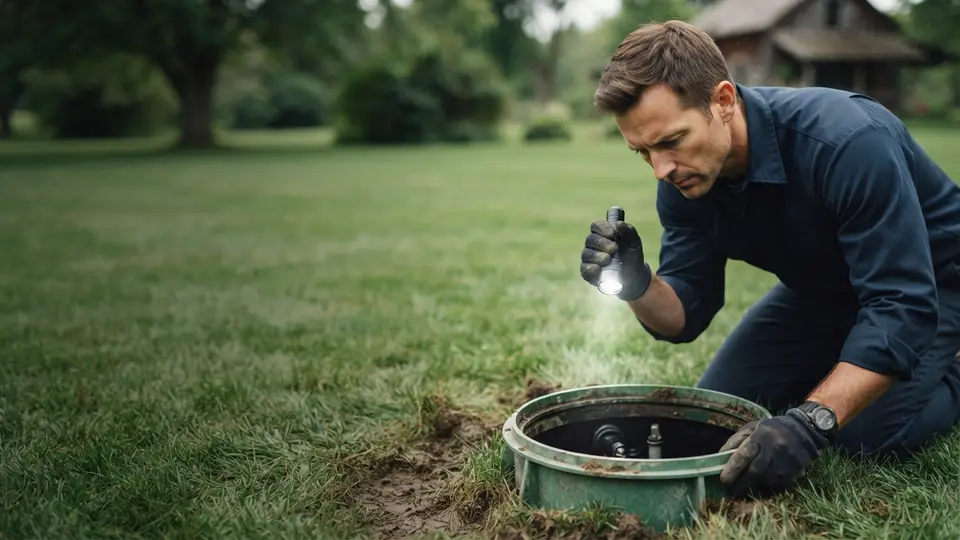
Tank
Job: Settles solids
Common problem: Full tank, failed baffle
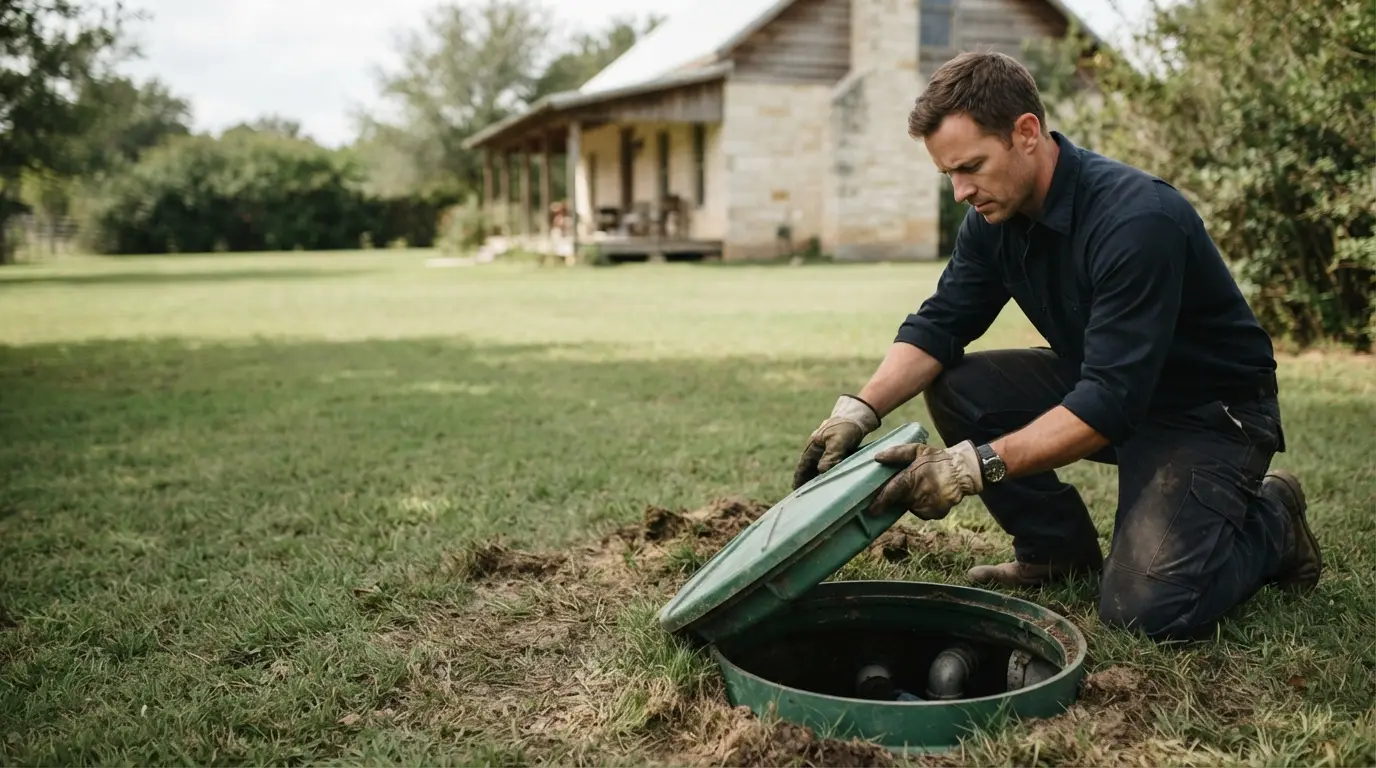
Drains slowing all over the house, or wet ground over the field? We provide septic tank services in Kentucky for farms, rural homes and lots beyond city sewer. Kentucky septic systems face shallow soil over rock, karst limestone where effluent can reach groundwater quickly, and steep slopes in the east. We pump and inspect tanks, test the field and repair or replace failed parts, working with your local health department on permits.
The service
Our data covers 555 Kentucky communities, and a large share of rural Kentucky homes use septic. Growth around Louisville and Lexington, in places like Mount Washington (median built 2002), Nicholasville and Shelbyville, has put many homes on acreages with septic systems. Most systems have a tank and a lateral field; others use mounds or alternative systems because of shallow soil.
Septic parts we service
Job: Settles solids
Common problem: Full tank, failed baffle
Job: Holds back solids
Common problem: Clogging
Job: Divides flow
Common problem: Settling, uneven flow
Job: Treats effluent in soil
Common problem: Saturation, roots
Job: Moves effluent uphill
Common problem: Float or pump failure
Why Kentucky
Limestone and shale near the surface leave little soil to treat effluent.
Sinkholes and cracks can carry poorly treated effluent to groundwater.
Wet springs saturate fields and leave no room for effluent.
Eastern Kentucky hillsides make field layout and access difficult.
Warning signs
Our process
We uncover lids, pump the tank, check baffles and clean the outlet filter.
We measure sludge, check inlet and outlet, inspect pumps and alarms and probe the field.
We repair lines and distribution boxes and replace failed laterals following the design your health department approves.
Typical cost
Any figure before we inspect is an estimate only. These factors decide the cost:
You approve a written price before we begin.
Get a written price: (833) 733-2357Large tanks and buried lids take longer.
Mounds and pumped systems have more parts.
Filters and baffles cost less than laterals.
Limestone and hills slow excavation.
Health department fees apply to repairs and new systems.
Benefits
Solids stay in the tank.
The system drains properly.
Records support inspections.
Protects wells and springs.
Around Bowling Green (33,481 homes) and across the Bluegrass, limestone carries water quickly through cracks and caves. A septic system that is not treating effluent well can affect springs and wells. Regular pumping, a working field and keeping the system away from sinkholes all matter. We inspect systems with that in mind and report any concerns.
Homes around Mount Washington, Shelbyville (6,993 homes), Nicholasville and Elizabethtown often sit on septic. Some are newer systems with pumps and alarms; others are older systems on land that was once farmland. We pump, inspect and repair both, and can advise when a sewer connection becomes available.
In Eastern Kentucky, homes on steep hollows may have old systems, straight pipes or tanks with short fields. Vacancy is high in some towns, 23% of homes in Paintsville in our data. When an old house changes hands or returns to use, we inspect what is there and explain the repair or replacement options with the local health department.
Many rural Kentucky homes have a well or spring near the septic system. In karst country, contamination can travel far and fast. We check distances during inspection, and regular well testing for bacteria is a good habit.
Lenders and buyers often ask for a septic inspection, and finding a problem early gives both sides time to agree on repairs before closing. We pump the tank, inspect the system and provide a written report, then complete any repairs needed for the sale.
We leave a written record after each visit with tank size, condition, repairs and the next suggested pumping date. In small towns like Marion, where 22% of homes are vacant in our data, records help new owners understand an old system quickly.
Kentucky gets plenty of rain, much of it in late winter and spring when the ground is already wet and plants are not yet using much water. Lateral fields in heavy or shallow soil fill up, and toilets start to gurgle after every storm. Pumping the tank does not fix a saturated field, but it can buy time. The longer-term answers are moving roof water and sump discharge away from the field, repairing broken laterals, adding field capacity or, where soil is poor, switching to a mound or alternative system that the health department approves.
On hilly lots, a pump often lifts effluent from the tank to a field uphill. When the float sticks or the pump fails, the alarm sounds and the pump tank begins to fill. We repair floats, replace pumps and check the control panel and alarm, and we show you how to read the alarm so you know when to cut back on water and call.
A garbage disposal adds food solids to the tank and shortens the time between pumpings. If you use one, plan to pump more often and keep grease out of the sink. Composting food scraps instead of grinding them is easier on the system and on the field.
Cut water use to a minimum if drains are slow or the alarm is on. Skip laundry, baths and the dishwasher.
Keep people, pets and vehicles off the field. Never open a tank; the gases are dangerous. Then call us.
Septic systems in Kentucky are permitted through local health departments under state rules. We work with your health department and arrange inspections. Our plumbers hold Kentucky state plumbing licenses for the plumbing we perform.
Why choose us
What you can count on every time one of our plumbers comes to your door.
Every job is handled by a plumber who holds the license your state or city requires, backed by liability insurance.
Our plumber explains the problem and the options, and you approve a written price before any work begins.
Burst pipes, sewage backups and failed water heaters get priority scheduling, including nights and weekends.
We pull permits when the job needs one and schedule the inspection, so the work holds up when you sell.
Repairs and installations come with a written warranty on labor, on top of the manufacturer's warranty on parts.
Our pages and plumbers account for your area's water, soil, climate and the age of the homes around you.
Service area
We serve septic systems in rural areas around these Kentucky communities, including Elizabethtown (14,788 homes):
It depends on tank size, lid depth and truck access. We give you a written price before pumping begins.
It depends on the system type and how much we need to uncover and test. We price it in writing before we start.
Repairing a few lines costs much less than a new field. We test the field and recommend the repair that will last.
We uncover the lids, pump the tank, check baffles and the outlet filter and give you notes on the system and the next pumping date.
Yes. We pump and inspect the system, write a report and complete repairs needed for the sale.
Yes. We trace the line from the house with a locator or probe, and health department records sometimes help.
Yes. Tank gases can be deadly, and old lids may collapse. Leave opening and pumping to us.
Yes, especially in karst ground where water moves fast. Test your well regularly and fix septic problems promptly.
Usually an hour or two once lids are uncovered. Buried lids add digging time.
Often a few days after the health department approves the design, depending on weather and rock.
Many homes need pumping every three to five years. Tank size, household and a disposal affect the schedule.
Most systems do not need them. Pumping on schedule and keeping harmful items out of drains matter much more.
Stop using water and call us. Backups are scheduled ahead of routine work, and we find whether the tank, filter or field is the cause.
Limestone cracks and sinkholes can carry poorly treated effluent to groundwater, so proper siting and maintenance matter more.
Yes, with careful design. Pumped systems and alternative fields are often used where slopes or shallow soil limit options.