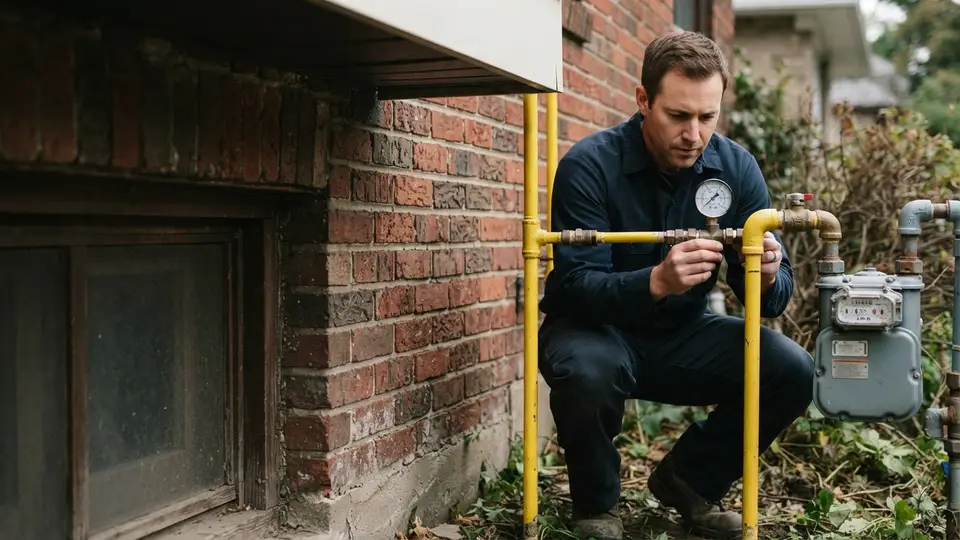
Black iron
Where we find it: Cellars and older homes
Notes: Durable, threaded joints can leak
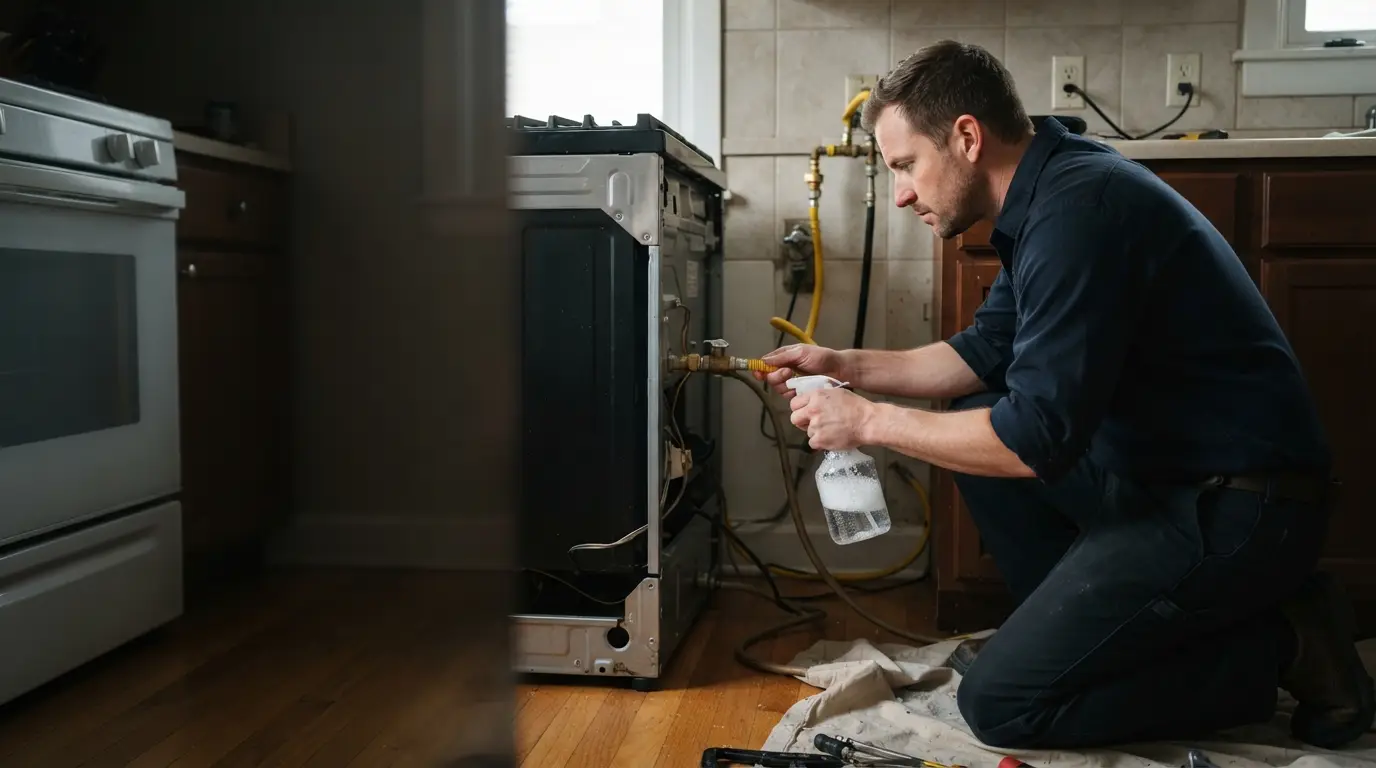
Propane smell near the range, or a new line needed for a generator? We handle gas line repair and installation in Maine. Propane serves much of the state beyond the natural gas mains, which reach Portland, Bangor and a few other areas. Many owners are adding propane ranges, water heaters, fireplaces and standby generators to oil-heated homes. We repair leaks, run new lines and pressure test every system. If you smell gas now, leave the house and call your supplier first.
The service
Natural gas heats 39% of homes in Portland, 34% in South Portland and 30% in Brewer, while propane is the main gas for much of Maine: 24% of homes in Rockland, 23% in Ellsworth and 35% in Cape Neddick heat with it. Many more use propane for cooking, hot water or a generator.
Gas piping we work with
Where we find it: Cellars and older homes
Notes: Durable, threaded joints can leak
Where we find it: Newer installs
Notes: Needs bonding against lightning
Where we find it: Many propane systems
Notes: Common for propane in Maine
Where we find it: Buried lines from tanks
Notes: Underground only, with tracer wire
Why Maine
Frost heave and snow sliding off roofs damage regulators and outdoor piping.
Threaded joints and flare fittings loosen over the years.
Lines extended for new appliances may be undersized or poorly supported.
Snowplows and equipment can hit tanks, meters and risers.
Warning signs
Our process
Once the supplier or utility makes it safe, we find the leak, replace the faulty fitting or pipe and pressure test.
We size and install lines for ranges, water heaters, fireplaces, space heaters and generators.
We connect appliances with new connectors and test every joint.
Typical cost
Any figure before we see the job is an estimate only. These factors set the price:
You approve a written price before we start.
Get a written price: (833) 733-2357Long runs or finished spaces take more labor.
Generators need larger lines.
Trenching through rock and frost adds cost.
Steel, copper and CSST differ.
Gas work needs proper permits and inspection.
Benefits
Every line checked for leaks.
Appliances and generators get enough gas.
Regulators shielded from snow.
Venting and bonding checked.
In Maine, the propane company usually owns or services the tank and first-stage regulator. The piping into the house and to each appliance is often the owner's responsibility. We coordinate with your supplier, install and repair the house piping and second-stage regulators and pressure test before the system is turned on.
After ice storms and wind storms that left Maine homes dark for days, many owners in Bath (4,796 homes), Brunswick, Saco and rural towns added standby generators. A generator needs a line sized for full load plus other appliances, and propane tanks must be large enough for long outages. We size the line, coordinate tank size with your supplier and install and test it with your electrician.
Regulators and meters under roof edges can be buried or crushed by sliding snow and ice, and plows can hit them. Ice in a regulator vent can cause pressure problems. We relocate or shield exposed regulators and risers and suggest marking them so plow drivers can see them.
Many Maine homes heat with oil but add propane for a range, dryer, water heater or fireplace. In older homes in Lewiston (17,105 homes) and Portland, we run new lines through the cellar, size them for every appliance planned and pressure test before the supplier sets the tank.
In Portland (36,559 homes), South Portland, Bangor (16,042 homes) and Brewer, natural gas serves many neighborhoods. The utility owns the line to the meter; we repair and extend house piping and convert appliances when owners switch from oil.
Maine homes are closed up tight in winter, and gas, propane and oil appliances can release carbon monoxide if venting fails or snow blocks a sidewall vent. Install CO alarms on every level and keep vents clear of snow. We check venting on every gas appliance we connect and show you where the vents are.
Many Maine homes add a propane direct-vent wall heater or gas fireplace as backup heat for cold snaps, outages or a chilly back room. These units need a properly sized line, a shutoff and a clear vent path outdoors that will not be buried by snow drifts. We install the gas piping, connect and test the unit and help you place the vent where it will stay clear. When oil heat fails in January, a working backup heater can keep pipes from freezing until the boiler is fixed.
Coastal restaurants and seasonal kitchens often run ranges, fryers and water heaters on propane. When new equipment is added, the line or regulator may be too small and burners starve at peak hours. We calculate the full load, upsize lines and regulators and test before the season opens.
If you smell gas or propane, leave at once and call your supplier, utility or 911 from outside. Do not use switches, phones or anything that could spark.
Once the supplier or utility has made the area safe, call us for the repair. Never attempt gas work yourself.
Gas and propane piping in Maine is regulated by the state and requires properly licensed installers and permits. We handle permits and inspections and coordinate with your supplier. Our technicians hold the Maine licenses gas work requires.
Why choose us
What you can count on every time one of our plumbers comes to your door.
Every job is handled by a plumber who holds the license your state or city requires, backed by liability insurance.
Our plumber explains the problem and the options, and you approve a written price before any work begins.
Burst pipes, sewage backups and failed water heaters get priority scheduling, including nights and weekends.
We pull permits when the job needs one and schedule the inspection, so the work holds up when you sell.
Repairs and installations come with a written warranty on labor, on top of the manufacturer's warranty on parts.
Our pages and plumbers account for your area's water, soil, climate and the age of the homes around you.
Service area
We repair and install gas and propane lines in 155 Maine communities, including Saco (9,869 homes) and Brunswick (7,490 homes). Find yours:
It depends on where the leak is, how much pipe needs replacing, access and permits. You get a written price before work begins.
It depends on the distance from the tank or existing line, the route through the house and permits. We price it after seeing the space.
Generators need larger lines and sometimes a bigger propane tank. We calculate the load and price the full job in writing.
We find the leak, repair or replace the faulty part, pressure test and arrange inspection so service can be restored.
Usually the propane company owns or services the tank and first regulator. House piping is typically the owner's responsibility.
Many can be converted with the manufacturer's kit. We check the model and handle conversion and testing.
Leave without using switches or phones and call your propane supplier or 911 from outside. Call us once it is safe.
On every level and near sleeping areas. Test them monthly and keep sidewall vents clear of snow.
Short appliance lines often take a few hours. Generators and buried lines may take a day or more, plus inspection.
Usually a few hours. We coordinate with your supplier or utility to restore service.
Once a year is a good habit, especially before heating season.
Yes. Older connectors can crack. We install new ones whenever we connect or move an appliance.
Call your supplier for a delivery. The system must be leak checked before relighting, which the supplier or we can do.
Yes. Sliding snow, ice and plows can damage regulators and meters. We shield or relocate exposed equipment.
No. Natural gas serves parts of Greater Portland, Bangor and a few other areas. Most of Maine uses propane.