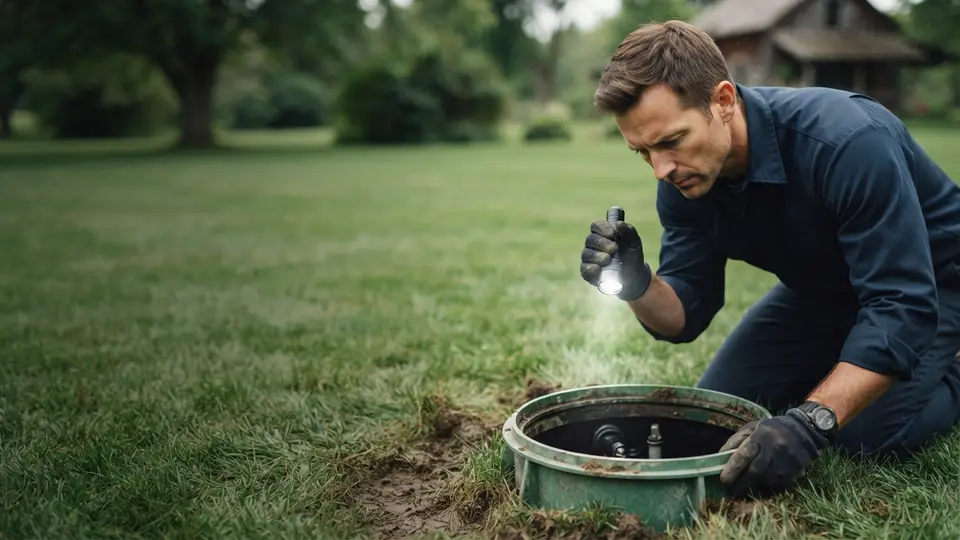
Septic tank
Purpose: Settles solids
Common problem: Full tank, failed baffle
Septic backing up after the spring thaw, or a camp system that has not been pumped in years? We provide septic tank services in Maine. Most Maine homes outside city centers use septic, often on shallow soil over ledge, with deep frost in winter and saturated ground in spring. Lake and coastal homes need extra care to protect the water. We pump and inspect tanks, repair pumps and lines and work on fields designed by a licensed site evaluator.
The service
Our data covers 155 Maine communities, most of them town centers and villages surrounded by homes on private wells and septic. Even growing towns like Gorham (median built 1992) and Sanford have many homes on septic. A typical system has a tank and a disposal field; shallow soil often calls for a raised bed or chamber system.
Septic parts we service
Purpose: Settles solids
Common problem: Full tank, failed baffle
Purpose: Keeps solids out of the field
Common problem: Clogging
Purpose: Lifts effluent to a raised field
Common problem: Pump or float failure
Purpose: Treats effluent in soil
Common problem: Saturation, frost, roots
Purpose: Stores waste at some camps
Common problem: Needs regular pumping
Why Maine
Little soil over rock leaves less room to treat effluent.
Snowmelt fills the ground and floods fields every spring.
Lines and tanks with thin cover can freeze in snowless cold.
Many older homes have systems built before current rules.
Warning signs
Our process
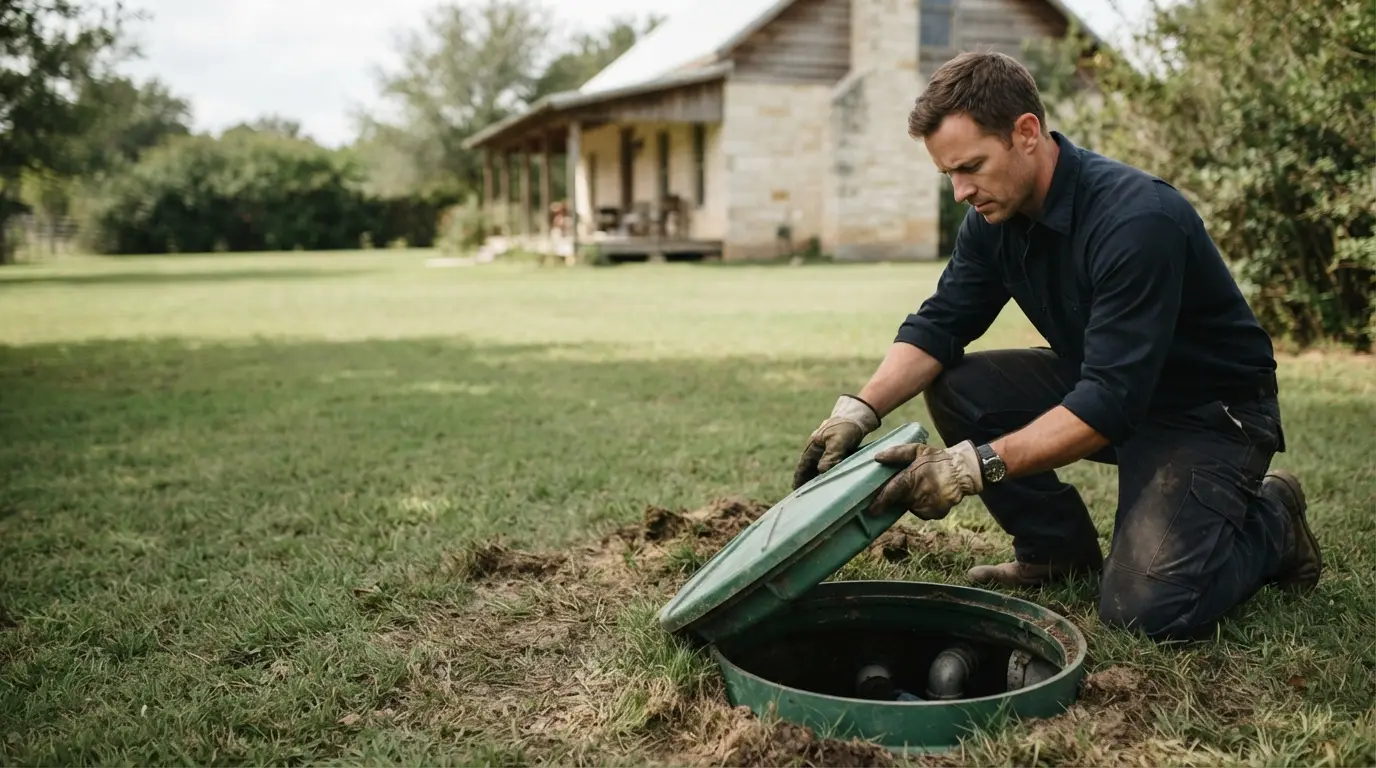
We uncover lids, pump the tank, check baffles and clean the outlet filter.
We measure sludge, check the inlet and outlet, test pumps and alarms and probe the field.
We repair lines and distribution boxes and work with a licensed site evaluator on replacement fields.
Typical cost
Any figure before we inspect is an estimate only. These factors decide the cost:
You approve a written price before we begin.
Get a written price: (833) 733-2357Deep lids and big tanks take longer.
Pump stations and raised fields have more parts.
Filters and baffles cost less than field work.
Rock and frozen ground slow excavation.
Replacement systems need a permit and site evaluator design.
Benefits
Solids stay in the tank.
The system drains as it should.
Proper treatment protects water.
Records support inspections.
Homes near lakes, rivers and the coast need systems that protect the water. Many sit empty part of the year: 64% of homes in Cape Neddick, 33% in Bar Harbor and 28% in Camden are vacant in our data. When a cottage fills up in summer, a small old system can be overloaded. We pump before the season, check filters and advise when a system needs an upgrade.
A cold winter without much snow lets frost reach tanks, pump lines and field pipes. Seasonal homes are especially at risk because no warm water flows through. Keep snow on the field, keep vehicles off it and use water normally. If the system freezes, we find the frozen section and thaw it without damaging the pipe.
In April and May, snowmelt and rain saturate the ground, and fields in heavy or shallow soil fill up. Toilets gurgle and drains slow. Pumping the tank buys time, but if the field fails every spring, it may need repair or replacement. We look at the whole system before recommending work.
Older camps around Millinocket (2,449 homes), the Rangeley and Moosehead regions and Down East may have small tanks, holding tanks or very old systems. When a camp changes hands or adds a bathroom, we inspect what is there and explain the options under state rules.
Almost every rural Maine home has a well near its septic system. A failing field can affect groundwater, so we check distances during inspection. Test your well regularly for bacteria along with arsenic and other natural contaminants.
Buyers and lenders often ask for a septic inspection, and some shoreland sales trigger extra requirements. In Ellsworth (5,044 homes), Belfast and towns across Maine, we pump the tank, inspect the system and provide a written report, then complete repairs needed for the sale.
We leave a written record after each visit with tank size, condition, repairs and the next pumping date. In places like Lisbon, where 21% of homes are manufactured, systems often change owners, and records help.
Because so much of Maine has shallow soil over ledge, many systems use a raised field built up with fill, fed by a pump station that lifts effluent from the tank. When the float sticks, the pump fails or the alarm loses power, the pump chamber fills and drains back up. We repair floats, replace pumps and check the control panel and alarm, and we show you how to read the alarm so you know when to cut back on water and call us. In winter we also check that pump lines drain back so they do not freeze between cycles.
A garbage disposal adds food solids and means more frequent pumping. Water treatment backwash from softeners and filters also adds water to the system. We can size equipment and route backwash where allowed so it does not overload a small field.
Use as little water as possible if drains are slow or an alarm is on. Skip laundry and long showers.
Keep people and vehicles off the field. Never open a tank; the gases are dangerous. Then call us.
Maine subsurface wastewater systems are designed by a licensed site evaluator and permitted through the Local Plumbing Inspector under state rules. We coordinate permits and inspections. Our plumbers hold Maine plumbing licenses for the plumbing we perform.
Why choose us
What you can count on every time one of our plumbers comes to your door.
Every job is handled by a plumber who holds the license your state or city requires, backed by liability insurance.
Our plumber explains the problem and the options, and you approve a written price before any work begins.
Burst pipes, sewage backups and failed water heaters get priority scheduling, including nights and weekends.
We pull permits when the job needs one and schedule the inspection, so the work holds up when you sell.
Repairs and installations come with a written warranty on labor, on top of the manufacturer's warranty on parts.
Our pages and plumbers account for your area's water, soil, climate and the age of the homes around you.
Service area
We service septic systems around these Maine communities, including Sanford (10,246 homes) and Belfast (4,300 homes):
It depends on tank size, lid depth and access for the truck. We give you a written price before pumping begins.
It depends on the system type and how much we need to uncover and test. We price it in writing first.
It is one of the larger septic costs and depends on the site evaluator's design, soil and ledge. We try repairs first when they will last.
We uncover the lids, pump the tank, check baffles and the filter and give you notes on the system and the next pumping date.
Yes. We pump and inspect the system, write a report and complete repairs needed for the sale.
Yes. We trace the line from the house and probe the yard. Town permit records sometimes help.
Yes. Tank gases can be deadly. Leave opening and pumping to us and keep children away from lids.
Yes, if the system is failing or too close. Test your well regularly and fix septic problems promptly.
Usually an hour or two once lids are uncovered. Deep lids and frozen ground add time.
Often a few days once the design is approved, depending on ledge, weather and season.
Many homes need pumping every three to five years. Seasonal camps may need less, busy households more.
Most systems do not need them. Pumping on schedule and keeping harmful items out of drains matter much more.
Stop using water and call us. Backups are scheduled ahead of routine work, and we find which part failed.
Snowmelt saturates shallow soil over ledge, leaving no room for effluent. Fields that fail each spring often need repair.
Yes, especially in snowless cold or at empty camps. Snow cover, normal use and keeping traffic off the field help.