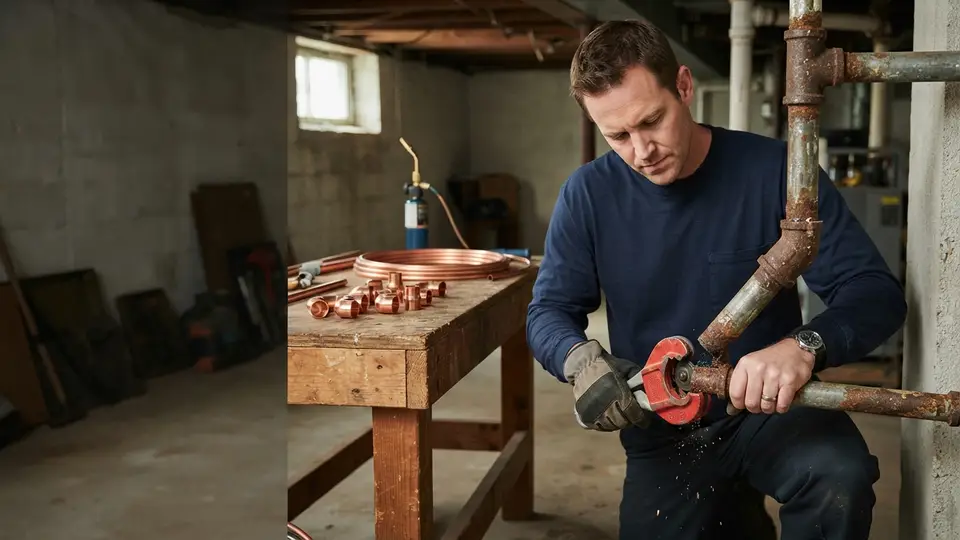
Galvanized steel
Era: Before about 1960
Typical issue: Rust buildup, low pressure
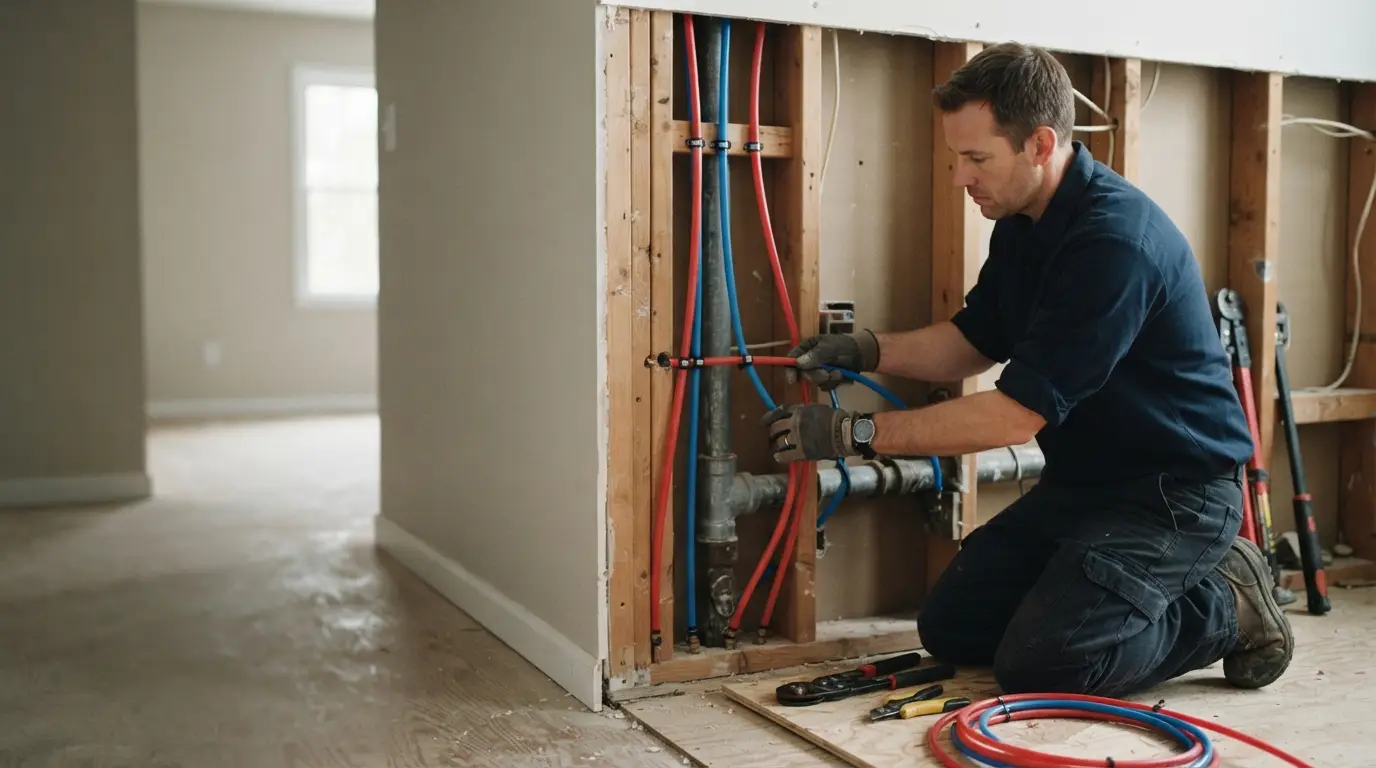
Rusty water, or pressure that drops when someone flushes? We handle repiping and water line replacement in Maine. We work in old houses, triple-deckers and small buildings. Maine has the oldest housing in the country, and many homes still carry galvanized steel or patched copper, some with old lead-era fittings. Freezes and corrosive well water add to the wear. We replace old pipe with PEX or copper, keep water on each evening and treat old plaster and woodwork with care.
The service
46% of the 337,614 homes in our Maine data were built before 1960. In Rumford 94% of homes predate 1980, in Millinocket 89% and in Waterville 81%. Bath (median built 1938) and Rockland (1948) have whole streets of 19th and early 20th century houses.
Pipe in Maine homes
Era: Before about 1960
Typical issue: Rust buildup, low pressure
Era: Mid-century
Typical issue: Pinholes, especially with acidic water
Era: Very old homes
Typical issue: Health concern, replace
Era: Today
Typical issue: Flexible, tolerates freezing better
Era: Today
Typical issue: Durable, good for exposed runs
Why Maine
Galvanized pipe from the early 1900s has rusted closed inside.
Corrosive well water dissolves copper over time.
Pipes in outside walls and ells freeze and weaken year after year.
Mixed metals joined over decades corrode at the joints.
Warning signs
Our process
We replace damaged sections with new pipe and proper transition fittings.
We plan warm routes, run new pipe to each fixture, pressure test and remove or abandon the old lines.
We repair leaks in the service line from the street or well, below the frost.
We replace old service and well lines deep enough to stay below the frost.
Typical cost
Repiping figures are estimates only until we walk the home. The price depends on:
You approve a written price before we start.
Get a written price: (833) 733-2357Old houses with additions need more pipe.
PEX and copper differ in cost.
Cellars help; plaster walls need care.
Replacement below frost is separate work.
Repipes need a plumbing permit.
Benefits
No rust or copper stains.
Full flow everywhere.
Lines move to warm spaces.
Old lead-era parts are gone.
The best repipe in Maine moves water lines out of outside walls, ells and unheated spaces. We run new mains along the cellar ceiling and bring branches up through interior walls wherever possible. Where pipe must run near an outside wall, we insulate it on the cold side and keep it inside the heated envelope. Homes that froze every January often stop freezing after a well-planned repipe.
Old houses in Portland (36,559 homes), Bath and Rockland have plaster walls, wide-board floors and woodwork worth protecting. We use existing chases, closets and cellar access, open as little as possible and leave openings clean for patching. In triple-deckers in Lewiston (17,105 homes) and Biddeford, we plan the work one floor at a time so each family keeps water most of the day.
Some very old Maine homes still have lead service lines or lead-era fittings. Water utilities are identifying these lines, and some have replacement programs, so check with yours. We replace the private side, coordinate with the utility on the public side and recommend testing your water afterward.
If acidic well water caused the pinholes, new copper will corrode too unless the water is treated. Many owners choose PEX for that reason, and we often add a neutralizer at the same time. We also check the pressure tank and switch so the whole system works with the new pipe.
Larger buildings hold 33% of homes in Portland and 30% in Lewiston. We repipe old apartment buildings unit by unit or riser by riser, give tenants notice and keep water outages short.
We protect floors, shut off the water and run new mains in the cellar first. Over the next days we connect bathrooms, kitchen, laundry and the water heater or boiler coil, a few areas at a time, restoring water each evening. Then we pressure test, call the Local Plumbing Inspector and patch openings.
Renovations of old houses in Augusta (10,164 homes), Bangor and across Maine are the best time to repipe. With walls open, new pipe costs far less, and we can move it away from cold exterior walls.
A repipe is the time to fix the small parts that cause trouble later. We install a main shutoff that turns easily, quarter-turn stops under each sink and toilet and a shutoff at the water heater or boiler coil. On city water we check pressure and add a regulator if it runs high; on a well we check the pressure switch setting so new fixtures get steady flow. When a cold snap threatens or a fixture fails, you can isolate one part of the house instead of shutting down everything.
Maine farmhouses grew in stages: a main house, an ell, a connected barn, sometimes converted into living space with its own bathroom. Water lines often run through the coldest parts of these buildings. We map every run, move pipe into heated space where we can and insulate the rest, so the far bathroom stops freezing every winter. Where a barn apartment or studio needs its own shutoff, we add one so it can be drained separately when it sits empty.
If a pipe is leaking, close the main shutoff and, on a well, switch off the pump. Note which fixtures have low pressure or discolored water.
Clear the cellar along walls where pipes run. Then call us to plan the work.
Repiping and service line replacement need a plumbing permit from your Local Plumbing Inspector. We pull it and schedule the inspection. Our plumbers hold Maine plumbing licenses.
Why choose us
What you can count on every time one of our plumbers comes to your door.
Every job is handled by a plumber who holds the license your state or city requires, backed by liability insurance.
Our plumber explains the problem and the options, and you approve a written price before any work begins.
Burst pipes, sewage backups and failed water heaters get priority scheduling, including nights and weekends.
We pull permits when the job needs one and schedule the inspection, so the work holds up when you sell.
Repairs and installations come with a written warranty on labor, on top of the manufacturer's warranty on parts.
Our pages and plumbers account for your area's water, soil, climate and the age of the homes around you.
Service area
We repipe homes in 155 Maine communities, including Biddeford (10,502 homes) and Waterville (7,312 homes). Find yours:
It depends on the size and layout of the house, the pipe material, access and the service line. We walk through and give you a written price first.
PEX tolerates freezing better and resists acidic water. Copper suits exposed runs. We explain both before you choose.
Yes. Replacing the line from the street or well involves digging below frost and is listed as its own item.
We use existing chases and the cellar, open as little as possible and leave clean openings for patching.
Usually, yes. We restore water each evening so you can live in the home throughout the work.
Often, yes, because we move lines away from outside walls and cold spaces into the heated part of the house.
Very old homes may have lead service lines or fittings. Testing your water and checking with your utility tells you.
Acidic well water often causes it. Treating the water protects the new pipe as well as the old.
Many homes take a few days. Large old houses with additions take longer.
Usually one to two days, depending on depth, ledge and season.
Keep the heat on, keep fuel tanks full and insulate any pipe near outside walls.
If it is acidic or hard, yes. Treatment protects new pipe, fixtures and the water heater.
Close the main shutoff and call us. We repair the break first and schedule the repipe afterward.
Maine has the oldest housing in the country, with galvanized pipe, patched copper and freeze damage common.
Some Maine water utilities have replacement programs. Ask yours what applies to your address.