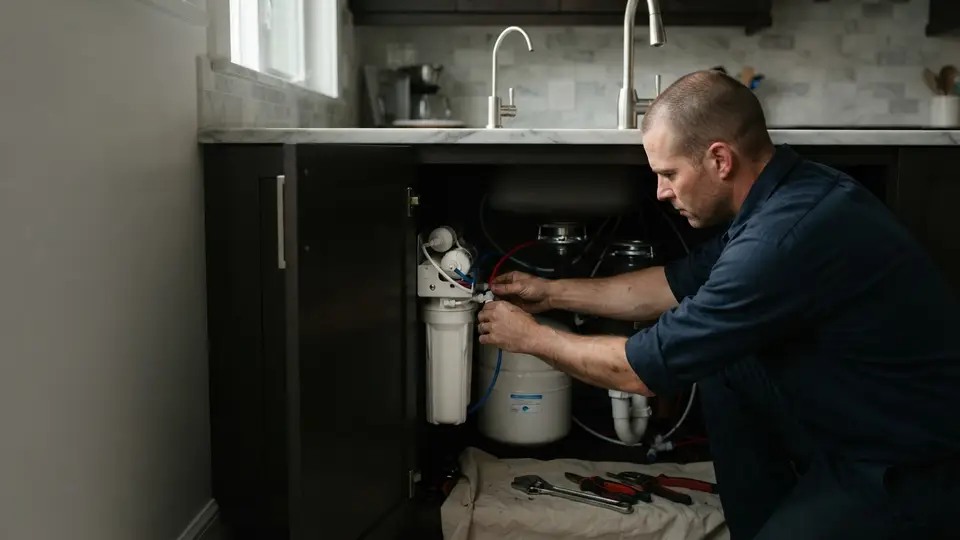
Acid neutralizer
What it addresses: Low pH, corrosive water
Notes: Stops blue-green staining
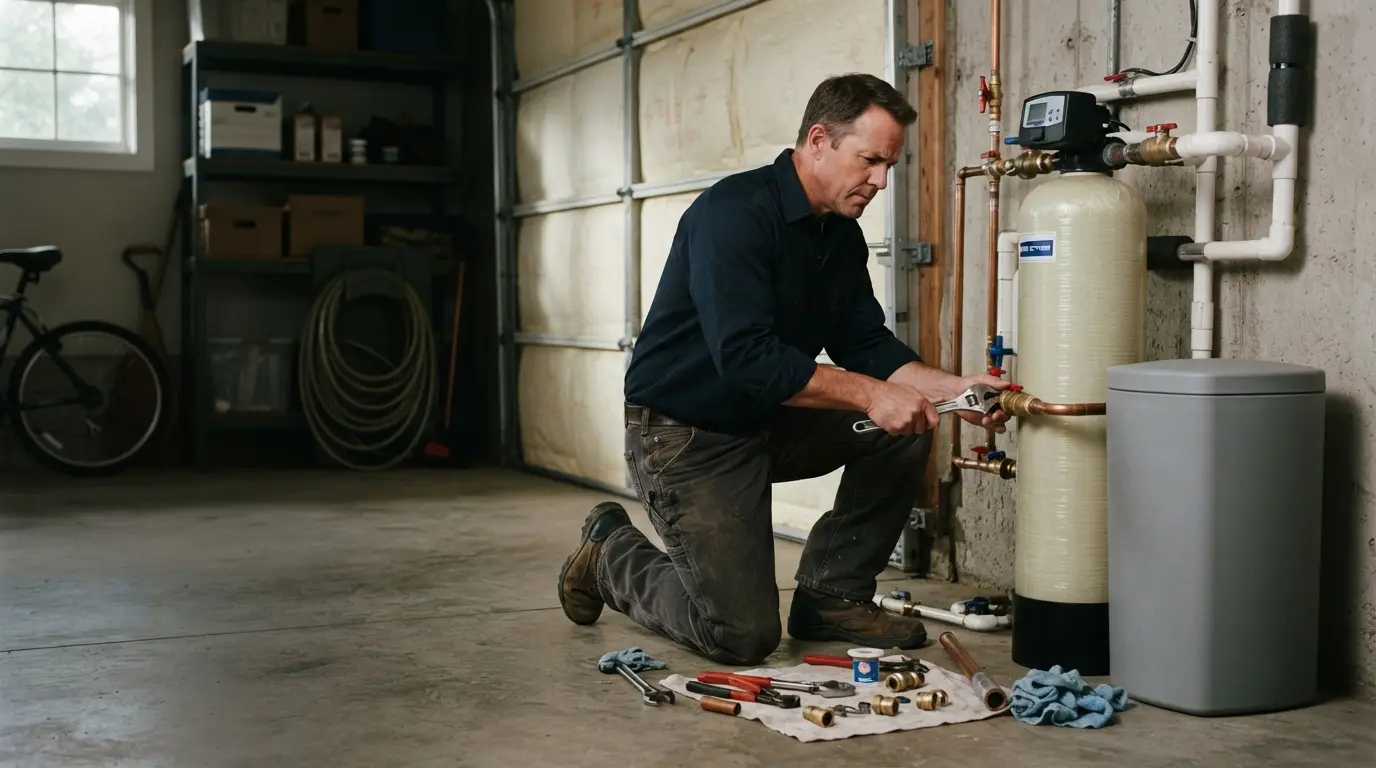
Well test showing arsenic, or blue-green stains in every sink? We install water softeners and filtration in Maine for private wells and city water. Maine bedrock wells can carry arsenic, radon, iron, manganese and hardness, and many are acidic enough to eat copper pipe. These problems need different equipment, so treatment starts with a lab test. We read the results with you and install the softener, neutralizer, filter, reverse osmosis or radon system that fits.
The service
Portland (36,559 homes) and many larger towns use public water, often from lakes, while most rural Maine homes rely on private wells drilled into bedrock. Even fast-growing towns like Gorham (median built 1992), Saco and Sanford have many homes on wells. Each well is different, so testing comes before any equipment.
Treatment systems we install
What it addresses: Low pH, corrosive water
Notes: Stops blue-green staining
What it addresses: Hardness, some iron
Notes: Regenerates with salt
What it addresses: Stains and black deposits
Notes: Common on bedrock wells
What it addresses: Arsenic
Notes: Whole house or reverse osmosis
What it addresses: Radon gas in well water
Notes: Aeration or carbon
What it addresses: Bacteria
Notes: With a sediment filter
Why Maine
Granite and other bedrock can release arsenic, radon, uranium and manganese into well water.
Low-pH water dissolves copper and brass and can raise lead from old fittings.
Some wells carry iron and hard minerals that stain and scale.
Shallow or damaged wells can pick up bacteria after heavy rain or snowmelt.
Warning signs
Our process
We size the softener from hardness, iron and household use, install a bypass and connect the drain.
We install neutralizers, iron and manganese filters, sediment filters and radon systems on the main line.
We install under-sink reverse osmosis for drinking water, often used to reduce arsenic and other dissolved contaminants.
Typical cost
Any figure before we see your test results is an estimate only. These factors determine the cost:
You approve a written price before we start.
Get a written price: (833) 733-2357Several problems need several systems.
Bigger families need bigger systems.
Drains, power and space affect labor.
Arsenic, radon and RO systems add cost.
Salt, media, filters and lamps are ongoing.
Benefits
Arsenic and radon reduced.
No more pinhole leaks from acidic water.
No blue, orange or black stains.
Less scale and corrosion.
Maine health officials recommend testing private wells regularly, including for arsenic, radon, uranium and bacteria. A certified lab test tells us exactly what is in your water. Arsenic has no taste, color or smell, so the only way to know is to test. We review results with you and recommend only the treatment your water needs, then suggest a follow-up test to confirm it works.
Arsenic is found in many Maine bedrock wells. Depending on the level and type, treatment can be a reverse osmosis system at the kitchen tap for drinking and cooking or a whole-house system. The right choice depends on your test results and how the water is used. We install and maintain both and recommend retesting after installation.
Radon gas can dissolve in well water and escape into the air when you shower, wash dishes or do laundry. High levels are treated with an aeration system that releases radon outdoors, or with carbon filtration at lower levels. Air radon is handled separately by radon professionals; we focus on the water side.
Blue-green stains mean the water is dissolving your copper pipe. Over time it causes pinhole leaks and can raise copper and lead in drinking water. An acid neutralizer raises pH with a mineral bed, protecting pipe, fixtures and the water heater. It is often the first piece of a Maine treatment system.
Maine public water systems treat water to meet drinking standards. Some owners still want less chlorine taste or a drinking water tap with reverse osmosis. Your utility's annual water quality report lists what is in the water, and we use it to suggest simple options.
Renters occupy 58% of homes in Orono and 65% in Farmington, and larger buildings hold 33% of Portland homes. Owners of buildings on wells can treat water for all units with one system. We install and service treatment for owners and managers.
Most Maine homes have a cellar with room near the pressure tank, which makes installation simpler. Treatment equipment needs a drain for backwash and power for controls. In homes in Ellsworth (5,044 homes), Belfast and Caribou (3,931 homes) on small septic systems, we size backwash and route it where allowed so it does not overload the field.
Iron leaves orange stains and manganese leaves black or brown deposits on fixtures, dishes and laundry. Both are common in Maine bedrock wells and can also clog pipes, valves and water heaters over time. A softener handles small amounts of iron, but higher levels need a dedicated iron and manganese filter that oxidizes and traps the minerals. If the water is also acidic, the neutralizer usually goes first so the iron filter can do its job. We size the system from your test results and set the backwash schedule to match your water use.
When a well needs more than one treatment, the order matters. A sediment filter protects the equipment after it, a neutralizer raises pH, iron and hardness come out next, and arsenic or reverse osmosis treatment and UV come last. We lay out the system so each stage works well and can be serviced easily.
Arrange a certified lab test of your well water if you do not have recent results. On city water, find your utility's water quality report.
Clear space near the pressure tank or main line. Then call us to review results and plan the installation.
Treatment installations that change plumbing may need a permit from the Local Plumbing Inspector. We pull permits where required. Our plumbers hold Maine plumbing licenses.
Why choose us
What you can count on every time one of our plumbers comes to your door.
Every job is handled by a plumber who holds the license your state or city requires, backed by liability insurance.
Our plumber explains the problem and the options, and you approve a written price before any work begins.
Burst pipes, sewage backups and failed water heaters get priority scheduling, including nights and weekends.
We pull permits when the job needs one and schedule the inspection, so the work holds up when you sell.
Repairs and installations come with a written warranty on labor, on top of the manufacturer's warranty on parts.
Our pages and plumbers account for your area's water, soil, climate and the age of the homes around you.
Service area
We install treatment in 155 Maine communities, including Sanford (10,246 homes) and Topsham (3,157 homes). Find yours:
It depends on what is in your water, how many systems are needed and installation details. We review your lab test and give you a written price first.
A drinking water reverse osmosis system costs less than whole-house treatment. Your arsenic level and water use guide the choice.
Salt, neutralizer media, filters, membranes and UV lamps. We explain them so there are no surprises.
We start with a certified lab test, then recommend only the equipment that addresses what the test found.
We shut off the water, install the system after the pressure tank, connect drains and power, set it up and test.
Yes. We install aeration or carbon systems for radon in well water. Air radon is handled by radon professionals.
Only a lab test can tell. Arsenic and radon have no taste or smell, so regular testing is important in Maine.
No. Arsenic needs specific treatment such as reverse osmosis or an arsenic filter.
Most single systems take a few hours. Multi-stage systems take most of a day.
Many systems last ten years or more with care. Media and parts need periodic replacement.
Maine health officials recommend regular testing; after installing treatment, test again to confirm it works.
Acidic water is dissolving copper pipe. An acid neutralizer fixes the cause and protects your plumbing.
Put it in bypass, close the inlet valve and call us. Leaks that will not stop are scheduled ahead of routine work.
Some is, but many Maine wells are soft and acidic instead. A test shows which problem you have.
Large backwash volumes can stress a small field. We size equipment and route backwash where allowed to protect it.