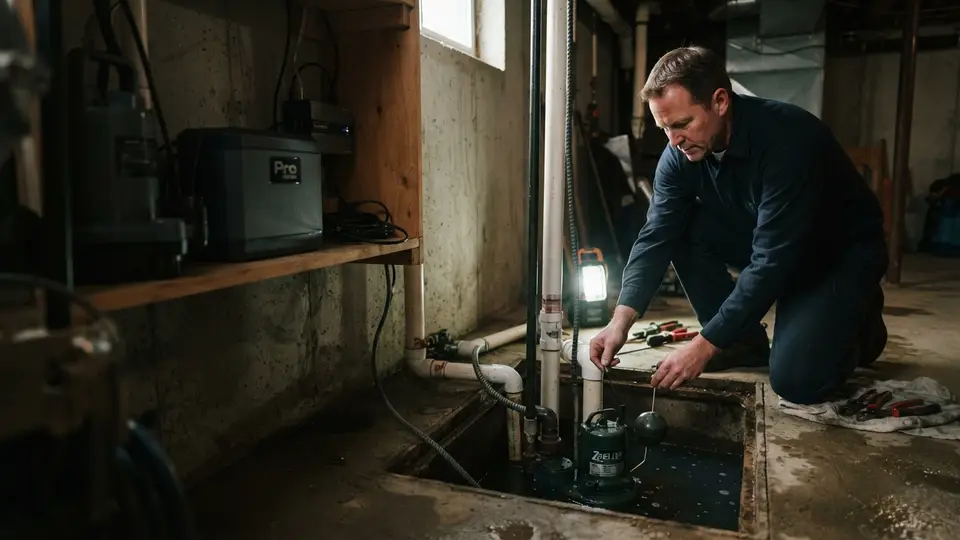
Submersible pump
How it works: Sealed motor in the pit
Best for: Finished basements
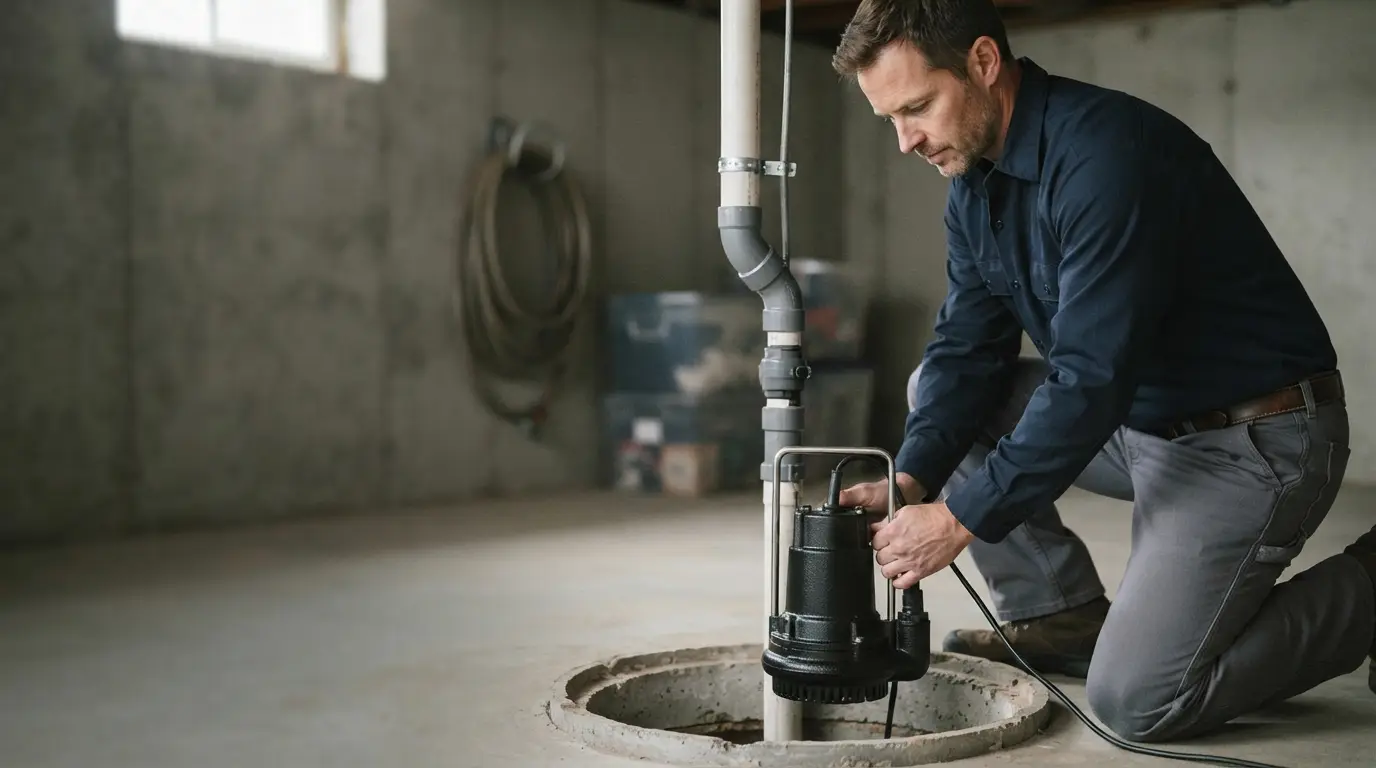
Cellar flooding in the spring thaw, or a pump that quit when the power went out? We handle sump pump repair and installation in Maine. Maine cellars sit in wet, rocky ground, and every spring snowmelt and rain push groundwater through fieldstone walls and floor cracks. Ice storms and nor'easters knock out power just when pumps are needed most. We repair and replace pumps, add battery backups and keep discharge lines from freezing.
The service
Most Maine homes have cellars, from fieldstone foundations in Lewiston (17,105 homes) and Augusta to poured basements in Gorham (median built 1992). Newer basements usually have drain tile and a pit; older cellars may have a hand-dug hole or nothing at all.
Sump pump options
How it works: Sealed motor in the pit
Best for: Finished basements
How it works: Motor above the pit
Best for: Small pits, easy service
How it works: Second pump on a battery
Best for: Storm outages
How it works: Runs on city water pressure
Best for: Homes on public water
Why Maine
Melting snow and frozen ground send water toward the foundation for weeks.
Old stone foundations let groundwater seep through the joints.
Water perches on rock and dense soil instead of draining away.
Nor'easters and ice storms cut power for days.
Warning signs
Our process
We test the pump, float and check valve, clean the pit and replace worn parts.
We size the pump, dig or improve the pit and route discharge away from the foundation.
We add a battery-powered second pump with an alarm so water keeps moving during outages.
Typical cost
Any figure before we inspect is an estimate only. These factors determine the cost:
You approve a written price before we start.
Get a written price: (833) 733-2357A float costs less than a pump.
Heavy inflow needs a stronger pump.
Cutting concrete or digging through stone takes labor.
Extra equipment adds cost.
Buried, frost-protected lines add work.
Benefits
Water leaves before it spreads.
Backups keep pumping.
Old sills and joists stay dry.
Alarms alert you first.
March and April are the hardest months for Maine cellars. The ground is still frozen near the surface, so melting snow cannot soak in and runs toward the house. Pumps may run every few minutes for weeks. We replace tired pumps before the thaw, check that floats move freely and make sure discharge water does not loop back into the pit.
In Caribou (3,931 homes), Bangor and inland towns, discharge lines freeze in January and the pump burns out trying to push against ice. We slope lines to drain fully, bury them below frost where possible and add a freeze-relief outlet near the house so water can still escape if the line freezes.
Fieldstone and granite foundations in Portland (36,559 homes), Auburn and Waterville often take in water along the base of the walls. Many have no pit or an old hand-dug hole. We cut in a proper pit with a liner, connect perimeter drainage where possible and install a pump sized for the water you get.
Ice storms and nor'easters can leave Maine homes without power for days. A battery backup covers shorter outages, and a generator inlet can run the main pump longer. On public water, a water-powered backup needs no battery. We help you pick the right backup.
Many sewer districts, including those serving South Portland (12,782 homes) and other cities, do not allow sump water in the sanitary sewer because it overloads treatment in spring. We route discharge outdoors to an approved spot and can disconnect old sump connections to the sewer.
A high-water alarm warns you when the pit fills. Wi-Fi monitors alert your phone, useful for seasonal homes and rentals. We install and test both, along with the backup.
A camp or cottage cellar can flood during the thaw with no one there to notice. A reliable pump, a backup and a phone alarm protect the house. We check pumps before you leave in fall and after the thaw. If the camp has no power in winter, we discuss whether a backup or a caretaker visit during the thaw makes more sense, since a pump cannot run without electricity and a long outage during snowmelt can flood a cellar with no one there.
Radon is common in Maine, and an open sump pit is one of the ways soil gas can enter a cellar. Many homes with radon systems use a sealed, gasketed pit lid so the mitigation fan can draw from under the slab. When we replace a pump in a home with a radon system, we reseal the lid and check that pipe penetrations are airtight. A sealed pit also keeps cellar air drier, which helps old sills, joists and anything stored in the cellar. We leave radon testing and fan work to radon professionals.
More homes in Gorham, South Portland and Auburn (11,136 homes) have finished basements, where a failed pump means ruined flooring and drywall. We recommend a backup pump and an alarm for every finished space and check the system each fall.
Check that the pump is plugged in and the breaker or GFCI has not tripped. Lift the float gently to see if it starts.
Stay out of water near cords. Move belongings off the cellar floor and take photos. Then call us.
Some sump and drainage work needs a permit, and sewer districts limit where water can go. We follow local rules and pull permits where required. Our plumbers hold Maine plumbing licenses.
Why choose us
What you can count on every time one of our plumbers comes to your door.
Every job is handled by a plumber who holds the license your state or city requires, backed by liability insurance.
Our plumber explains the problem and the options, and you approve a written price before any work begins.
Burst pipes, sewage backups and failed water heaters get priority scheduling, including nights and weekends.
We pull permits when the job needs one and schedule the inspection, so the work holds up when you sell.
Repairs and installations come with a written warranty on labor, on top of the manufacturer's warranty on parts.
Our pages and plumbers account for your area's water, soil, climate and the age of the homes around you.
Service area
We repair and install sump pumps in 155 Maine communities, including Bangor (16,042 homes) and Sanford (10,246 homes). Find yours:
It depends on the pump type and capacity, the pit, discharge routing and any backup. We give you a written price before starting.
In Maine, usually yes. Ice storms and nor'easters often cut power during heavy rain and thaw.
Yes. Digging through stone and old floors takes more labor. We price it separately.
We test the pump, float and check valve, clean the pit, inspect the discharge and recommend repair or replacement.
We look at how fast water enters the pit during the thaw and how high and far it must be pumped.
Yes. We cut in a lined pit, connect drainage where possible and route discharge outside.
Not if water may reach outlets or cords. Shut off cellar power from a dry spot or wait for help.
Many Maine sewer districts do not allow it. We route discharge outdoors according to local rules.
A pump swap in an existing pit usually takes a few hours. New pits or backups take longer.
Many last around seven to ten years, less if they run often during long thaws.
Before the spring thaw and before fall storms. Pour water in the pit and confirm it starts and stops.
Slope it to drain, keep the outlet clear of snow and add a freeze-relief outlet near the house.
Call us. Failed pumps during heavy inflow are scheduled ahead of routine work, and we keep you updated on timing.
Frozen ground keeps snowmelt from soaking in, so water runs toward foundations and seeps through old walls.
If its cellar takes on water in spring, yes, with an alarm so you know if it fails while you are away.