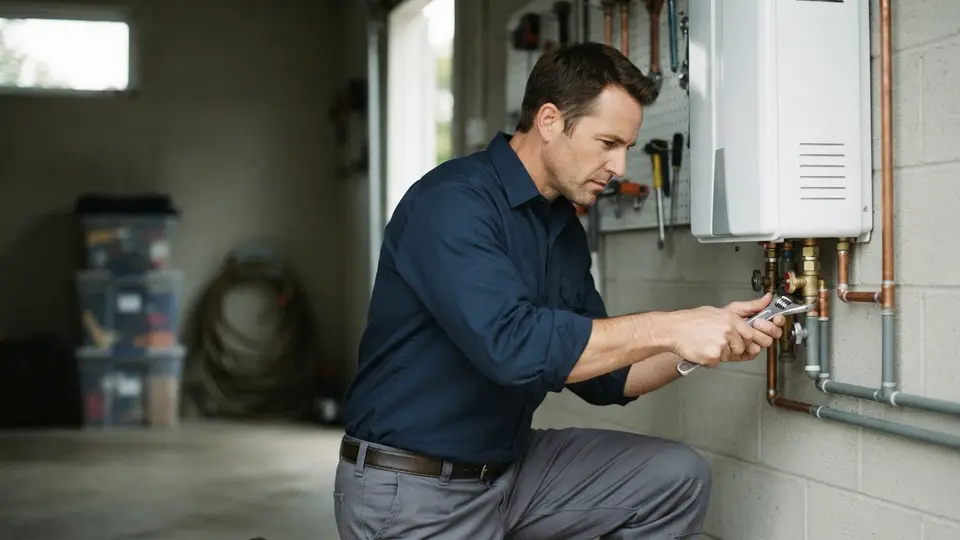
Tankless coil in boiler
Fuel: Oil or propane
Notes: Common, but runs boiler all summer
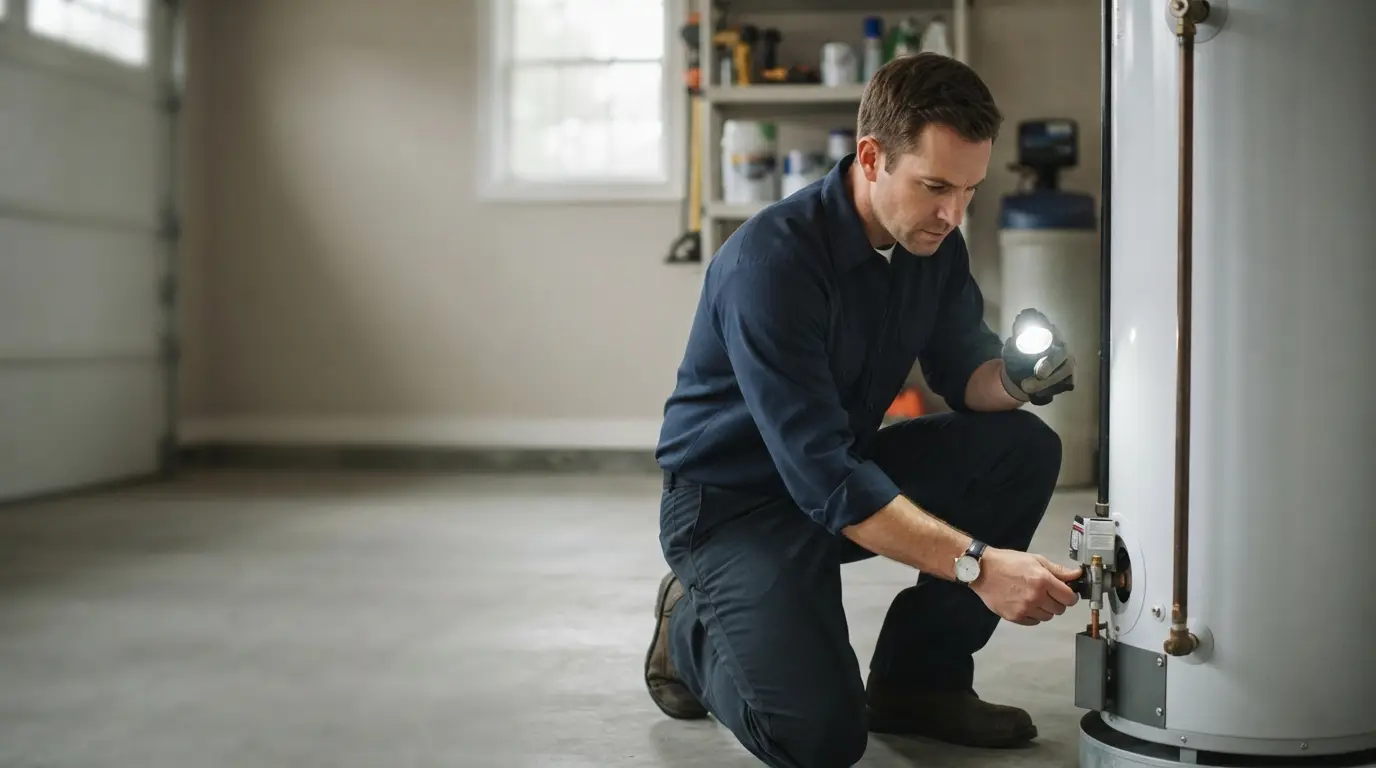
Lukewarm water from the boiler coil, or a tank leaking in the cellar? We handle water heater repair and replacement in Maine. Many Maine homes heat water with an oil or propane boiler, through a coil or an indirect tank, while others use electric, propane or heat pump water heaters. Very cold incoming water and hard or acidic well water wear them out. We repair what makes sense and install properly sized replacements that work with your heating system.
The service
Fuel oil heats a large share of Maine homes: 77% in Caribou, 70% in Waterville and 64% in Biddeford. Propane is common along the coast, with 24% of homes in Rockland, 23% in Ellsworth and 35% in Cape Neddick using it, and Portland has more gas (39%). Many of these homes make hot water from the boiler.
Water heating systems we service
Fuel: Oil or propane
Notes: Common, but runs boiler all summer
Fuel: Boiler heat
Notes: Efficient, long-lasting
Fuel: Electricity
Notes: Simple, higher running cost
Fuel: Electricity
Notes: Efficient in warm cellars
Fuel: Propane
Notes: For homes without a boiler
Why Maine
Winter water is close to freezing, so heaters and coils work hard.
Hard water scales boiler coils and cuts hot water flow.
Corrosive well water attacks tanks and fittings.
Old boilers lose efficiency, and hot water suffers with them.
Warning signs
Our process
We repair elements, thermostats, valves, mixing valves and coil connections, and descale coils when needed.
We install indirect tanks, electric, propane and heat pump heaters with expansion tanks and proper venting.
We install propane tankless units sized for cold Maine water, with flushing valves.
Typical cost
Any figure before we see the system is an estimate only. The price depends on:
You approve a written price before we start.
Get a written price: (833) 733-2357Parts and descaling cost less than new equipment.
Indirect, heat pump and tankless units differ in price.
Indirect tanks need the right boiler controls.
Upgrades add cost.
Replacements usually need a permit.
Benefits
Even in January.
The boiler rests in summer.
Mixing valves prevent scalding.
Water treatment protects the tank.
Many Maine boilers make hot water through a coil inside the boiler. Coils scale up, give lukewarm water and keep the boiler hot all summer. An indirect tank, heated by the boiler through a separate loop, stores hot water so the boiler can rest between calls. It usually gives more hot water and saves fuel. We descale or replace coils, install indirect tanks and add mixing valves so water comes out at a safe temperature.
Heat pump water heaters have become popular in Maine as a way to cut oil use in summer and electric costs year round. They work best in a cellar that stays above about 40 degrees and has enough air around the unit. They also dehumidify damp cellars. We check your space and wiring before recommending one.
Hard water scales tanks and coils, and acidic water eats tanks and copper connections. Iron and sulfur can make hot water smell, and sediment from the well settles in the bottom of tanks and shortens their life. A sediment filter ahead of the heater helps on wells that carry sand or grit. We test your water and may suggest a softener, neutralizer or a different anode rod to protect the new heater.
Cottages and camps that sit empty need their water heaters drained or protected before winter. A tank left full in an unheated house can freeze and split. In places like Cape Neddick, where 64% of homes are vacant in our data, we drain heaters in fall and refill and test them in spring.
Renters occupy 58% of homes in Orono, 65% in Farmington and 53% in Bangor. Older buildings often share one heater or boiler among several units. We size heaters to the building and repair them for owners and managers.
Oil and propane appliances need proper venting and combustion air. In older homes in Portland (36,559 homes) and South Portland (12,782 homes), chimneys may need liners when equipment changes. We check venting on every fuel-burning install and recommend carbon monoxide alarms near bedrooms.
Closed systems need an expansion tank so heated water does not raise pressure and make the relief valve drip. Indirect tanks and coils often store water hotter than is safe at the tap, so a mixing valve tempers it. We install both where needed and set the tap temperature to a safe level.
Electric tanks serve many apartments, newer homes and houses heated with wood or heat pumps; 29% of Orono homes heat mainly with electricity. Elements and thermostats fail, and scale from hard water shortens their life. We test each part, replace what failed and flush the tank. When the tank itself is leaking or worn out, we compare a new electric tank with a heat pump model, which can cut the electric cost of hot water sharply in a Maine cellar.
If a tank is leaking, close the cold water valve and switch off the power or set the burner control to off.
If you smell oil smoke, gas or propane, leave and call your fuel supplier or 911 from outside. Then call us.
Water heater replacement in Maine usually needs a plumbing permit from the Local Plumbing Inspector, and fuel-burning work may involve other licensed trades. We pull the plumbing permit and coordinate. Our plumbers hold Maine plumbing licenses.
Why choose us
What you can count on every time one of our plumbers comes to your door.
Every job is handled by a plumber who holds the license your state or city requires, backed by liability insurance.
Our plumber explains the problem and the options, and you approve a written price before any work begins.
Burst pipes, sewage backups and failed water heaters get priority scheduling, including nights and weekends.
We pull permits when the job needs one and schedule the inspection, so the work holds up when you sell.
Repairs and installations come with a written warranty on labor, on top of the manufacturer's warranty on parts.
Our pages and plumbers account for your area's water, soil, climate and the age of the homes around you.
Service area
We repair and replace water heaters in 155 Maine communities, including Bangor (16,042 homes) and Ellsworth (5,044 homes). Find yours:
It depends on the system type, how it ties to your boiler, venting and wiring. We give you a written price before starting.
Often, yes. It gives more hot water and lets the boiler rest in summer, which can save fuel.
It costs more upfront than an electric tank but uses much less electricity over its life.
We shut off water and fuel or power, remove the old heater, set and connect the new one, add safety valves, fill and test it.
Often, yes, by descaling the coil or replacing a mixing valve. If the coil is worn out, we may suggest an indirect tank.
We consider household size, fixtures and very cold winter water temperature so the heater keeps up in January.
Leave the home and call your fuel supplier or 911 from outside. We repair the plumbing once the equipment is safe.
High pressure, high temperature or a worn valve can cause it. Never cap it; call us to find the cause.
A simple tank swap takes a few hours. Indirect tanks and heat pump units take longer.
Many tanks last eight to twelve years. Hard or acidic water shortens that without treatment.
Once a year for tanks. Boiler coils may need descaling every few years on hard water.
Yes, if the camp will be unheated in winter. A full tank can freeze and split.
Close the cold supply, turn off the burner or power and call us. Leaking heaters are scheduled ahead of routine work.
Many oil and propane boilers include a coil or feed an indirect tank, so one appliance heats both the house and the water.
It works best in a cellar that stays above about 40 degrees with enough space around it. We check before recommending one.