Clay tile
Era: Before the 1970s
Typical failure: Roots, cracked joints
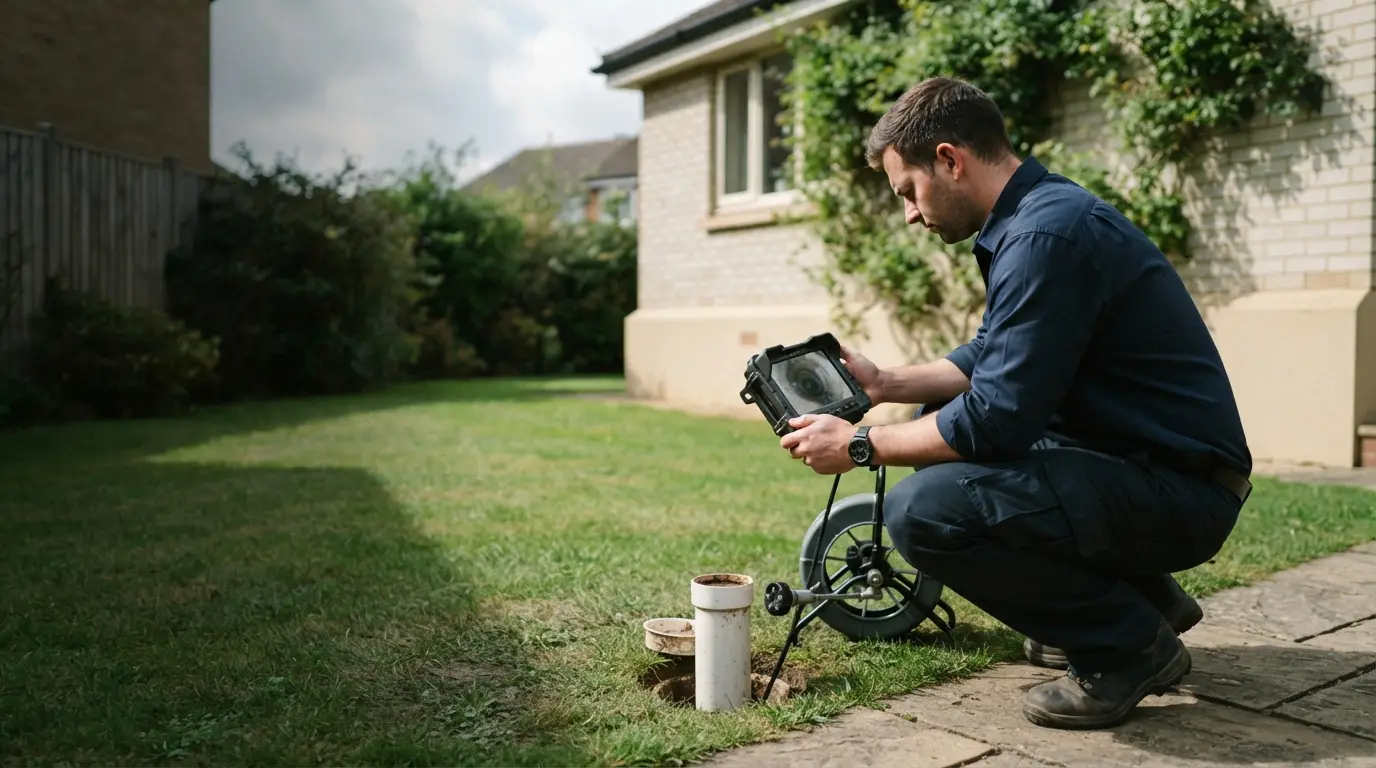
Sewer backing up into the cellar, or roots choking an old clay line? We handle sewer line repair and replacement in Maine. Many Maine laterals are clay or cast iron laid generations ago, buried deep to stay below the frost and often running through ledge. Roots, frost heave and age break them down. We camera the line, mark the damage from above and repair it by digging or trenchless methods, working around rock and frozen ground.
The service
The lateral carries waste from the house to the public sewer, and the owner is usually responsible for it. 46% of the 337,614 homes in our Maine data were built before 1960. Bath (median built 1938), Portland (1946) and Rockland (1948) have many laterals that have never been replaced.
Sewer pipe under Maine homes
Era: Before the 1970s
Typical failure: Roots, cracked joints
Era: Through the 1970s
Typical failure: Rust, split bottoms
Era: Mid 1900s
Typical failure: Flattening and collapse
Era: Newer homes
Typical failure: Sags if bedding settles
Why Maine
Old maples and elms reach into clay joints and fill the pipe.
Deep frost lifts and drops soil each winter, pulling joints apart.
Pipe laid over rock can crack where it bears on a ledge point.
Iron corrodes and fiber pipe flattens after decades underground.
Warning signs
Our process
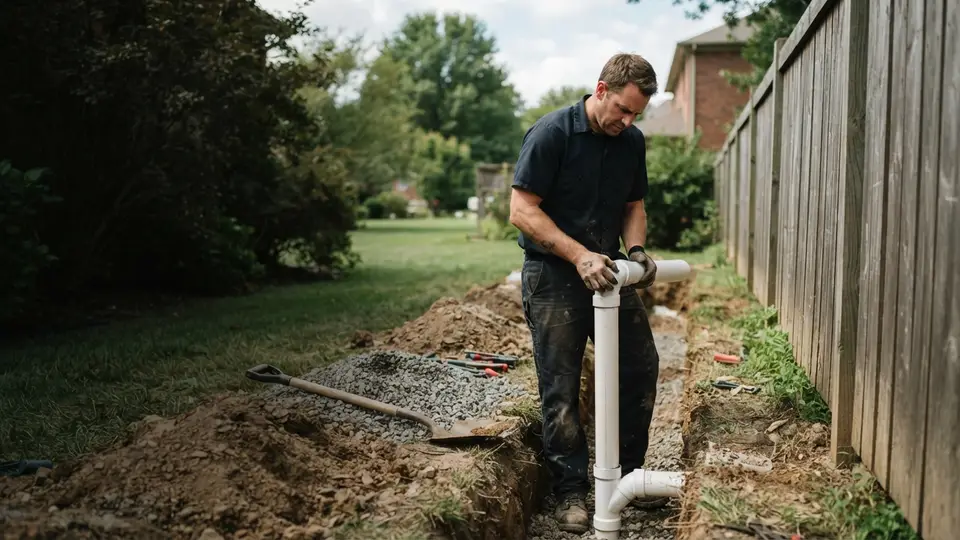
For a single break, we dig at the marked spot, replace the bad section and set it on proper bedding.
When the lateral fails along its length, we replace it by open trench, pipe bursting or lining, depending on rock and route.
We record the line with a camera and locate breaks and their depth from the surface.
Typical cost
Any figure before the camera inspection is an estimate only. These factors set the final price:
You approve a written price before we dig.
Get a written price: (833) 733-2357Maine laterals are deep to stay below frost.
Rock slows digging or needs special equipment.
Frozen ground adds time.
One break costs less than a full replacement.
Sewer work needs a permit.
Benefits
Sealed pipe stops roots.
Sewage stays in the pipe.
Buyers value a sound sewer.
Sealed joints keep water out.
Much of Maine has ledge close to the surface, and laterals must be deep enough to stay below the frost. That makes open-trench work slower than in many states, and winter digging means cutting through frozen ground. Where we can, we use trenchless methods. When we dig, we bed the new pipe in sand away from rock points so it does not crack again.
Lining places a resin liner in the old pipe that cures into a new one; bursting pulls new pipe through as the old one breaks apart. Both avoid digging through ledge, stone walls and old trees. A collapsed or badly sagging line usually needs excavation. We explain the options after the camera inspection.
In spring, snowmelt and rain raise groundwater, and cracked laterals take in water that fills the line. Cellar drains back up even when nothing is flushed. A camera shows where groundwater is getting in, and sealing or replacing those joints stops it. Many sewer districts also ask owners to keep sump pumps and roof drains out of the sewer, since that extra water overloads the system every spring.
Home inspections seldom include the sewer. On an older house in Augusta (10,164 homes), Waterville or anywhere in Maine, a camera check before closing can reveal a rooted or broken lateral. We give you the video and a written summary.
When neighbors back up at once, the public main may be the cause. In South Portland (12,782 homes), Brewer and other towns, our camera shows where the blockage is. If it is in the public sewer, we tell you to call the sewer district. If it is your lateral, we explain the repair.
In newer areas like Gorham (median built 1992), PVC laterals can still sag if the trench settles. A camera shows the problem, and the footage helps if a builder warranty applies.
When a town extends its sewer, homes on septic may be required or choose to connect. We abandon the old tank properly, run the new lateral below the frost line and pull the plumbing permit. Connection deadlines and rules vary by town and sewer district, so we confirm them before we start and schedule the work so the house is only briefly without a working drain.
Many Maine houses sit on fieldstone or granite block foundations, and the sewer leaves the cellar through a hole chipped in the stone generations ago. That spot often leaks, lets groundwater and roots in or cracks the pipe where the wall settles. Yards also hide old stone walls and buried granite that a lateral may run under. We repair the foundation penetration with proper sleeves and seals, and we plan routes and trenchless methods that avoid tearing up stone walls you want to keep.
Stop using water if sewage is backing up and keep everyone away from it.
Clear access to the cellar cleanout. Do not dig near the line yourself, then call us.
Sewer repair and replacement in Maine need a plumbing permit from the Local Plumbing Inspector, and the sewer district may have its own rules. We handle the permits. Our plumbers hold Maine plumbing licenses.
We repair sewer lines in 155 Maine communities, including Waterville (7,312 homes). Find yours:
Why choose us
What you can count on every time one of our plumbers comes to your door.
Every job is handled by a plumber who holds the license your state or city requires, backed by liability insurance.
Our plumber explains the problem and the options, and you approve a written price before any work begins.
Burst pipes, sewage backups and failed water heaters get priority scheduling, including nights and weekends.
We pull permits when the job needs one and schedule the inspection, so the work holds up when you sell.
Repairs and installations come with a written warranty on labor, on top of the manufacturer's warranty on parts.
Our pages and plumbers account for your area's water, soil, climate and the age of the homes around you.
Service area
Portland (36,559 homes), Lewiston (17,105 homes), Auburn and Bangor have neighborhoods of old houses and triple-deckers with clay laterals under tree-lined streets. Parts of some older city systems also carry storm water, and heavy rain or snowmelt can push water back toward low cellar drains. We camera and repair laterals and recommend a backwater valve where it helps.
It depends on depth, ledge, season and what lies above the line. We give you a written price after the camera inspection and before digging.
It can cost more per foot but often saves money in Maine by avoiding digging through ledge and frozen ground.
Yes. It is priced as its own service and shows exactly where the damage is, so you only pay to fix what is broken.
We record the line with a camera and use a locator to mark the problem and its depth on the surface.
We call in utility locates, open the ground or set up trenchless equipment, replace the pipe, test it and arrange inspection.
Yes, though frozen ground adds time. Trenchless methods are often a good choice in winter.
Yes. Sewage carries bacteria. Avoid contact, keep children and pets away and clean the area after the repair.
No. Deep trenches can collapse and utilities may be nearby. Leave excavation to us.
Many lateral replacements take one to two days plus inspection. Ledge or frozen ground can add time.
Only while the old pipe is out and the new one is being connected. We tell you when to stop and resume using water.
Keep trees away from the line, clean roots on schedule and replace clay sections with sealed pipe.
A camera check every few years for clay or cast iron lines catches damage before it causes a backup.
Stop using water and call us. Sewage backups are scheduled ahead of routine work, and we keep you updated on timing.
They must stay below the frost line, which can reach several feet in a Maine winter.
Yes. Rock slows digging and can crack pipe. We bed new pipe in sand and use trenchless methods where possible.