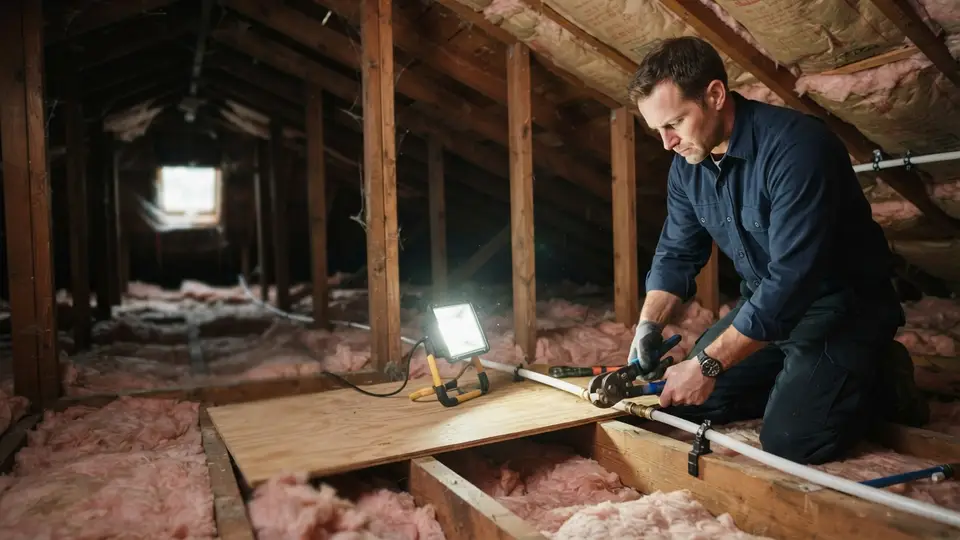
Spot repair
What we do: Open the floor at the leak
Best when: One leak, sound pipe elsewhere
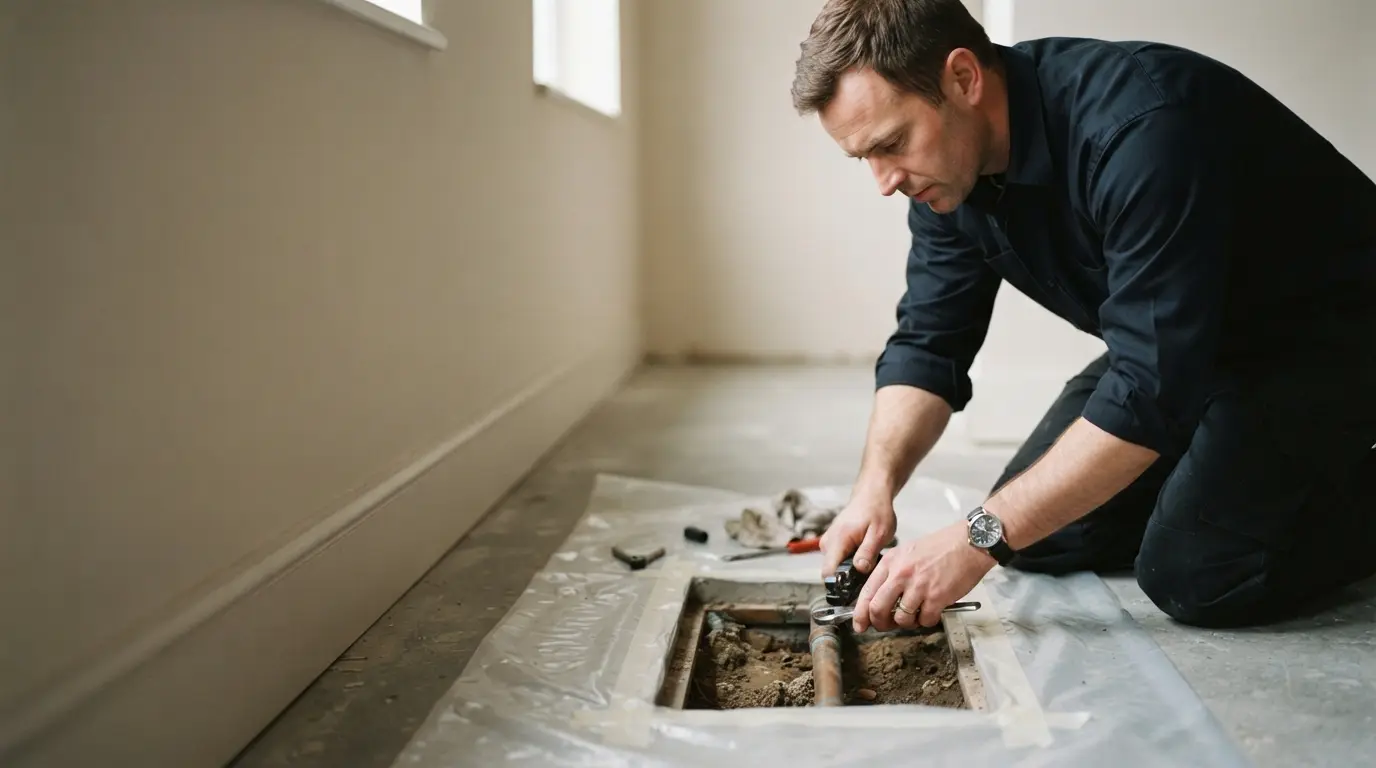
Radiant floor losing pressure, or water seeping up through the cellar slab? We handle slab leak repair in Maine for homes and businesses. Most Maine houses have cellars, but water and drain lines still run under basement floors, slab-built ranches, garages, shops and newer condos, and radiant heat tubing is common in Maine slabs. Frost, settling and age wear on buried pipe. We pinpoint the leak and repair it through a small opening or reroute the line overhead.
The service
A slab leak is a break in a water, drain or heating line under concrete. In Maine that means lines beneath cellar floors, slab ranches and condos in towns like Gorham (median built 1992), Saco (1982) and Topsham (1979), and the radiant tubing in many garages, shops and newer homes.
Slab leak repair options
What we do: Open the floor at the leak
Best when: One leak, sound pipe elsewhere
What we do: Run new pipe overhead or in walls
Best when: Old pipe or finished floors
What we do: Seal a cracked drain from inside
Best when: Drain keeps its shape
What we do: Repair or isolate one heating loop
Best when: Leak in heat tubing
Why Maine
Garage and shop slabs that are not fully below the frost line move in winter.
Fill under slabs settles, stressing pipes and fittings.
Acidic well water thins copper from the inside.
Drains under old cellar floors rust through.
Warning signs
Our process
We isolate supply, drain and heating lines with pressure tests and pinpoint the leak with listening and thermal tools.
We cut a small opening, replace the damaged section, test it and patch the concrete.
We leave the old line in place and run new pipe overhead, along the cellar ceiling or through walls.
Typical cost
Any figure before we find the leak is an estimate only. These factors decide the cost:
You approve a written price before we start.
Get a written price: (833) 733-2357Some spots sit under finished floors or equipment.
Supply, drain and radiant repairs differ.
Rerouting avoids floor damage but may cost more upfront.
Tile and finished basements cost more to restore.
Reroutes may need one.
Benefits
No water seeping up.
Water, pump power and fuel stop being wasted.
Radiant loops hold pressure again.
Repair and reroute priced side by side.
Radiant tubing in concrete is popular in Maine garages, shops, basements and newer homes. A leak shows up as a boiler that keeps adding water or losing pressure, and sometimes a damp patch on the floor. We pressure test each loop to find the leaking circuit, then locate the leak with thermal imaging while the loop is warm. We repair the tubing through a small opening or take that loop out of service if repair is not practical.
In older homes in Portland (36,559 homes), Bangor and Westbrook, the main drain often runs under the cellar floor to the street, and some service lines come in below the slab. Cast iron rusts along the bottom, and water seeps up through cracks. A camera shows the drain's condition, and we repair it by opening the floor or lining the pipe.
On a private well, a hidden leak under the floor shows up as a pump that keeps cycling and a rising electric bill. We isolate the pressure tank, house lines and under-slab runs to find where water is going.
Condos and slab homes in Gorham, Saco, Sanford (10,246 homes) and Brunswick (7,490 homes) have PEX or copper under the floor. A leak in one unit can affect neighbors. We trace the leak to the right line, document which unit it serves and work with the association.
If an under-slab line has failed from corrosion, the rest is often in similar shape. Rerouting replaces the run with new pipe that is easy to reach, usually along the cellar ceiling or through interior walls where it will not freeze. It avoids breaking finished floors and is often done in a day or two.
Shops, garages and businesses in places like Old Orchard Beach (7,796 homes) and Westbrook sit on slabs with lines to floor drains, sinks and restrooms. We locate leaks and plan repairs around your schedule.
If you have had more than one pinhole leak, test your water. Acidic well water will keep eating copper until it is treated. A neutralizer protects new and old pipe alike.
Every spring, snowmelt raises groundwater and many Maine cellars take in water through floor cracks and old fieldstone walls. That can look just like a slab leak. The difference is that groundwater comes and goes with the weather, while a leak keeps the meter or well pump running in dry weather too. We test the lines first, so you do not pay to open a floor for water that is really coming from outside. If it is groundwater, a sump pump or drainage fix is the right answer.
A hot water leak under the floor keeps the heater or boiler coil working. If fuel use rises or the electric water heater runs nonstop, close the cold valve at the heater and see whether the meter or pump stops. We confirm with pressure testing.
If water is coming through the floor, close the main shutoff and, on a well, switch off the pump. If the boiler is losing pressure, do not keep adding water; call us.
Move belongings off damp floors and take photos. Then call us.
Spot repairs often need no permit, while reroutes and repipes may. We pull permits through the Local Plumbing Inspector where required. Our plumbers hold Maine plumbing licenses.
Why choose us
What you can count on every time one of our plumbers comes to your door.
Every job is handled by a plumber who holds the license your state or city requires, backed by liability insurance.
Our plumber explains the problem and the options, and you approve a written price before any work begins.
Burst pipes, sewage backups and failed water heaters get priority scheduling, including nights and weekends.
We pull permits when the job needs one and schedule the inspection, so the work holds up when you sell.
Repairs and installations come with a written warranty on labor, on top of the manufacturer's warranty on parts.
Our pages and plumbers account for your area's water, soil, climate and the age of the homes around you.
Service area
We repair slab leaks in 155 Maine communities, including Bangor (16,042 homes). Find yours:
It depends on the leak location, the type of line and the floor. We give you a written price after finding the leak and before cutting concrete.
Often, yes, when the old pipe is corroded or the floor is finished. We price both options for you to compare.
Many policies cover access and resulting damage but not the pipe itself. Check your policy; we provide documentation.
We pressure test each line to isolate the leak, then use listening tools and thermal imaging to mark it.
Often, yes. We find the leaking loop and repair it through a small opening, or isolate the loop if repair is not practical.
Yes. Old cast iron rusts through. A camera inspection shows the damage, and we repair or line it.
Not always. Groundwater can seep in during the spring thaw. We test the lines to tell the difference.
No. Constant refilling brings in fresh oxygen that corrodes the system. Call us to find the leak.
Most spot repairs take a day, plus curing time. Reroutes usually take one to two days.
Usually the same day. We restore water once the repair is tested.
Test and treat corrosive water, keep pressure normal and service your heating system yearly.
If the pipe is corroded, more leaks are likely. Rerouting or treating the water helps prevent them.
Close the main shutoff and call us. Active leaks are scheduled ahead of routine work, and we keep you updated on timing.
Less common than in slab-heavy states, but they happen under cellar floors, slab homes, garages and radiant floors.
It can, in garages and shops where the slab is not fully protected from frost, since movement stresses pipes.