Flooded basements
Heavy summer storms overload sewers and push water up through floor drains. We clear drains, install backwater valves where allowed and add sump pumps with backups.
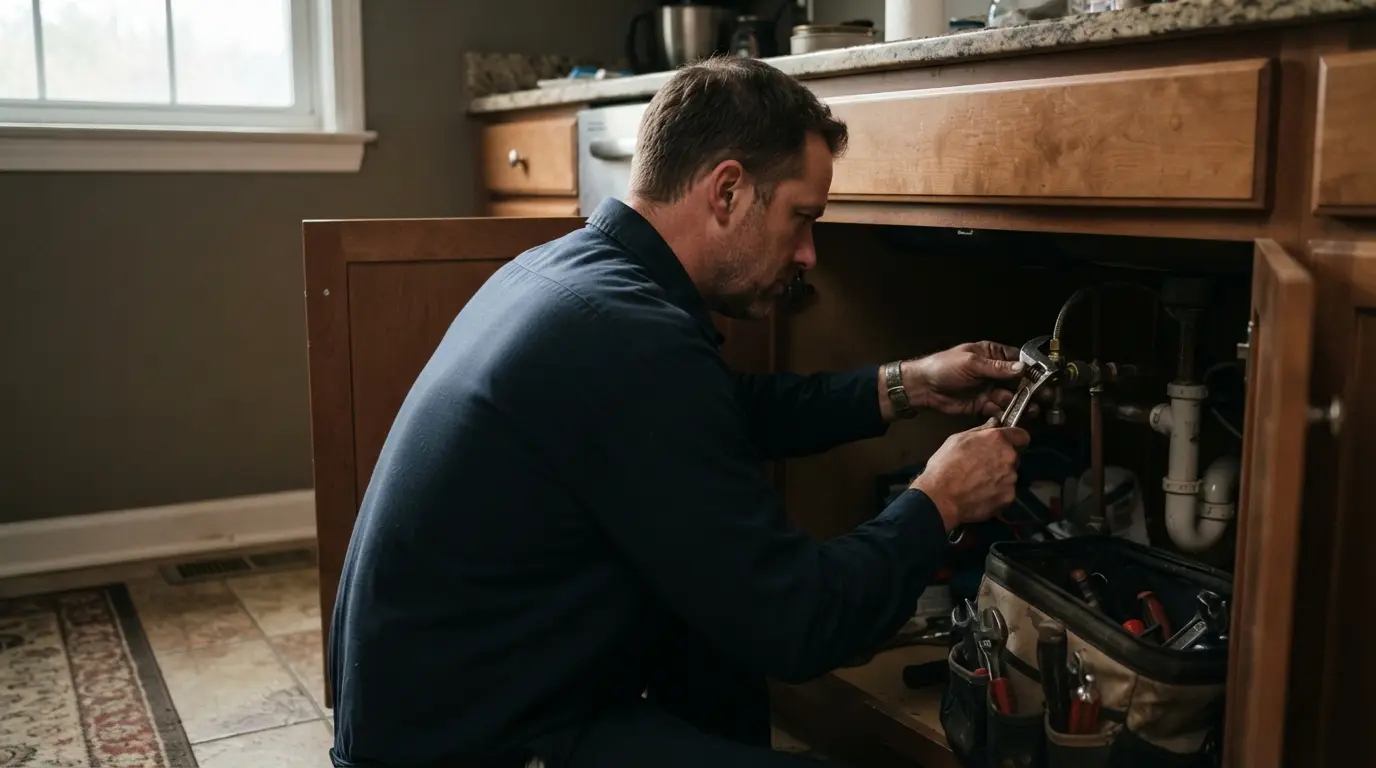
Basement flooded after a storm, or a pipe frozen solid? Our plumbers in Michigan find the cause and fix it, with a written price before work starts. We work across metro Detroit, Grand Rapids and West Michigan, Lansing, Flint and the Tri-Cities, Kalamazoo and Battle Creek, the northern Lower Peninsula and the Upper Peninsula. Michigan plumbing is shaped by basements, deep frost, hard well water and a lot of postwar housing. Here is what we fix and where we work.
Plumbing in Michigan
Our Census data covers 5,578,269 Michigan residents in 2,561,363 homes across 745 places. 73% of those homes were built before 1980, and 47% before 1960. The share built before 1980 reaches 90% in Detroit, 94% in Flint and 94% in Eastpointe. Only 11% of homes date from 2000 or later, mostly in growing suburbs like Novi and Allendale.
Natural gas heats 82% of Michigan homes, one of the highest shares in the country, and electricity 14%. Propane fills the gap in rural areas, heating 22% of homes in Skidway Lake. Renters occupy 36% of homes, and buildings with five or more units hold 18%.
Counts from the U.S. Census Bureau 2024 Gazetteer.
Explore our servicesWhat our plumbers see
Heavy summer storms overload sewers and push water up through floor drains. We clear drains, install backwater valves where allowed and add sump pumps with backups.
Deep frost reaches pipes in crawl spaces, garages and outside walls. We thaw, repair and reroute them.
Many older cities still have lead or galvanized service lines. We replace the private side and work with utility programs.
Much of Michigan's groundwater is hard and carries iron. We install softeners and iron filters.
Clay laterals in postwar suburbs take in roots. We camera, clean and repair them.
Gas water heaters in basements wear out faster with hard water. We repair and replace them.
Our services
Each service page explains how our plumbers handle that work in Michigan homes and businesses.
Sewer Line Repair & Replacement

Repiping & Water Line Replacement
Gas Line Repair & Installation
Water Heater Repair & Replacement

Toilet, Faucet & Fixture Repair
Sump Pump Repair & Installation
Across the state
Homes and main places: Detroit (329,393 homes), Warren, Dearborn, Southfield
What our plumbers see: Postwar bungalows, storm backups, lead lines
Homes and main places: Grand Rapids (84,894 homes), Wyoming, Holland, Muskegon
What our plumbers see: Lake-effect snow, hard water, new suburbs
Homes and main places: Lansing (55,943 homes), Flint, Saginaw, Bay City
What our plumbers see: Older city housing, service line work
Homes and main places: Kalamazoo (32,379 homes), Battle Creek, South Haven
What our plumbers see: Student rentals, lake cottages, wells
Homes and main places: Traverse City (8,479 homes), Petoskey, Alpena
What our plumbers see: Seasonal homes, septic, wells
Homes and main places: Marquette (9,570 homes), Escanaba, Ironwood
What our plumbers see: Extreme cold, deep frost, old housing
Michigan licenses plumbers and plumbing contractors through the Department of Licensing and Regulatory Affairs (LARA), and the state plumbing code applies statewide. Our Michigan work is done by plumbers holding the licenses each job requires, and gas piping is handled by properly licensed mechanical contractors.
Permits come from the city, township or county building department, or from the state where no local agency enforces the code. Water heater replacement, repiping, sewer work and gas piping generally need a permit. We pull it and schedule the inspection.
Detroit and much of southeast Michigan get treated water from the Great Lakes Water Authority, drawn from the Detroit River and Lake Huron. Grand Rapids, Lansing and other cities run their own lake, river or well systems. Michigan rules now require water utilities to replace lead service lines over time, and many cities are doing so street by street. Ask your utility whether your line is listed.
Rural homes rely on private wells and septic systems, which are permitted by local or district health departments rather than one statewide code. Some counties require inspections when a property is sold. Groundwater across much of the state is hard and often high in iron. We service septic connections, well pumps and treatment systems, and coordinate with your health department on repairs.
Most Michigan homes have basements, and in older suburbs like Allen Park, where 94% of homes predate 1980, many sit on combined or aging sewers. Severe summer storms in recent years have flooded basements across metro Detroit. When the public sewer fills, water comes up through the floor drain. Our plumbers clear and camera the line, install backwater valves where the city allows them, and add sump pumps with battery backups so basements stay dry.
Warren (median year 1965), Eastpointe, Dearborn and Livonia filled with brick bungalows and ranches in the years after World War II. Their galvanized supply lines, cast iron stacks and clay laterals are now 60 to 80 years old. We see low pressure, rusty water, rooted sewers and leaking basement drains in these homes. Our plumbers repipe in stages, line or replace sewers and replace failing basement drains under the slab.
Flint has 43,028 homes in our data, 94% built before 1980, and Saginaw 90%. Older Michigan cities still have lead and galvanized service lines, and replacing them has become a statewide priority. When a utility replaces its part, the private side inside the house may still be old. We replace interior piping and the private side of the service and pull the permits, so the whole line from the street is new.
Ironwood, where 96% of homes predate 1980, Escanaba (84%) and Marquette face long winters with heavy snow and deep frost. Water lines must be buried deep, and pipes in crawl spaces and seasonal homes freeze easily. Up north, 46% of homes in Indian River sit empty part of the year. We winterize and open cottages, thaw frozen lines and service wells and septic systems.
South Haven has 43% of homes vacant for part of the year in our data, and lakeshore towns from the Indiana line to Traverse City are full of cottages. Many have old plumbing, shallow lines and septic systems close to the water. We open cottages in spring, look for freeze damage, close them properly in fall and keep septic and well systems in working order so the lake stays clean.
Renters occupy 61% of homes in East Lansing, 55% in Ann Arbor and 58% in Kalamazoo. Student houses and apartment buildings near campuses see heavy fixture use and frequent clogs. Buildings with five or more units hold 51% of East Lansing homes. We work with landlords and property managers on repairs and schedule larger work between semesters.
Manufactured homes make up 37% of homes in West Monroe and are common in parts of southeast and west Michigan. Their supply lines run under the home, close to the ground, and freeze when skirting is damaged or heat tape fails. We repair and replace PEX and older polybutylene lines, fix heat tape connections and replace water heaters sized for these homes.
Service area
Our largest Michigan service areas by population:
Every Michigan place in our data, grouped by county:
Alcona County
Alger County
Allegan County
Alpena County
Antrim County
Arenac County
Baraga County
Barry County
Bay County
Benzie County
Berrien County
Branch County
Calhoun County
Cass County
Charlevoix County
Cheboygan County
Chippewa County
Clare County
Clinton County
Crawford County
Delta County
Dickinson County
Eaton County
Emmet County
Genesee County
Gladwin County
Gogebic County
Grand Traverse County
Gratiot County
Hillsdale County
Houghton County
Huron County
Ingham County
Ionia County
Iosco County
Iron County
Isabella County
Jackson County
Kalamazoo County
Kalkaska County
Kent County
Keweenaw County
Lake County
Lapeer County
Leelanau County
Lenawee County
Livingston County
Luce County
Mackinac County
Macomb County
Manistee County
Marquette County
Mason County
Mecosta County
Menominee County
Midland County
Missaukee County
Monroe County
Montcalm County
Montmorency County
Muskegon County
Newaygo County
Oakland County
Oceana County
Ogemaw County
Ontonagon County
Osceola County
Oscoda County
Otsego County
Ottawa County
Presque Isle County
Roscommon County
Saginaw County
Sanilac County
Schoolcraft County
Shiawassee County
St. Clair County
St. Joseph County
Tuscola County
Van Buren County
Washtenaw County
Wayne County
Wexford County
How it works
We ask about the problem and the house and tell you what to shut off right away.
Flooding, sewage backups and burst pipes are scheduled ahead of routine work.
A camera, pressure test or water test shows the cause.
We go over the options, and work starts only when you agree.
The repair is tested, and we arrange the local inspection when one is required.
Have a plumbing problem in Michigan?
Call Expert Plumber Now and tell us what is happening. We’ll send a licensed plumber.
Pricing
We price each job after we see it. These factors matter most:
Galvanized, cast iron and clay often need replacing.
Finished basements take longer to open and repair.
Deep trenches for water and sewer lines add digging.
Local and state permit fees vary.
Wells, septic and water treatment add parts.
Evening and weekend calls cost more.
You get a written price before work begins.
Season by season
Keep heat steady, open cabinets on outside walls and drip faucets in deep cold.
Test the sump pump before snowmelt and check cottages for freeze damage before turning water on.
Keep floor drains clear and consider a backwater valve before storm season.
Shut off outdoor faucets, flush the water heater and winterize seasonal homes.
Why choose us
What you can count on every time one of our plumbers comes to your door.
Every job is handled by a plumber who holds the license your state or city requires, backed by liability insurance.
Our plumber explains the problem and the options, and you approve a written price before any work begins.
Burst pipes, sewage backups and failed water heaters get priority scheduling, including nights and weekends.
We pull permits when the job needs one and schedule the inspection, so the work holds up when you sell.
Repairs and installations come with a written warranty on labor, on top of the manufacturer's warranty on parts.
Our pages and plumbers account for your area's water, soil, climate and the age of the homes around you.
Our plumber looks at the problem, pipe material, access and permits, then gives you a written price. Nothing starts until you approve it.
It can. Opening and closing drywall or flooring adds time. We plan repairs to keep openings small and explain any added cost.
We ask what is happening, tell you what to shut off and schedule our plumber, with flooding and sewage first. We keep you updated on timing.
Yes. We get permits from your city, township or county, or from the state where it enforces the code, and schedule the inspection.
Leave without using switches or phones and call your gas utility or 911 from outside. We repair the piping once it is safe.
A like-for-like swap usually takes a few hours. Changes in size, fuel or venting take longer, and an inspection may follow.
Keep the heat on, open cabinets on outside walls, disconnect hoses and drip faucets during deep cold.
Stay away from water near outlets, stop using water if the sewer is backing up and call us. Flooding gets priority.
Yes. Our Michigan plumbers hold state licenses issued through LARA, and gas work is done under the proper mechanical license.
Homes built before the 1950s often did. Your water utility's service line records can tell you, and we can check the pipe at your meter.