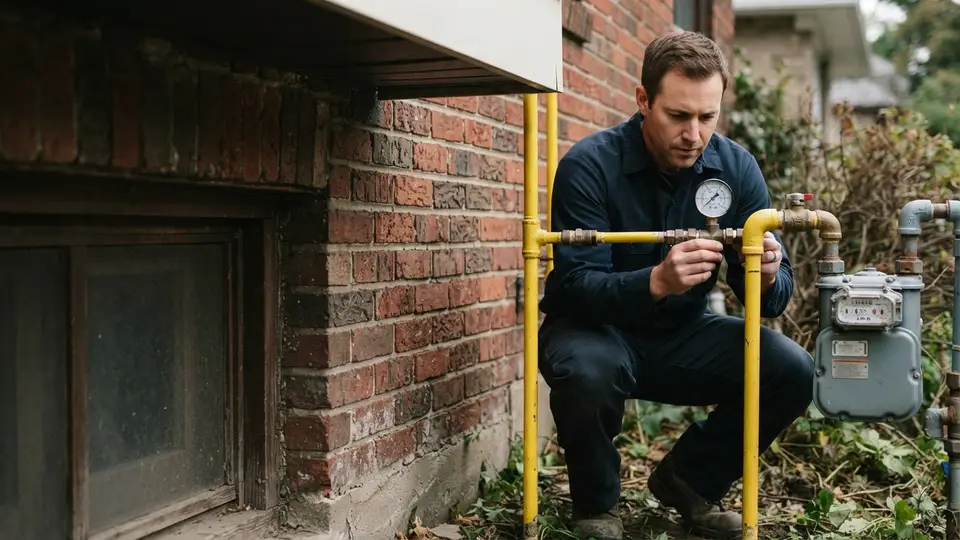
Leak repair
Includes: Find and fix leaking joints, valves, connectors
Final step: Pressure test
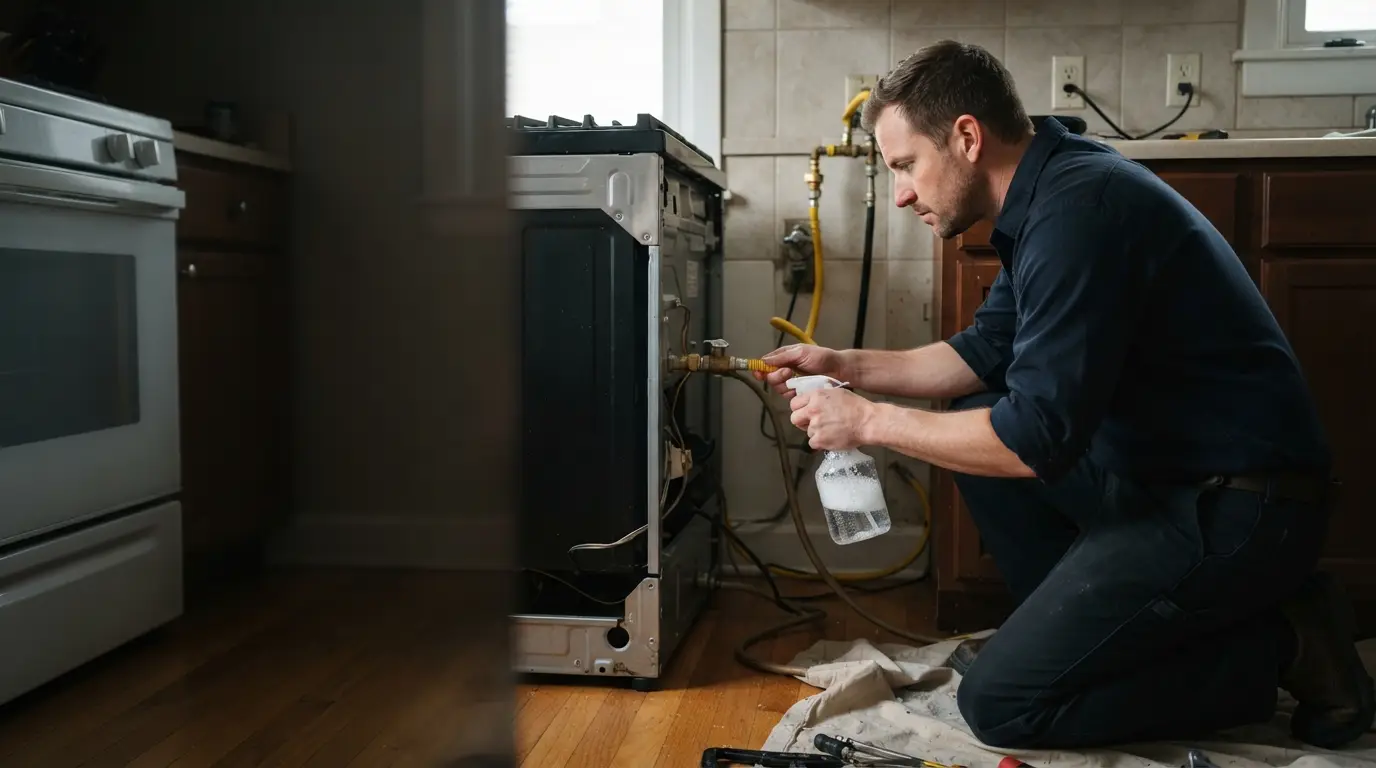
Faint gas smell by the furnace, or a new generator that needs a line? We handle gas line repair and installation in Michigan. Natural gas heats more than four in five Michigan homes, so nearly every basement has gas piping feeding a furnace, water heater, dryer or range. Our licensed technicians repair leaks, run new lines and connect appliances and standby generators, then pressure test the work and have it inspected. We also work on propane systems in rural areas.
The service
Natural gas heats 82% of Michigan homes in our data, one of the highest shares in the nation, and 91% of homes in Taylor and 90% in Livonia. Where mains do not reach, propane takes over: it heats 22% of homes in Skidway Lake, 17% in Lake Isabella and 17% in Norway in the U.P. Gas piping in older basements is usually black iron, sometimes with later flexible lines added for new appliances.
Gas services we provide
Includes: Find and fix leaking joints, valves, connectors
Final step: Pressure test
Includes: Size and run pipe to an appliance
Final step: Permit and inspection
Includes: Furnace, water heater, range, dryer, fireplace
Final step: Leak and burner check
Includes: Pipe sized for standby generator load
Final step: Permit and inspection
Includes: Lines from regulator to appliances
Final step: Leak test
Why Michigan
Piping installed with postwar homes has had decades of changes and loosened joints.
Older uncoated flexible connectors can crack and should be replaced.
Larger ranges, tankless heaters and generators need more gas than old lines carry.
Moisture and occasional flooding rust exposed steel pipe and valves.
Warning signs
Our process
After the utility has made the area safe, we locate the leak with electronic detectors and leak solution, replace the failed part and pressure test the system.
We calculate the total load, size the pipe, run black iron or approved flexible tubing, add shutoffs and have it inspected before use.
We connect furnaces, water heaters, ranges, dryers and fireplaces with proper connectors and sediment traps, then check for leaks and correct flame.
Typical cost
Prices are estimates only until we see your piping. These factors matter:
You approve a written price before we begin.
Get a written price: (833) 733-2357Longer lines need more pipe and time.
Generators and tankless units need larger pipe.
Finished ceilings and walls slow the work.
One joint or several corroded sections.
Mechanical permits and inspections.
Benefits
Tested, inspected piping.
Appliances run together.
Correct pressure and connections.
Useful at sale time.
Ice storms and summer windstorms knock out power across Michigan, and many owners in Rochester Hills (30,921 homes), Troy and rural areas now install standby generators. A generator can draw more gas than any other appliance in the house, so the line, and sometimes the meter, must be sized for it. We calculate the load, run the line and work with your electrician and the utility so everything is ready when the power goes out.
Tankless water heaters and professional-style ranges need much more gas than the appliances they replace. Hooking one to an existing half-inch branch can starve it and the furnace when both run at once. Before installing, we add up every appliance on the system and upsize the line from the meter where needed. That avoids error codes, weak burners and callbacks in the middle of winter.
In Bath, propane heats 13% of homes, and it is common across rural mid-Michigan, the north and the U.P. Propane runs at different pressures than natural gas and needs different appliance orifices. We pipe from the second-stage regulator to each appliance, convert appliances between fuels and leak test the system. Your propane supplier owns and services the tank and first-stage regulator.
In Burton (median year 1964), Lansing and older Grand Rapids neighborhoods, basement gas piping often has been extended many times, with abandoned stubs, missing shutoffs and old connectors. We trace the system, cap dead lines properly, replace outdated connectors and add appliance shutoffs so each appliance can be serviced without shutting off gas to the whole house.
Gas grills, fire pits, pool heaters and detached garages with heaters all need lines run outdoors or underground. Buried lines must be the right material and depth, with tracer wire so they can be found later. We install outdoor lines, protect pipe where it leaves the house and include them in the permit and inspection.
As gas mains extend into growing townships, many Michigan homeowners switch from propane to natural gas. The utility installs the service and meter, but every appliance in the house has to be converted, with new orifices or conversion kits and adjusted regulators, and the house piping may need resizing because natural gas runs at a lower pressure. We handle the house side of the switch, convert each appliance, test the system and coordinate the final step with the utility and your propane supplier, who removes the tank.
If you smell gas, leave the house and call the gas utility or 911 from outside. Do not search for the leak yourself.
For a planned job, clear the path to the meter and appliances and have model numbers handy. Then call us.
Gas piping work in Michigan requires a mechanical permit from the local building department or the state, and an inspection before gas is turned on. We pull the permit and schedule the inspection. Our technicians hold the Michigan licenses required for gas piping work.
Why choose us
What you can count on every time one of our plumbers comes to your door.
Every job is handled by a plumber who holds the license your state or city requires, backed by liability insurance.
Our plumber explains the problem and the options, and you approve a written price before any work begins.
Burst pipes, sewage backups and failed water heaters get priority scheduling, including nights and weekends.
We pull permits when the job needs one and schedule the inspection, so the work holds up when you sell.
Repairs and installations come with a written warranty on labor, on top of the manufacturer's warranty on parts.
Our pages and plumbers account for your area's water, soil, climate and the age of the homes around you.
Service area
We repair and install gas lines in 745 Michigan communities, including Grand Rapids (84,894 homes), Lansing (55,943 homes) and Mount Pleasant (8,551 homes). Find yours:
It depends on length, pipe size, access and the permit. We give you a written price before we start.
Generators use a lot of gas, so they often need larger pipe and sometimes a meter upgrade from the utility.
Yes. Gas work needs a permit and inspection in Michigan, and we include them in the written price.
Once the utility has made it safe, we use electronic detectors and leak solution on joints to pinpoint it.
Yes. We install a shutoff and approved connector, test for leaks and check the burners.
Yes. We check the whole system load and upsize the line if needed so the heater and furnace both get enough gas.
Get everyone outside, call 911 or your utility and do not go back in until it is cleared. Then we check your appliances.
Older uncoated brass connectors can crack. We replace them with current approved connectors.
A simple appliance line takes a few hours. Long runs and generator lines may take a day, plus inspection.
After it passes the pressure test and inspection. We schedule the inspection promptly.
Once a year for the furnace and water heater, ideally before heating season.
Yes, gently. Ice and snow can damage the regulator and block vents. Do not chip at it with tools.
Call the utility first. Once they make the area safe, we repair the piping as a priority.
Yes. We run and repair propane piping and convert appliances. Your supplier services the tank.
Gas piping must be done under the proper state license with a permit. We meet both requirements.