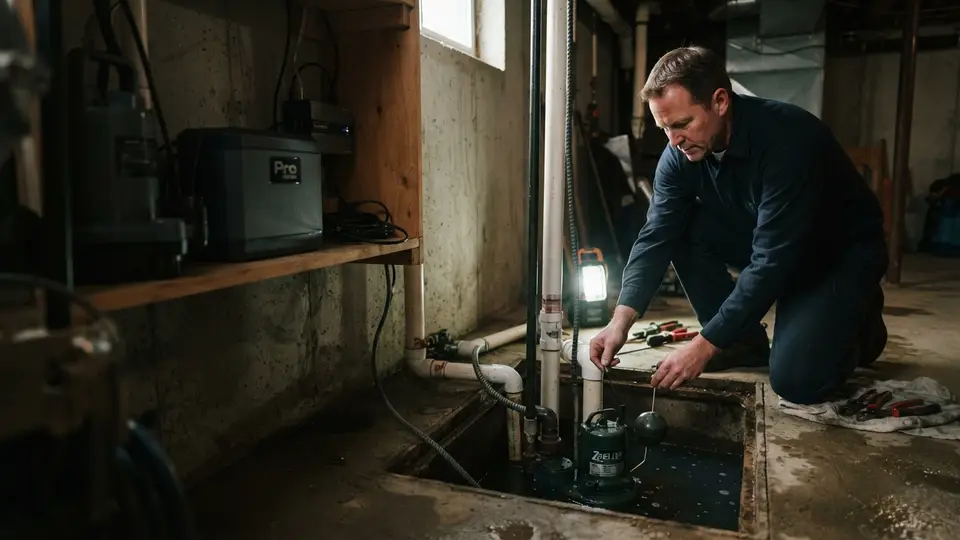
Submersible pump
How it works: Sealed motor sits in the pit
Good for: Most Michigan basements
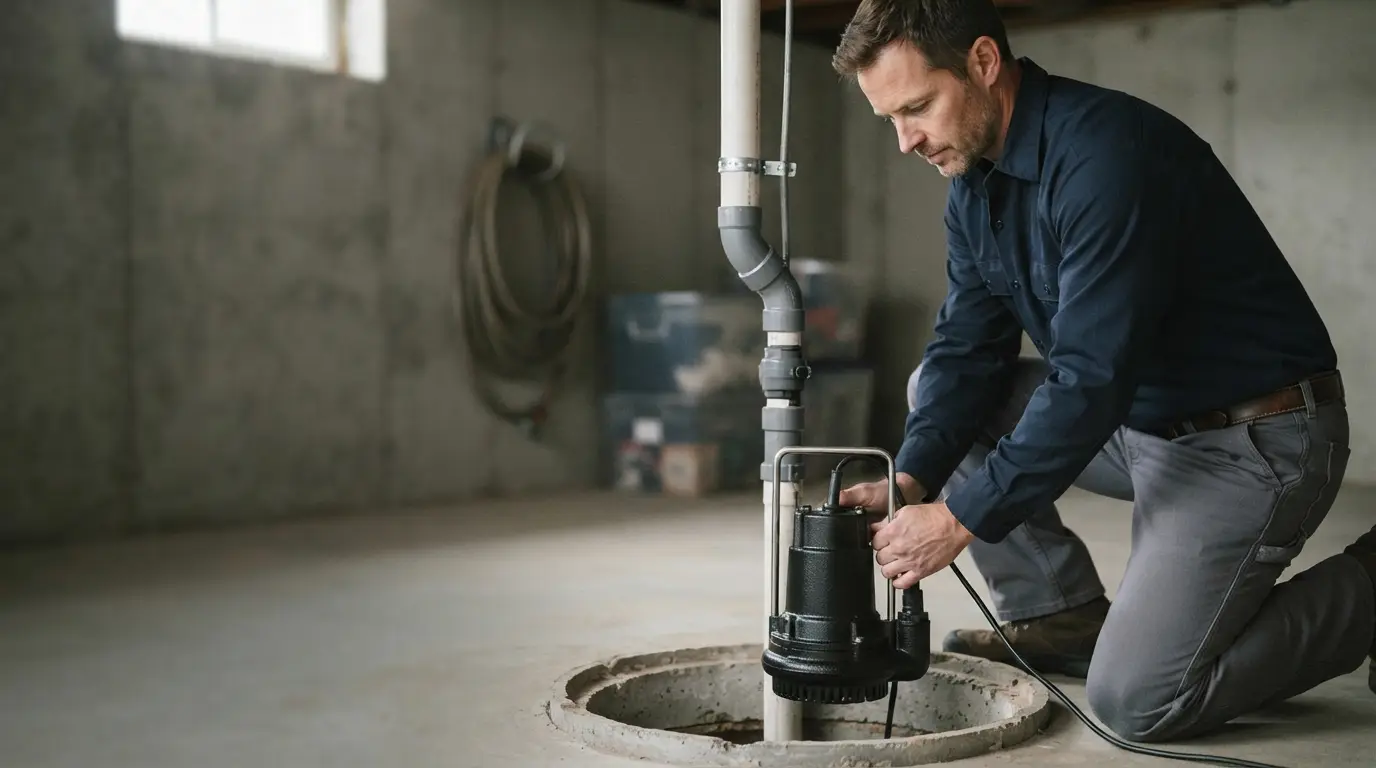
Sump pump quit in a thunderstorm, or water seeping in at every thaw? We handle sump pump repair and installation in Michigan. Almost every Michigan home has a basement, and clay soils, spring snowmelt and heavy summer storms send water toward the foundation every year. Our plumbers repair failed pumps, install new pits and pumps sized for the water your basement actually sees, and add battery backups so the pump keeps running when storms take the power out.
The service
A sump pump collects water from drain tile around the foundation into a pit and pumps it outside before it rises through the floor. Many Michigan homes built since the 1950s have a sump crock from the start; older homes in Detroit (329,393 homes) and Dearborn often drain their footing tile into the sewer instead. Both setups can flood: a pump fails, or the sewer backs up into the tile.
Sump pump choices
How it works: Sealed motor sits in the pit
Good for: Most Michigan basements
How it works: Motor above the pit
Good for: Narrow or shallow crocks
How it works: Second pump on a battery
Good for: Power outages in storms
How it works: Primary and backup in one unit
Good for: Finished basements
How it works: Runs on city water pressure
Good for: Homes on municipal water
Why Michigan
Southeast Michigan clay holds water against foundations instead of letting it drain away.
Melting snow on frozen ground runs straight toward the house.
Intense rain overwhelms gutters, tile and pumps, often with power outages.
Low ground near lakes and rivers keeps pits filling for weeks.
Warning signs
Our process
We check the switch, float, motor, check valve and discharge, clean the pit and intake screen and replace what failed.
We size the pump for flow and lift, set it on a stable base in the crock, install a check valve and route discharge well away from the house.
We add a second pump on a deep-cycle battery with a charger and alarm so the pit keeps draining in an outage or if the main pump fails.
Typical cost
Prices are estimates only until we see the basement. These factors matter:
You approve a written price before we start.
Get a written price: (833) 733-2357A switch costs less than a new pump.
Breaking the floor and digging adds labor.
Higher flow costs more.
Battery or water-powered.
Long runs, burial and freeze protection.
Benefits
Water leaves before it rises.
Backups run during outages.
Less dampness and mold.
Alarms sound before a flood.
Taylor (median year 1963), Southgate (1963) and Dearborn Heights sit on flat clay ground with many postwar homes. Storms here have flooded basements on whole streets in recent years, both from groundwater and from sewers backing up. We install sump pumps and backups, and where footing drains tie into the sewer, we talk through disconnecting them to a sump pit where local rules allow.
St. Clair Shores, where 91% of homes predate 1980, and Roseville (84%) lie close to Lake St. Clair, where groundwater stays high. Pumps in these neighborhoods may run much of the spring. We use pumps rated for long run times, check valves that keep water from falling back into the pit and backups that cover nights when storms cut the power.
Newer homes in Novi (median year 1993), Rochester Hills (1984) and Livonia often have finished basements with carpet and drywall. One pump failure can mean thousands in damage. We recommend a quality primary pump, a battery backup and a high-water alarm or Wi-Fi monitor for these homes, and we seal the pit lid to keep moisture and radon out of the living space.
Grand Rapids (84,894 homes) and Wyoming (30,816 homes) see heavy lake-effect snow, and the spring melt that follows fills sump pits fast. Sandy soils in some areas drain better, but clay pockets and river flats still flood. We size pumps for the snowmelt season and make sure discharge lines are pitched so they do not freeze when winter returns.
Where sump water goes matters. Most Michigan communities do not allow sump pumps to discharge into the sanitary sewer, and water dumped next to the foundation simply comes back. In winter, a buried or flat discharge line can freeze solid, so the pump runs but nothing leaves the house. We route discharge to a safe spot, pitch it to drain and add a freeze-relief outlet near the house so water can escape if the line ices up.
Most sump failures give no warning. A float catches on the pit wall or a GFCI outlet trips during a storm, and the first sign is a wet carpet. A simple high-water alarm in the pit sounds before water reaches the floor. Wi-Fi monitors go further and send a phone alert when the pump stops, runs too long or loses power, which is valuable for cottages and for families who travel. We install both and test them before we leave.
Make sure the pump is plugged in and the breaker or GFCI outlet has not tripped. Lift the float gently to see if the pump starts.
Move belongings off the floor and stay away from standing water near electrical equipment. Then call us.
Replacing a sump pump usually needs no permit, but new discharge connections, footing drain disconnections or plumbing changes may. We check local requirements and pull permits when needed. Our plumbers hold Michigan plumbing licenses.
Why choose us
What you can count on every time one of our plumbers comes to your door.
Every job is handled by a plumber who holds the license your state or city requires, backed by liability insurance.
Our plumber explains the problem and the options, and you approve a written price before any work begins.
Burst pipes, sewage backups and failed water heaters get priority scheduling, including nights and weekends.
We pull permits when the job needs one and schedule the inspection, so the work holds up when you sell.
Repairs and installations come with a written warranty on labor, on top of the manufacturer's warranty on parts.
Our pages and plumbers account for your area's water, soil, climate and the age of the homes around you.
Service area
We repair and install sump pumps in 745 Michigan communities, including Dearborn (39,394 homes) and Livonia (39,665 homes). Find yours:
It depends on pump size, the crock condition and the discharge line. You get a written price before we start.
For most Michigan basements, yes. Storms that flood basements often knock out power at the same time.
Cutting the floor and digging a pit adds labor compared with swapping a pump. We price it clearly up front.
We look at how fast the pit fills, how high the water must be lifted and how far it travels, then pick a pump to match.
We prepare the crock, set the pump, install the check valve and discharge, then fill the pit to test it.
In some Michigan cities, yes, by routing them to a sump pit. We check local rules and handle the work.
Yes, if water reaches outlets, the furnace or water heater. Stay out of it and shut power only if you can do so safely.
Only after unplugging the pump, and never while standing in water near electrical connections.
A replacement takes a few hours. A new crock and pump usually take most of a day.
Often around seven to ten years, less if they run constantly through wet seasons.
Before spring thaw and again before summer storms, by pouring water into the pit until it starts.
Flat or shallow lines hold water that freezes. We pitch them to drain and add a freeze-relief outlet.
Move belongings up, stay away from water near outlets and call us. Flooding basements get priority.
Most communities do not allow it. Discharge usually goes to the yard or a storm system where permitted.
Snowmelt on frozen ground and clay soil push water against the foundation. A properly sized pump handles it.