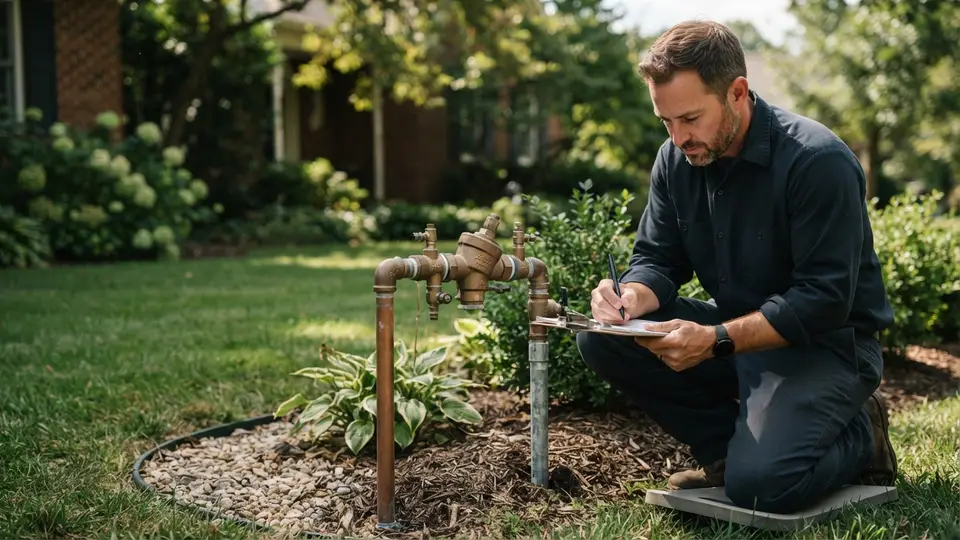
Reduced pressure zone (RPZ)
Common use: Boilers, commercial and medical equipment
Hazard level: High
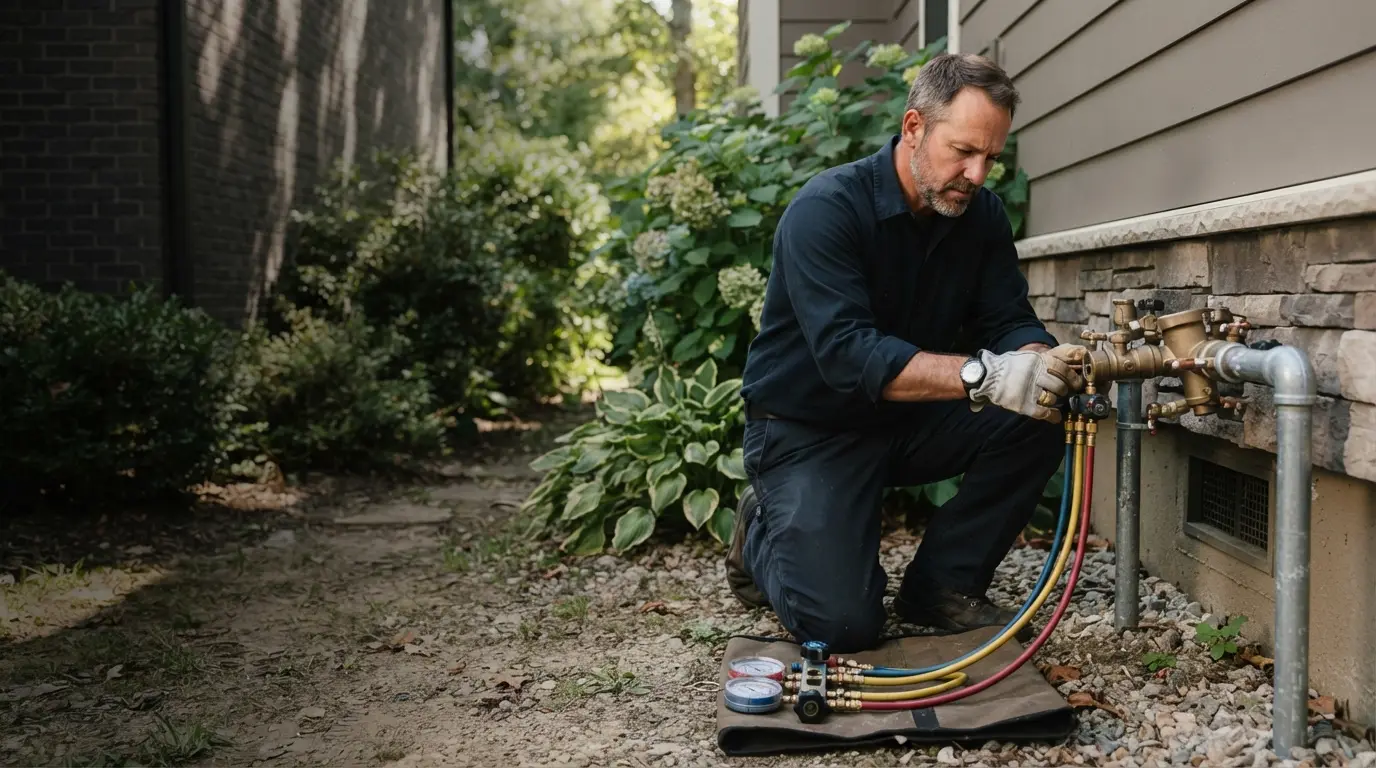
Letter from the water department about your sprinkler backflow device? We handle backflow testing and prevention in Michigan. Our certified testers check, install and repair backflow preventers on lawn irrigation, fire sprinklers, boilers and commercial equipment, and we send results to your water supplier. Michigan public water systems must run cross-connection programs, and a missed test can lead to notices or even a shutoff. We keep devices working, winterized and on schedule.
The service
Backflow is water flowing backward from a home or business into the public supply. It can happen when street pressure drops during a main break or fire, or when equipment pushes water back. A backflow preventer stops it, keeping lawn chemicals, boiler water or sprinkler water out of drinking water. Michigan rules require public water suppliers to have cross-connection control programs, which include testing of certain devices.
Backflow devices we test and service
Common use: Boilers, commercial and medical equipment
Hazard level: High
Common use: Fire sprinklers, some services
Hazard level: Low to moderate
Common use: Lawn irrigation
Hazard level: Irrigation
Common use: Indoor irrigation connections
Hazard level: Irrigation
Why Michigan
State drinking water rules require suppliers to identify and control cross-connections.
Suburban irrigation is widespread and can carry fertilizer and soil water.
Treated heating water and industrial equipment must stay separated from the supply.
Stagnant water in fire lines must not reach drinking water.
Warning signs
Our process
We test each device with calibrated gauges, record readings for each check and relief valve and submit results to your water supplier in the format it requires.
We match the device to the hazard, install it at the right height with access for testing and protect it from freezing.
We rebuild failed devices with new checks, springs and seals, or replace damaged bodies, then retest and file the passing result.
Typical cost
Prices are estimates only until we see the device. These factors matter:
You approve a written price before we start.
Get a written price: (833) 733-2357Multiple tests in one visit lower the cost per device.
Large RPZs take longer.
Rebuild kits or replacement.
New devices, piping and enclosures.
Spring startup and fall winterizing.
Benefits
For your home and neighbors.
Results filed on time.
Seasonal service done right.
We track every device and due date.
Lawn irrigation is common in Novi (28,351 homes), Rochester Hills, Troy and West Michigan suburbs. Most systems use a pressure vacuum breaker outdoors. In a Michigan winter, a PVB left full of water will crack, so it must be drained each fall. In spring, it must be reassembled and tested before the system runs. We handle the spring test and fall winterization in one schedule so nothing is missed.
Offices, restaurants, medical buildings and factories in Troy, Southfield, Grand Rapids (84,894 homes) and Midland have many cross-connections: boilers, chemical feeders, ice machines, carbonators and process equipment. We keep a list of every device in your building with its due date, test them on time and repair failures quickly, so the facility stays in compliance.
Buildings with five or more units hold 39% of homes in Southfield and 37% in Ann Arbor. Larger buildings have fire sprinkler connections, boilers and sometimes booster pumps that need protection. We test for property managers and associations, schedule brief water shutoffs with notice to residents and keep records available for inspectors.
Every outdoor backflow device in Michigan faces freezing. Commercial RPZs installed outside need heated, insulated enclosures; indoor devices near overhead doors or in unheated rooms can still freeze. A frozen device can split and flood a room. We install devices where they stay warm, add enclosures and heat where needed and replace devices that have frozen.
Many older homes and apartment buildings in Detroit (329,393 homes), Lansing and Kalamazoo heat with hot water or steam boilers. The boiler's fill line connects the drinking water to a closed loop that may contain chemicals or rusty water. A backflow preventer on that line is required in many situations. When we work on a boiler fill, we check for proper protection and upgrade it when needed.
A failed test usually means debris or worn rubber, not that your water is contaminated. Main flushing and construction in the area can lodge grit in a check valve. Your supplier will give a deadline for repair. We carry rebuild kits for common models and often repair and retest the device on the same visit. If a device is outdated or damaged, we price a replacement before installing it.
Fire sprinkler systems in apartment buildings, schools, warehouses and offices hold water that sits for years in steel pipe, sometimes with antifreeze in unheated sections. The connection to the public main needs a double check or RPZ assembly, depending on the system and local rules. Testing these larger devices takes coordination, because the fire system may be briefly out of service. We work with building owners and the fire protection contractor to schedule the test, notify whoever needs to know and restore the system promptly.
Many Michigan water suppliers now use online tracking systems, and missed tests generate reminder letters and, eventually, a shutoff notice. We file results electronically where the supplier allows it and keep our own record of each device, its serial number, location and due date. Property managers with several sites get one list instead of a pile of letters.
Find your test notice and note the device location and serial number. Clear access to the device and its shutoffs.
If an RPZ is discharging heavily, close the shutoffs on both sides if you can do it safely. Then call us.
Installing a backflow device usually needs a plumbing permit and approval from the water supplier. Testing must be done by a certified tester. We handle permits and filing. Our plumbers hold Michigan plumbing licenses, and our testers hold backflow certification.
Why choose us
What you can count on every time one of our plumbers comes to your door.
Every job is handled by a plumber who holds the license your state or city requires, backed by liability insurance.
Our plumber explains the problem and the options, and you approve a written price before any work begins.
Burst pipes, sewage backups and failed water heaters get priority scheduling, including nights and weekends.
We pull permits when the job needs one and schedule the inspection, so the work holds up when you sell.
Repairs and installations come with a written warranty on labor, on top of the manufacturer's warranty on parts.
Our pages and plumbers account for your area's water, soil, climate and the age of the homes around you.
Service area
We test and repair backflow devices in 745 Michigan communities, including Troy (34,883 homes), Farmington Hills (38,107 homes) and Midland (19,459 homes). Find yours:
It depends on the number and type of devices. Several in one visit cost less each. We give you a written price first.
Usually, if the body is not cracked. Frozen or damaged bodies need replacement.
Yes. We submit results to your water supplier and give you a copy.
We attach calibrated gauges to the test cocks and measure how each valve holds pressure, then record the results.
Yes. We install the right device, place it for testing and draining and arrange approval.
Yes. We drain or remove them in fall and reinstall and test them in spring.
Yes. Without protection, chemicals or dirty water can be pulled into the drinking supply.
Stop drinking it, call your water supplier and have us check your backflow devices.
Usually less than an hour per device, with a brief water shutoff.
Many devices need annual testing, and some suppliers require more frequent tests for high-hazard devices. Your supplier sets the schedule.
Drain it before the first hard freeze or have us winterize it each fall.
Yes. In Michigan they need insulated and usually heated enclosures to survive winter.
Close the shutoffs on both sides if safe and call us. It usually needs repair.
Your local water supplier runs the cross-connection program under state drinking water rules.
Homes with lawn sprinklers, boilers or fire sprinklers often do. Your supplier will notify you.