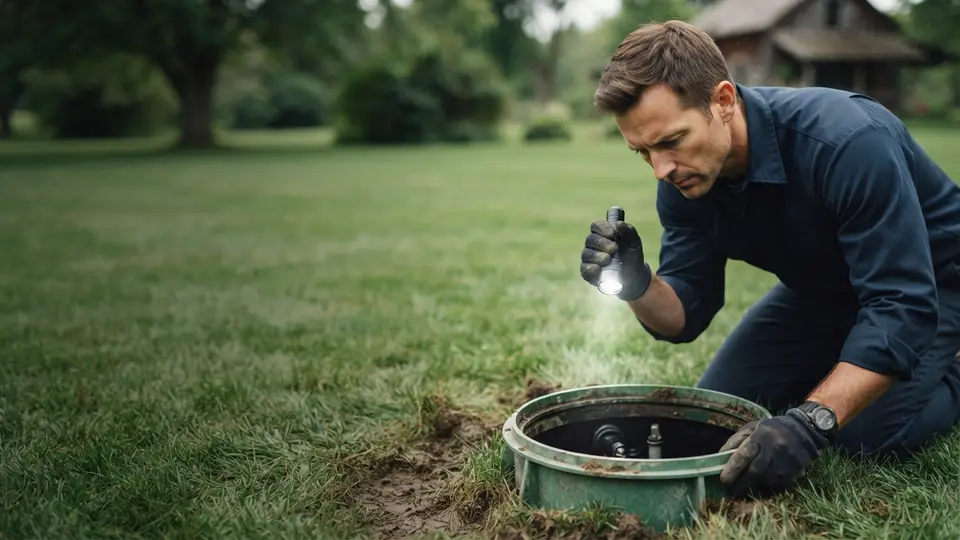
Septic pumping
When it is needed: Every few years or when full
What we do: Remove sludge and scum, check baffles
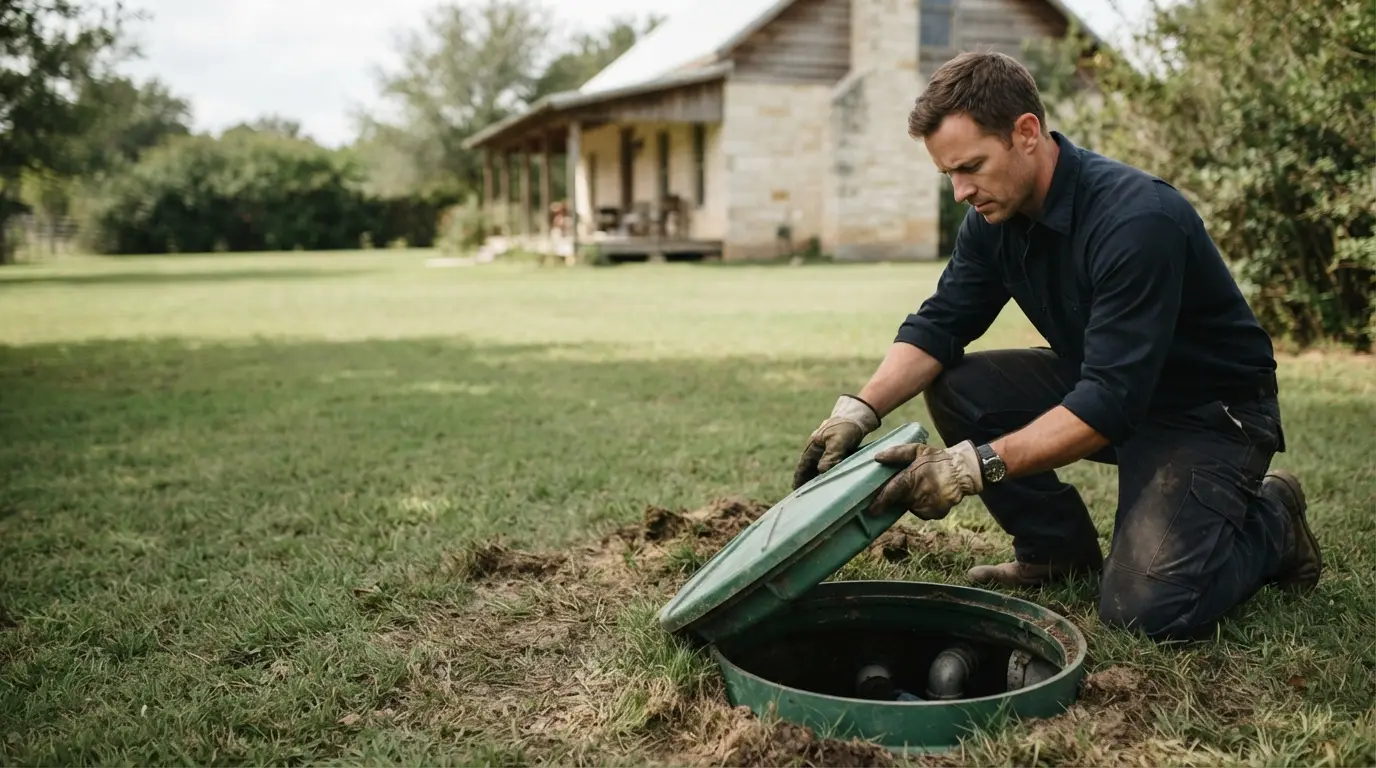
Wet spot over the drain field, or a cottage septic that backs up each summer? We handle septic tank services in Michigan. Our plumbers pump tanks, inspect systems and repair drain fields for year-round homes, lake cottages and rural properties. A large share of Michigan homes outside the cities rely on septic, and local health departments set the rules. Sandy soils up north, heavy clay in the south and high water tables near lakes all shape how systems work and fail.
The service
A septic system settles solids in a buried tank and sends the liquid to a drain field, where soil filters it. Michigan has no single statewide septic code; county and district health departments issue permits and set standards, and some require inspections when a property changes hands. That means rules for repairs, setbacks and replacement differ from one county to the next.
Septic services we provide in Michigan
When it is needed: Every few years or when full
What we do: Remove sludge and scum, check baffles
When it is needed: At sale, before buying, or with problems
What we do: Check tank, lines and field
When it is needed: Wet ground, odors, slow drains
What we do: Find the failure and repair it
When it is needed: Pump chambers and mound systems
What we do: Repair pumps, floats and alarms
Why Michigan
Much of southern Michigan has dense clay that absorbs water slowly, so fields saturate.
Cottages on small lots near the water often have fields close to groundwater.
Many lake cottages have tanks and fields that were sized for weekend use decades ago.
Shallow lines and tank lids without snow cover can freeze in deep cold.
Warning signs
Our process
We dig to the lids if needed, pump both compartments, look at the inlet and outlet baffles and check the tank for cracks while it is empty.
We measure sludge, inspect baffles and the outlet filter, check the distribution box and probe the drain field. We follow your county's inspection requirements when the inspection is for a sale.
We find out whether pipes are crushed, clogged or rooted, or whether the soil has failed. We repair lines and boxes, and when a new field is required we work from a health department permit.
Typical cost
Septic prices are estimates only until we see the system. These factors matter:
You approve a written price before any work begins.
Get a written price: (833) 733-2357Deep lids and large tanks take longer.
Pumped systems and mounds have more parts.
Baffles, boxes and broken lines.
Permits, design and excavation.
Frozen ground limits digging in winter.
These vary by area.
Benefits
Solids stay in the tank.
Effluent is treated properly.
Problems found before an inspection.
Waste keeps moving out.
Michigan's inland lakes and Great Lakes shoreline are lined with cottages. In our data, 46% of homes in Indian River, 43% in South Haven and 43% in Manitou Beach-Devils Lake are not occupied year-round. A cottage septic that sits idle all winter and then serves a full house on summer weekends is under heavy strain. We pump before the season, check that the field can handle summer loads and advise when a system is too small for how the cottage is used today.
Around Traverse City (8,479 homes), Petoskey and Marquette, sandy soils drain well but can let effluent move quickly toward wells and lakes. Rocky ground in parts of the U.P. limits where fields can go. Winter snow insulates tanks, but where it is plowed off or compacted, lines can freeze. We service systems through the season and recommend insulation for shallow lines and lids.
Growing towns like Allendale (median year 2003), Byron Center (1998) and Dexter (1997) include homes on septic as well as sewer. Newer systems are larger and built to current local codes, and some use pumps and engineered beds. They still need regular pumping, and pumps and alarms wear out. We service these systems and can explain the specific design yours uses.
Some Michigan counties require a septic and well evaluation when a property is sold, and lenders may ask for one even where it is not required. A failing system found at sale can delay closing. We inspect systems, explain what we found in plain terms and, if repairs are needed, coordinate with the health department so the sale can proceed. Check with your county health department for local requirements.
Rural homes that use septic usually also rely on wells and often on propane. Propane heats 22% of homes in Skidway Lake and 17% in Lake Isabella. On these properties, the septic, well and water heater all affect each other: a water softener can add water to the tank, and a leaking toilet can flood the field. We look at the whole system when we service yours.
Use as little water as possible: no laundry, dishwashing or long showers. If an alarm is sounding, silence it and leave the system on unless the panel says otherwise.
Keep vehicles and people off wet areas and do not open the tank yourself, as the gases inside are dangerous. Then call us.
Septic repairs and replacements in Michigan are permitted by your county or district health department. We coordinate permits and any required inspections. Our plumbers hold Michigan plumbing licenses for the house plumbing connected to the system.
Why choose us
What you can count on every time one of our plumbers comes to your door.
Every job is handled by a plumber who holds the license your state or city requires, backed by liability insurance.
Our plumber explains the problem and the options, and you approve a written price before any work begins.
Burst pipes, sewage backups and failed water heaters get priority scheduling, including nights and weekends.
We pull permits when the job needs one and schedule the inspection, so the work holds up when you sell.
Repairs and installations come with a written warranty on labor, on top of the manufacturer's warranty on parts.
Our pages and plumbers account for your area's water, soil, climate and the age of the homes around you.
Service area
We service septic systems in 745 Michigan communities, from St. Helen (2,406 homes) to Petoskey (3,069 homes) and Marquette (9,570 homes). Find yours:
Tank size, how deep the lids are and local disposal fees set the price. We give you a written price before we start.
Fixing a crushed line or a tipped box costs far less than a new field. We find the cause first, then price the repair.
Usually somewhat, because pumps, floats and alarms need service. We explain what your system needs.
We check health department records, follow the sewer line from the house and probe the ground to locate the lids.
We open and measure the tank, check baffles and the outlet filter, look at the distribution box and evaluate the field.
Yes. We follow your county's requirements and explain the results clearly to buyers, sellers and agents.
Yes. Tank gases can overcome a person, and open tanks are a fall hazard. Leave the lids to us.
It can. Untreated effluent can reach groundwater and surface water. Repairs protect both.
The work often takes a few days, but permits and design can add several weeks before digging starts.
Yes. Normal use is fine as soon as the lids are closed.
Many households need pumping every two to four years, depending on tank size and use. We suggest a schedule after the first visit.
Avoid compacting snow over the system, insulate shallow lines and lids and keep using water steadily in winter.
Stop using water, stay away from the sewage and call us. We find whether the tank, pipe or field is the cause.
No. County and district health departments set the rules, so requirements vary by location.
Often yes, because summer use is heavy and many cottage tanks are small. We check before and after the season.