Vitrified clay
Usual era: Before about 1970
How it fails: Roots at joints, cracks, offset sections
Roots in the sewer again, or a soft, sinking spot in the lawn? We handle sewer line repair and replacement in Michigan. Our plumbers find the broken section with a camera, mark it from the surface and fix it with as little digging as the ground allows. Michigan sewers sit deep below the frost line, and many were laid in clay or cast iron during the postwar building boom. After 60 years or more, roots, frost movement and settling have opened their joints.
The service
The building sewer carries everything from your basement to the city main or a septic tank. In most Michigan cities the owner is responsible for that line, often all the way to the main. With 47% of Michigan homes built before 1960, a large share of these lines are vitrified clay or cast iron, and a smaller number are bituminous fiber pipe that softens and flattens.
Sewer pipe in Michigan yards
Usual era: Before about 1970
How it fails: Roots at joints, cracks, offset sections
Usual era: Under basements and older laterals
How it fails: Rust, scale, a rotted bottom
Usual era: Some postwar homes
How it fails: Flattening and collapse
Usual era: Newer homes and repairs
How it fails: Sags in poorly compacted fill
Why Michigan
Maples and other big street trees planted when subdivisions were new have grown into the joints.
Ground movement during deep freezes shifts pipe sections and opens joints.
Heavy clay in much of southeast Michigan swells and shrinks, putting stress on pipe.
Most lines from the 1940s to 1960s have now passed their expected service life.
Warning signs
Our process
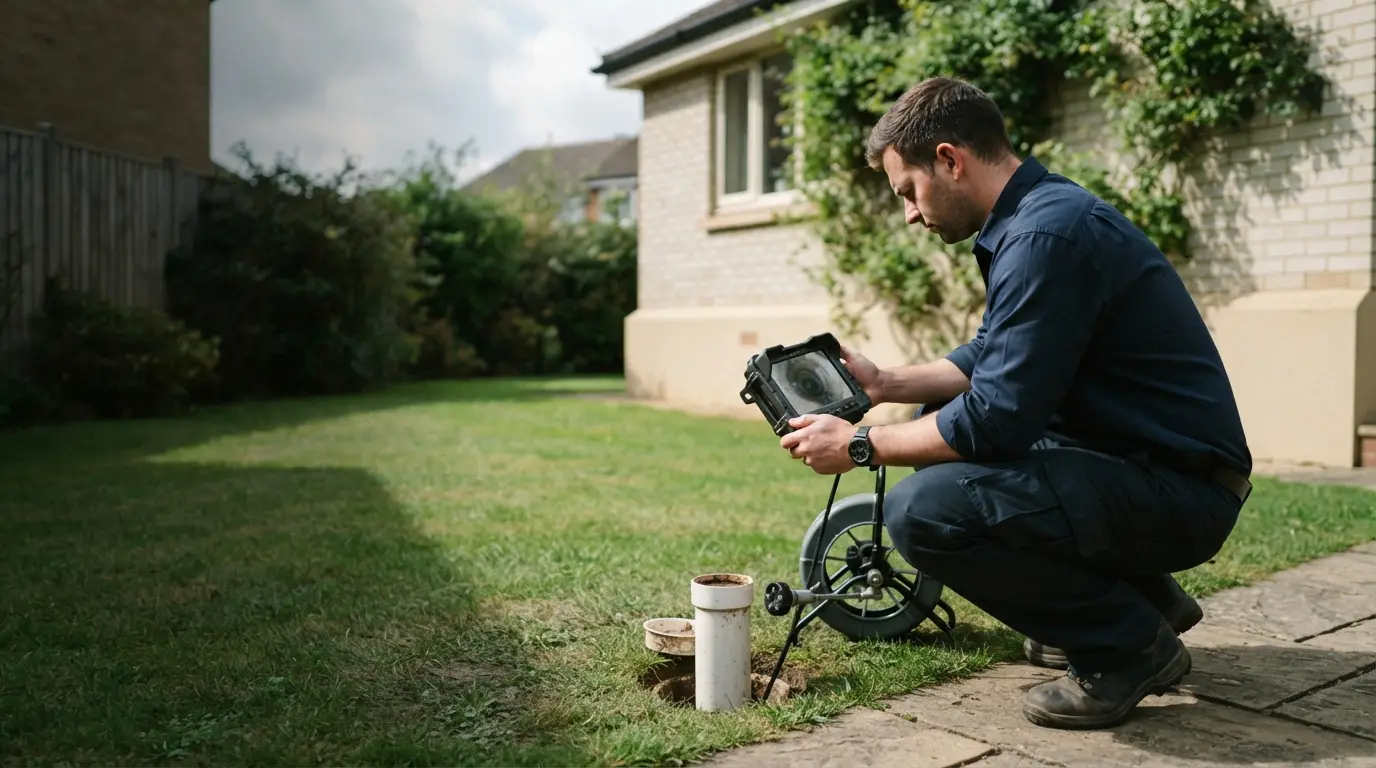
We run a camera through the line from the cleanout or floor drain, record it and use a locator to mark the exact spot and depth of each defect.
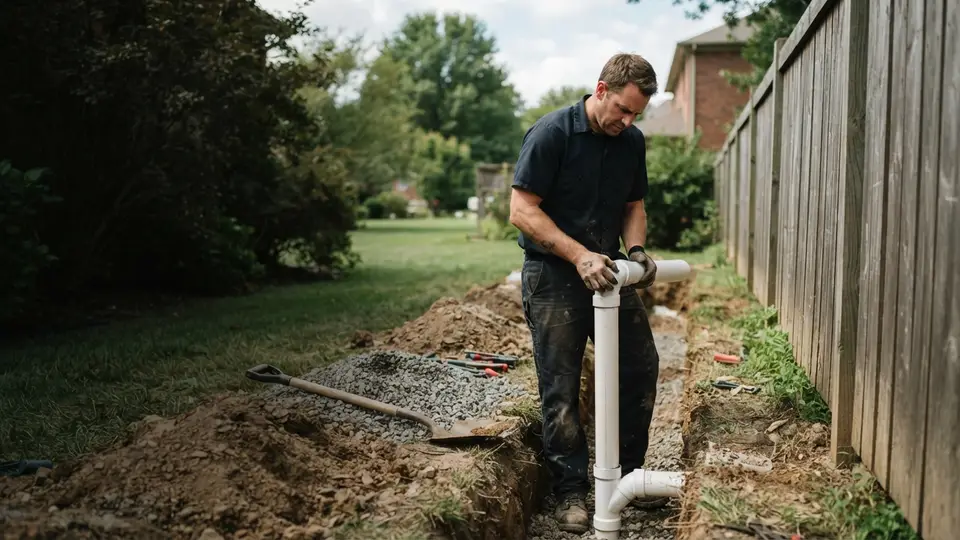
When the damage is in one place, we dig to that spot, cut out the failed pipe and join new pipe with shielded couplings and proper bedding.
When the whole line is failing, we replace it by trench or, where the route allows, by pipe bursting or lining, then camera the finished line.
Typical cost
Sewer repair prices are estimates only until we camera the line. These factors matter most:
We go over each option and you approve a written price before digging.
Get a written price: (833) 733-2357Deep frost-protected lines take more digging.
Spot repair, lining, bursting or open trench.
Driveways, sidewalks, trees and landscaping.
Right-of-way permits and road restoration.
Wet clay and sand need shoring.
Concrete, asphalt and lawn repair.
Benefits
Sound pipe ends the root cycle.
Waste leaves the house as it should.
Trenchless work spares lawns and drives.
Video of the new pipe for future buyers.
Allen Park (94% of homes built before 1980), Dearborn Heights (90%) and Garden City (92%) are almost entirely postwar housing with original clay sewers. Many of these lines run under mature trees and driveways. We see the same pattern on street after street: roots at the joints closest to the house, then cracked or offset sections near the sidewalk. A camera shows whether a spot repair or full replacement makes more sense.
Michigan sewers sit deep to stay below frost, and in the Upper Peninsula, around Marquette (9,570 homes), frost reaches deeper still. Deep lines mean bigger excavations, trench shoring and more restoration. Where the route is straight and the old pipe can be followed, trenchless methods can save a lot of digging. We look at depth, soil and what is above the line before recommending a method.
In Detroit (329,393 homes), Lansing (55,943 homes) and Saginaw, the problem is sometimes where your line meets the main in the street. Repairs there often require a right-of-way permit and coordination with the city. We handle permits, call in utility locates and arrange traffic control when the work reaches the road, so the repair is done once and inspected properly.
Some homes from the 1940s to the 1960s, in places like Livonia (median year 1964) and Wyoming (1969), were built with bituminous fiber sewer pipe. It slowly deforms into an oval, then blisters and collapses. On camera it is easy to recognize. Because it cannot be patched reliably, we replace it from the foundation to the city connection.
A general home inspection usually does not include the sewer line. In older neighborhoods of Grand Rapids (84,894 homes), Bay City (median year 1941) and metro Detroit, a camera inspection before buying can reveal roots, breaks or fiber pipe that would cost thousands to fix. We record the line, mark problems and give you a clear summary to use in negotiations.
Stop using water if sewage is backing up. Do not open a cleanout cap while the line is full; it can release sewage into the basement.
Write down when backups happen, such as after laundry or heavy rain, and clear a path to the cleanout or floor drain. Then call us.
Sewer repairs and replacements need a permit from your local building department, and street work needs a right-of-way permit from the city or road agency. We pull them and schedule inspections. Our plumbers hold Michigan plumbing licenses. Even in newer areas like Rochester Hills (median year 1984) we confirm grades and connections against local requirements.
Why choose us
What you can count on every time one of our plumbers comes to your door.
Every job is handled by a plumber who holds the license your state or city requires, backed by liability insurance.
Our plumber explains the problem and the options, and you approve a written price before any work begins.
Burst pipes, sewage backups and failed water heaters get priority scheduling, including nights and weekends.
We pull permits when the job needs one and schedule the inspection, so the work holds up when you sell.
Repairs and installations come with a written warranty on labor, on top of the manufacturer's warranty on parts.
Our pages and plumbers account for your area's water, soil, climate and the age of the homes around you.
Service area
We repair and replace sewer lines in 745 Michigan communities, including Saginaw (21,063 homes). Find yours:
Cost depends on depth, length, the repair method and what sits over the line. After the camera inspection, you get a written price for each option.
Often it does, mainly because restoration is smaller. Collapsed pipe, steep sags or rock can still call for a trench.
Yes. It pinpoints the type and location of damage, so you pay only for the repair your line actually needs.
A transmitter in the camera head sends a signal we pick up on the surface. We mark the spot and depth before digging.
We pull permits, call for utility locates, open the trench or set up trenchless gear, install and test new pipe, get it inspected and restore the surface.
Yes, if the rest of the line is sound. The camera shows whether a spot repair will hold or the whole line is near failure.
Yes. Raw sewage carries bacteria into soil and basements. Stop using water during a backup and keep people away from it.
We shore deep trenches, fence or cover the opening and keep the area closed off until the pipe is buried.
Many jobs take one to three days. Street work, deep lines and inspection timing can add time.
Water stays on, but drains cannot be used while the line is open. We plan to keep that window short.
Keep trees away from the line and have clay pipe checked regularly. Lining or replacing rooted joints keeps roots out for good.
Every few years for clay or cast iron, and always before buying an older home.
Stop all water use, stay out of the sewage and call us. We clear the line first and then plan the repair.
Yes. Work in the public right-of-way needs a permit from the city or road agency, and we arrange it.
To stay below the frost line. Shallow lines would freeze in a Michigan winter, so sewers run several feet down.