Water softener
Removes or treats: Calcium and magnesium hardness
Common for: Wells and groundwater cities
Orange iron stains in the toilet, or scale crusting every faucet? We handle water softeners and filtration in Michigan. Groundwater across much of the state is hard and often carries iron, and roughly a quarter of Michigan households get their water from private wells. Our plumbers test your water, then install softeners, iron filters, whole-house carbon filters and reverse osmosis drinking water systems sized for your home. We install only what your water test shows you need.
The service
Michigan water comes from two very different sources. Detroit-area homes on the Great Lakes Water Authority system and other lake-fed cities receive treated surface water that is only moderately hard. Grand Rapids draws from Lake Michigan. Many other cities, including Lansing and Kalamazoo, pump groundwater, and private wells serve a large share of rural and suburban homes. Michigan groundwater is often hard, and iron is one of the most common complaints, along with sulfur odor in some wells.
Treatment systems we install
Removes or treats: Calcium and magnesium hardness
Common for: Wells and groundwater cities
Removes or treats: Iron staining and some manganese
Common for: Private wells
Removes or treats: Rotten-egg odor
Common for: Some wells
Removes or treats: Chlorine taste, odors
Common for: City water
Removes or treats: Dissolved solids and many contaminants
Common for: Kitchen drinking water
Why Michigan
Groundwater picks up calcium and magnesium as it moves through limestone and glacial gravel.
Iron is common in wells across the Lower Peninsula and stains everything it touches.
Some wells and water heaters produce hydrogen sulfide odor.
Parts of southeast and Thumb-area Michigan have wells with naturally occurring arsenic.
Warning signs
Our process
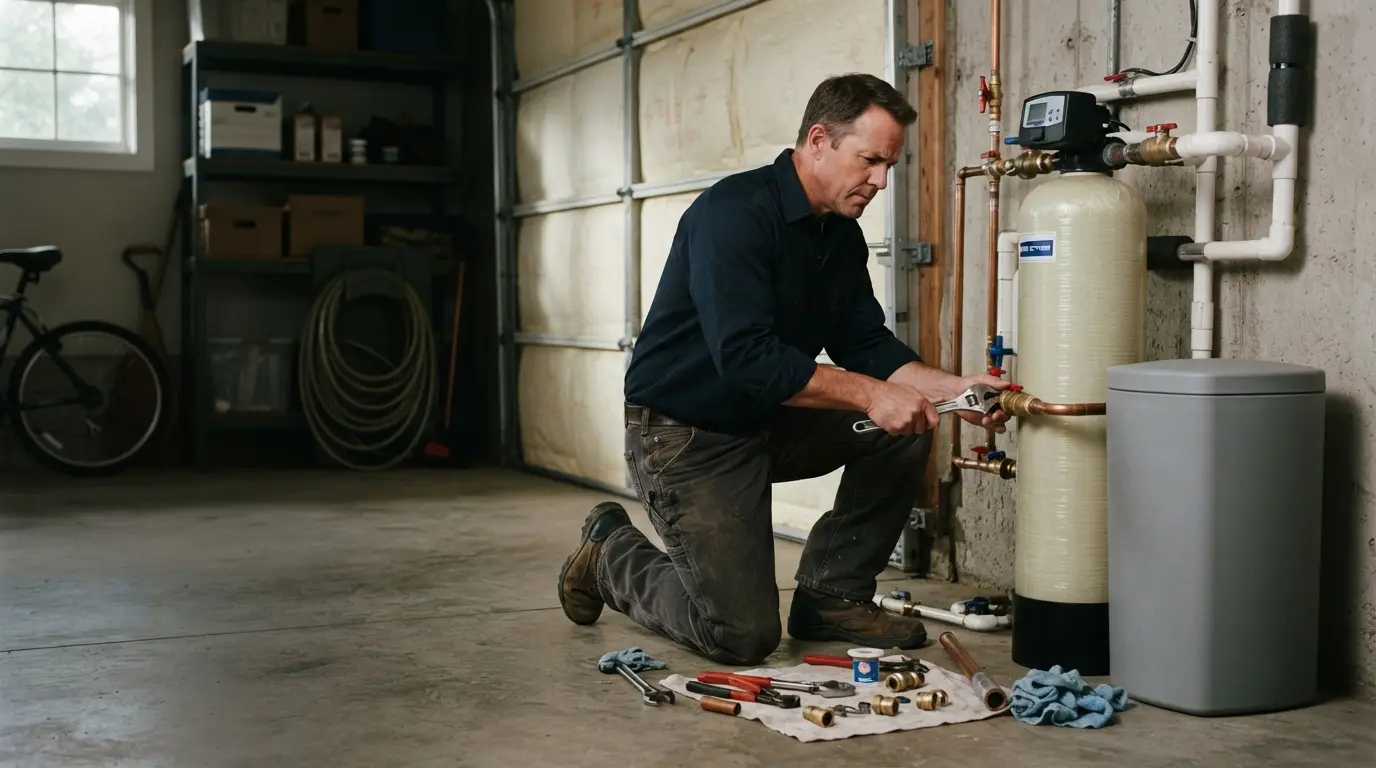
We test hardness and iron, size the softener to your use, install it with a bypass and proper drain and program regeneration.
We install sediment, iron, sulfur and carbon filters in the right order at the point where water enters the house.
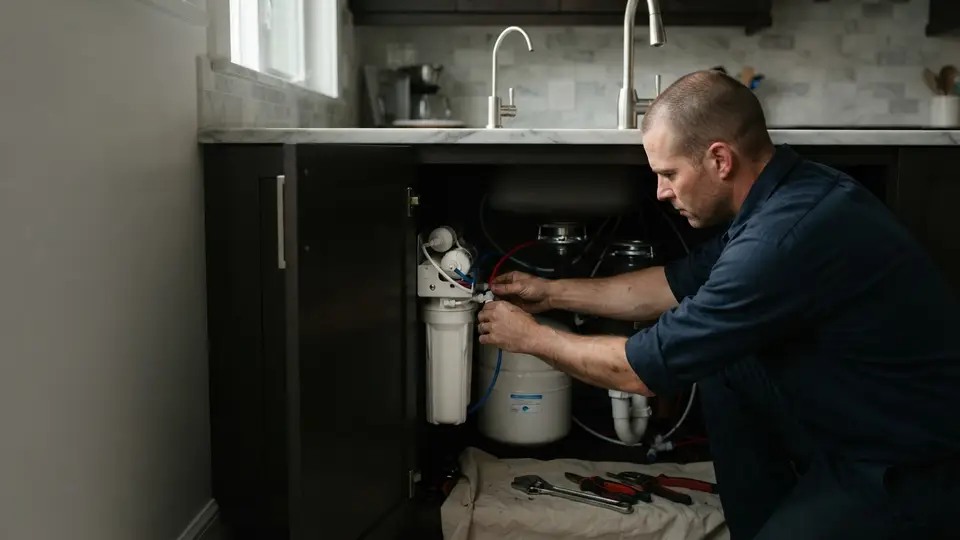
We install an under-sink reverse osmosis system with its own faucet and can connect it to the refrigerator, then explain filter changes.
Typical cost
Prices are estimates only until we have test results. These factors matter:
You approve a written price before we start.
Get a written price: (833) 733-2357Hardness, iron, sulfur and other contaminants.
Bigger households need larger systems.
Filters, softener and RO.
Basement layout matters.
Salt and filter cartridges.
Benefits
Iron and scale removed.
Less scale in heaters and machines.
Sulfur and chlorine reduced.
Reverse osmosis at the tap.
Fast-growing areas like Allendale (median year 2003), Byron Center (1998), Dexter (1997) and Freeland (1995) include many homes on private wells or township systems drawing from groundwater. New homes there often come with no treatment, and owners discover iron stains within months. We test the water and install a softener and iron filter combination that suits the well's output.
Lansing (55,943 homes), Kalamazoo (32,379 homes) and Portage supply city water pumped from wells, and it can be noticeably hard. Holland and Grand Rapids draw from Lake Michigan, which is softer. If you are not sure, your utility's annual water quality report lists hardness. We help you read it and decide whether a softener is worth it for your home.
Iron is the most common reason Michigan well owners call us about water. Small amounts stain fixtures orange; larger amounts clog softeners and leave sediment in pipes. A softener can remove low levels of iron, but higher levels need a dedicated iron filter ahead of it. We test for iron and manganese and size the system so it does not foul within a year.
Homes in Detroit (329,393 homes) and other lake-fed cities get treated water that is tested regularly. Many owners there still want a carbon filter for chlorine taste or a reverse osmosis system for drinking water, especially in older homes where the plumbing itself may affect water quality. We install filters and can check for lead service lines and galvanized pipe at the same visit.
Around Traverse City (8,479 homes) and in the north, wells are common at year-round homes and cottages. Water can range from soft to very hard depending on depth and geology, and some wells carry iron or sulfur. Cottages that sit empty need treatment equipment that tolerates periods of no use. We set up systems for seasonal homes and winterize them along with the plumbing.
Hard water shortens the life of water heaters, dishwashers, washing machines and especially tankless heaters, whose narrow passages scale up quickly. Many tankless manufacturers set water hardness limits in their warranties. When we install a new heater in a hard-water home, we recommend treatment at the same time so the equipment lasts and stays under warranty.
Builders in growing townships near New Haven (median year 2002) and other fast-growing areas often leave treatment to the buyer. Owners move in, find orange stains within weeks and then find that the plumbing has no loop or drain ready for a softener. We add the bypass loop, drain and outlet the system needs and install treatment matched to the well, so it fits neatly in the mechanical room and is easy to service.
If you are on a well, get a lab test and have the results ready. Note where you see stains, scale or odor and whether it is hot water only.
Clear space near where the water line enters, and locate a floor drain and outlet nearby. Then call us.
Installing treatment equipment on the main water line generally needs a plumbing permit in Michigan, and softener discharge must be routed properly, especially on septic. We pull permits when required. Our plumbers hold Michigan plumbing licenses.
Why choose us
What you can count on every time one of our plumbers comes to your door.
Every job is handled by a plumber who holds the license your state or city requires, backed by liability insurance.
Our plumber explains the problem and the options, and you approve a written price before any work begins.
Burst pipes, sewage backups and failed water heaters get priority scheduling, including nights and weekends.
We pull permits when the job needs one and schedule the inspection, so the work holds up when you sell.
Repairs and installations come with a written warranty on labor, on top of the manufacturer's warranty on parts.
Our pages and plumbers account for your area's water, soil, climate and the age of the homes around you.
Service area
We install softeners and filters in 745 Michigan communities, including Grand Rapids (84,894 homes), Holland (13,998 homes) and Portage (21,881 homes). Find yours:
It depends on hardness, iron and household size. After reviewing your water test, we give you a written price.
A softener handles low iron. Higher iron needs a dedicated filter ahead of it. Your test results tell us which.
Mainly salt and a little water and electricity. We explain expected usage when we size the system.
We start with a water test, then design treatment in the right order for what is actually in your water.
Yes. We install under-sink systems with a dedicated faucet and can connect the refrigerator.
Usually not. Great Lakes water is only moderately hard. Some owners add a carbon filter for taste.
Only a lab test can tell. Test for bacteria, nitrates and arsenic regularly.
In some areas, yes. Arsenic needs specific treatment such as reverse osmosis or special filters.
A single system takes a few hours. Multi-stage systems may take most of a day.
Every year for bacteria and nitrates, and every few years for arsenic and other contaminants.
Sediment and carbon cartridges often every few months, depending on your water and use.
A properly sized and set softener adds limited water. We set it to regenerate efficiently.
If you are on city water, call your utility. On a well, stop drinking it and call us to check the well and treatment.
Hydrogen sulfide from the well or a reaction in the water heater. We test and treat the cause.
Yes. Scale builds quickly. Treatment protects the heater and helps keep its warranty valid.