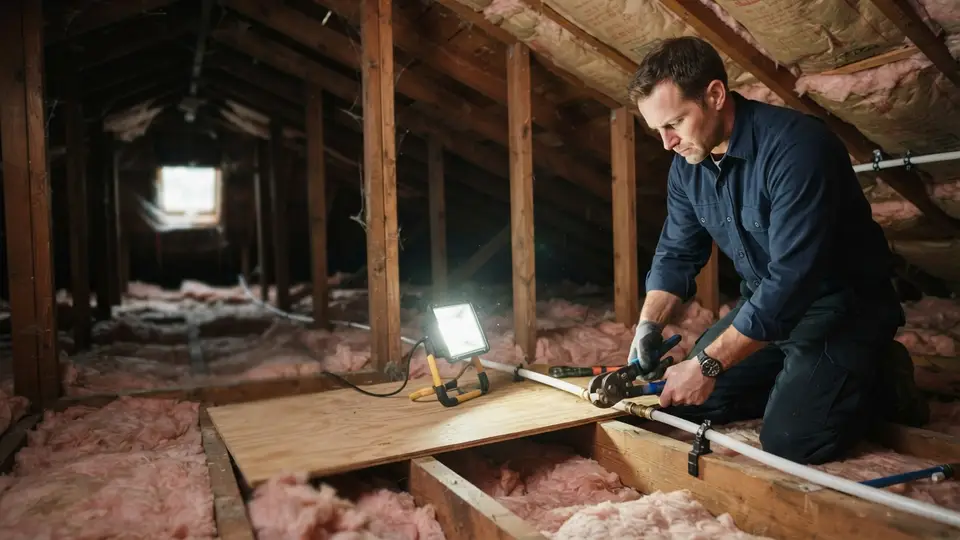
Direct repair
What happens: Open the floor at the leak and replace pipe
Best fit: One leak in sound pipe
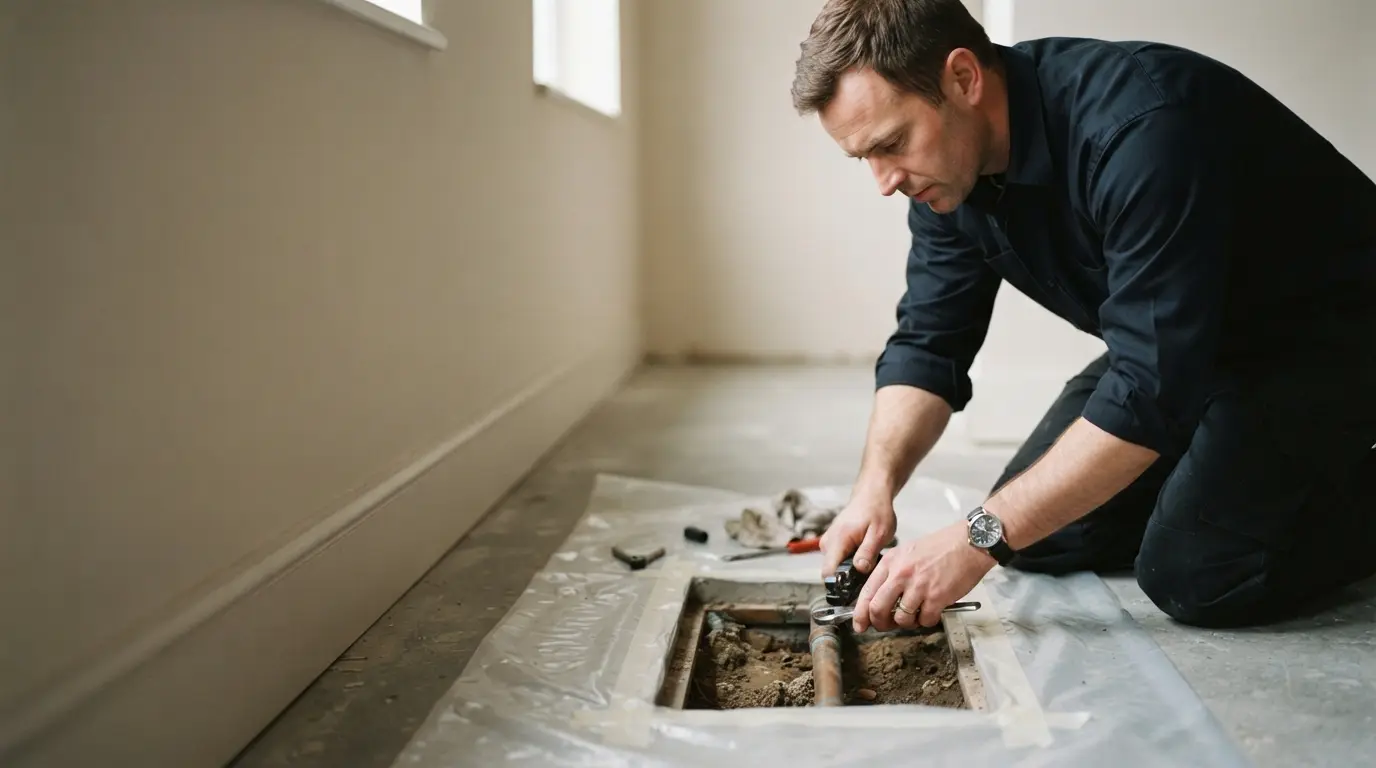
Warm patch on the floor, or a meter spinning with every tap off? We handle slab leak repair in Michigan. Most Michigan homes have basements, but water and drain lines still run under basement floors, slab-on-grade ranches, condos, additions and garages. When one of them leaks, the water stays hidden under concrete. Our plumbers pinpoint the leak from above, then repair it through a small opening or reroute the line through walls and ceilings so the floor stays whole.
The service
A slab leak is any leak in a pipe below or within a concrete floor. In Michigan that includes the water service entering through the basement floor, drain lines under the basement slab, supply lines in slab-on-grade homes and additions, and radiant heating tubing in heated floors. These leaks often go unnoticed until flooring lifts or bills climb.
Ways we fix leaks under concrete
What happens: Open the floor at the leak and replace pipe
Best fit: One leak in sound pipe
What happens: Run new supply line above the floor
Best fit: Old or repeatedly leaking pipe
What happens: Replace cracked drain under the slab
Best fit: Broken cast iron or PVC
What happens: Repair or isolate a heating loop
Best fit: Heated basement or garage floors
Why Michigan
Copper resting on gravel or concrete wears thin as it expands and contracts.
Soil under slabs on fill can settle, and frost at slab edges shifts pipe.
Drains under older basement floors rust through along the bottom.
Pipe nicked during building or later remodeling can leak years afterward.
Warning signs
Our process
We isolate hot and cold lines to find which one leaks, then use ground microphones and thermal imaging to mark the leak on the floor within a small area.
We saw a small opening, dig to the pipe, replace the damaged section, pressure test it and then backfill and patch the concrete.
When the buried line is old or has leaked before, we abandon it and run new PEX or copper through walls, joists or the attic to the fixtures.
Typical cost
Slab leak prices are estimates only until the leak is found. These factors matter:
You see prices for repair and reroute in writing and choose before we start.
Get a written price: (833) 733-2357Tile and hardwood cost more to open and restore.
Rerouting avoids concrete but adds new pipe runs.
Aging copper may have more than one.
Supply, drain and radiant lines differ.
Patching and finish flooring afterward.
Benefits
We open only at the leak.
Hidden water stops collecting.
The meter stops running.
Rerouting removes old pipe from concrete.
Some 1950s and 1960s neighborhoods in Taylor (median year 1963), Burton (1964) and Wyoming include slab-on-grade ranches, and many basement homes have family rooms, sunrooms or garages added on slabs. Water lines run under that concrete to kitchens and bathrooms. After 50 or 60 years, copper in those slabs starts to pinhole. We usually suggest rerouting through the ceiling or walls rather than chasing leaks under the floor one at a time.
In basement homes, the most common under-slab problem is a drain, not a water line. Cast iron and clay drains below the basement floor crack, rust through or separate, letting wastewater into the soil and sewer gas into the house. A camera shows where. In suburbs like Sterling Heights (median year 1977) and Troy (1977), we replace these sections through narrow trenches in the floor and test them before patching.
Heated basement floors, garages and bathroom floors are popular in Michigan, where floors stay cold for months. The tubing is cast into the slab and fed by a boiler or water heater. A leak shows up as a pressure drop, a feed valve that keeps adding water or a damp area. We trace warm loops with a thermal camera and repair or isolate the leaking loop.
Homes in Novi (median year 1993), Allendale (2003) and Forest Hills (1988) are newer, but slab condos and finished basements still hide pipe. A fastener through a line or a poorly made fitting can leak years after construction. We locate the leak, fix it and document the cause in case a builder or association warranty applies.
Hard well water in West Michigan, around Holland (13,998 homes) and Kentwood, and some soft or aggressive water supplies can both affect copper. Pinhole leaks that keep appearing in different places point to a water quality issue rather than bad luck. We can test your water and recommend treatment along with the repair so new pipe lasts longer.
In many Michigan basements the water service comes up through the floor near the front wall, often in old copper or galvanized pipe sleeved through the concrete. Where the pipe meets the slab, years of moisture and movement can wear it through. The first sign is usually a damp ring of concrete around the pipe or water seeping along the wall. We dig out around the entry, replace the damaged length, add a proper sleeve and reseal the floor, then check the meter and main valve while we are there.
Close the main valve if water is coming up or the meter shows a big leak. If the leak seems to be on the hot side only, closing the cold supply to the water heater may let you keep cold water.
Lift rugs and move furniture off damp areas, keep electrical items away from water and call us.
Rerouting water or drain lines usually needs a plumbing permit from your local building department, and we file it and schedule the inspection. Our plumbers hold Michigan plumbing licenses.
Why choose us
What you can count on every time one of our plumbers comes to your door.
Every job is handled by a plumber who holds the license your state or city requires, backed by liability insurance.
Our plumber explains the problem and the options, and you approve a written price before any work begins.
Burst pipes, sewage backups and failed water heaters get priority scheduling, including nights and weekends.
We pull permits when the job needs one and schedule the inspection, so the work holds up when you sell.
Repairs and installations come with a written warranty on labor, on top of the manufacturer's warranty on parts.
Our pages and plumbers account for your area's water, soil, climate and the age of the homes around you.
Service area
We repair slab leaks in 745 Michigan communities, including Portage (21,881 homes), Midland (19,459 homes) and Kentwood (22,322 homes). Find yours:
It depends on where the leak is, the flooring above it and whether we repair or reroute. You get a written price once the leak is located.
Sometimes. It avoids concrete and flooring repair but needs new pipe runs. We price both so you can compare.
Many policies cover access and resulting damage, not the pipe itself. Check your policy; we provide documentation of the cause.
We isolate the leaking line with pressure tests, then pinpoint the spot with ground microphones and thermal imaging.
Usually small, often about two feet square, depending on how deep the pipe is. We patch the concrete afterward.
Yes. We camera it, open a narrow trench, replace the broken section and test it before patching.
It can damage finishes, feed mold and create a shock risk near outlets and cords. Shut off water and keep electronics away.
A long-running leak can wash out soil under the slab. Stopping it early limits that risk.
A direct repair often takes a day. A reroute may take one to three days depending on the fixtures served.
Only while we work on the line. We restore water as soon as the repair or new line passes a pressure test.
Keep pressure normal, treat aggressive water and consider rerouting old copper after the first leak.
Yes. Watch boiler pressure, and have us check if the system keeps needing water.
Close the main valve, move belongings and electronics and call us. If it is groundwater, a sump pump may be the fix.
Supply line slab leaks are less common than in slab-only states, but drain leaks under basement floors are frequent in older homes.
It can contribute to pipe wear along with aggressive water. Testing tells us whether treatment would help.