Restaurants
Common work: Grease interceptors, kitchen drains, gas
Typical problems: Grease clogs, slow floor drains
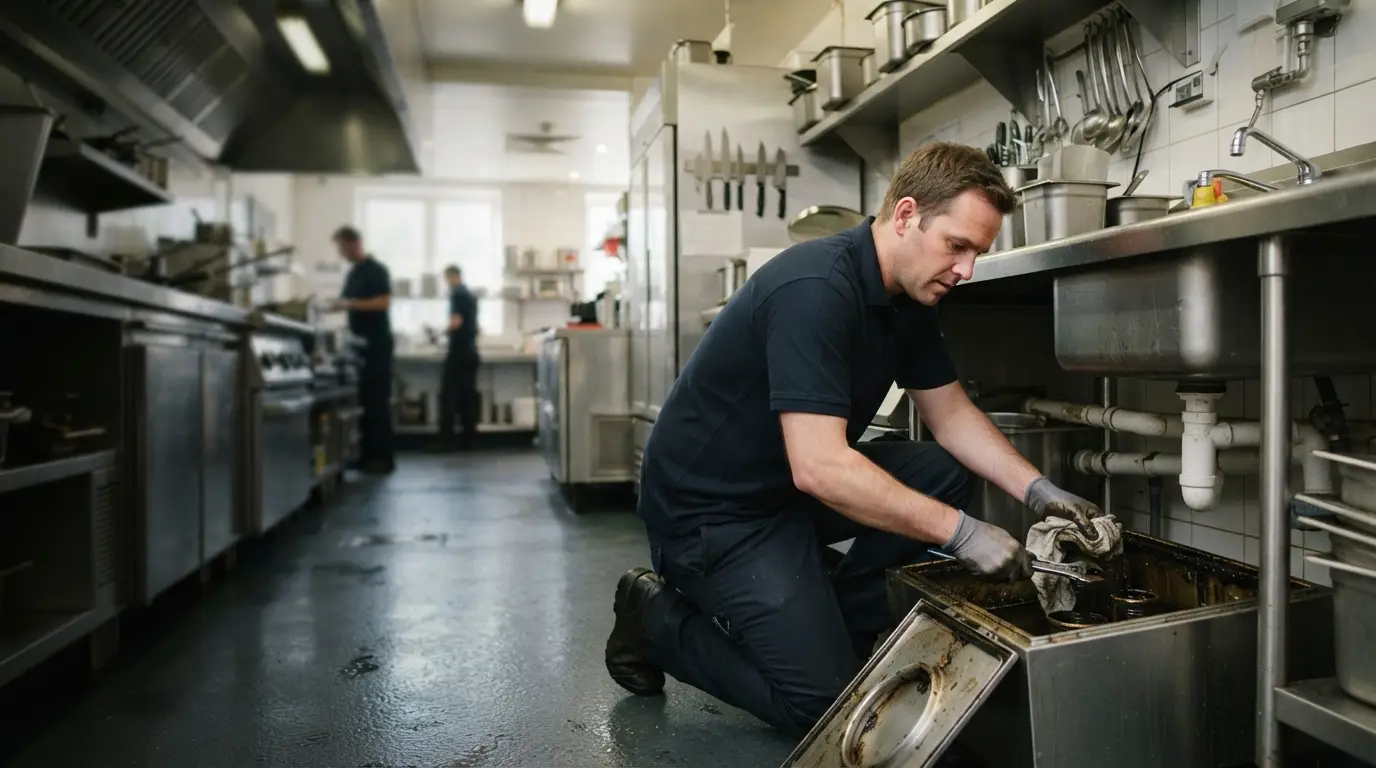
Grease line backing up mid-service, or a riser leaking through three floors? We handle commercial plumbing in Michigan. Our plumbers serve restaurants, offices, retail stores, medical buildings, schools, factories and apartment complexes. Michigan businesses face hard water, deep freezes in vacant spaces, strict grease and backflow rules and plenty of older buildings with new tenants. We plan around your hours, keep shutdowns short and leave records your facility team and inspectors can use.
The service
Commercial plumbing covers everything from a single coffee shop to a high-rise office or a 200-unit apartment complex. Buildings with five or more units hold 18% of Michigan homes in our data, 39% in Southfield and 51% in East Lansing. Each property type has its own mix of equipment, codes and scheduling needs.
Commercial clients we serve
Common work: Grease interceptors, kitchen drains, gas
Typical problems: Grease clogs, slow floor drains
Common work: Restrooms, heaters, backflow
Typical problems: Fixture wear, test deadlines
Common work: Risers, boilers, ejector pumps
Typical problems: Leaks between units, old pipe
Common work: Backflow, special fixtures, RO
Typical problems: Cross-connections, uptime
Common work: Process water, backflow, drains
Typical problems: Heavy use, compliance
Why Michigan
Downtown Detroit, Grand Rapids and Lansing have many early 1900s buildings with new uses.
Local sewer ordinances limit fats, oils and grease from food service.
Water suppliers track testable devices at commercial sites.
Loading docks, vacant suites and fire lines freeze in cold snaps.
Warning signs
Our process
We jet kitchen drains, repair and install grease traps and interceptors, connect cooking equipment to gas and help keep maintenance logs.
We repair restrooms and water heaters, install fixtures for build-outs and test and repair backflow devices.
We repair risers and stacks, service ejector and booster pumps and replace aging piping in planned stages.
Typical cost
Prices are estimates only until we see the site. These factors matter:
You approve a written price before we begin.
Get a written price: (833) 733-2357A service call, a repair or a full build-out.
Occupied spaces and after-hours work.
Old pipe, masonry and tight chases.
Commercial plumbing and mechanical permits.
Interceptors, pumps, heaters and devices.
Benefits
Work planned around your hours.
Backflow and grease records.
Problems caught early.
We learn your systems.
Dearborn (39,394 homes), Hamtramck, Detroit and Grand Rapids have dense restaurant districts, and kitchens there run long hours. Many communities require grease interceptors and regular pumping, and sewer authorities can fine businesses that send grease downstream. We install and repair interceptors, jet lines on a schedule and do the work before opening or after closing.
Troy (34,883 homes), Southfield and Ann Arbor have large office and medical campuses. These buildings need dependable restrooms, hot water for hand sinks, backflow protection on equipment and quick response when something fails. We service multiple buildings for property managers, track backflow due dates and plan bigger projects during off-hours.
Renters occupy 58% of homes in Kalamazoo and 55% in Ann Arbor, and large garden-style complexes are common across the state. These complexes have water heaters in each unit or central boilers, ejector pumps in lower levels and long underground service lines. We handle unit repairs, central equipment and planned replacements, and we report back to managers with photos and notes.
Michigan still has a large manufacturing base, from auto suppliers around Detroit to chemical and industrial plants near Midland (19,459 homes). Plants have process water lines, chemical feeds, eyewash stations and heavy-use restrooms. Backflow protection is critical on every process connection. We install and test devices, repair industrial fixtures and work within your safety procedures.
Michigan commercial buildings face frozen pipes at loading docks, in vestibules, above suspended ceilings near exterior walls and in vacant suites. A pipe that bursts over a weekend can damage several tenants. We inspect buildings before winter, insulate and heat-trace vulnerable lines and repair freeze damage quickly when it happens.
Restaurants, resorts and shops around Traverse City (8,479 homes) and the northern lakeshore run hard in summer and slow down or close in winter. We open and close seasonal plumbing, service water heaters and grease systems before the busy months and handle septic-connected commercial systems common in rural areas.
Hard water is a business cost in much of Michigan. Scale builds in commercial water heaters, dishwashers, ice machines, coffee brewers and steam equipment, cutting efficiency and causing breakdowns. Restaurants and hotels on groundwater supplies feel it most. We install commercial softeners and scale-reduction systems sized for your flow, protect new water heaters from day one and set up maintenance so equipment lasts its full rated life.
Schools, churches and community buildings in East Lansing (15,638 homes), Kalamazoo and smaller towns see heavy restroom use during the week and long quiet stretches during breaks. Flush valves, sensor faucets and drinking fountains wear out, and water that sits still in pipes over a long break can freeze or go stale. We repair commercial fixtures, flush lines after closures and schedule larger projects for summer when buildings are empty.
Many Michigan commercial buildings have restrooms, kitchens or floor drains below the sewer, served by ejector pumps or small lift stations. When a pump fails, waste backs up into the lowest level fast. We repair and replace ejector pumps, floats, check valves and alarms, and we recommend duplex pumps and alarms for buildings where a single failure would close the business.
Shut off water to the affected area or the building if a leak is spreading. Close fixtures on a backed-up line and put up signs.
Tell us where shutoffs and cleanouts are, who will meet us and when we can work. Then call us.
Commercial plumbing and gas work in Michigan requires permits from the local building department or the state, and larger projects need plan review. We pull permits and schedule inspections. Our plumbers hold Michigan licenses for the work they perform.
Why choose us
What you can count on every time one of our plumbers comes to your door.
Every job is handled by a plumber who holds the license your state or city requires, backed by liability insurance.
Our plumber explains the problem and the options, and you approve a written price before any work begins.
Burst pipes, sewage backups and failed water heaters get priority scheduling, including nights and weekends.
We pull permits when the job needs one and schedule the inspection, so the work holds up when you sell.
Repairs and installations come with a written warranty on labor, on top of the manufacturer's warranty on parts.
Our pages and plumbers account for your area's water, soil, climate and the age of the homes around you.
Service area
We serve businesses in 745 Michigan communities, including Detroit (329,393 homes), Grand Rapids (84,894 homes) and Lansing (55,943 homes). Find yours:
We look at scope, access, timing and permits, then give you a written price before work starts.
Yes, but it can avoid lost sales or disrupted tenants. We price both options so you can choose.
Yes. We set schedules for grease lines, backflow tests and water heaters, priced in writing.
Often, by working in sections. Larger shutoffs are scheduled before or after business hours.
Yes. We plan and install the plumbing, pull permits and work with your general contractor.
We repair and install them and jet the lines, and we coordinate with pumping services where needed.
Clear the building, avoid switches and equipment and call the utility or 911 from outside.
We close off work areas, post signs and keep equipment out of public paths.
It depends on the floors and units. We do it in stages to limit each unit's downtime.
Simple permits can be quick; larger projects with plan review take longer. We file early.
Busy kitchens often need it every few months. We set a schedule after the first cleaning.
Many devices need annual tests; some need more. Your water supplier sets the schedule.
Shut off the water and call us. It is treated as an emergency, and we keep you updated on timing.
Many local sewer ordinances require them. Your sewer authority can confirm the rules for your site.
Yes. We plan routes through old structures and coordinate phased work with your contractor.