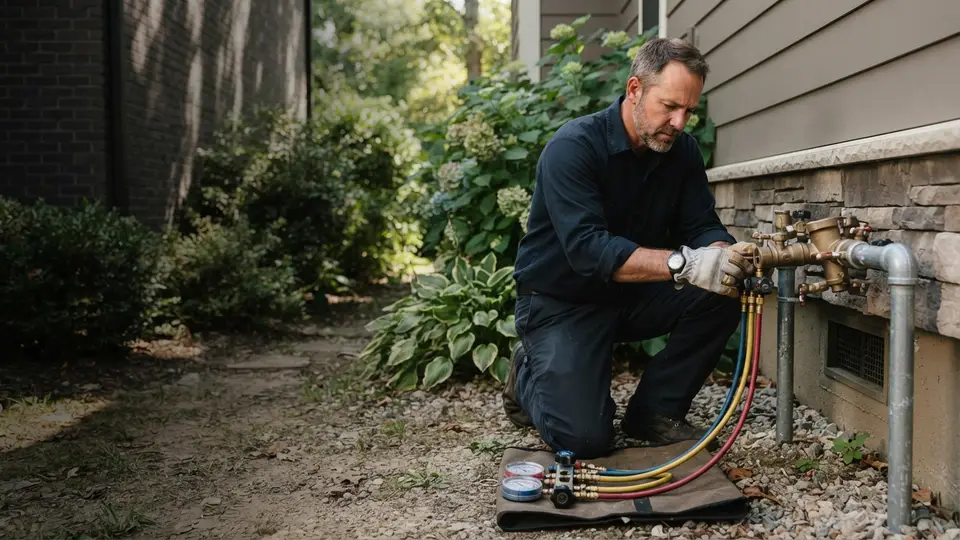
Reduced pressure zone (RPZ)
Typical use: Boilers with chemical treatment, medical and dental offices, restaurants, labs
Notes: High hazard; relief valve discharges if checks fail
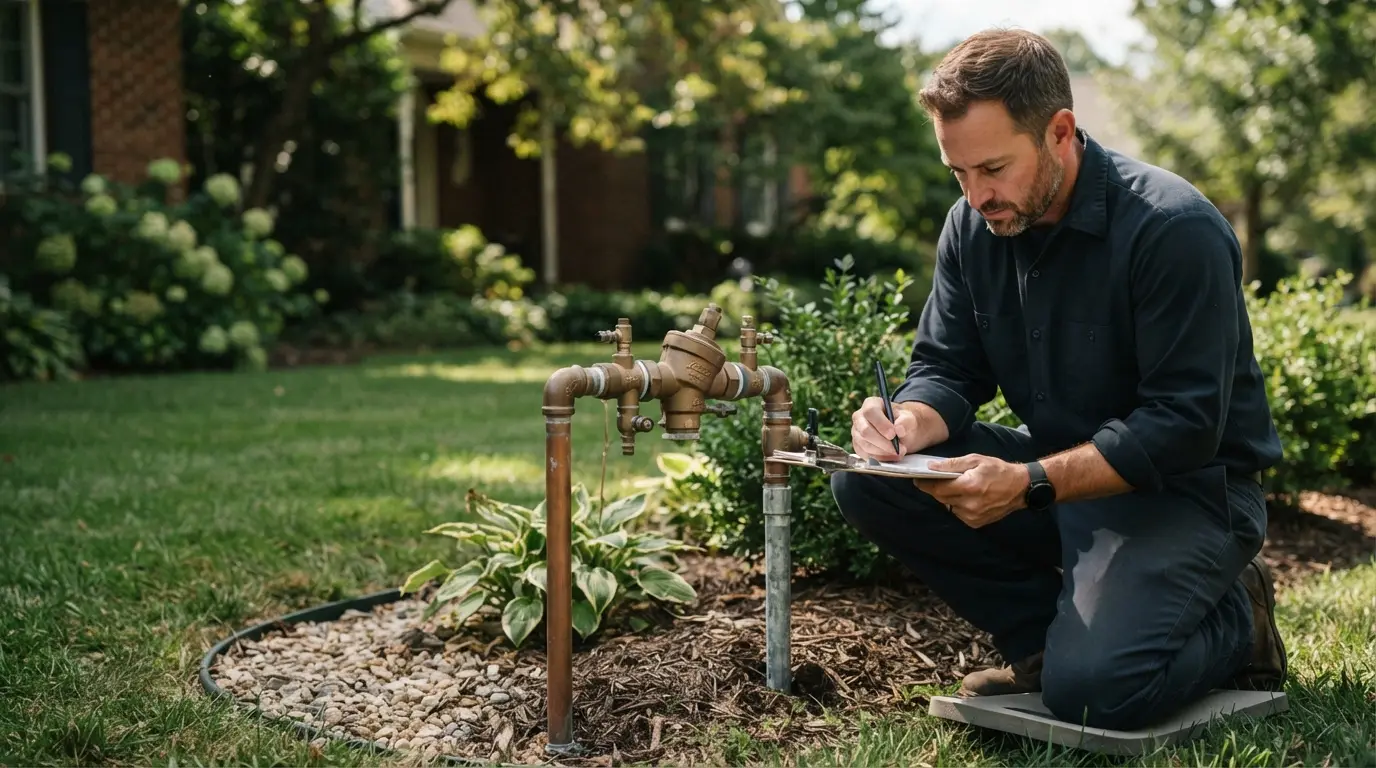
Notice from the water company that a test is due? We handle backflow testing and prevention in Connecticut for businesses, multifamily buildings and homes. Backflow preventers keep water from boilers, fire sprinklers, irrigation and process equipment from flowing back into the public water supply. Connecticut water utilities run cross-connection control programs under state public health rules, and testable assemblies must be checked by a certified tester on a set schedule. We test, repair, replace and install assemblies and send the results to your utility.
The service
Backflow is water moving the wrong way, from a building system back into the public main. A water main break or heavy firefighting can drop pressure and siphon water backward; a boiler, pump or booster system can push it back. Without protection, boiler treatment chemicals, stagnant fire sprinkler water or irrigation water could reach neighbors' taps.
Backflow preventers are valve assemblies with check valves and, on some types, a relief valve. Their springs and rubber parts wear, so they are tested on a schedule and after any repair.
Assemblies used in Connecticut buildings
Typical use: Boilers with chemical treatment, medical and dental offices, restaurants, labs
Notes: High hazard; relief valve discharges if checks fail
Typical use: Fire sprinkler services, some domestic services
Notes: Low hazard; common in basements and mechanical rooms
Typical use: Fire lines with a meter bypass
Notes: Detects unauthorized use
Typical use: Lawn irrigation systems
Notes: Must be drained before winter
Why Connecticut
Many Connecticut buildings heat with boilers that are filled from the domestic water supply. Boiler water often carries treatment chemicals, so the fill line needs a backflow preventer.
Multifamily and mixed-use buildings in Hartford, New Haven, Bridgeport and Stamford often have fire sprinkler services with backflow assemblies. Renters occupy 74% of Hartford homes and 72% of New Haven homes, and many live in buildings with these systems.
Offices with dental equipment, labs, restaurants and car washes typically need RPZ assemblies tested on a schedule.
Irrigation backflow devices on larger properties crack when they are not drained before the first hard freeze.
Warning signs
Our process
Our certified tester connects a calibrated test kit, checks each check valve and relief valve against required readings and records the results. We submit the report to your water utility in the format it requires and give you a copy.
We install the assembly type your utility and the hazard call for, at an accessible height, with an air gap or drain for RPZ discharge so a relief event does not flood the mechanical room. New assemblies are tested at installation.
Failed assemblies are rebuilt with new seals, springs and check parts, or replaced when the body is damaged or parts are unavailable. Every repair is retested and reported.
Typical cost
We give you a written price before testing or repairs.
Get a written price: (833) 733-2357Large RPZ and fire assemblies take longer.
Testing several in one visit lowers the cost per device.
Rubber kits cost less than check assemblies or replacement.
New devices may require piping changes, drainage and a permit.
Tight mechanical rooms and devices up high add time.
Benefits
Working devices stop contamination at the source.
Missed tests can bring utility notices and possible service action under utility rules.
Testing finds worn parts before a failure.
One provider for testing, repair and reporting.
Large buildings and portfolios may have many assemblies on domestic, fire and boiler connections, each with its own due date. We keep an inventory with serial numbers, locations and test dates, test on one schedule where possible and send every report on time. For fire services, we coordinate with your fire alarm and sprinkler contractors before closing valves, so the building is never left unprotected without notice. Stamford, with 58,655 homes in our data, and Danbury have many such buildings.
An RPZ can release a lot of water when a check valve fouls or pressure fluctuates. Installed in a basement or mechanical room without proper drainage, that discharge can flood the space. We size the drain or air gap funnel for the assembly and route it to a floor drain or the outside, so a relief event is an inconvenience instead of a flood.
Most single-family homes in Connecticut have no testable backflow assembly. The exceptions are homes with lawn irrigation systems, residential fire sprinklers, boilers with chemical treatment on city water, or a private well connected near a public supply. If your water utility sends a notice, it names the device and due date. If you are not sure whether you have one, the utility can tell you, and we can check during any visit. Dual check valves and hose bib vacuum breakers also protect homes but usually are not tested.
A new or repaired assembly must pass a test before it goes back in service, and utilities want that report even if the annual test is already done. We test right after the work and file it so your record stays complete.
Make sure we can reach the assembly: clear storage, unlock the mechanical room and have the utility notice ready, since it lists the serial number and due date.
If an RPZ is discharging heavily, you may close its shutoff valves to stop it, but that cuts water to whatever it serves, including possibly a boiler fill or fire line. Do not remove or bypass an assembly. Call us.
Connecticut public health rules require water utilities to maintain cross-connection control programs, and each utility sets which assemblies it requires and how often they are tested. Testers must hold certification recognized by the state. Our testers are certified, and our plumbers hold the Connecticut licenses required for installation and repair. New installations generally need a permit from the town building official, which we pull.
Why choose us
What you can count on every time one of our plumbers comes to your door.
Every job is handled by a plumber who holds the license your state or city requires, backed by liability insurance.
Our plumber explains the problem and the options, and you approve a written price before any work begins.
Burst pipes, sewage backups and failed water heaters get priority scheduling, including nights and weekends.
We pull permits when the job needs one and schedule the inspection, so the work holds up when you sell.
Repairs and installations come with a written warranty on labor, on top of the manufacturer's warranty on parts.
Our pages and plumbers account for your area's water, soil, climate and the age of the homes around you.
Service area
We test and repair backflow assemblies in 215 Connecticut places, including Danbury (34,948 homes). Choose yours:
It depends on the assembly type and size and how many devices we test on one visit. You get a written price before the test is done.
Many repairs need only a rubber parts kit and labor. Damaged bodies or obsolete assemblies need replacement, which costs more.
Yes. Testing every device on one visit lowers the cost per device, which helps multifamily and commercial owners.
Our certified tester attaches a calibrated gauge, checks each check and relief valve against required values and records the results for the utility.
Yes. We submit it in the required format and give you a copy for your records.
Yes. We schedule with your fire protection contractor so the system is never shut down without notice.
Yes. During pressure drops, water from boilers, sprinklers or equipment can be drawn into the main without a working device.
No. Removing or bypassing a required device violates utility rules and endangers the water supply.
Most single tests take under an hour. Large fire and commercial assemblies take longer.
Promptly after the test, so it reaches the utility before the due date. Tell us the deadline when you call.
Your water utility sets the schedule; many require testing at least once a year, and after installation or repair.
Often a fouled first check valve or pressure fluctuations. We test it, rebuild it and check the incoming pressure.
Close the assembly shutoffs if it is safe to do so and call us. We repair it and can improve the drainage.
Boiler fill lines generally need backflow protection, especially when the boiler water contains treatment chemicals.
State public health rules require cross-connection programs, and each water utility sets the details for its customers.