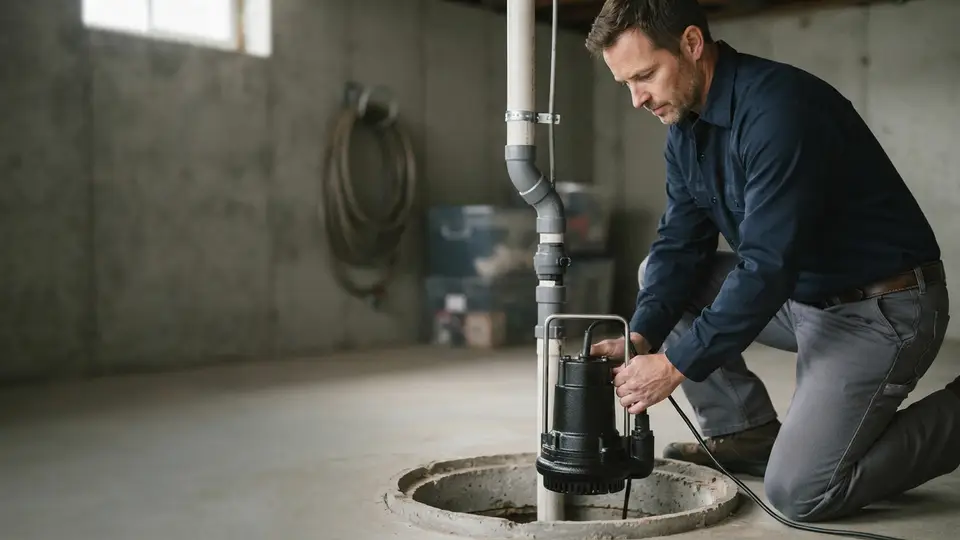
Primary pump
Job: Removes water from the pit
What we check: Motor, impeller, float, cord and outlet
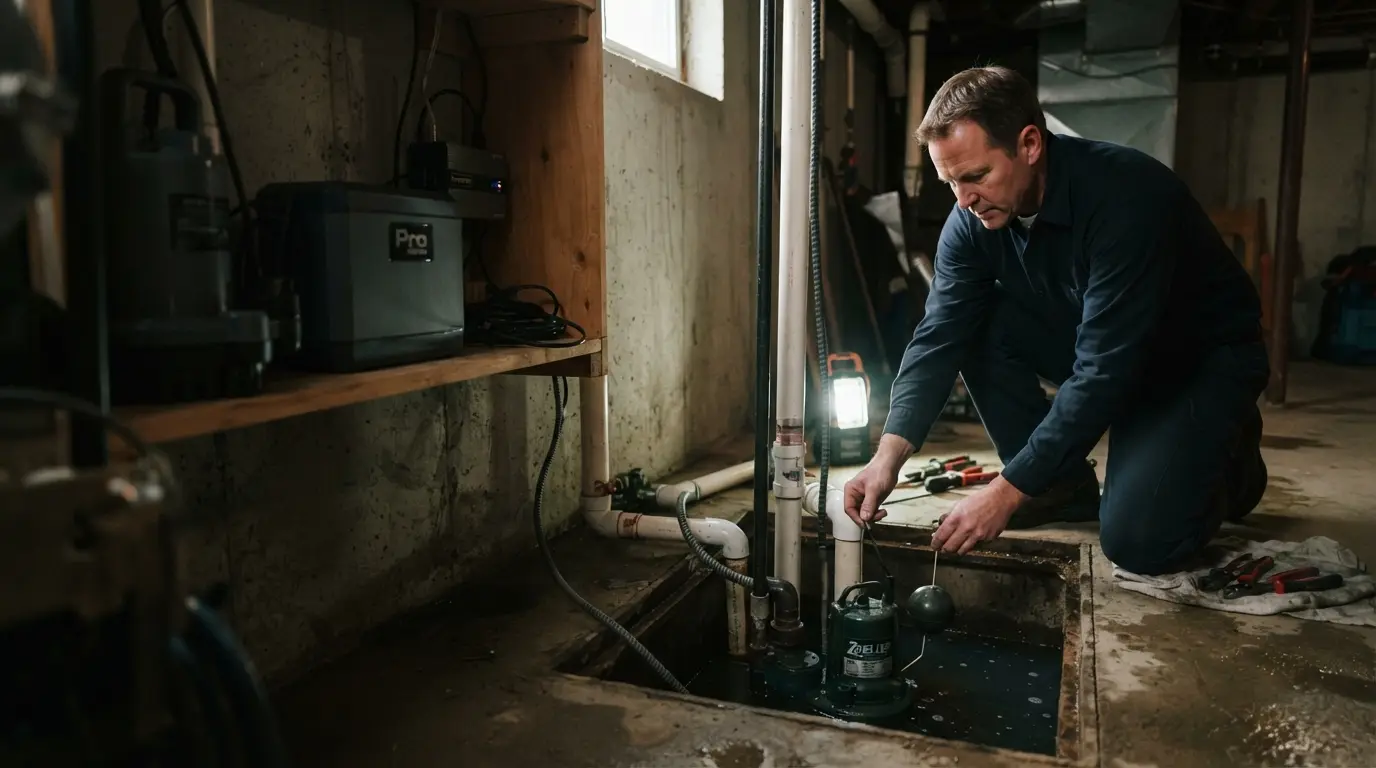
Water seeping across the basement floor after a storm? We do sump pump repair and installation in Connecticut, plus backups for power outages. Most Connecticut homes have basements, and spring snowmelt, nor'easters, tropical storms and a high water table near rivers and the shoreline push water toward them. A sump pump is often the only thing standing between that water and your furnace, boiler, water heater and stored belongings. We repair failing pumps, install new systems and add battery backups that keep pumping when the power goes out.
The service
A sump pump sits in a pit at the low point of the basement. Water reaches the pit from drain tile around the foundation, from under the slab, or through openings in the pit liner. When the water rises, a float switch turns on the pump, which pushes it out through a discharge line to the yard or another approved outlet. A check valve keeps pumped water from running back down.
Sump equipment we service
Job: Removes water from the pit
What we check: Motor, impeller, float, cord and outlet
Job: Stops backflow into the pit
What we check: Seal, direction, noise
Job: Carries water away
What we check: Freezing, breaks, outlet location
Job: Pumps during outages or overload
What we check: Battery health, charger, alarm
Job: Collects water
What we check: Silt, debris, cover seal
Why Connecticut
Spring brings melting snow and frequent rain on ground that is still partly frozen. Groundwater rises against foundations for weeks.
Nor'easters and tropical storms bring heavy rain and, along the shoreline, high water. Homes in low areas near the coast and rivers see the most water.
With 47% of Connecticut homes in our data built before 1960, many basements have fieldstone or block foundations without modern waterproofing or drain tile. Water finds the joints and cracks.
The storms that bring the most water often knock out power, and a pump without a backup stops at exactly the wrong time.
Warning signs
Our process
We test the float, motor and impeller, clear debris from the pit and intake, replace failed check valves and inspect the discharge line. Pumps with failed motors are replaced with one sized to your inflow.
For a new system, we cut a pit at the low point, set a perforated liner, connect any interior drain, install the pump and check valve, and route the discharge to an approved location well away from the foundation. We add a sealed cover to keep out debris and moisture.
A battery backup pump sits beside the primary and takes over during outages or when the primary cannot keep up. We install it with a charger and alarm and show you how to test it.
Typical cost
We give a written price before work begins.
Get a written price: (833) 733-2357A float or check valve costs less than a pump.
Cutting the floor and adding drain pipe adds work.
Higher flow pumps cost more.
Batteries, chargers and alarms add equipment.
Long or buried lines add materials.
Bulkhead-only access and finished spaces add labor.
Benefits
Boilers, furnaces and oil tanks stay out of water.
Basements stay usable.
Less moisture means less mold and musty odor.
Less water pressure against old walls.
Fieldstone foundations, common in older Connecticut homes, let water through in many places. Waterproofing them from outside is costly and often impractical. An interior drain along the inside of the foundation, feeding a sump pit, captures water before it spreads across the floor. We cut a channel along the wall, lay perforated pipe in stone, route it to the pit and patch the floor, keeping the basement usable for storage and mechanical equipment.
Low-lying neighborhoods in towns like Norwalk (38,129 homes), West Haven, East Haven and New London see high groundwater during storms and spring tides. Sump pumps there may run often and need higher capacity, a backup and a discharge that does not let water return. We also install backwater valves where sewers can surcharge during storms.
A discharge line that freezes is a common winter failure. The pump keeps running against ice until it overheats or the pit overflows. We slope discharge lines so they drain between cycles, bury them where practical and add an overflow fitting near the house so water can escape if the outer line freezes. Keep the outlet clear of snow piles and plowed banks through the winter.
Homes on city water with good pressure can use a water-powered backup pump, which uses the flow of municipal water to remove water from the pit without electricity or batteries. It is not suitable for homes on private wells, since the well pump stops when the power does. We help you choose the right backup for your home.
Check that the pump is plugged in and the breaker or GFCI has not tripped. If the float is stuck, unplug the pump and free it with a stick. In winter, check the discharge outlet for ice.
Do not walk through standing water where cords or equipment may be submerged. Shut off power to the basement from a dry spot if you can safely reach the panel, then call us.
Replacing a pump in an existing pit usually needs no permit. New pits, interior drains and discharge connections may, depending on your town, and sump discharge into the sanitary sewer is generally not allowed. Our plumbers hold the Connecticut licenses required, and we check local rules before installing.
Why choose us
What you can count on every time one of our plumbers comes to your door.
Every job is handled by a plumber who holds the license your state or city requires, backed by liability insurance.
Our plumber explains the problem and the options, and you approve a written price before any work begins.
Burst pipes, sewage backups and failed water heaters get priority scheduling, including nights and weekends.
We pull permits when the job needs one and schedule the inspection, so the work holds up when you sell.
Repairs and installations come with a written warranty on labor, on top of the manufacturer's warranty on parts.
Our pages and plumbers account for your area's water, soil, climate and the age of the homes around you.
Service area
We repair and install sump pumps in 215 Connecticut places, from Danbury and Middletown to shoreline towns. Choose yours:
Many repairs, such as a float switch or check valve, are modest. A failed motor means a new pump. Our plumber gives you a written price before work begins.
It depends on whether a pit exists, whether an interior drain is needed, the pump size and the discharge route. We price it after seeing your basement.
For most basements, yes. Nor'easters and tropical storms often cut power when water is rising, and a backup keeps pumping.
Often, combined with an interior drain along the walls. It captures water before it spreads across the floor.
We measure how fast the pit fills and how high and far water must travel, then choose a pump with enough capacity and margin.
To the yard, well away from the foundation, where water drains away. Not into the sanitary sewer, which is generally prohibited.
Not if electrical equipment or cords may be in the water. Shut off power from a dry location and wait for us.
Ground-fault protection is commonly required for basement outlets. We check the connection and recommend what your location needs.
Usually one to two hours in an existing pit. A new pit with interior drain can take one to three days.
Right away. Water above the pit rim reaches heating equipment and stored items quickly.
Before spring thaw, before hurricane season and after long dry spells. Fill the pit with water and watch it start and stop.
Often seven to ten years. Pumps that run often in wet basements wear out sooner.
Check pump power, stay clear of water near electrical equipment and call us. Flooding gets priority scheduling.
Snowmelt and rain raise groundwater around foundations while the ground is still partly frozen, pushing water in through walls and floors.
Often. High groundwater during storms means more inflow, so higher capacity and a backup are worth considering.