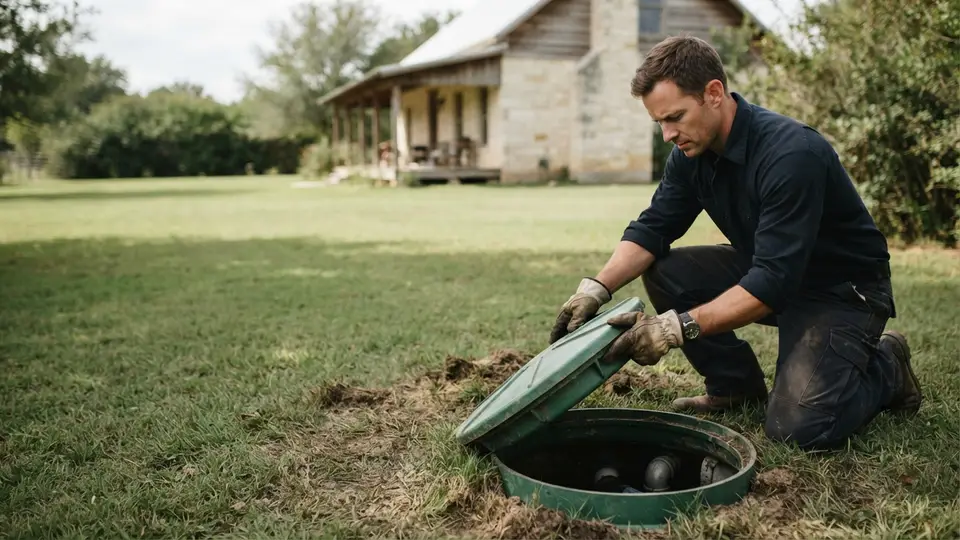
Septic pumping
When: Every few years or when sludge is high
What it includes: Uncover, pump every compartment, check baffles and filter
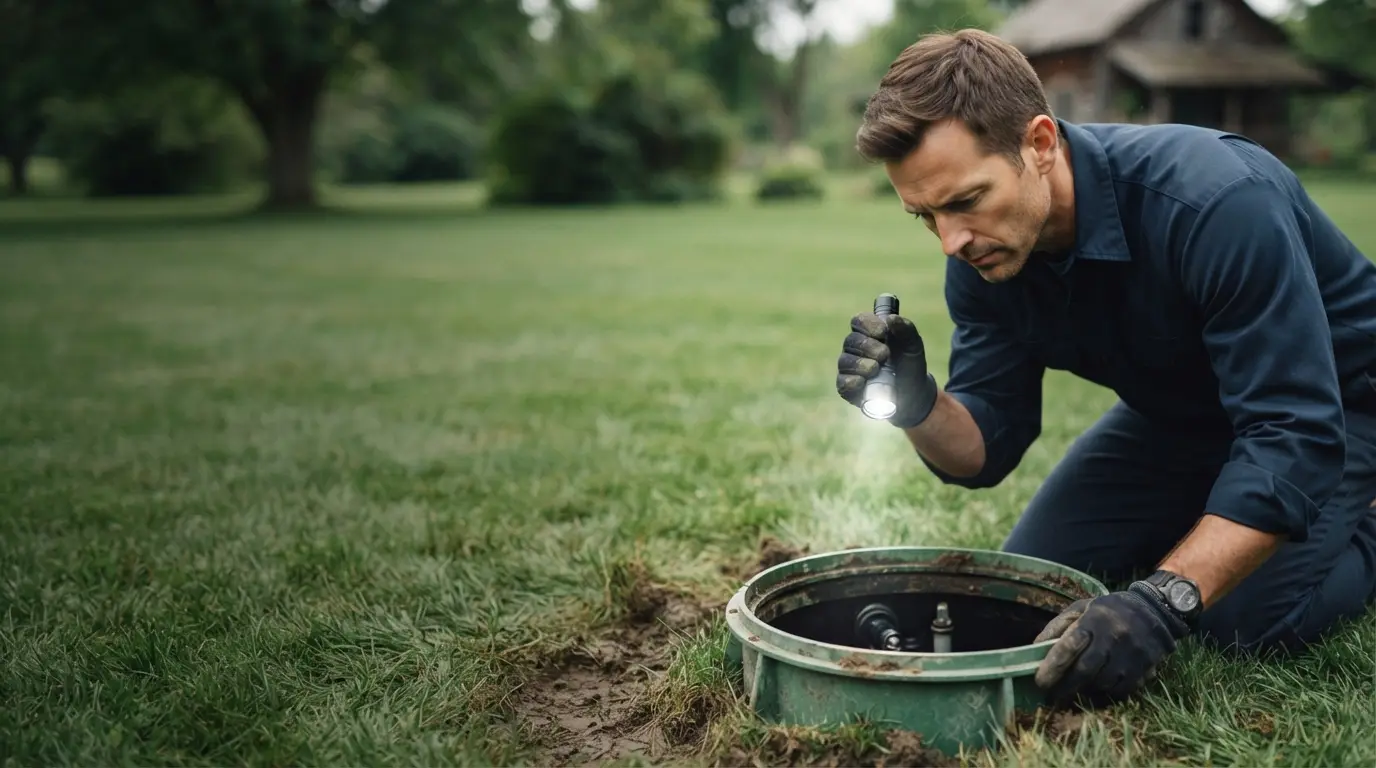
Soggy lawn over the leaching field, or toilets gurgling after a rainy week? We provide septic tank services in Connecticut for homes beyond the sewer lines. Septic systems serve a large share of homes in Connecticut suburbs and rural towns, often on rocky glacial soil, ledge or wet ground with a high water table in spring. Many systems are decades old, with steel or concrete tanks and leaching fields that have done their job for a long time. We pump, inspect and repair systems and work with your local health department when permits are needed.
The service
A subsurface sewage disposal system has a septic tank, where solids settle and scum floats, and a leaching system, such as trenches, galleries or chambers, where the clarified water soaks into the soil for treatment. Sites with ledge, high groundwater or tight soil may need pumps, raised systems or engineered designs.
Our septic services
When: Every few years or when sludge is high
What it includes: Uncover, pump every compartment, check baffles and filter
When: Home sale, refinance or problems
What it includes: Measure layers, inspect tank, check leaching area and pump
When: Wet areas, odors, backups after pumping
What it includes: Locate failed sections, repair or replace them
When: Alarm sounding or pump failure
What it includes: Test floats, pump and alarm, repair or replace
Why Connecticut
Glaciers left much of Connecticut with thin, stony soil over bedrock. There may be little depth for a leaching system, and repairs often require engineered designs or fill.
Snowmelt and spring rain raise the water table. A leaching field sitting in saturated soil cannot accept water, so drains slow until the ground dries.
Older suburban and rural homes have older systems. Our data shows 72% of Connecticut homes predate 1980, and many septic systems from that era use steel tanks that rust or concrete tanks with failing baffles.
Skipped pumping, garbage disposals, water softener discharge and running toilets push solids and extra water into the field.
Warning signs
Our process
We locate the covers and dig as needed.
Liquid above the outlet tells us the field is not accepting water.
We pump each compartment and check baffles, filter and tank condition.
We look for breakout and saturation and test any pump or alarm.
You receive findings and a written price for any repair.
Typical cost
You get a written price before we begin.
Get a written price: (833) 733-2357Larger tanks take longer to pump.
Buried covers, stone walls and steep yards add time.
Baffles, covers, filters and pumps add parts and labor.
Repairing a section costs far less than a new field.
Ledge and high groundwater complicate field work.
Required for new fields and major repairs.
Benefits
Pumping keeps solids out of the costliest part.
A working system keeps wastewater out of groundwater.
Healthy systems keep nutrients and bacteria out of surface water.
A recent inspection report answers buyer questions.
A failing field may have a crushed pipe, a blocked distribution box or a section clogged with roots, and those can often be repaired. When the soil itself is sealed by years of solids, the field needs replacement, which requires a design by a licensed engineer or installer and approval from the local health department. We coordinate those steps and complete the work.
Lenders and buyers often ask for a septic inspection on Connecticut homes with private systems. We pump the tank, inspect it, check the leaching area for signs of failure, and give a written report. If repairs are needed, we price them so buyer and seller can work out the details before closing.
Most Connecticut homes with septic also have a private well. Required separation distances keep them apart, but a failing system or a cracked tank can still affect groundwater, especially in fractured bedrock. Regular pumping and inspection protect your drinking water. If your well water changes in smell or appearance, have it lab-tested and let us check the septic system.
Garbage disposals add food solids that fill a tank faster, so homes that use one need more frequent pumping. Water softener backwash and high-volume laundry add water the field must absorb. We look at how your household uses water and suggest a pumping interval and changes that ease the load.
Use as little water as possible and spread out laundry. If a pump alarm is sounding, silence it but leave the pump circuit on unless the breaker trips. Note whether the trouble started after heavy rain or snowmelt.
Never open or enter a septic tank; gases inside can kill quickly and old covers can collapse. Keep people and vehicles off the field and call us.
Subsurface sewage disposal systems in Connecticut are governed by the state public health code and permitted through local health districts and departments, with the state Department of Public Health overseeing larger systems. New systems and repairs need an approved design and permit; pumping does not. Our plumbers hold the Connecticut licenses their work requires, and we coordinate with your health department. Confirm local rules before planning new work.
Why choose us
What you can count on every time one of our plumbers comes to your door.
Every job is handled by a plumber who holds the license your state or city requires, backed by liability insurance.
Our plumber explains the problem and the options, and you approve a written price before any work begins.
Burst pipes, sewage backups and failed water heaters get priority scheduling, including nights and weekends.
We pull permits when the job needs one and schedule the inspection, so the work holds up when you sell.
Repairs and installations come with a written warranty on labor, on top of the manufacturer's warranty on parts.
Our pages and plumbers account for your area's water, soil, climate and the age of the homes around you.
Service area
Our data includes 185 Connecticut places that are villages or sections of towns and 150 with fewer than 5,000 residents, where septic is common. Larger towns such as Torrington, Shelton and Danbury also have septic neighborhoods outside their sewer areas. Choose the nearest place:
Tank size, how easy it is to reach the covers and what the inspection finds set the price. We give you a written price before we start pumping.
It needs a soil evaluation, an engineered design, health department approval and excavation, often through ledge or wet ground. Pumping and line repairs cost far less.
Yes. Field replacement is one of the largest repair bills on a property with a private system, and an inspection shows the condition before you commit.
We pump and inspect the tank, measure sludge and scum, check baffles and filters, look over the leaching area and test pumps and alarms.
Yes. Risers bring the covers to ground level so future pumping and inspections are faster.
Yes. For repairs and replacements that need approval, we coordinate with the designer and your local health district or department.
Yes. Gases inside can be fatal, and old covers can give way. Leave tank work to our crew.
Yes. It carries pathogens and can reach wells, brooks and ponds. Keep people and pets away and call us.
Most home tanks are pumped and inspected in one to two hours, longer if we must dig for the covers.
Construction often takes several days, but design and approval come first. We give you a realistic timeline.
Many households need pumping every three to five years, depending on tank size and use. We suggest an interval after measuring.
Softener backwash adds water and salt to the system. We can route it to a separate drywell where allowed or adjust settings.
Stop using water and call us. Septic backups get priority scheduling, and pumping usually gives immediate relief.
Local health districts and departments issue permits under the state public health code, with the Department of Public Health overseeing larger systems.
Snowmelt and rain raise groundwater around the field, leaving it unable to absorb wastewater until the ground dries.